
Miné Okubo (1912–2001)
Author of Citizen 13660
About the Author
Image credit: Medford Leas Residents Association
Works by Miné Okubo
Associated Works
Tagged
Common Knowledge
- Birthdate
- 1912-06-27
- Date of death
- 2001-02-10
- Gender
- female
- Education
- Riverside Junior College
University of California, Berkeley - Occupations
- artist
illustrator
painter - Organizations
- Fortune magazine
- Nationality
- USA
- Birthplace
- Riverside, California, USA
- Places of residence
- Riverside, California, USA
Tanforan Assembly Center, California, USA
Topaz Relocation Center, Utah, USA
Greenwich Village, New York, USA
Paris, France - Burial location
- Olivewood Cemetery, Riverside, California, USA
- Associated Place (for map)
- USA
Members
Reviews
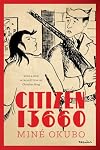
I wanted to learn about the Japanese American experience in the internment/concentration camps from a Japanese American perspective and voice, not from a white historians perspective. I'm glad I found this book at the library. This book is a good one for learning about what the camps were like and the daily struggles of being in the camps. Okubo doesn't gloss over the hardships and I felt like I better understand the emotions of being stuck behind barbed wire, bored, frustrated, and mad at show more being forced from home. show less
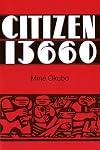
When someone hears the words camp and WWII, the first thoughts is the Nazi camps in Europe. But there were other ones - which even if not as dramatic as the European ones - need to be remembered.
When Japan hits Pearl Harbor in 1941, USA realizes that the war will not just go away and something need to be done. One of the actions is to move all Japanese residing in specific parts of USA to evacuation camps. And if this could have been accepted as a normal reaction after an invasion, the show more definition of Japanese changes the perception. Before WWII, Japanese born in Japan that had made their lives in USA could not be naturalized. But their children, born in USA and in a lot of cases never seen Japan had been American citizens by birth with all the obligations and rights coming from that. Until the day the evacuations are ordered. All people from Japanese ancestry (regardless of their nationality) are ordered to either move away from the pre-designated zones or to evacuate to camps.
Mine Okubo is a second generation Japanese, an American citizen by birth and the beginning of the war, she is in Europe. This is where her story begins -- with her getting back to USA where all should be better; where she can feel safe. Until she needs to leave her home and evacuate - only because of her race. During the years she spends in the camps (first in California, then in Utah), she is drawing pictures of the camp life. And this is what is the base of this book. It is not a comic book but it is not a narrative autobiography either. The best description is probably an autobiography in drawings with captions.
Without the pictures, the book feels unfinished and too spar; without the words, a lot of the pictures make no sense (especially when the association with the word camp is Auschwitz). Together, they make the message clear -- despite the fact that there is no cruelty and it sounds like the camp officials were doing all they could to make life bearable and easy, a camp is not home. And people did not choose to move there.
There is a lot of humor in the book; a lot of understanding of why it happened the way it happened, a lot of almost trivial explanations. It makes the whole situation surreal - people are treated badly and still they don't really blame anyone too much.
I'll admit that I was in my late 20s when I heard about these camps at all. They were not in my textbooks or in the books I had read about WWII. But they were important - despite all the differences, despite the fact that at the end anyone could almost leave when they wanted to (the author stayed longer than she was forced to), they were camps created for the people from a race - regardless of their nationality. And Okubo's book catches the life in the camps marvelously. She comes up as a whiny young woman occasionally, especially at times like that. But at the same time, she had grown up to a different standard and in a country where the rights are protected.
The format of the book does not allow for any analysis. But none is needed. And this is a story that should be remembered and repeated - because it was part of the war; even if almost noone died. show less
When Japan hits Pearl Harbor in 1941, USA realizes that the war will not just go away and something need to be done. One of the actions is to move all Japanese residing in specific parts of USA to evacuation camps. And if this could have been accepted as a normal reaction after an invasion, the show more definition of Japanese changes the perception. Before WWII, Japanese born in Japan that had made their lives in USA could not be naturalized. But their children, born in USA and in a lot of cases never seen Japan had been American citizens by birth with all the obligations and rights coming from that. Until the day the evacuations are ordered. All people from Japanese ancestry (regardless of their nationality) are ordered to either move away from the pre-designated zones or to evacuate to camps.
Mine Okubo is a second generation Japanese, an American citizen by birth and the beginning of the war, she is in Europe. This is where her story begins -- with her getting back to USA where all should be better; where she can feel safe. Until she needs to leave her home and evacuate - only because of her race. During the years she spends in the camps (first in California, then in Utah), she is drawing pictures of the camp life. And this is what is the base of this book. It is not a comic book but it is not a narrative autobiography either. The best description is probably an autobiography in drawings with captions.
Without the pictures, the book feels unfinished and too spar; without the words, a lot of the pictures make no sense (especially when the association with the word camp is Auschwitz). Together, they make the message clear -- despite the fact that there is no cruelty and it sounds like the camp officials were doing all they could to make life bearable and easy, a camp is not home. And people did not choose to move there.
There is a lot of humor in the book; a lot of understanding of why it happened the way it happened, a lot of almost trivial explanations. It makes the whole situation surreal - people are treated badly and still they don't really blame anyone too much.
I'll admit that I was in my late 20s when I heard about these camps at all. They were not in my textbooks or in the books I had read about WWII. But they were important - despite all the differences, despite the fact that at the end anyone could almost leave when they wanted to (the author stayed longer than she was forced to), they were camps created for the people from a race - regardless of their nationality. And Okubo's book catches the life in the camps marvelously. She comes up as a whiny young woman occasionally, especially at times like that. But at the same time, she had grown up to a different standard and in a country where the rights are protected.
The format of the book does not allow for any analysis. But none is needed. And this is a story that should be remembered and repeated - because it was part of the war; even if almost noone died. show less
Moving and incredibly well done. Okubo's spare cartoons and storytelling bring Japanese internment camp to life. I appreciate a young adults' perspective on the larger context.
Informative and straight-forward, although not as compelling as I had anticipated. It minimized the personal aspects of Okubo's experience, and didn't really cover the emotional toll on the people. A good starter book, but if you only read one book on the subject I'd find a more in-depth one.
Lists
Awards

You May Also Like


Associated Authors
Statistics
- Works
- 2
- Also by
- 2
- Members
- 363
- Popularity
- #66,172
- Rating
- 3.8
- Reviews
- 9
- ISBNs
- 5
- Languages
- 1
- Favorited
- 1