
Susie Kelly
Author of Best Foot Forward
Works by Susie Kelly
The Valley of Heaven and Hell: Cycling in the Shadow of Marie Antoinette (2011) 45 copies, 5 reviews
Tagged
Common Knowledge
- Gender
- female
Members
Reviews
The Lazy Cook (Book One): Quick and Easy Meatless Meals (The Lazy Cook Books 1 and 2) by Susie Kelly
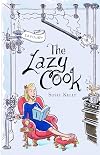
My lovely cousin, who I grew up with and who therefore knows me very well, got me this book as a birthday present. It is appropriate because I am the laziest and most incompetent cook I have ever met. This is not a claim I make lightly. Many people find cooking boring and confusing, although a surprising number claim to enjoy it, whereas I also find eating and food in general boring and confusing. I resent the need to for meals at all - why can’t we just take pills for that, as predicted show more in 1950s sci-fi? Why is Huel, which claims to be a meal substitute, so entirely revolting? Why is it so difficult to work out what a ‘healthy diet’ is? Actually, I think the answer to all three of those questions is, ‘because capitalism’, but I can’t really go so far as to blame my own inability to cook on the neoliberal hegemony in which we find ourselves. I made a new year’s resolution to try and eat better, though, so am trying to puzzle my way through it. Since ‘The Lazy Cook’ is chatty and filled with anecdotes, more like an unpretentious food blog than a standard recipe book, it seemed worth reviewing here. I read the whole whole thing straight through in order to assess the actual likelihood of my cooking things from it.
Reasons to think I might try recipes from this book:
- They are all vegetarian, well piscatarian to be precise, which greatly helps. I have never eaten meat and never want to. As far as I’m concerned, it isn’t a food. Neither are brussel sprouts, incidentally.
- The author is a of a generation that experienced rationing and thus exhibits a marked preference for cheaper, simpler ingredients. She even mentions shopping in Lidl, which I greatly approve of. It’s deeply demotivating when recipes include twenty five fancy ingredients, including seven I’ve never heard of in my life and have to google, which probably cost like £35 in total. Why bother.
- The instructions are clear and include idiot-proof asides like, ‘Don’t put hot liquids in a blender’. It is reassuring when recipes assume that the person following them may have extremely poor judgement when it comes to cooking. Personal examples of said poor judgement: assuming for many years that it took 25 minutes to hard-boil an egg; trying to reheat pizza in the toaster; nearly causing a fire by microwaving a rice cake.
- I may find cooking very tedious, but I also dislike ready meals, takeaways, and most other forms of pre-prepared food. Supermarket pasta sauces and soups are often disappointing and weirdly sweet, so seemingly simple recipes for both are appealing.
- The author shares my fondness for salads that are literally just three things chopped into cubes and mixed together with balsamic vinegar, the most important condiment.
- The inclusion of the following subheadings: ‘The great lettuce debate’ and ‘That lovely green soup you made once’.
- A whole section on cooking eggs, which [b:Among the Bohemians: Experiments in Living 1900-1939|703733|Among the Bohemians Experiments in Living 1900-1939|Virginia Nicholson|https://images.gr-assets.com/books/1407707748s/703733.jpg|1067397] taught me were the fast food of choice in early 20th century artists’ garrets. Eggs are a convenient food and it’s helpful to have their preparation explained in simple terms, without the patronising air of Delia Smith’s 13-step egg boiling instructions. (I once made the mistake of starting to read [b:Delia's How to Cook: Book One|1761008|Delia's How to Cook Book One (Delia's How to Cook #1)|Delia Smith|https://images.gr-assets.com/books/1359623394s/1761008.jpg|1758972].)
Reasons to think I might not try recipes from this book:
- The author does not have a microwave and disapproves of them. Personally, I think they are a magical, wondrous invention that I rely upon. A microwave can heat food in two minutes!
- Why would you make pastry?? What possible need could there be to make it yourself? What is it even for? Also, why on earth make your own mayonnaise? Or gnocci? Or hummus? I classify the latter three as ‘ingredients that you purchase’.
- Quite a few recipes involve frying onions or boiling rice, both of which I gave up on years ago after ruining them with monotonous regularity. Many have attempted to teach me to fry an onion, yet it remains a mystery. I never get the water or heat level right with rice, so now I buy it pre-cooked in microwave packets that resemble military rations. Those things got me through my PhD.
- The quantities cited in recipes are often uncertain, which concerns me. For instance, in the ratatouille recipe: ‘add some sliced red and green peppers, some sliced courgette, and some skinned and chopped tomatoes’. This raises many questions. How much is ‘some’? What size should the slices of each ingredient be? Why is it necessary to skin tomatoes, a fiddly nonsense task? Etc.
- The book assumes that you are cooking for others. Luckily for the rest of the world, the vast majority of the time I am merely attempting to feed myself. It really isn’t worth making pretty-looking salads and foods that don’t keep under such circumstances. Stuff that can be frozen in portions is much more useful.
- Cheese and vinegar are not ‘an unlikely combination’; ‘strawberry soup’ is.
With seven points on each side, it certainly seems much more likely that I will use this cook book that the many others I have been thoughtfully given over the years. I think it underestimates just how lazy a cook it is possible to be, yet there are definitely simple and accessible recipes within and the tone is cheerful and encouraging. As might be obvious by now, the vast majority of recipe books get my back up. Kelly’s cheery anecdotes of dinners gone wrong are much more appealing. The lack of microwave use is extraordinary, though, so I will end this review with a recipe of my own. A friend recently taught me how to scramble an egg in the microwave, as follows:
- Check the fridge for an egg that is not past its use by date. If you think it might be off, see whether it floats in a glass of water. If it does, throw it away and eat something else.
- If the egg is OK, break it into a mug and beat it with a fork until the white and yolk are mixed.
- Microwave the mug-egg for twenty seconds.
- Remove from microwave and mix the egg with a fork to break it up.
- Microwave the mug-egg for ten seconds.
- Remove from microwave and mix the egg with a fork to break it up.
- Microwave the mug-egg for ten seconds.
- Remove from microwave and mix the egg with a fork to break it up.
- The egg should now look scrambled and fluffy. If it doesn’t, microwave it for another ten seconds.
- Scrape the egg out of the mug onto a piece of toast. Sprinkle with salt and pepper. Eat.
Now that’s what I call lazy cookery. show less
Reasons to think I might try recipes from this book:
- They are all vegetarian, well piscatarian to be precise, which greatly helps. I have never eaten meat and never want to. As far as I’m concerned, it isn’t a food. Neither are brussel sprouts, incidentally.
- The author is a of a generation that experienced rationing and thus exhibits a marked preference for cheaper, simpler ingredients. She even mentions shopping in Lidl, which I greatly approve of. It’s deeply demotivating when recipes include twenty five fancy ingredients, including seven I’ve never heard of in my life and have to google, which probably cost like £35 in total. Why bother.
- The instructions are clear and include idiot-proof asides like, ‘Don’t put hot liquids in a blender’. It is reassuring when recipes assume that the person following them may have extremely poor judgement when it comes to cooking. Personal examples of said poor judgement: assuming for many years that it took 25 minutes to hard-boil an egg; trying to reheat pizza in the toaster; nearly causing a fire by microwaving a rice cake.
- I may find cooking very tedious, but I also dislike ready meals, takeaways, and most other forms of pre-prepared food. Supermarket pasta sauces and soups are often disappointing and weirdly sweet, so seemingly simple recipes for both are appealing.
- The author shares my fondness for salads that are literally just three things chopped into cubes and mixed together with balsamic vinegar, the most important condiment.
- The inclusion of the following subheadings: ‘The great lettuce debate’ and ‘That lovely green soup you made once’.
- A whole section on cooking eggs, which [b:Among the Bohemians: Experiments in Living 1900-1939|703733|Among the Bohemians Experiments in Living 1900-1939|Virginia Nicholson|https://images.gr-assets.com/books/1407707748s/703733.jpg|1067397] taught me were the fast food of choice in early 20th century artists’ garrets. Eggs are a convenient food and it’s helpful to have their preparation explained in simple terms, without the patronising air of Delia Smith’s 13-step egg boiling instructions. (I once made the mistake of starting to read [b:Delia's How to Cook: Book One|1761008|Delia's How to Cook Book One (Delia's How to Cook #1)|Delia Smith|https://images.gr-assets.com/books/1359623394s/1761008.jpg|1758972].)
Reasons to think I might not try recipes from this book:
- The author does not have a microwave and disapproves of them. Personally, I think they are a magical, wondrous invention that I rely upon. A microwave can heat food in two minutes!
- Why would you make pastry?? What possible need could there be to make it yourself? What is it even for? Also, why on earth make your own mayonnaise? Or gnocci? Or hummus? I classify the latter three as ‘ingredients that you purchase’.
- Quite a few recipes involve frying onions or boiling rice, both of which I gave up on years ago after ruining them with monotonous regularity. Many have attempted to teach me to fry an onion, yet it remains a mystery. I never get the water or heat level right with rice, so now I buy it pre-cooked in microwave packets that resemble military rations. Those things got me through my PhD.
- The quantities cited in recipes are often uncertain, which concerns me. For instance, in the ratatouille recipe: ‘add some sliced red and green peppers, some sliced courgette, and some skinned and chopped tomatoes’. This raises many questions. How much is ‘some’? What size should the slices of each ingredient be? Why is it necessary to skin tomatoes, a fiddly nonsense task? Etc.
- The book assumes that you are cooking for others. Luckily for the rest of the world, the vast majority of the time I am merely attempting to feed myself. It really isn’t worth making pretty-looking salads and foods that don’t keep under such circumstances. Stuff that can be frozen in portions is much more useful.
- Cheese and vinegar are not ‘an unlikely combination’; ‘strawberry soup’ is.
With seven points on each side, it certainly seems much more likely that I will use this cook book that the many others I have been thoughtfully given over the years. I think it underestimates just how lazy a cook it is possible to be, yet there are definitely simple and accessible recipes within and the tone is cheerful and encouraging. As might be obvious by now, the vast majority of recipe books get my back up. Kelly’s cheery anecdotes of dinners gone wrong are much more appealing. The lack of microwave use is extraordinary, though, so I will end this review with a recipe of my own. A friend recently taught me how to scramble an egg in the microwave, as follows:
- Check the fridge for an egg that is not past its use by date. If you think it might be off, see whether it floats in a glass of water. If it does, throw it away and eat something else.
- If the egg is OK, break it into a mug and beat it with a fork until the white and yolk are mixed.
- Microwave the mug-egg for twenty seconds.
- Remove from microwave and mix the egg with a fork to break it up.
- Microwave the mug-egg for ten seconds.
- Remove from microwave and mix the egg with a fork to break it up.
- Microwave the mug-egg for ten seconds.
- Remove from microwave and mix the egg with a fork to break it up.
- The egg should now look scrambled and fluffy. If it doesn’t, microwave it for another ten seconds.
- Scrape the egg out of the mug onto a piece of toast. Sprinkle with salt and pepper. Eat.
Now that’s what I call lazy cookery. show less
Recently I switched to a diet that would keep the pH of my body in a more alkaline state. I am not much of a cook, but I realized that to make sure I get the diet I wanted, I will have to learn to prepare the meals myself. In addition, I have a cultural problem with cookbooks. They make me think of science experiments that I will likely fail at because I lack the right equipment, ingredients or intelligence to implement correctly.
Susie Kelly's book addresses all of these issues and it is now show more my top choice in vegan or vegetarian cookbooks.
Her recipes are vegetarian, including fish and eggs, with notes on which recipes are vegan or gluten free. This helps me focus on the vegan recipes which are closer to the pH diet I want.
The ingredients and equipment are easy to come by. I don't need fancy kitchen gadgets. She doesn't use them herself.
The recipes are simple which lazy cooks, and inexperienced cooks like myself, need. The recipes are also easy to find in the book.
Perhaps most of all, she enhances the recipes by enclosing them in entertaining stories which make them memorable. This got me thinking that recipes may be closer to favorite poems or stories that one re-tells rather than science experiments. This is probably the main reason I plan to use this book to get my diet healthier. show less
Susie Kelly's book addresses all of these issues and it is now show more my top choice in vegan or vegetarian cookbooks.
Her recipes are vegetarian, including fish and eggs, with notes on which recipes are vegan or gluten free. This helps me focus on the vegan recipes which are closer to the pH diet I want.
The ingredients and equipment are easy to come by. I don't need fancy kitchen gadgets. She doesn't use them herself.
The recipes are simple which lazy cooks, and inexperienced cooks like myself, need. The recipes are also easy to find in the book.
Perhaps most of all, she enhances the recipes by enclosing them in entertaining stories which make them memorable. This got me thinking that recipes may be closer to favorite poems or stories that one re-tells rather than science experiments. This is probably the main reason I plan to use this book to get my diet healthier. show less
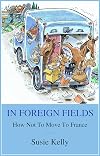
What starts out as your typical "I bought a ruin in France" book quickly evolves into a romp into the crazy people the author meets and has to deal with on a daily basis.
Sure, everyone wants to find that needle in the haystack old ruin in France/Italy/Spain, and easily restore it to a beautiful estate, where one can sit and watch the sunsets while drinking incredible wine. The author did too, except she bought what, on a good day, probably should have been condemned. And then, with the show more financial crisis, quickly found herself out of money.
Choosing to stay in France with the home, while her husband returned to England to work, she valiantly attempts to put the home together. Dealing with unscrupulous agents and construction workers almost makes her give up. BUT...then you throw in the hodge-podge of ridiculously crazy neighbors (mostly also expats), and you really have a odd story to tell!
I don't know how the author survived the experience. I hope that now she has found it worthwhile. I know that it makes me hesitant to try this myself. show less
Sure, everyone wants to find that needle in the haystack old ruin in France/Italy/Spain, and easily restore it to a beautiful estate, where one can sit and watch the sunsets while drinking incredible wine. The author did too, except she bought what, on a good day, probably should have been condemned. And then, with the show more financial crisis, quickly found herself out of money.
Choosing to stay in France with the home, while her husband returned to England to work, she valiantly attempts to put the home together. Dealing with unscrupulous agents and construction workers almost makes her give up. BUT...then you throw in the hodge-podge of ridiculously crazy neighbors (mostly also expats), and you really have a odd story to tell!
I don't know how the author survived the experience. I hope that now she has found it worthwhile. I know that it makes me hesitant to try this myself. show less

Susie Kelly has the gift of an extraordinary memory. We may, in theory, all have this gift. And we may, in theory, all remember — even if only in our dreams.
But Susie Kelly has an additional gift. She has the ability not only to remember, but also to give verbal expression to those memories in extraordinary form.
If you, as a potential reader — and I use that word “potential” advisedly — are not grabbed hook, line and sinker by the first few sentences, move on. Choose another book. show more This one is not for you.
But if you are hooked, hold on — and ride this story for the life of it.
I would be hard pressed to call Susie Kelly a ‘stylist’ — at least not in the traditional sense of the word (although what follows immediately might well prove the exception to my little rule). Nor would I call her a prominent punctuationalist. No, Susie’s style is in the choice of her details to remember and relate, and Susie’s punctuation is in the punctilio of those details.
“I’ll never forget sailing through the Suez Canal. Silhouettes of camels, donkeys, men and children glided by on the palmy sandbanks as the sun folded itself from a brilliant red ball into a sliver that slid gracefully from sight into the blackness of the night.” (Chapter 2)
Reading Chapter One, I’m transported to perhaps my favorite animated video of all time — also British — titled “The Snowman” (1982). If fellow Americans have never seen this video, I can’t stress enough how brilliant and memorable the execution of it is. Comparably brilliant and memorable is the prose of Susie Kelly’s first chapter. If you want to get an idea of what things were like for a young child in war-tinged Britain and on a continent torn and ravaged by the same WWII, this is as good as it gets. We in America who were not soldiers at the time know nothing of these conditions — except through film. We were too busy dancing — then making and exporting to Europe the things that would make us rich. It was a new kind of noblesse oblige — and the noblesse in this case was a burgeoning middle class.
As Spartan as the conditions Susie Kelly describes in post-war Britain might’ve been, one can only venture a guess as to how sub-Spartan they must’ve been on the Continent — in any case, probably too subterranean-Spartan to even venture pen to paper (if either of these two was even available at the time).
Quite apart from rendering these expert descriptions of post-war Britain in the first half of her novel, Ms. Kelly reminds us of how much goes through a child’s mind from first cognition through early adolescence. For those of us who are also parents, this can be a harrowing experience — suggesting, as it does, that the proverbial tabula rasa that is a child’s mind corrects the ‘rasa’ in short order by registering, recording, assimilating, decoding and eventually sitting in judgment long before our little darlings first appear to us to be thinking adults.
We can only hope that those same little darlings don’t possess an ability to recall and report equal to that of Susie Kelly!
I’ll be the first to admit that a lot of the vocabulary, setting and events Ms. Kelly describes during her “Kenya era” would’ve been unintelligible to me had I not first read — then seen the film version of — Isak Dinesen’s Out of Africa many years ago. Is (or was) Susie Kelly the new Baroness Karen von Blixen? No. Susie’s experience of Kenya was not that of a coffee plantation owner; nor was she born of the Danish nobility — and lucky for us, it and she were not! While we may — in fantasy — identify with Meryl Streep or Robert Redford, we can — in reality — identify more judiciously with Susie Kelly. And how refreshing it was to read that a pre-adolescent Susie Kelly herself could’ve fantasized about marrying the young tribesman, Arap Rono, out of sheer joy and appreciation of his own joie de vivre — even if already at that tender and innocent age, she recognized the social injunctions against marrying a black.
Did I say earlier that Ms. Kelly isn’t a stylist? Maybe not. But the following paragraph from just past the midpoint of the novel would certainly suggest that she’s quite an adequate and sufficient sensualist!
“I loved Cinderella. I loved the smell of her breath when she’d eaten hay, and the smell of her flesh when she sweated. I loved the smell of her droppings in the straw. I loved the gentle way she took a mint from between my lips and rummaged for more in my pockets with her soft nose. I loved the way her ears pricked as soon as she saw me cycle into the yard, and the soft whickering noise she made to greet me. I loved the way she galloped out into the field when I turned her loose, her head and tail high in the air, whinnying her pleasure. I loved the way she would see me from a distance and race across the paddock whinnying, jerking to a halt inches before the gate. I loved her spirit, her enthusiasm, her bravery, her willingness, and the wisdom in her dark eyes. I loved the way she stood quietly dozing in the warm afternoons, one hind leg bent, while I sat and read on the straw in her stable.” (Chapter 16)
At about the same point in the book, however, we see how a pair of controlling parents can induce a child into submissiveness. I have to wonder whether this is a foreshadowing of things to come as Susie Kelly grows older…. All we can say at this point is “Thank God for the neighbors!”
In Chapter 17, Susie enters true adolescence — and we shudder at what’s in store (for us as well as for her!). Nature has this funny way of exerting its gravitational pull, and we suspect it’s going to be straight down to the ground. But then, she did name her horse ‘Cinderella’….
At the beginning of Chapter 25, an entirely new chapter in Susie’s life begins: a son is born. If this sounds a bit like that other famous proclamation in Händel’s Messiah, forgive me. But for Susie, we feel, it’s every bit as portentous as she silently invokes the wisdom of Solomon in her battle with an intrusive mother-in-law.
In Formal Logic, you can’t derive a ‘universal’ from an ‘existential.’ In plain English, this means you can’t reach generalized conclusions on the basis of one instance. Good thing, too — because if you could, you might be tempted to conclude, based on Susie’s experience, that marrying into an Italian family would result in slow death by suffocation.
A few chapters later, a second new chapter (in the form of a baby girl) makes its way into Susie’s life. But shortly thereafter, the culture shock of a move back to England — with all of its attendant rudeness of time-cards and work bells for a woman who’d grown used to a gentle, orderly and comforting Kenya — comes knocking at life’s door. As does a husband grown increasingly indifferent, alcohol-centric, and downright hostile.
At this point, I’ll resist the temptation to let a teaser slip through my fingertips and out onto the keyboard and say simply BUY THIS BOOK: you won’t regret it! I Wish I Could Say I Was Sorry is the kind of autobiography we should all write — or at least read.
RRB
3/08/14
Brooklyn, New York, U.S.A. show less
But Susie Kelly has an additional gift. She has the ability not only to remember, but also to give verbal expression to those memories in extraordinary form.
If you, as a potential reader — and I use that word “potential” advisedly — are not grabbed hook, line and sinker by the first few sentences, move on. Choose another book. show more This one is not for you.
But if you are hooked, hold on — and ride this story for the life of it.
I would be hard pressed to call Susie Kelly a ‘stylist’ — at least not in the traditional sense of the word (although what follows immediately might well prove the exception to my little rule). Nor would I call her a prominent punctuationalist. No, Susie’s style is in the choice of her details to remember and relate, and Susie’s punctuation is in the punctilio of those details.
“I’ll never forget sailing through the Suez Canal. Silhouettes of camels, donkeys, men and children glided by on the palmy sandbanks as the sun folded itself from a brilliant red ball into a sliver that slid gracefully from sight into the blackness of the night.” (Chapter 2)
Reading Chapter One, I’m transported to perhaps my favorite animated video of all time — also British — titled “The Snowman” (1982). If fellow Americans have never seen this video, I can’t stress enough how brilliant and memorable the execution of it is. Comparably brilliant and memorable is the prose of Susie Kelly’s first chapter. If you want to get an idea of what things were like for a young child in war-tinged Britain and on a continent torn and ravaged by the same WWII, this is as good as it gets. We in America who were not soldiers at the time know nothing of these conditions — except through film. We were too busy dancing — then making and exporting to Europe the things that would make us rich. It was a new kind of noblesse oblige — and the noblesse in this case was a burgeoning middle class.
As Spartan as the conditions Susie Kelly describes in post-war Britain might’ve been, one can only venture a guess as to how sub-Spartan they must’ve been on the Continent — in any case, probably too subterranean-Spartan to even venture pen to paper (if either of these two was even available at the time).
Quite apart from rendering these expert descriptions of post-war Britain in the first half of her novel, Ms. Kelly reminds us of how much goes through a child’s mind from first cognition through early adolescence. For those of us who are also parents, this can be a harrowing experience — suggesting, as it does, that the proverbial tabula rasa that is a child’s mind corrects the ‘rasa’ in short order by registering, recording, assimilating, decoding and eventually sitting in judgment long before our little darlings first appear to us to be thinking adults.
We can only hope that those same little darlings don’t possess an ability to recall and report equal to that of Susie Kelly!
I’ll be the first to admit that a lot of the vocabulary, setting and events Ms. Kelly describes during her “Kenya era” would’ve been unintelligible to me had I not first read — then seen the film version of — Isak Dinesen’s Out of Africa many years ago. Is (or was) Susie Kelly the new Baroness Karen von Blixen? No. Susie’s experience of Kenya was not that of a coffee plantation owner; nor was she born of the Danish nobility — and lucky for us, it and she were not! While we may — in fantasy — identify with Meryl Streep or Robert Redford, we can — in reality — identify more judiciously with Susie Kelly. And how refreshing it was to read that a pre-adolescent Susie Kelly herself could’ve fantasized about marrying the young tribesman, Arap Rono, out of sheer joy and appreciation of his own joie de vivre — even if already at that tender and innocent age, she recognized the social injunctions against marrying a black.
Did I say earlier that Ms. Kelly isn’t a stylist? Maybe not. But the following paragraph from just past the midpoint of the novel would certainly suggest that she’s quite an adequate and sufficient sensualist!
“I loved Cinderella. I loved the smell of her breath when she’d eaten hay, and the smell of her flesh when she sweated. I loved the smell of her droppings in the straw. I loved the gentle way she took a mint from between my lips and rummaged for more in my pockets with her soft nose. I loved the way her ears pricked as soon as she saw me cycle into the yard, and the soft whickering noise she made to greet me. I loved the way she galloped out into the field when I turned her loose, her head and tail high in the air, whinnying her pleasure. I loved the way she would see me from a distance and race across the paddock whinnying, jerking to a halt inches before the gate. I loved her spirit, her enthusiasm, her bravery, her willingness, and the wisdom in her dark eyes. I loved the way she stood quietly dozing in the warm afternoons, one hind leg bent, while I sat and read on the straw in her stable.” (Chapter 16)
At about the same point in the book, however, we see how a pair of controlling parents can induce a child into submissiveness. I have to wonder whether this is a foreshadowing of things to come as Susie Kelly grows older…. All we can say at this point is “Thank God for the neighbors!”
In Chapter 17, Susie enters true adolescence — and we shudder at what’s in store (for us as well as for her!). Nature has this funny way of exerting its gravitational pull, and we suspect it’s going to be straight down to the ground. But then, she did name her horse ‘Cinderella’….
At the beginning of Chapter 25, an entirely new chapter in Susie’s life begins: a son is born. If this sounds a bit like that other famous proclamation in Händel’s Messiah, forgive me. But for Susie, we feel, it’s every bit as portentous as she silently invokes the wisdom of Solomon in her battle with an intrusive mother-in-law.
In Formal Logic, you can’t derive a ‘universal’ from an ‘existential.’ In plain English, this means you can’t reach generalized conclusions on the basis of one instance. Good thing, too — because if you could, you might be tempted to conclude, based on Susie’s experience, that marrying into an Italian family would result in slow death by suffocation.
A few chapters later, a second new chapter (in the form of a baby girl) makes its way into Susie’s life. But shortly thereafter, the culture shock of a move back to England — with all of its attendant rudeness of time-cards and work bells for a woman who’d grown used to a gentle, orderly and comforting Kenya — comes knocking at life’s door. As does a husband grown increasingly indifferent, alcohol-centric, and downright hostile.
At this point, I’ll resist the temptation to let a teaser slip through my fingertips and out onto the keyboard and say simply BUY THIS BOOK: you won’t regret it! I Wish I Could Say I Was Sorry is the kind of autobiography we should all write — or at least read.
RRB
3/08/14
Brooklyn, New York, U.S.A. show less
You May Also Like


Associated Authors
Statistics
- Works
- 17
- Members
- 277
- Popularity
- #83,812
- Rating
- 3.8
- Reviews
- 17
- ISBNs
- 35
- Languages
- 1
