
Stephen Clarke (1) (1958–)
Author of A Year in the Merde
For other authors named Stephen Clarke, see the disambiguation page.
Series
Works by Stephen Clarke
Tagged
Common Knowledge
- Birthdate
- 1958-10-15
- Gender
- male
- Education
- University of Oxford
- Occupations
- journalist
writer - Agent
- Susanna Lea Associates
- Nationality
- UK
- Birthplace
- St. Albans, Hertfordshire, England, UK
- Places of residence
- Bournemouth, Dorset, England, UK
Glasgow, Scotland, UK
Paris, France - Associated Place (for map)
- UK
Members
Discussions
Found: PLEASE HELP - this ones tough! in Name that Book (January 2025)
Reviews
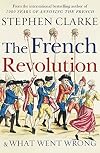
Stephen Clarke, you treasure, where were you when I was reading about the F-Rev ten years ago? He reduces all those dry academic tomes I waded through - purely out of historical interest - into doorstops and kindling. Also, as the title indicates, Clarke takes a fresh view of the Revolution - not apologist exactly, but definitely inclined towards monarchist, which suits me - I always had a soft spot for poor useless Louis XVI - but might piss off a few French or American readers. show more Bonus.
Clarke delivers more or less the same potted history of France, from Louis XIV, the Sun King, who built Versailles, to the beheading of his grandson in 1793 and the extended power struggle that eventually saw Napoleon seize power, but he does so in accessible language and with HUMOUR. I love how Clarke relates the events of over 200 years ago to the present day, too, so that we get 'fake news' during the Revolution.
I'm with Stephen Clarke in that I think Louis XVI was well-intentioned but weak, and Marie Antoinette - who did not say 'Let them eat cake' - was acting a role and then acting up in the face of public opposition, so I appreciate the redistribution of blame presented here. Clarke brilliantly compares Louis to the CEO of a large company, inherited from his father, who sees that his workers are being treated unfairly and tries to make changes, but is blocked by the board of directors, who have their own interests. Who would really want to destroy that company - the owner, or those seeking to take over?
To me, the French Revolution was nothing but an extremely violent extended battle of the egos, in which men like Danton, Robespierre and Marat did away with the possibility of a constitutional monarchy in order to gain power for themselves, only to have the fear and suspicion of the Revolution turn on them. Anyone who romanticises the thousands of French men and women murdered in the name of liberty, equality and fraternity after the fall of the Bastille needs to either read this book or be slapped upside the head with the hardback edition. Incroyable. show less
Clarke delivers more or less the same potted history of France, from Louis XIV, the Sun King, who built Versailles, to the beheading of his grandson in 1793 and the extended power struggle that eventually saw Napoleon seize power, but he does so in accessible language and with HUMOUR. I love how Clarke relates the events of over 200 years ago to the present day, too, so that we get 'fake news' during the Revolution.
I'm with Stephen Clarke in that I think Louis XVI was well-intentioned but weak, and Marie Antoinette - who did not say 'Let them eat cake' - was acting a role and then acting up in the face of public opposition, so I appreciate the redistribution of blame presented here. Clarke brilliantly compares Louis to the CEO of a large company, inherited from his father, who sees that his workers are being treated unfairly and tries to make changes, but is blocked by the board of directors, who have their own interests. Who would really want to destroy that company - the owner, or those seeking to take over?
To me, the French Revolution was nothing but an extremely violent extended battle of the egos, in which men like Danton, Robespierre and Marat did away with the possibility of a constitutional monarchy in order to gain power for themselves, only to have the fear and suspicion of the Revolution turn on them. Anyone who romanticises the thousands of French men and women murdered in the name of liberty, equality and fraternity after the fall of the Bastille needs to either read this book or be slapped upside the head with the hardback edition. Incroyable. show less
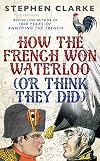
How The French Won Waterloo (Or Think They Did) – Funny and Factual.
With the 200th anniversary of the Battle of Waterloo now a memory to most and to the British a win under Wellington’s guidance which finally put the French and the puny Corsican back in his place, we British know we were the victors! Just do not let the French hear you say that as they believe they won and yes we lost, there is a collective amnesia in France for the last 200 years.
As Stephen Clarke shows throughout this show more delightfully funny but factual book the French do not like to see their ultimate hero cast as a failure at Waterloo. Even Napoleon wrote after the battle that he won and that the English cheated, as he sat in exile on an obscure British territory in the middle of the Atlantic Ocean. It is 200 years since Napoleon set off for Saint Helena, and as Clarke explains his stature has never stopped growing in France, Victor Hugo said of him a case of ‘losing the field but keeping control of history.’
This book is a wonderful examination of that keeping control of history and the collective denial of the French who were there that they lost of the battlefield. The French political, education, military systems are deeply based on the Napoleonic codes even today, when he lost at Waterloo even the Arc de Triomphe had not been completed but the boulevards had! Even today the French President life in Napoleon’s Palace, sits in his chairs and eats from his table.
French patriotism does not allow them to admit that they lost at Waterloo from Victor Hugo to the recent French Prime Minister Dominique de Villepin all state that it was the French that won the moral victory. Villepin stated ‘This defeat shines with the aura of victory’ and Hugo in Les Miserable wrote ‘What was Waterloo? A victory? No, a lottery, won by Europe and paid for by France.’ Proof that denial can last more than a life time but for 200 years and will continue.
At the same time as this tongue in cheek look at Waterloo there are plenty of historical facts packed in amongst the pages some of which you cannot help but admire Napoleon’s work as a leader and commander. Such as he was able to raise an army of force between March and June 1815 of 413,000 men to guard against invaders and these were mobilised and ready to act.
Again one cannot disagree with the fact that on all sides at Waterloo it took super human courage and stoicism (or plain stupidity) to fight a battle in which the main tactic of both sides was to stand up in non-camouflaged uniforms and let the enemy fire at you, or charging armour without anything that was bullet proof right in to the mouth of canon that was firing right at you.
One interesting aside about Waterloo and the weather, it was raining in June 1815, and this came as a surprise to the French blaming God for being against them with the weather. But if they had done their research they would have found that June has the fourth highest amount of rainfall in Belgium so turning those fields in Flanders in to a quagmire and rivers of mud. It cannot be said we learnt the lesson of history of Flanders, rain and mud 100 years later. In fact Napoleons canons attempted to pound the British lines but most of his cannonballs settled in the mud and did nothing.
Out of the 80,000 books that have examined every inch of the battle at Waterloo, How The French Won Waterloo is probably the most interesting and funny making the subject seem almost fun but not hiding the harsh realities of war. Sometimes a student needs to remember facts but as a history graduate I tend to remember the funnier stories as it always sparks my memory towards the actual facts. This book is fun, well written and a very welcome addition to the Waterloo canon and I am sure there are plenty of people who will smile all the way throughout the book. show less
With the 200th anniversary of the Battle of Waterloo now a memory to most and to the British a win under Wellington’s guidance which finally put the French and the puny Corsican back in his place, we British know we were the victors! Just do not let the French hear you say that as they believe they won and yes we lost, there is a collective amnesia in France for the last 200 years.
As Stephen Clarke shows throughout this show more delightfully funny but factual book the French do not like to see their ultimate hero cast as a failure at Waterloo. Even Napoleon wrote after the battle that he won and that the English cheated, as he sat in exile on an obscure British territory in the middle of the Atlantic Ocean. It is 200 years since Napoleon set off for Saint Helena, and as Clarke explains his stature has never stopped growing in France, Victor Hugo said of him a case of ‘losing the field but keeping control of history.’
This book is a wonderful examination of that keeping control of history and the collective denial of the French who were there that they lost of the battlefield. The French political, education, military systems are deeply based on the Napoleonic codes even today, when he lost at Waterloo even the Arc de Triomphe had not been completed but the boulevards had! Even today the French President life in Napoleon’s Palace, sits in his chairs and eats from his table.
French patriotism does not allow them to admit that they lost at Waterloo from Victor Hugo to the recent French Prime Minister Dominique de Villepin all state that it was the French that won the moral victory. Villepin stated ‘This defeat shines with the aura of victory’ and Hugo in Les Miserable wrote ‘What was Waterloo? A victory? No, a lottery, won by Europe and paid for by France.’ Proof that denial can last more than a life time but for 200 years and will continue.
At the same time as this tongue in cheek look at Waterloo there are plenty of historical facts packed in amongst the pages some of which you cannot help but admire Napoleon’s work as a leader and commander. Such as he was able to raise an army of force between March and June 1815 of 413,000 men to guard against invaders and these were mobilised and ready to act.
Again one cannot disagree with the fact that on all sides at Waterloo it took super human courage and stoicism (or plain stupidity) to fight a battle in which the main tactic of both sides was to stand up in non-camouflaged uniforms and let the enemy fire at you, or charging armour without anything that was bullet proof right in to the mouth of canon that was firing right at you.
One interesting aside about Waterloo and the weather, it was raining in June 1815, and this came as a surprise to the French blaming God for being against them with the weather. But if they had done their research they would have found that June has the fourth highest amount of rainfall in Belgium so turning those fields in Flanders in to a quagmire and rivers of mud. It cannot be said we learnt the lesson of history of Flanders, rain and mud 100 years later. In fact Napoleons canons attempted to pound the British lines but most of his cannonballs settled in the mud and did nothing.
Out of the 80,000 books that have examined every inch of the battle at Waterloo, How The French Won Waterloo is probably the most interesting and funny making the subject seem almost fun but not hiding the harsh realities of war. Sometimes a student needs to remember facts but as a history graduate I tend to remember the funnier stories as it always sparks my memory towards the actual facts. This book is fun, well written and a very welcome addition to the Waterloo canon and I am sure there are plenty of people who will smile all the way throughout the book. show less
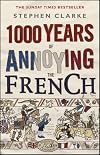
This turned out far better than I expected from the (admittedly amusing) title. Indeed, this not being my period, I could only really find two errors (when talking about Mary, Queen of Scots' imprisonment at Tutbury in Staffordshire, Clarke refers to "nearby" Buxton when it's anything but; and he gets the origin of the Sudeten Germans wrong - but then again, so does nearly everyone else) and one glossing over (his account of the 1956 Suez crisis seems a bit sketchy over the American and show more Russian reactions, and just saying that he was concentrating on the Anglo-French story is no excuse because Clarke went off-piste for essential background earlier).
But these are minor quibbles; after all, no-one's going to use this as their primary source for serious historical research. Are they?
Nearly 700 pages slipped past very easily. It read like a cross between 'Game of Thrones' and 'Horrible Histories'. Ruth Murray's cover art is a delight. show less
But these are minor quibbles; after all, no-one's going to use this as their primary source for serious historical research. Are they?
Nearly 700 pages slipped past very easily. It read like a cross between 'Game of Thrones' and 'Horrible Histories'. Ruth Murray's cover art is a delight. show less

Other reviews can give you the general plot, but it's only a paper-thin scaffolding for Clarke's attitudes towards the French, which he uses in this thinly-veiled fiction. The main character, Paul West, is thoroughly unlikable. He derides the working people of France, and constantly objectifies the women. There are very few redeeming qualities about this book. Every once in a great while, Clarke manages to write an effective joke, but most of it is hurtful or sleazy.
Lists
Awards

You May Also Like


Associated Authors
Statistics
- Works
- 17
- Members
- 4,951
- Popularity
- #5,071
- Rating
- 3.4
- Reviews
- 112
- ISBNs
- 212
- Languages
- 12
- Favorited
- 4
