
Craig Shirley
Author of December 1941: 31 Days that Changed America and Saved the World
About the Author
Craig Shirley is the author of Reagan Rising, Rendezvous with Destiny, Reagan's Revolution, Last Act, and the New York Times bestseller December 1941. He is a regular commentator throughout the media and a contributor to national publications, the Visiting Reagan Scholar at Eureka College, Reagan's show more alma mater, and lectures often at the Reagan Library and the Reagan Ranch. He and his wife, Zorine, live in Virginia. show less
Works by Craig Shirley
Rendezvous with Destiny: Ronald Reagan and the Campaign That Changed America (2009) 125 copies, 1 review
Reagan's Revolution: The Untold Story of the Campaign That Started It All (2005) 111 copies, 2 reviews
Tagged
Common Knowledge
- Gender
- male
- Occupations
- public relations
- Places of residence
- Lancaster, Virginia, USA
- Associated Place (for map)
- Lancaster, Virginia
Members
Reviews
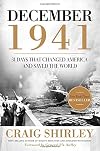
A really good look at the run-up to World War II and America's reaction immediately after.
Shirley combs through news reports, memos and memories to reconstruct December 1941, day by day, just before the attack to America's first two weeks of war.
I was struck by how the U.S. was already on war footing before the attack. Not just the military, but popular culture, too. He recounts war-oriented advertising, which surprised me since the U.S. is always portrayed as intensely isolationist before show more Pearl Harbor.
A lot of great info here, presented day by day, the same way it was lived.
My only nitpick with the book was the typos. They were all over the book, and redundancies in writing, too. Didn't bother me enough to make me stop reading, just derailed me from time to time.
More reviews at my WordPress site, Ralphsbooks. show less
Shirley combs through news reports, memos and memories to reconstruct December 1941, day by day, just before the attack to America's first two weeks of war.
I was struck by how the U.S. was already on war footing before the attack. Not just the military, but popular culture, too. He recounts war-oriented advertising, which surprised me since the U.S. is always portrayed as intensely isolationist before show more Pearl Harbor.
A lot of great info here, presented day by day, the same way it was lived.
My only nitpick with the book was the typos. They were all over the book, and redundancies in writing, too. Didn't bother me enough to make me stop reading, just derailed me from time to time.
More reviews at my WordPress site, Ralphsbooks. show less
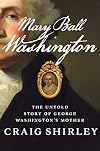
Not surprisingly there is little source material for Mary Ball Washington, hence the majority of this book does not directly concern her.
I thought the book was rather slow and aspects were obviously inserted in great detail to fill out the narrative. Perhaps the best example would be the section devoted to genealogies which went into a dizzying array of minutia.
Perhaps this book would have more appeal to those with no real background in the American Revolution. However, for those that are show more well versed, there is no new information to add other than that specific to Mary Ball- which could have been discussed in a few chapters. show less
I thought the book was rather slow and aspects were obviously inserted in great detail to fill out the narrative. Perhaps the best example would be the section devoted to genealogies which went into a dizzying array of minutia.
Perhaps this book would have more appeal to those with no real background in the American Revolution. However, for those that are show more well versed, there is no new information to add other than that specific to Mary Ball- which could have been discussed in a few chapters. show less
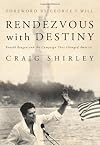
If you enjoy politics and the give and take of political campaigns, this is a book for you. If you like President Reagan, this is defintely a book for you. It covers in full detal the 1980 presidential campaign, when Reagan trounced President Carter and changed radically the national landscape for a generation. Ironically, changing it in the opposite way of a President that Reagan admired, Franklin Roosevelt.
It's a great book, but not for everyone. Its 600+ pages, densely written in very show more small type, go into extreme detail on all the major and minor events occurring within each of the campaigners' teams towards the Reagan's eventual victory. Although now, with the benefit of hindsight, we know that Reagan caused a crushing defeat of Carter, the author paints vividly the fact that throughout that year, 1980, the results were far from assured. Only Reagan had the confidence, most of the time, of forging ahead because he knew and felt the way most voters felt.
The author reconstructs, as far as it's possible, conversations and events throughout the year-long campaign. He gives vivid portraits of a large number of characters, starting with the three main candidates who were in the November ballot (who remembers Anderson?) and the campaign managers, advisors, interlopers, etc. Shirley, the author, also brings forth the humanity of the candidates, especially Reagan and Carter.
Carig Shirley, the author, reinforces and gives further evidence that President Reagan was a very smart, humble, and shrewd politician. And clarifies his innate ability to relate to the 'common man' who knew well the aspirations and desires of the vast majority of Americans. It is not by sleight of hand that he gained the support a great mix of people, but rather his understanding that the only way that the Republican party would succeed was by opening up to all- and stopping its elitist attitudes. Shirley points out that the high echelons of the party, the establishment, disliked him. But Reagan was able to overrun them.
At the same time, Shirley paints Carter as a rather sanctimonious, even hypocritical, individual who failed to understand the mood of the country. He had succeeded over Ford in '76 mostly as a rejection of Ford perhaps. But his inability to govern, and understand the governed, led to his downfall.
The author also shows President Bush, the father, as a tough campaigner who initially disliked Reagan. In fact, the feeling was mutual through the primary campaign when they opposed each other. Reagan manages to outmaneuver Bush and gets the nomination. After choosing Bush as his running mate, the come to like and respect each other.
Overall I found this book, to use a cliche, a page turner. Although very long it kept my attention throughout- I couldn't put it down. show less
It's a great book, but not for everyone. Its 600+ pages, densely written in very show more small type, go into extreme detail on all the major and minor events occurring within each of the campaigners' teams towards the Reagan's eventual victory. Although now, with the benefit of hindsight, we know that Reagan caused a crushing defeat of Carter, the author paints vividly the fact that throughout that year, 1980, the results were far from assured. Only Reagan had the confidence, most of the time, of forging ahead because he knew and felt the way most voters felt.
The author reconstructs, as far as it's possible, conversations and events throughout the year-long campaign. He gives vivid portraits of a large number of characters, starting with the three main candidates who were in the November ballot (who remembers Anderson?) and the campaign managers, advisors, interlopers, etc. Shirley, the author, also brings forth the humanity of the candidates, especially Reagan and Carter.
Carig Shirley, the author, reinforces and gives further evidence that President Reagan was a very smart, humble, and shrewd politician. And clarifies his innate ability to relate to the 'common man' who knew well the aspirations and desires of the vast majority of Americans. It is not by sleight of hand that he gained the support a great mix of people, but rather his understanding that the only way that the Republican party would succeed was by opening up to all- and stopping its elitist attitudes. Shirley points out that the high echelons of the party, the establishment, disliked him. But Reagan was able to overrun them.
At the same time, Shirley paints Carter as a rather sanctimonious, even hypocritical, individual who failed to understand the mood of the country. He had succeeded over Ford in '76 mostly as a rejection of Ford perhaps. But his inability to govern, and understand the governed, led to his downfall.
The author also shows President Bush, the father, as a tough campaigner who initially disliked Reagan. In fact, the feeling was mutual through the primary campaign when they opposed each other. Reagan manages to outmaneuver Bush and gets the nomination. After choosing Bush as his running mate, the come to like and respect each other.
Overall I found this book, to use a cliche, a page turner. Although very long it kept my attention throughout- I couldn't put it down. show less
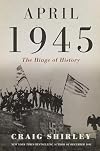
This was a really good, but different kind of book. The author goes from one thing to another, whether its grabbing headlines, or completely changing the subject. Either way, it just flows a lot easier than you would think. I'm sure there is a better word for it, but I haven't really read anything like this before. Enjoyed it tremendously.
Awards

You May Also Like


Statistics
- Works
- 9
- Members
- 885
- Popularity
- #28,943
- Rating
- 3.5
- Reviews
- 15
- ISBNs
- 40