
Amity Shlaes
Author of The Forgotten Man: A New History of the Great Depression
About the Author
Amity Shlaes is the author of tour New York Times bestsellers: The Forgotten Man: A New History of the Great Depression, The Forgotten Man graphic edition, Coolidge, and The Greedy Hand: How Taxes Drive Americans Crazy. Shlaes chairs the board of the Calvin Coolidge Presidential Foundation and the show more Manhattan Institute's Hayek Book Prize, and serves as a scholar at the King's College. Twitter: @amityshlaes show less
Works by Amity Shlaes
The Forgotten Man: A New History of the Great Depression (Graphic Edition) (2014) 88 copies, 2 reviews
Associated Works
It's Not as Bad as You Think: Why Capitalism Trumps Fear and the Economy Will Thrive (2009) — Foreword, some editions — 31 copies
Tagged
Common Knowledge
- Canonical name
- Shlaes, Amity
- Legal name
- Shlaes, Amity Ruth
- Birthdate
- 1960-09-10
- Gender
- female
- Education
- Yale University (BA|English|1982)
- Occupations
- author
columnist
editor
professor (economics) - Organizations
- New York University (Adjunct Associate Professor of Economic History)
Calvin Coolidge Memorial Foundation (Trustee) - Awards and honors
- Frederic Bastiat Prize (2002)
JP Morgan Fellow for finance and economy at the American Academy in Berlin (2003)
Bradley lecture at the American Enterprise Institute (2004)
Newswomen's Club of New York's Front Page Award (2007)
Deadline Club award (Opinion writing, 2007) - Relationships
- Lipsky, Seth (husband)
- Nationality
- USA
- Associated Place (for map)
- USA
Members
Reviews

A great retelling of the Great Depression in a narrative format without all the gilded dross that has stuck to it because of the sheen of FDR and liberalism. The history of the Great Depression has been skewed by liberal academe since liberal academicians helped Brain Trust the thing since its inception. The standard history I got growing up was: (1) Republicans ruined the economy with excess and no regulations in the 1920s; (2) Hoover did nothing because he hated government action and show more regulation; (3) FDR came in and saved the day with the New Deal, regulating business and banks, creating jobs, and saving lives; (4) FDR ended the Great Depression. I even got this in my introductory US history classes in college. How prevalent is the mythology? When I pointed out in the US history intro class I taught that the unemployment rate never reached 1929 levels until World War II, my graduate teaching assistant told a friend (but not me), "I've never heard anyone say the New Deal didn't work."
Hmm.
Well, by any objective economic measure, it didn't work. So why is the New Deal taught as a success? Why is FDR beloved? Why do progressive liberals (or collectivist liberals, as opposed to old-fashioned individual liberty-liberalism) still idolize the experimentation, regulation, and programs of the New Deal?
Shlaes begins her book with a vignette that sounds like 1929/1930, i.e., the start of the Depression. A suicide. Hunger. Business failures. Mocking of the Secretary of the Treasury. Climbing unemployment.
The kicker? It's a vignette of 1937. Not 1929.
Shlaes begins her book in 1927, with Hoover and a cast of characters, before shifting to a progressive junket to visit Stalin's Soviet Union. The import? The love progressives (Hoover and the future Brain Trusters) have for planning, engineering, experimentation, government regulation and action, etc. The lines she draws between Stalin (and Mussolini) and liberal programs is subtle and inferential (not blatantly and polemically drawn, like Jonah Goldberg's Liberal Fascism), but unmistakable. She then covers the stock market crash of 1929, and thoroughly, but not deeply, talks about some causes of the Great Depression. Hoover is not the do-nothing he is stereotypically portrayed as, but he fails nonetheless.
FDR comes on the scene and with the socialistic Brain Trusters reorganizes the government, the economy, and society. Unlike the liberal platitude, FDR did not intend to "save capitalism," he meant to upend it. His tinkering with gold prices delayed recovery. His tax hikes delayed recovery. His anti-business and anti-businessman rhetoric delayed recovery. His NRA delayed recovery. His AAA delayed recovery. His TVA delayed recovery. The very chaotic, unpredictable, and contradictory motives and actions of the dozens and dozens of New Deal programs, regulations, and idiocy delayed recovery. Customers can't choose the chickens they want to butcher? Tax-free utility companies competing against private enterprise? It is all presented as chaotic and arbitrary. FDR's clear aim is to take control of the machinery of power and ensure future political victories for him and his brand of Democrat. FDR shamelessly changes his tune come election time, only to renege on promises and rhetoric when it suits him. He pulls black Americans and farmers into the party, while not truly helping them at all. He gives unions guaranteed rights and bargaining power, which hurts employment. He shamelessly purchases votes through Social Security and make-work welfare jobs (like the PWA, WPA, CCC, etc.).
Shlaes tells this whole story by centering on characters. Wendell Wilkie, Andrew Mellon, Bill W. (of Alcoholics Anonymous), Rexford Tugwell, black preacher Father Divine, etc. This is good in some instances, like viewing the inner workings of the New Deal through the eyes of Rex Tugwell. The book also serves as a biography, pretty much, of Wilkie. Looking at the Great Depression through the lens of how ordinary and extraordinary people puts a human touch on the Depression that is often lacking past 1932/1933 in standard works. (That is, most books talk about how people felt in the the baddest early years, then act as if call things are peachy after FDR came into office and you don't really hear anything bad from the people after that.) You get the impression that not everybody loved the New Deal or thought FDR was all that grand. Some of the people in the narrative, however, are odd inclusions. Bill W. and Father Divine seem thrown in as afterthoughts. Remove the material about them and it is still the same book with the same point.
The point? The New Deal may have had some bright spots, but the over-weening government control and experimentation it created did nothing to ever pull the economy out of the Depression. Take the bit about the Roosevelt Recession, the inexplicable "recession within a depression" which you could in no way blame on Republican policies and so-called plutocratic oligarchs (p. 336ff.). New Deal policies caused it (and it wasn't lack of spending, libs). The Fed extinguished capital; NRA and then Wagner Act caused wage increases took capital from business and caused inflationary prices; etc. Governmental tinkering might have some benefits, but letting the markets be the markets seem to have the greatest benefits. (Reagan and Thatcher proved that, right?) It is craziness and change and a heavy thumb that hurt economies.
Well-researched, decent pictures. Fine bibliography and research, but a lack of proper footnotes makes it hard to know where everything is coming from. There is the dumb "quote to note" system modern publishing houses seem to adore, but they are unhelpful.
Five-star reviews on Amazon.com will provide you with finer, more specific reasons for liking this important book.
[The paperback edition throws in an afterword that starts off seeming to be an academic rejoinder to critics of the book, but falls flat. Not wrong, just flat.] show less
Hmm.
Well, by any objective economic measure, it didn't work. So why is the New Deal taught as a success? Why is FDR beloved? Why do progressive liberals (or collectivist liberals, as opposed to old-fashioned individual liberty-liberalism) still idolize the experimentation, regulation, and programs of the New Deal?
Shlaes begins her book with a vignette that sounds like 1929/1930, i.e., the start of the Depression. A suicide. Hunger. Business failures. Mocking of the Secretary of the Treasury. Climbing unemployment.
The kicker? It's a vignette of 1937. Not 1929.
Shlaes begins her book in 1927, with Hoover and a cast of characters, before shifting to a progressive junket to visit Stalin's Soviet Union. The import? The love progressives (Hoover and the future Brain Trusters) have for planning, engineering, experimentation, government regulation and action, etc. The lines she draws between Stalin (and Mussolini) and liberal programs is subtle and inferential (not blatantly and polemically drawn, like Jonah Goldberg's Liberal Fascism), but unmistakable. She then covers the stock market crash of 1929, and thoroughly, but not deeply, talks about some causes of the Great Depression. Hoover is not the do-nothing he is stereotypically portrayed as, but he fails nonetheless.
FDR comes on the scene and with the socialistic Brain Trusters reorganizes the government, the economy, and society. Unlike the liberal platitude, FDR did not intend to "save capitalism," he meant to upend it. His tinkering with gold prices delayed recovery. His tax hikes delayed recovery. His anti-business and anti-businessman rhetoric delayed recovery. His NRA delayed recovery. His AAA delayed recovery. His TVA delayed recovery. The very chaotic, unpredictable, and contradictory motives and actions of the dozens and dozens of New Deal programs, regulations, and idiocy delayed recovery. Customers can't choose the chickens they want to butcher? Tax-free utility companies competing against private enterprise? It is all presented as chaotic and arbitrary. FDR's clear aim is to take control of the machinery of power and ensure future political victories for him and his brand of Democrat. FDR shamelessly changes his tune come election time, only to renege on promises and rhetoric when it suits him. He pulls black Americans and farmers into the party, while not truly helping them at all. He gives unions guaranteed rights and bargaining power, which hurts employment. He shamelessly purchases votes through Social Security and make-work welfare jobs (like the PWA, WPA, CCC, etc.).
Shlaes tells this whole story by centering on characters. Wendell Wilkie, Andrew Mellon, Bill W. (of Alcoholics Anonymous), Rexford Tugwell, black preacher Father Divine, etc. This is good in some instances, like viewing the inner workings of the New Deal through the eyes of Rex Tugwell. The book also serves as a biography, pretty much, of Wilkie. Looking at the Great Depression through the lens of how ordinary and extraordinary people puts a human touch on the Depression that is often lacking past 1932/1933 in standard works. (That is, most books talk about how people felt in the the baddest early years, then act as if call things are peachy after FDR came into office and you don't really hear anything bad from the people after that.) You get the impression that not everybody loved the New Deal or thought FDR was all that grand. Some of the people in the narrative, however, are odd inclusions. Bill W. and Father Divine seem thrown in as afterthoughts. Remove the material about them and it is still the same book with the same point.
The point? The New Deal may have had some bright spots, but the over-weening government control and experimentation it created did nothing to ever pull the economy out of the Depression. Take the bit about the Roosevelt Recession, the inexplicable "recession within a depression" which you could in no way blame on Republican policies and so-called plutocratic oligarchs (p. 336ff.). New Deal policies caused it (and it wasn't lack of spending, libs). The Fed extinguished capital; NRA and then Wagner Act caused wage increases took capital from business and caused inflationary prices; etc. Governmental tinkering might have some benefits, but letting the markets be the markets seem to have the greatest benefits. (Reagan and Thatcher proved that, right?) It is craziness and change and a heavy thumb that hurt economies.
Well-researched, decent pictures. Fine bibliography and research, but a lack of proper footnotes makes it hard to know where everything is coming from. There is the dumb "quote to note" system modern publishing houses seem to adore, but they are unhelpful.
Five-star reviews on Amazon.com will provide you with finer, more specific reasons for liking this important book.
[The paperback edition throws in an afterword that starts off seeming to be an academic rejoinder to critics of the book, but falls flat. Not wrong, just flat.] show less
For more reviews and bookish posts visit: https://www.ManOfLaBook.com
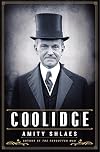
Coolidge by Amity Shales is a biography of Calvin Coolidge, America’s 30th President. Ms. Shales is a columnist and a chair on the board of the Calvin Coolidge Memorial Foundation.
Calvin Coolidge, “Silent Cal”, is remembered for his precise and short communication, as well as harsh frugality. As the nation reeled from the debts of World War I, and was shaken by the death of President Warren G. Harding, President show more Coolidge’s leadership was put to a test.
Coolidge by Amity Shales is researched very well and gives a lot of information. The author is certainly an excellent researcher, but I wish she wrote a less scholarly narrative and focused on telling the story of the life of Coolidge himself. The narrative changes threads without drawing any connections between them. I enjoy the connections of seemingly separate subjects; I feel that they explain a biography’s subject better than most large accomplishments or aspirations.
The narrative is very linear and careful to be accurate and save the character of Calvin Coolidge. However, it comes out stiff and sterile like a schedule punctuated with appointments in the fabric of time, on the thread of Coolidge’s lifeline.
The book shines with the author writes about Coolidge’s economics. She makes excellent arguments defending his tax policies and budgetary choices.
This is a strange biography, both tired and admirable. There are marvelous anecdotes, and it’s excellently written, however, Coolidge himself comes off as a caricature without familiarizing the character of this fascinating man with the reader. show less
Coolidge by Amity Shales is a biography of Calvin Coolidge, America’s 30th President. Ms. Shales is a columnist and a chair on the board of the Calvin Coolidge Memorial Foundation.
Calvin Coolidge, “Silent Cal”, is remembered for his precise and short communication, as well as harsh frugality. As the nation reeled from the debts of World War I, and was shaken by the death of President Warren G. Harding, President show more Coolidge’s leadership was put to a test.
Coolidge by Amity Shales is researched very well and gives a lot of information. The author is certainly an excellent researcher, but I wish she wrote a less scholarly narrative and focused on telling the story of the life of Coolidge himself. The narrative changes threads without drawing any connections between them. I enjoy the connections of seemingly separate subjects; I feel that they explain a biography’s subject better than most large accomplishments or aspirations.
The narrative is very linear and careful to be accurate and save the character of Calvin Coolidge. However, it comes out stiff and sterile like a schedule punctuated with appointments in the fabric of time, on the thread of Coolidge’s lifeline.
The book shines with the author writes about Coolidge’s economics. She makes excellent arguments defending his tax policies and budgetary choices.
This is a strange biography, both tired and admirable. There are marvelous anecdotes, and it’s excellently written, however, Coolidge himself comes off as a caricature without familiarizing the character of this fascinating man with the reader. show less

"...socialism was a process, something you built toward, a utopia you aimed for. The idea justified any protest, any shift in target. As long as socialism was never complete, as long as socialists were still protesting and building, no one could dismiss socialism. That was the beauty of it."
The quote above could describe the philosophy of today's political Left. But it captures one of the themes of Great Society: A New History, Amity Shlaes eye-opening history of the ambitious social show more programs of the 1960s.
Although I was just a boy, I remember the early 1960s as a time of great optimism, especially with the success of the U.S. space program and the race to the Moon. But for the leading public figures of the day, this optimism bordered on hubris, as many believed that the primary purpose of government was to cure society's ills through top-down planning. Some also had a love affair with European-style democratic socialism, and wanted to implement a similar system in the U.S. With a seemingly endless stream of new programs coming out of Washington, there was a concerted push not just for equality of opportunity, but equality of outcomes. It began a new era of federal overreach that is still with us today.
As someone who lived through the times, but was too young to fully understand the events as they unfolded, I found Great Society: A New History very informative, and I highly recommend it to anyone interested in the history of the 1960s. show less
The quote above could describe the philosophy of today's political Left. But it captures one of the themes of Great Society: A New History, Amity Shlaes eye-opening history of the ambitious social show more programs of the 1960s.
Although I was just a boy, I remember the early 1960s as a time of great optimism, especially with the success of the U.S. space program and the race to the Moon. But for the leading public figures of the day, this optimism bordered on hubris, as many believed that the primary purpose of government was to cure society's ills through top-down planning. Some also had a love affair with European-style democratic socialism, and wanted to implement a similar system in the U.S. With a seemingly endless stream of new programs coming out of Washington, there was a concerted push not just for equality of opportunity, but equality of outcomes. It began a new era of federal overreach that is still with us today.
As someone who lived through the times, but was too young to fully understand the events as they unfolded, I found Great Society: A New History very informative, and I highly recommend it to anyone interested in the history of the 1960s. show less

A great retelling of the Great Depression in a narrative format without all the gilded dross that has stuck to it because of the sheen of FDR and liberalism. The history of the Great Depression has been skewed by liberal academe since liberal academicians helped Brain Trust the thing since its inception. The standard history I got growing up was: (1) Republicans ruined the economy with excess and no regulations in the 1920s; (2) Hoover did nothing because he hated government action and show more regulation; (3) FDR came in and saved the day with the New Deal, regulating business and banks, creating jobs, and saving lives; (4) FDR ended the Great Depression. I even got this in my introductory US history classes in college. How prevalent is the mythology? When I pointed out in the US history intro class I taught that the unemployment rate never reached 1929 levels until World War II, my graduate teaching assistant told a friend (but not me), "I've never heard anyone say the New Deal didn't work."
Hmm.
Well, by any objective economic measure, it didn't work. So why is the New Deal taught as a success? Why is FDR beloved? Why do progressive liberals (or collectivist liberals, as opposed to old-fashioned individual liberty-liberalism) still idolize the experimentation, regulation, and programs of the New Deal?
Shlaes begins her book with a vignette that sounds like 1929/1930, i.e., the start of the Depression. A suicide. Hunger. Business failures. Mocking of the Secretary of the Treasury. Climbing unemployment.
The kicker? It's a vignette of 1937. Not 1929.
Shlaes begins her book in 1927, with Hoover and a cast of characters, before shifting to a progressive junket to visit Stalin's Soviet Union. The import? The love progressives (Hoover and the future Brain Trusters) have for planning, engineering, experimentation, government regulation and action, etc. The lines she draws between Stalin (and Mussolini) and liberal programs is subtle and inferential (not blatantly and polemically drawn, like Jonah Goldberg's Liberal Fascism), but unmistakable. She then covers the stock market crash of 1929, and thoroughly, but not deeply, talks about some causes of the Great Depression. Hoover is not the do-nothing he is stereotypically portrayed as, but he fails nonetheless.
FDR comes on the scene and with the socialistic Brain Trusters reorganizes the government, the economy, and society. Unlike the liberal platitude, FDR did not intend to "save capitalism," he meant to upend it. His tinkering with gold prices delayed recovery. His tax hikes delayed recovery. His anti-business and anti-businessman rhetoric delayed recovery. His NRA delayed recovery. His AAA delayed recovery. His TVA delayed recovery. The very chaotic, unpredictable, and contradictory motives and actions of the dozens and dozens of New Deal programs, regulations, and idiocy delayed recovery. Customers can't choose the chickens they want to butcher? Tax-free utility companies competing against private enterprise? It is all presented as chaotic and arbitrary. FDR's clear aim is to take control of the machinery of power and ensure future political victories for him and his brand of Democrat. FDR shamelessly changes his tune come election time, only to renege on promises and rhetoric when it suits him. He pulls black Americans and farmers into the party, while not truly helping them at all. He gives unions guaranteed rights and bargaining power, which hurts employment. He shamelessly purchases votes through Social Security and make-work welfare jobs (like the PWA, WPA, CCC, etc.).
Shlaes tells this whole story by centering on characters. Wendell Wilkie, Andrew Mellon, Bill W. (of Alcoholics Anonymous), Rexford Tugwell, black preacher Father Divine, etc. This is good in some instances, like viewing the inner workings of the New Deal through the eyes of Rex Tugwell. The book also serves as a biography, pretty much, of Wilkie. Looking at the Great Depression through the lens of how ordinary and extraordinary people puts a human touch on the Depression that is often lacking past 1932/1933 in standard works. (That is, most books talk about how people felt in the the baddest early years, then act as if call things are peachy after FDR came into office and you don't really hear anything bad from the people after that.) You get the impression that not everybody loved the New Deal or thought FDR was all that grand. Some of the people in the narrative, however, are odd inclusions. Bill W. and Father Divine seem thrown in as afterthoughts. Remove the material about them and it is still the same book with the same point.
The point? The New Deal may have had some bright spots, but the over-weening government control and experimentation it created did nothing to ever pull the economy out of the Depression. Take the bit about the Roosevelt Recession, the inexplicable "recession within a depression" which you could in no way blame on Republican policies and so-called plutocratic oligarchs (p. 336ff.). New Deal policies caused it (and it wasn't lack of spending, libs). The Fed extinguished capital; NRA and then Wagner Act caused wage increases took capital from business and caused inflationary prices; etc. Governmental tinkering might have some benefits, but letting the markets be the markets seem to have the greatest benefits. (Reagan and Thatcher proved that, right?) It is craziness and change and a heavy thumb that hurt economies.
Well-researched, decent pictures. Fine bibliography and research, but a lack of proper footnotes makes it hard to know where everything is coming from. There is the dumb "quote to note" system modern publishing houses seem to adore, but they are unhelpful.
Five-star reviews on Amazon.com will provide you with finer, more specific reasons for liking this important book.
[The paperback edition throws in an afterword that starts off seeming to be an academic rejoinder to critics of the book, but falls flat. Not wrong, just flat.] show less
Hmm.
Well, by any objective economic measure, it didn't work. So why is the New Deal taught as a success? Why is FDR beloved? Why do progressive liberals (or collectivist liberals, as opposed to old-fashioned individual liberty-liberalism) still idolize the experimentation, regulation, and programs of the New Deal?
Shlaes begins her book with a vignette that sounds like 1929/1930, i.e., the start of the Depression. A suicide. Hunger. Business failures. Mocking of the Secretary of the Treasury. Climbing unemployment.
The kicker? It's a vignette of 1937. Not 1929.
Shlaes begins her book in 1927, with Hoover and a cast of characters, before shifting to a progressive junket to visit Stalin's Soviet Union. The import? The love progressives (Hoover and the future Brain Trusters) have for planning, engineering, experimentation, government regulation and action, etc. The lines she draws between Stalin (and Mussolini) and liberal programs is subtle and inferential (not blatantly and polemically drawn, like Jonah Goldberg's Liberal Fascism), but unmistakable. She then covers the stock market crash of 1929, and thoroughly, but not deeply, talks about some causes of the Great Depression. Hoover is not the do-nothing he is stereotypically portrayed as, but he fails nonetheless.
FDR comes on the scene and with the socialistic Brain Trusters reorganizes the government, the economy, and society. Unlike the liberal platitude, FDR did not intend to "save capitalism," he meant to upend it. His tinkering with gold prices delayed recovery. His tax hikes delayed recovery. His anti-business and anti-businessman rhetoric delayed recovery. His NRA delayed recovery. His AAA delayed recovery. His TVA delayed recovery. The very chaotic, unpredictable, and contradictory motives and actions of the dozens and dozens of New Deal programs, regulations, and idiocy delayed recovery. Customers can't choose the chickens they want to butcher? Tax-free utility companies competing against private enterprise? It is all presented as chaotic and arbitrary. FDR's clear aim is to take control of the machinery of power and ensure future political victories for him and his brand of Democrat. FDR shamelessly changes his tune come election time, only to renege on promises and rhetoric when it suits him. He pulls black Americans and farmers into the party, while not truly helping them at all. He gives unions guaranteed rights and bargaining power, which hurts employment. He shamelessly purchases votes through Social Security and make-work welfare jobs (like the PWA, WPA, CCC, etc.).
Shlaes tells this whole story by centering on characters. Wendell Wilkie, Andrew Mellon, Bill W. (of Alcoholics Anonymous), Rexford Tugwell, black preacher Father Divine, etc. This is good in some instances, like viewing the inner workings of the New Deal through the eyes of Rex Tugwell. The book also serves as a biography, pretty much, of Wilkie. Looking at the Great Depression through the lens of how ordinary and extraordinary people puts a human touch on the Depression that is often lacking past 1932/1933 in standard works. (That is, most books talk about how people felt in the the baddest early years, then act as if call things are peachy after FDR came into office and you don't really hear anything bad from the people after that.) You get the impression that not everybody loved the New Deal or thought FDR was all that grand. Some of the people in the narrative, however, are odd inclusions. Bill W. and Father Divine seem thrown in as afterthoughts. Remove the material about them and it is still the same book with the same point.
The point? The New Deal may have had some bright spots, but the over-weening government control and experimentation it created did nothing to ever pull the economy out of the Depression. Take the bit about the Roosevelt Recession, the inexplicable "recession within a depression" which you could in no way blame on Republican policies and so-called plutocratic oligarchs (p. 336ff.). New Deal policies caused it (and it wasn't lack of spending, libs). The Fed extinguished capital; NRA and then Wagner Act caused wage increases took capital from business and caused inflationary prices; etc. Governmental tinkering might have some benefits, but letting the markets be the markets seem to have the greatest benefits. (Reagan and Thatcher proved that, right?) It is craziness and change and a heavy thumb that hurt economies.
Well-researched, decent pictures. Fine bibliography and research, but a lack of proper footnotes makes it hard to know where everything is coming from. There is the dumb "quote to note" system modern publishing houses seem to adore, but they are unhelpful.
Five-star reviews on Amazon.com will provide you with finer, more specific reasons for liking this important book.
[The paperback edition throws in an afterword that starts off seeming to be an academic rejoinder to critics of the book, but falls flat. Not wrong, just flat.] show less
Lists
Awards


You May Also Like


Associated Authors
Statistics
- Works
- 8
- Also by
- 2
- Members
- 3,224
- Popularity
- #7,937
- Rating
- 3.8
- Reviews
- 78
- ISBNs
- 40
- Languages
- 1
- Favorited
- 3