
Vandana Singh
Author of Ambiguity Machines and Other Stories
Series
Works by Vandana Singh
Breaking the Bow: Speculative Fiction Inspired by the Ramayana (2012) — Editor; Contributor — 27 copies
Ruminations in an Alien Tongue 4 copies
Delhi [short story] 3 copies
Avatar अवतार: Indian Science Fiction - Fantascienza Indiana (Future Fiction) (Italian Edition) (2019) 2 copies
A Handful Of Rice 2 copies
Shikasta (short story) 2 copies
Oblivion: A Journey 2 copies
Requiem {short story} 1 copy
Hunger [short fiction] 1 copy
Three Tales From Sky River 1 copy
The Wife 1 copy
Associated Works
The Year's Best Science Fiction: Twenty-Second Annual Collection (2005) — Contributor — 578 copies, 11 reviews
The Year's Best Science Fiction: Twenty-Fifth Annual Collection (2008) — Contributor — 511 copies, 3 reviews
Sisters of the Revolution: A Feminist Speculative Fiction Anthology (2015) — Contributor — 345 copies, 8 reviews
So Long Been Dreaming: Postcolonial Science Fiction & Fantasy (2004) — Contributor — 323 copies, 9 reviews
The Year's Best Science Fiction: Twenty-Seventh Annual Collection (2010) — Contributor — 321 copies, 6 reviews
The Year's Best Science Fiction: Thirtieth Annual Collection (2013) — Contributor — 255 copies, 3 reviews
The Year's Best Fantasy and Horror: Seventeenth Annual Collection (2004) — Contributor — 241 copies, 9 reviews
The Year's Best Science Fiction: Thirty-Second Annual Collection (2015) — Contributor — 205 copies, 8 reviews
Loosed upon the World: The Saga Anthology of Climate Fiction (2015) — Contributor — 130 copies, 4 reviews
The Year's Best Science Fiction Vol. 1: The Saga Anthology of Science Fiction 2020 (2020) — Contributor — 109 copies, 7 reviews
Solaris Rising 2: The New Solaris Book of Science Fiction (2013) — Contributor — 74 copies, 6 reviews
The Final Frontier: Stories of Exploring Space, Colonizing the Universe, and First Contact (2018) — Contributor — 72 copies, 4 reviews
The Best Science Fiction and Fantasy of the Year, Volume 13 (2019) — Contributor — 68 copies, 3 reviews
The Apex Book of World SF: Volume 5 (Apex World of Speculative Fiction) (2018) — Contributor — 44 copies, 9 reviews
Visions, Ventures, Escape Velocities: A Collection of Space Futures (2017) — Contributor — 22 copies, 1 review
The Future of Horror: The Collected Solaris Horror Anthologies, featuring House of Fear, Magic and End of the Road (2015) — Contributor — 8 copies
Lightspeed Magazine, Issue 106 • March 2019 (2019) — Contributor, some editions — 6 copies, 1 review
Rabid Transit: Menagerie — Contributor, some editions — 5 copies
Fantasy Fiction: A Writer's Guide and Anthology (Bloomsbury Writer's Guides and Anthologies) (2024) — Contributor — 2 copies
Tagged
Common Knowledge
- Birthdate
- 20th century
- Gender
- female
- Short biography
- science fiction writer
- Nationality
- India
- Birthplace
- New Delhi, India
- Associated Place (for map)
- New Delhi, India
Members
Reviews

From the shirt-eating baby to the paneer-eating tiger - not to mention the eponymous hero - the characters in Vandana Singh's debut children's book are endearingly idiosyncratic, humorously entertaining, and altogether charming. This all-too-brief chapter-book chronicles some of the adventures of Younguncle - a sweet-tempered, open-minded young man, with a horror of being tied down, either to career or wife - who comes to live with his elder brother's family, and quickly becomes the favorite show more companion of his nephew and two nieces. Whether he's rescuing the local dairyman's cow or recovering his great-uncle's stolen horse, Younguncle always seems to know just what to do, resolving crisis after crisis in clever and amusing ways. He even finds a way to extricate his little sister from her engagement to an unexpectedly boorish young man! As Sarita, Ravi and the baby discover, once Youngucle comes to town, nothing is ever the same again...
Chosen as our September selection in The International Children's Book Club to which I belong, where we try to read a children's book from a different country each month, Younguncle Comes to Town was originally published in India, by New Delhi-based Zubaan Books. How fortunate that Viking picked it up for publication in the states, as now American children will also have the opportunity to read it! Not only is it a lighthearted introduction to life in northern India - the monsoon rains, the periodic invasion of the local monkey population, the crowded bus-rides - it is just a fun-filled, warmhearted, entertaining romp of a book, in its own right. I found myself laughing out loud on more than one occasion while reading it. Younguncle's admonition to his sister that they are not living in a silly Bollywood film, his reflection that a particularly ostentatious pink mansion must be the product of a "disturbed mind," his sister-in-law's habit of Speaking in Capitals - they all had me chuckling! The depiction of the baby's ongoing crusade to find a shirt of Younguncle's to eat was the best of all, though, and had me in stitches:
"Although the heat had adversely affected the enterprise and energy levels of the two older children, the baby was just as usual. She spent her spare time crawling about the house, pulling herself up along a sofa or chair, waiting for Younguncle to relax his guard. The baby's chief ambition in life was to find and consume an entire shirt of Younguncle's, and Younguncle knew this. Although they loved each other very much, Younguncle and the baby had completely different ideas on the meaning and purpose of shirts.And one day the baby got her chance."
Hilarious! I closed this book with a strong desire to read the sequel, Younguncle In The Himalayas. Here's hoping Viking published that as well! If not, it will have to be yet another book order from abroad... show less
Chosen as our September selection in The International Children's Book Club to which I belong, where we try to read a children's book from a different country each month, Younguncle Comes to Town was originally published in India, by New Delhi-based Zubaan Books. How fortunate that Viking picked it up for publication in the states, as now American children will also have the opportunity to read it! Not only is it a lighthearted introduction to life in northern India - the monsoon rains, the periodic invasion of the local monkey population, the crowded bus-rides - it is just a fun-filled, warmhearted, entertaining romp of a book, in its own right. I found myself laughing out loud on more than one occasion while reading it. Younguncle's admonition to his sister that they are not living in a silly Bollywood film, his reflection that a particularly ostentatious pink mansion must be the product of a "disturbed mind," his sister-in-law's habit of Speaking in Capitals - they all had me chuckling! The depiction of the baby's ongoing crusade to find a shirt of Younguncle's to eat was the best of all, though, and had me in stitches:
"Although the heat had adversely affected the enterprise and energy levels of the two older children, the baby was just as usual. She spent her spare time crawling about the house, pulling herself up along a sofa or chair, waiting for Younguncle to relax his guard. The baby's chief ambition in life was to find and consume an entire shirt of Younguncle's, and Younguncle knew this. Although they loved each other very much, Younguncle and the baby had completely different ideas on the meaning and purpose of shirts.And one day the baby got her chance."
Hilarious! I closed this book with a strong desire to read the sequel, Younguncle In The Himalayas. Here's hoping Viking published that as well! If not, it will have to be yet another book order from abroad... show less

I've been a fan of Vandana Singh since I read The Woman Who Thought She Was a Planet and Other Stories and met her at the Science Fiction Research Association 2015 conference, so I was excited to acquire an advance review copy of this, her second collection of short fiction, covering works released (mostly) after the publication of her first. A second novel is always a tricky thing; I'm wondering if a second short story collection can be even more so.
I enjoyed the first collection for its show more thoughtfulness and its sense of play, but I'm used to Singh's voice now, and at times I felt that Ambiguity Machines & Other Stories wasn't giving me much that I hadn't got out of the first. Singh has a recurrent interest in how (what one of her characters in TWWTSWP&OS called) "inner space" and "outer space" need to be accessed at the same time. As a result, there are a lot of ruminative stories about people in outer space here, people's ordinary lives paired with extraordinary journeys through time and space. On top of that, AM&OS adds an interest in the environment-- as is common in contemporary sf, a lot of these tales take place after some kind of ecological disaster or environmental collapse, though sometimes they're about one being forestalled. I'll be honest, occasionally it started to all blend together.
But when Singh hits, she really does sing. I really enjoyed "Peripeteia," about a physics academic who, after her lover leaves her, starts to worry that Occam's Razor might not be true, and maybe all of physics is just an ad hoc alien construction. "Are you Sannata3159?", about a man working for a pittance in a meat factory in a stratified future society, is a really dark story, more like what I would expect of Manjula Padmanabhan (it's sort of Harvestesque), but blackly good. "Sailing the Antarsa," about a lone space explorer who discovers there's always a new unknown to know, was a nice and uplifting counterpart to that one. I liked the knitting together of the stories of ordinary people during a fantastic event in "Cry of the Kharchal."
The second-best story in the volume is the last (and the only one not previously published): "Requiem," about a graduate student who goes to Alaska (in a time of environmental collapse) to collect the belongings of her recently deceased beloved aunt. A strong take on grief, with some intriguing ideas under the surface. The best story in the volume is the title story, "Ambiguity Machines: An Examination," three stories about nameless characters encountering machines that may or may not exists, each one on its own an insightful, melancholy tale, but in combination, greater than the sum of their parts. Which is true for many machines, many stories, and many collections, including this one. show less
I enjoyed the first collection for its show more thoughtfulness and its sense of play, but I'm used to Singh's voice now, and at times I felt that Ambiguity Machines & Other Stories wasn't giving me much that I hadn't got out of the first. Singh has a recurrent interest in how (what one of her characters in TWWTSWP&OS called) "inner space" and "outer space" need to be accessed at the same time. As a result, there are a lot of ruminative stories about people in outer space here, people's ordinary lives paired with extraordinary journeys through time and space. On top of that, AM&OS adds an interest in the environment-- as is common in contemporary sf, a lot of these tales take place after some kind of ecological disaster or environmental collapse, though sometimes they're about one being forestalled. I'll be honest, occasionally it started to all blend together.
But when Singh hits, she really does sing. I really enjoyed "Peripeteia," about a physics academic who, after her lover leaves her, starts to worry that Occam's Razor might not be true, and maybe all of physics is just an ad hoc alien construction. "Are you Sannata3159?", about a man working for a pittance in a meat factory in a stratified future society, is a really dark story, more like what I would expect of Manjula Padmanabhan (it's sort of Harvestesque), but blackly good. "Sailing the Antarsa," about a lone space explorer who discovers there's always a new unknown to know, was a nice and uplifting counterpart to that one. I liked the knitting together of the stories of ordinary people during a fantastic event in "Cry of the Kharchal."
The second-best story in the volume is the last (and the only one not previously published): "Requiem," about a graduate student who goes to Alaska (in a time of environmental collapse) to collect the belongings of her recently deceased beloved aunt. A strong take on grief, with some intriguing ideas under the surface. The best story in the volume is the title story, "Ambiguity Machines: An Examination," three stories about nameless characters encountering machines that may or may not exists, each one on its own an insightful, melancholy tale, but in combination, greater than the sum of their parts. Which is true for many machines, many stories, and many collections, including this one. show less
 This review was written for LibraryThing Early Reviewers.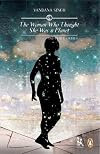
This collection offers ten stories, each with its own finely grained world. When in the last story, "The Room on the Roof," I came across pov character Urmilla's conclusion "that the world she lived in was not a separate, self-contained thing, but actually an intersection of many worlds. There was the world of the beetle, the world of her mother pounding spices in the kitchen downstairs, the chess world, where her brother battled the evil enemy king, and who knows how many hidden worlds show more outside her awareness"(181), I found myself thinking that her observation distills a sort of subtext of the collection as a whole. Of course more world than one is evoked in each story, but one of the things Singh does well is give us a sensual taste of the particularities of the daily in her characters' lives.
I'd read several of the stories before and found them well worth a second read. I do have favorite stories in the book, though: the inexplicably powerful "Hunger," the poignant "The Room on the Roof," and "The Woman Who Thought She Was a Planet." The latter is a classic feminist sf story that imparted a sense of wonder even as it made me giggle with its sly, not-to-be-denied humor. The story is told from the point of view of the middle-aged Ramnath Mishra, who grows increasingly frantic to restrain Kamala, his wife, who is in the process of becoming a planet, from disrobing in public (and private). Here's a sample:
He caught her just as she was about to run out into the driveway in nothing but a petticoat and blouse, in full view of street vendors, cricket-playing children and respectable elderly gentlemen. He wrestled her into the bedroom and tried to slap some sense into her, but she continued to struggle and weep. At last, frustrated, he pulled half a dozen saris out from the big steel cupboard and flung them on the bed.
"Kamala," he said desperately, "even planets have atmospheres. See here, this gray sari, it looks like a swirl of clouds. How about it?" She calmed down at once. She began to put on the gray sari although the fabric, georgette, was unsuitable for summer.
"At last you believe me, Ramnath," she said. Her voice seemed to have changed. It was deeper, more powerful. He looked at her, aghast. She had addressed him by his name! That was all very well for the new generation of young adults, but respectable, traditional women never addressed their husbands by their names. He decided not to do anything about it for now. At least she was clothed. (45) show less
I'd read several of the stories before and found them well worth a second read. I do have favorite stories in the book, though: the inexplicably powerful "Hunger," the poignant "The Room on the Roof," and "The Woman Who Thought She Was a Planet." The latter is a classic feminist sf story that imparted a sense of wonder even as it made me giggle with its sly, not-to-be-denied humor. The story is told from the point of view of the middle-aged Ramnath Mishra, who grows increasingly frantic to restrain Kamala, his wife, who is in the process of becoming a planet, from disrobing in public (and private). Here's a sample:
He caught her just as she was about to run out into the driveway in nothing but a petticoat and blouse, in full view of street vendors, cricket-playing children and respectable elderly gentlemen. He wrestled her into the bedroom and tried to slap some sense into her, but she continued to struggle and weep. At last, frustrated, he pulled half a dozen saris out from the big steel cupboard and flung them on the bed.
"Kamala," he said desperately, "even planets have atmospheres. See here, this gray sari, it looks like a swirl of clouds. How about it?" She calmed down at once. She began to put on the gray sari although the fabric, georgette, was unsuitable for summer.
"At last you believe me, Ramnath," she said. Her voice seemed to have changed. It was deeper, more powerful. He looked at her, aghast. She had addressed him by his name! That was all very well for the new generation of young adults, but respectable, traditional women never addressed their husbands by their names. He decided not to do anything about it for now. At least she was clothed. (45) show less

Seeing that I was presenting on short Indian science fiction at the Science Fiction Research Association, it seemed I ought to read the short Indian science fiction written by the conference's guest of honor. I was glad I did-- Vandana Singh is a very different writer to Manjula Padmanabhan (one might glibly say that Padamanabhan's work is all about getting out of India, while Singh's is about getting back), but also a very good one. This volume collects all Singh's published short sf as of show more 2008, most of which I would classify as falling on the literary end of things, some even being more stories about science fiction than actual science fiction. Anyway, it's thoughtful, inventive stuff: the title story, for example, sees a man's wife transform into a planet, to the extent that her residents colonize him!
I particularly liked "Infinities," about an obsessed mathematician; "Hunger," about a dinner party gone bad through the small cruelties all of us commit every day in our need to get by; and "Three Tales from Sky River," an inventive set of folklore from another planet in another time. My favorite story in the book, though, was "The Tetrahedron," where a giant tetrahedron just appears in a city street one day, and its protagonist must try to figure out what it's doing and why it captivates her so much. No one else understands her interest, and I felt this sentence not only summed up the story, but also the book as a whole, and was just a lesson worth remembering: "outer space, inner space, both had unknown topologies. You couldn't overlook one at the expense of the other." show less
I particularly liked "Infinities," about an obsessed mathematician; "Hunger," about a dinner party gone bad through the small cruelties all of us commit every day in our need to get by; and "Three Tales from Sky River," an inventive set of folklore from another planet in another time. My favorite story in the book, though, was "The Tetrahedron," where a giant tetrahedron just appears in a city street one day, and its protagonist must try to figure out what it's doing and why it captivates her so much. No one else understands her interest, and I felt this sentence not only summed up the story, but also the book as a whole, and was just a lesson worth remembering: "outer space, inner space, both had unknown topologies. You couldn't overlook one at the expense of the other." show less
Lists
Mitski! (1)
Awards


You May Also Like


Associated Authors
Statistics
- Works
- 31
- Also by
- 69
- Members
- 706
- Popularity
- #35,870
- Rating
- 3.7
- Reviews
- 35
- ISBNs
- 28
- Languages
- 3
- Favorited
- 1

