
Karin Tidbeck
Author of Amatka
About the Author
Image credit: Photo by Henry Söderlund.
Series
Works by Karin Tidbeck
Beatrice 2 copies
Starfish 2 copies
Augusta Prima {Short Story} 2 copies
A fine show on the abyssal plain 2 copies
Brita’s Holiday Village 1 copy
Associated Works
Sisters of the Revolution: A Feminist Speculative Fiction Anthology (2015) — Contributor — 340 copies, 8 reviews
Some of the Best from Tor.com: 2019 Edition: A Tor.com Original (2020) — Contributor — 157 copies, 3 reviews
The Best Science Fiction and Fantasy of the Year Volume Seven (2013) — Contributor — 154 copies, 3 reviews
The Best Science Fiction and Fantasy of the Year Volume Eight (2014) — Contributor — 116 copies, 6 reviews
The Year's Best Science Fiction Vol. 1: The Saga Anthology of Science Fiction 2020 (2020) — Contributor — 109 copies, 7 reviews
Uncanny Magazine Issue 24: September/October 2018 (Disabled People Destroy Science Fiction) (2018) — Contributor — 52 copies
2010年代海外SF傑作選 — Contributor — 1 copy
S-Fマガジン 2013年 11月号 — Contributor — 1 copy
Tagged
Common Knowledge
- Legal name
- Tidbeck, Karin
- Birthdate
- 1977-04-06
- Gender
- non-binary
- Education
- Skurups Folkhögskola (skrivarlinjen|skrivpedagog)
- Agent
- Renee Zuckerbrot
- Nationality
- Sweden
- Places of residence
- Stockholm, Sverige
Malmö, Sverige - Map Location
- Sweden
Members
Discussions
THE DEEP ONES: "Augusta Prima" by Karin Tidbeck in The Weird Tradition (July 2022)
THE DEEP ONES: "Starfish" by Karen Tidbeck in The Weird Tradition (June 2022)
THE DEEP ONES: "Rebecka" by Karin Tidbeck in The Weird Tradition (September 2021)
THE DEEP ONES: "A Fine Show on the Abyssal Plain" by Karen Tidbeck in The Weird Tradition (December 2016)
Reviews
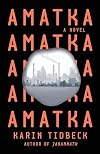
Amatka is a dystopia with a whole lot in common with its famous forebears. We’ve got a micromanagerial socialist state à la Zamyatin or Orwell, rationing food and dismantling the nuclear family with a collective rearing system. We have characters whose names include numbers (never explained, so presumably just another depersonalizing device), familiar from many a science fiction yarn. Speaking of food, the numbingly bland, mushroom-based diet of Amatka’s inhabitants, combined with their show more ritual of “recycling” the deceased, puts the reader more than a little in mind of Soylent Green. We also touch on the preservational theme of A Canticle for Leibowitz or Mockingbird, the valorisation of old texts and prelapsarian knowledge. The aesthetic as a whole is overwhelmingly bleak, functional and joyless, and peculiarly Scandi — like an IKEA catalogue in monochrome. This is an observation, not a criticism — the world built here by Tidbeck ain’t no Disneyland, but it is quite convincing and an interesting place to stumble around for a few hours.
The big innovation is that (almost) everything in this world is manufactured out of a kind of grey goo, and will revert to sludge unless continually “marked”, verbally and in writing, with its name. Even book titles must directly reference the content of the book, so we get hilarious poetry collections called “About Plant House #3” and — the one that creased me up — “About Trains”. On one level we can read this as an assertion of the primacy and potency of language, or rather of nomenclature, but by the end I thought it meant the opposite of this — that objects and the material world are actually just as arbitrary as the world of sound and sign. It’s an ersatz world of mushroom porridge, mushroom coffee, where anything can substitute for anything else.
The story follows Vanya on a trip to Amatka, one of four “colonies” on an inimical alter-earth, to do market research (the first private enterprises having recently been permitted). There she falls in an anaemic kind of love with her host, Nina, and also finds herself drawn into a mystery which threatens to unpick the fabric of her tenuously-maintained reality. I found it quite slow going, but the denouement makes up for the preceding drabness with some satisfyingly apocalyptic events, albeit the opposite of conclusive, only serving to confuse matters even more. A strange book, very much in the Vandermeer (who seems to have sponsored the project) mould with its uncanniness, intriguing premise and total refusal to commit itself. show less
The big innovation is that (almost) everything in this world is manufactured out of a kind of grey goo, and will revert to sludge unless continually “marked”, verbally and in writing, with its name. Even book titles must directly reference the content of the book, so we get hilarious poetry collections called “About Plant House #3” and — the one that creased me up — “About Trains”. On one level we can read this as an assertion of the primacy and potency of language, or rather of nomenclature, but by the end I thought it meant the opposite of this — that objects and the material world are actually just as arbitrary as the world of sound and sign. It’s an ersatz world of mushroom porridge, mushroom coffee, where anything can substitute for anything else.
The story follows Vanya on a trip to Amatka, one of four “colonies” on an inimical alter-earth, to do market research (the first private enterprises having recently been permitted). There she falls in an anaemic kind of love with her host, Nina, and also finds herself drawn into a mystery which threatens to unpick the fabric of her tenuously-maintained reality. I found it quite slow going, but the denouement makes up for the preceding drabness with some satisfyingly apocalyptic events, albeit the opposite of conclusive, only serving to confuse matters even more. A strange book, very much in the Vandermeer (who seems to have sponsored the project) mould with its uncanniness, intriguing premise and total refusal to commit itself. show less
Amatka was a really fun read, albeit a weird one.
The setting that Karin Tidbeck established is not far removed from what you would find in Orwell's 1984, an oppressive dystopia where people just do what they are told, no questions asked. Information is scarce, and curiosity is shunned. But while in Orwell's work, the oppression comes in a way to control, in Amatka comes out of necessity. The world is clearly an alien one, where (almost) everything is created by the power of speaking and show more marking its name on it. It's the only way for the Colony to survive, and so this oppression is validated by the necessity to maintain things as they are: unchanged, tangible, concrete.
Amatka delves into the power of language, how words create meaning for our objects, but also constrain us from thinking outside of the obvious. Is a pencil a pencil because you said so? Or is it a piece of wood, a stick, a weapon, a key? Is a drawing of a pencil a pencil? If not, then why do we perceive it as one? Why do you think of a pencil when I write about it, and not something else?
Tidbeck takes these concepts to the limit in the book to the point of absurdity, creating an enticing narrative that makes you curious about the mysteries of this world and how it works. I think it's an amazing job of world-building that they can construct in a bit more than 200 pages.
Amatka is also about change, and how it can be scary, but also needed. To give up on the known for the unknown is always a test of faith, will, and strength. The path of change is always preferable to the path of inaction, and I love how they put change as not something beautiful and happy, but as strange, painful, and even gruesome. It might not be better, but that's the objective. The objective is to be different from what it is.
I don't think it's a book that everyone will appreciate. The ending is bittersweet and leaves you with more questions than when you started. While reading it, I kind of prepared myself for an open ending, as I felt that most of my questions about the world and what it is would be left unanswered, and I was right about that. Some people might find this unfulfilling and get disappointed with the book. Although I would prefer some closure, I did like it and felt it was sufficient.
Overall, it is a read that will stay with me for a while, and made me think profoundly about how we can change our reality with the power of language. show less
The setting that Karin Tidbeck established is not far removed from what you would find in Orwell's 1984, an oppressive dystopia where people just do what they are told, no questions asked. Information is scarce, and curiosity is shunned. But while in Orwell's work, the oppression comes in a way to control, in Amatka comes out of necessity. The world is clearly an alien one, where (almost) everything is created by the power of speaking and show more marking its name on it. It's the only way for the Colony to survive, and so this oppression is validated by the necessity to maintain things as they are: unchanged, tangible, concrete.
Amatka delves into the power of language, how words create meaning for our objects, but also constrain us from thinking outside of the obvious. Is a pencil a pencil because you said so? Or is it a piece of wood, a stick, a weapon, a key? Is a drawing of a pencil a pencil? If not, then why do we perceive it as one? Why do you think of a pencil when I write about it, and not something else?
Tidbeck takes these concepts to the limit in the book to the point of absurdity, creating an enticing narrative that makes you curious about the mysteries of this world and how it works. I think it's an amazing job of world-building that they can construct in a bit more than 200 pages.
Amatka is also about change, and how it can be scary, but also needed. To give up on the known for the unknown is always a test of faith, will, and strength. The path of change is always preferable to the path of inaction, and I love how they put change as not something beautiful and happy, but as strange, painful, and even gruesome. It might not be better, but that's the objective. The objective is to be different from what it is.
I don't think it's a book that everyone will appreciate. The ending is bittersweet and leaves you with more questions than when you started. While reading it, I kind of prepared myself for an open ending, as I felt that most of my questions about the world and what it is would be left unanswered, and I was right about that. Some people might find this unfulfilling and get disappointed with the book. Although I would prefer some closure, I did like it and felt it was sufficient.
Overall, it is a read that will stay with me for a while, and made me think profoundly about how we can change our reality with the power of language. show less
Rating: 4* of five
The Publisher Says: Vanja, a government worker, leaves her home city of Essre for the austere, wintry colony of Amatka on a research assignment. It takes some adjusting: people act differently in Amatka, and citizens are monitored for signs of subversion.
Intending to stay just a short while, Vanja finds herself falling in love with her housemate, Nina, and decides to stick around. But when she stumbles on evidence of a growing threat to the colony and a cover-up by its show more administration, she begins an investigation that puts her at tremendous risk.
In Karin Tidbeck's dystopic imagining, language has the power to shape reality. Unless objects, buildings, and the surrounding landscape are repeatedly named, and named properly, everything will fall apart. Trapped in the repressive colony, Vanja dreams of using language to break free, but her individualism may well threaten the very fabric of reality. Amatka is a beguiling and wholly original novel about freedom, love, and artistic creation by an idiosyncratic new voice.
THIS PURCHASE WAS INSPIRED BY THE WICKED, WICKED SF BOOK-BLOGGER, RACHEL CORDASCO. GO FOLLOW HER...WHY SHOULD I GO BROKE ALONE.
My Review: I was inspired to write this review by the book's selection for a group read in Goodreads's Speculative Fiction in Translation group. The power of group reads is not to be treated lightly, authors...court them!
This is a weird, weird tale. Vanja, a government functionary in a brutally planned-to-a-fare-thee-well society, is sent to an outlying community in her colonial world of, um, psychically manipulable fungi. Sort of. I am floundering a bit for a way to present the world because Author Tidbeck uses the ever-useful in medias res technique to keep your defenses down. I've seen readers unable to decide whether it's all a fable, a magical-realist condemnation of the supposed grey horrors of socialism, or a real secondary world that the colonists have traveled to in some poorly-explained way. I myownself plump for the latter because "colonists" means little on today's quite crowded Earth.
Also it pays for readers to attend to, then recall, that the book mentions the first colonists discovered buildings "not for human standards" which is all but a slamming shut of that case for me. Other readers may find other ways to interpret the story, of course; I don't think it's giving enough credit to a story to say that one and only one interpretation uses The Right Lens.
It was, however, this point that convinced me this was not Earth whether past or future. The sun being missing, or *a* sun being missing, I took to mean that the planet's skies were totally overcast at all times. How else but via a thick atmosphere of some kind could a fungal habitat keep itself from desiccation? And that also went along with the colonists' arrival by non-chemically-propelled means, as their arrival isn't accompanied by any sense of A Journey.
Vanja's life in this peculiar totalitarian society was what kept my interest the most. Her inability and/or unwillingness to be integrated anywhere made her fascinating to me. Nina, her love interest, is another more-or-less misfit. It seems to me their attraction is peculiarly one-sided. How can anyone be attracted to the point of falling in love with Vanja? She's the embodiment of the society she lives in...stop naming her and she will simply slide back into fungal goop.
This presents my basic problem with the book: It stops. It slips back into the primordial goop of story-stuff. I'm sure the ambiguity of the ending is deliberate, is a choice and a declaration of stylistic intent. Looked at from that angle, it "works" inasmuch as I am unable to finish my relationship with this story...I keep needing to name it: "Amatka has ended...Amatka is over..." but note that I need to use "to be" verbs, there isn't even a gerund I can whomp up out of the story-stuff I'm given.
It's not like this is a fatal flaw. It is, however, a self-inflicted wound on what might have been a hugely more popular seller...and I get the impression, reading about a rigid settler society that never appears to question WHY this fungal paradise of infinite, if ephemeral, possibility even exists or what happens to those who...vanish, that this is entirely okay with the author. If not the reason she wrote the story in the first place.
I found myself chuckling at the knee-jerk responses to this story to the world of socialist economic austerity. In fact, it seems to me a bitterly outraged condemnation of the eternal horror of capitalism's consume-or-die ethos, its ephemeral products designed to fail to ensure they need to be replaced, the supposed inexhaustibility of the planet's resources tied to an endless need to rename...recycle, reform, reuse...the very substance of reality. Because it's gray and hopeless, it must be about Them, not us...well folks, your privilege is showing. The view from the bottom is very much in line with Author Tidbeck's retelling of it.
What I want is for hundreds of thousands of you to be overwhelmed by a sudden desire to make your inner world richer with a flattened, attenuated emotional landscape. By contrast, even the new plague-fighting restrictions impinging on our daily lives must seem positively vibrant with possibility.
All in all, a wonderful story to read, and then re-read, for its layered and beautifully textured use of, and celebration f the uses of, language. I have seldom read a self-translated work that was this exacting in its craft, so fully and unsparingly rendered as its own self. Many are the echoes of Solaris, for example, in the protean fungal goop; but never by word or deed do the characters echo the positions or words of Lem's ancestral work.
Bravo, Author Tidbeck. Well crafted on all counts, in all metrics. show less
The Publisher Says: Vanja, a government worker, leaves her home city of Essre for the austere, wintry colony of Amatka on a research assignment. It takes some adjusting: people act differently in Amatka, and citizens are monitored for signs of subversion.
Intending to stay just a short while, Vanja finds herself falling in love with her housemate, Nina, and decides to stick around. But when she stumbles on evidence of a growing threat to the colony and a cover-up by its show more administration, she begins an investigation that puts her at tremendous risk.
In Karin Tidbeck's dystopic imagining, language has the power to shape reality. Unless objects, buildings, and the surrounding landscape are repeatedly named, and named properly, everything will fall apart. Trapped in the repressive colony, Vanja dreams of using language to break free, but her individualism may well threaten the very fabric of reality. Amatka is a beguiling and wholly original novel about freedom, love, and artistic creation by an idiosyncratic new voice.
THIS PURCHASE WAS INSPIRED BY THE WICKED, WICKED SF BOOK-BLOGGER, RACHEL CORDASCO. GO FOLLOW HER...WHY SHOULD I GO BROKE ALONE.
My Review: I was inspired to write this review by the book's selection for a group read in Goodreads's Speculative Fiction in Translation group. The power of group reads is not to be treated lightly, authors...court them!
This is a weird, weird tale. Vanja, a government functionary in a brutally planned-to-a-fare-thee-well society, is sent to an outlying community in her colonial world of, um, psychically manipulable fungi. Sort of. I am floundering a bit for a way to present the world because Author Tidbeck uses the ever-useful in medias res technique to keep your defenses down. I've seen readers unable to decide whether it's all a fable, a magical-realist condemnation of the supposed grey horrors of socialism, or a real secondary world that the colonists have traveled to in some poorly-explained way. I myownself plump for the latter because "colonists" means little on today's quite crowded Earth.
Also it pays for readers to attend to, then recall, that the book mentions the first colonists discovered buildings "not for human standards" which is all but a slamming shut of that case for me. Other readers may find other ways to interpret the story, of course; I don't think it's giving enough credit to a story to say that one and only one interpretation uses The Right Lens.
It was, however, this point that convinced me this was not Earth whether past or future. The sun being missing, or *a* sun being missing, I took to mean that the planet's skies were totally overcast at all times. How else but via a thick atmosphere of some kind could a fungal habitat keep itself from desiccation? And that also went along with the colonists' arrival by non-chemically-propelled means, as their arrival isn't accompanied by any sense of A Journey.
Vanja's life in this peculiar totalitarian society was what kept my interest the most. Her inability and/or unwillingness to be integrated anywhere made her fascinating to me. Nina, her love interest, is another more-or-less misfit. It seems to me their attraction is peculiarly one-sided. How can anyone be attracted to the point of falling in love with Vanja? She's the embodiment of the society she lives in...stop naming her and she will simply slide back into fungal goop.
This presents my basic problem with the book: It stops. It slips back into the primordial goop of story-stuff. I'm sure the ambiguity of the ending is deliberate, is a choice and a declaration of stylistic intent. Looked at from that angle, it "works" inasmuch as I am unable to finish my relationship with this story...I keep needing to name it: "Amatka has ended...Amatka is over..." but note that I need to use "to be" verbs, there isn't even a gerund I can whomp up out of the story-stuff I'm given.
It's not like this is a fatal flaw. It is, however, a self-inflicted wound on what might have been a hugely more popular seller...and I get the impression, reading about a rigid settler society that never appears to question WHY this fungal paradise of infinite, if ephemeral, possibility even exists or what happens to those who...vanish, that this is entirely okay with the author. If not the reason she wrote the story in the first place.
I found myself chuckling at the knee-jerk responses to this story to the world of socialist economic austerity. In fact, it seems to me a bitterly outraged condemnation of the eternal horror of capitalism's consume-or-die ethos, its ephemeral products designed to fail to ensure they need to be replaced, the supposed inexhaustibility of the planet's resources tied to an endless need to rename...recycle, reform, reuse...the very substance of reality. Because it's gray and hopeless, it must be about Them, not us...well folks, your privilege is showing. The view from the bottom is very much in line with Author Tidbeck's retelling of it.
What I want is for hundreds of thousands of you to be overwhelmed by a sudden desire to make your inner world richer with a flattened, attenuated emotional landscape. By contrast, even the new plague-fighting restrictions impinging on our daily lives must seem positively vibrant with possibility.
All in all, a wonderful story to read, and then re-read, for its layered and beautifully textured use of, and celebration f the uses of, language. I have seldom read a self-translated work that was this exacting in its craft, so fully and unsparingly rendered as its own self. Many are the echoes of Solaris, for example, in the protean fungal goop; but never by word or deed do the characters echo the positions or words of Lem's ancestral work.
Bravo, Author Tidbeck. Well crafted on all counts, in all metrics. show less

This novel rewrites and massively expands author Tidbeck's prior (2009) short story "Augusta Prima" concerning inhabitants of the Gardens, a rather small and artificial fairyland whose chief inhabitants have fallen into a sybaritic cruelty in their never-ending festivities. Augusta herself, a Lady of the Gardens, is the villain of the story, and she expresses a strangely innocent and nevertheless repulsive sort of evil. The heroes of The Memory Theater are Thistle, a "servant" (i.e. slave) show more who had been abducted from Earth to the Gardens as a child, and his adoptive sister Dora, an enigmatic magical offspring of one Lord of the Gardens. A non-human sorceress named Ghorbi assumes a tutelary role for these two.
Despite my original inferences from the title, The Memory Theater really has nothing to do with Renaissance memory arts or the mental theater of Giulio Camillo (ca. 1480–1544). Instead, the title refers to a small collective enterprise with larger metaphysical consequences: a set of performers enacting memories in order to dignify vanished cultures and values. It is the polar opposite of the Gardens. In the Gardens, time is suppressed, suffering is taken for comic entertainment, and Lords and Ladies are expert at forgetting.
Tidbeck's prose in this book is lean and efficient. It reads quickly, and some of the descriptors in the original story (e.g. the servants of the Gardens as "changelings," Ghorbi as a "djinneya") have been dropped. One effect of this change is to open up a little sfnal ambivalence: the "traffic controllers" of the inter-world crossroads have an air of extraterrestrial exoticism for instance. The relevant Earth history is set in the nineteenth and twentieth centuries, largely in Sweden.
From jacket copy and other short descriptions, I expected this book to have a feel like works I had read from Susanna Clarke, but it didn't. The constellation of central characters and the worlds-transiting magic involved reminded me more than a little of Paul Park's Roumania books. Still, the flavor was really its own, and I enjoyed it as a distinctive instance of the micro-genre of "fairy weird." show less
Despite my original inferences from the title, The Memory Theater really has nothing to do with Renaissance memory arts or the mental theater of Giulio Camillo (ca. 1480–1544). Instead, the title refers to a small collective enterprise with larger metaphysical consequences: a set of performers enacting memories in order to dignify vanished cultures and values. It is the polar opposite of the Gardens. In the Gardens, time is suppressed, suffering is taken for comic entertainment, and Lords and Ladies are expert at forgetting.
Tidbeck's prose in this book is lean and efficient. It reads quickly, and some of the descriptors in the original story (e.g. the servants of the Gardens as "changelings," Ghorbi as a "djinneya") have been dropped. One effect of this change is to open up a little sfnal ambivalence: the "traffic controllers" of the inter-world crossroads have an air of extraterrestrial exoticism for instance. The relevant Earth history is set in the nineteenth and twentieth centuries, largely in Sweden.
From jacket copy and other short descriptions, I expected this book to have a feel like works I had read from Susanna Clarke, but it didn't. The constellation of central characters and the worlds-transiting magic involved reminded me more than a little of Paul Park's Roumania books. Still, the flavor was really its own, and I enjoyed it as a distinctive instance of the micro-genre of "fairy weird." show less
Lists
Awards


You May Also Like


Associated Authors
Statistics
- Works
- 22
- Also by
- 36
- Members
- 1,373
- Popularity
- #18,735
- Rating
- 3.8
- Reviews
- 81
- ISBNs
- 47
- Languages
- 10
- Favorited
- 4