
Kij Johnson
Author of The Dream-Quest of Vellitt Boe
About the Author
Image credit: Wikipedia user Jjkessel
Series
Works by Kij Johnson
Reimagining Lovecraft: Four Tor.com Novellas: (The Ballad of Black Tom, The Dream-Quest of Vellit Boe, Hammers on Bone, Agents of Dreamland) (2017) — Contributor — 24 copies, 1 review
RiverBank: Roleplaying Game 2 copies
My Wife Reincarnated as a Solitaire—Exposition on the Flaws in my Spouse's Character—The Nature of the Bird—The Possible Causes—Her Final Disposition 2 copies, 1 review
Elfrithe's Ghost [short fiction] 2 copies
The Knife Birds 2 copies
The Privilege of the Happy Ending [novelette] — Author — 1 copy
Dagon n.º 3 1 copy
Kicune 1 copy
Last Dance at Dante's 1 copy
Chris 1 copy
Ari Nehrinin Agzinda 1 copy
Ursula Redux {short story} 1 copy
Associated Works
The Year's Best Science Fiction: Twenty-Ninth Annual Collection (2012) — Contributor — 276 copies, 5 reviews
The Year's Best Fantasy and Horror: Seventeenth Annual Collection (2004) — Contributor — 241 copies, 9 reviews
The Year's Best Fantasy and Horror 2008: 21st Annual Collection (2008) — Contributor — 176 copies, 5 reviews
The Best Science Fiction and Fantasy of the Year, Volume 5 (2011) — Contributor — 166 copies, 4 reviews
The Best Science Fiction and Fantasy of the Year, Volume 6 (2012) — Contributor — 162 copies, 4 reviews
Worlds Seen in Passing: Ten Years of Tor.com Short Fiction (2018) — Contributor — 161 copies, 1 review
The Best Science Fiction and Fantasy of the Year, Volume 7 (2013) — Contributor — 154 copies, 3 reviews
The Best Science Fiction and Fantasy of the Year, Volume 3 (2009) — Contributor — 150 copies, 2 reviews
The Best Science Fiction and Fantasy of the Year, Volume 4 (2010) — Contributor — 141 copies, 2 reviews
Girls Who Bite Back: Witches, Mutants, Slayers and Freaks (2004) — Contributor — 53 copies, 1 review
The Long List Anthology Volume 5: More Stories from the Hugo Award Nomination List (The Long List Anthology Series) (2019) — Contributor — 53 copies
Asimov's Science Fiction: Vol. 35, No. 10 & 11 [October/November 2011] (2011) — Contributor — 25 copies, 2 reviews
Tagged
Common Knowledge
- Other names
- Johnson, Katherine Irenae (birth)
- Birthdate
- 1960-01-20
- Gender
- female
- Education
- Clarion West (1987)
- Occupations
- fantasy writer
- Organizations
- Science Fiction and Fantasy Writers of America
- Nationality
- USA
- Birthplace
- Harlan, Iowa, USA
- Map Location
- USA
Members
Reviews

Kij Johnson is a writer I don't know as well as I might like. That is to say, I read and enjoyed The Dream-Quest of Vellitt Boe, and I think I have read some of her short fiction, but what I know of her makes me think I would like her a lot. So I was glad to get the opportunity to pick up a copy of The Privilege of the Happy Ending from Small Beer Press, which collects a bunch of her short fiction from the past decade.
Almost all the stories here focus on animals, and many of the stories use show more what we would recognize as postmodern or self-reflexive techniques. So, they may be a bit of an acquired taste for some readers—but for me, it is the kind of taste I have indeed acquired. I liked "Tool-Using Mimics," which offers a number of different explanations for a photograph of a girl with octopus tentacles; "Five Sphinxes and 56 Answers," which focuses on deconstructing the story of the sphinx as well as a young girl obsessed with the sphinx; and all three of the "Certain Lorebooks for Apartment Dwellers," which chronicle magical symbols, strange beasts, and bizarre dreams while also telling in brief snippets stories about relationships. I will say that Johnson has her go-to techniques in her stories, and for me this meant that when some concept or idea or trope turned up two times in rapid succession, it made me like the weaker implementation of it less than I might have had I read it in isolation. For example, I didn't really get into "Butterflies of Eastern Texas." The upside of a single-author collection is seeing how a writer develops a theme; the downside, I suppose, is that you might get tired of it.
There are only a couple stories I didn't get on with. "Coyote Invents the Land of the Dead" took me three tries to get through, and I never did figure out what was going on. "The Ghastly Spectre of Toad Hall" is a The Wind in the Willows sequel; I have only the vaguest memories of that book, which didn't help, but its anthropomorphic animals are an ill fit among the strange and uncanny animals of the rest of the collection. It might be good, but this is the wrong context for it.
I was glad for the chance to reread "The Dream-Quest of Vellitt Boe," and I found even more to enjoy in its depiction of middle age than I did the first time. Of all the stories in the book, this one engenders thoughts of a sequel: what would it be like for someone from a dreamworld to go on a quest in our world? But perhaps that's better left imagined. (This novella on its own makes the book good value for money; Tor.com sells it on its own for $15 in hard copy, but you can buy this whole collection for $17!) I particularly liked the volume's final story, "The Privilege of the Happy Ending," which is about a girl and her talking chicken trying to survive an infestation of weird, bizarre animals. As the title points out, it demonstrates how happy endings are privileges, by sometimes choosing to tell you what happens to side characters, and sometimes not. Not all stories have happy endings, but how happy an ending is depends on where you stop and who you care about.
So while I wish this was both a little less repetitive (surely Johnson has something to say about topics other than animals?) and a little more cohesive ("Toad Hall" is an odd fit, but to be honest, so is "Vellitt Boe"), it's a good way to be exposed to a master of the craft of short fiction. Most of the stories can be found online... but though you could do that, will you? Read them in this book. As for myself, I will be seeking out her earlier At the Mouth of the River of Bees now. show less
Almost all the stories here focus on animals, and many of the stories use show more what we would recognize as postmodern or self-reflexive techniques. So, they may be a bit of an acquired taste for some readers—but for me, it is the kind of taste I have indeed acquired. I liked "Tool-Using Mimics," which offers a number of different explanations for a photograph of a girl with octopus tentacles; "Five Sphinxes and 56 Answers," which focuses on deconstructing the story of the sphinx as well as a young girl obsessed with the sphinx; and all three of the "Certain Lorebooks for Apartment Dwellers," which chronicle magical symbols, strange beasts, and bizarre dreams while also telling in brief snippets stories about relationships. I will say that Johnson has her go-to techniques in her stories, and for me this meant that when some concept or idea or trope turned up two times in rapid succession, it made me like the weaker implementation of it less than I might have had I read it in isolation. For example, I didn't really get into "Butterflies of Eastern Texas." The upside of a single-author collection is seeing how a writer develops a theme; the downside, I suppose, is that you might get tired of it.
There are only a couple stories I didn't get on with. "Coyote Invents the Land of the Dead" took me three tries to get through, and I never did figure out what was going on. "The Ghastly Spectre of Toad Hall" is a The Wind in the Willows sequel; I have only the vaguest memories of that book, which didn't help, but its anthropomorphic animals are an ill fit among the strange and uncanny animals of the rest of the collection. It might be good, but this is the wrong context for it.
I was glad for the chance to reread "The Dream-Quest of Vellitt Boe," and I found even more to enjoy in its depiction of middle age than I did the first time. Of all the stories in the book, this one engenders thoughts of a sequel: what would it be like for someone from a dreamworld to go on a quest in our world? But perhaps that's better left imagined. (This novella on its own makes the book good value for money; Tor.com sells it on its own for $15 in hard copy, but you can buy this whole collection for $17!) I particularly liked the volume's final story, "The Privilege of the Happy Ending," which is about a girl and her talking chicken trying to survive an infestation of weird, bizarre animals. As the title points out, it demonstrates how happy endings are privileges, by sometimes choosing to tell you what happens to side characters, and sometimes not. Not all stories have happy endings, but how happy an ending is depends on where you stop and who you care about.
So while I wish this was both a little less repetitive (surely Johnson has something to say about topics other than animals?) and a little more cohesive ("Toad Hall" is an odd fit, but to be honest, so is "Vellitt Boe"), it's a good way to be exposed to a master of the craft of short fiction. Most of the stories can be found online... but though you could do that, will you? Read them in this book. As for myself, I will be seeking out her earlier At the Mouth of the River of Bees now. show less
 This review was written for LibraryThing Early Reviewers.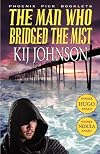
https://fromtheheartofeurope.eu/the-paper-menagerie-by-ken-liu-the-man-who-bridg...
When I first read it in 2012, I wrote:
"I thought this was a brilliant story of a world not quite our own, with a hero-engineer dealing with the challenges of a river of deadly mist and of facing up to his own emotional needs – an odd but effective mixture of immersive fantasy and basic technology. Excellent stuff, which I really hope wins the [Hugo] award."
Again, I still like this story. Re-reading it, I was show more interested that the world where the story is set is equivalent to early modern in technology, but has much better gender equality; the emotional core of the story is the bridge-builder’s love affair with one of the river sailors who will be put out of business by the bridge. show less
When I first read it in 2012, I wrote:
"I thought this was a brilliant story of a world not quite our own, with a hero-engineer dealing with the challenges of a river of deadly mist and of facing up to his own emotional needs – an odd but effective mixture of immersive fantasy and basic technology. Excellent stuff, which I really hope wins the [Hugo] award."
Again, I still like this story. Re-reading it, I was show more interested that the world where the story is set is equivalent to early modern in technology, but has much better gender equality; the emotional core of the story is the bridge-builder’s love affair with one of the river sailors who will be put out of business by the bridge. show less
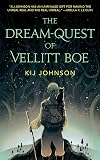
I adore this book about a woman who must undertake a perilous journey to save her beloved town - and the Lovecraftian worlds that lie beneath ours (or at least in some parallel state). I loved Vellitt Boe and the cat, and I loved the journey. I could have read a book five times as long about this character, but I know that this novella is meant to mirror, update, improve upon, speak to, etc., a Lovecraft story that is also not book-length. As in N.K. Jemisin's Fifth Season and Obelisk Gate, show more the protagonist is not a young woman, but someone who is important to the fate of the world. That's a fine new trend that I hope continues for a good long time. I did laugh about "Wisconsin." Wonderful. show less
Rating: 4.5* of five
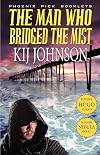
The Publisher Says: The river of Mist, an almost living organism, divides the Empire in two. A few Ferries make dangerous and treacherous journeys across the Mist when they can, trusting in good fortune and the uncanny skills of those plying the trade. *** A bridge across the Mist will greatly ease the suffering of those who risk crossing the river. The last bridge builder sent by the Empire died while building it. *** Kit now comes to the town of Nearside to complete the show more task left unfinished by the dead bridge builder. Will he be the man who will finally bridge the Mist?
This novella won the Hugo and the Nebula Awards for Best Novella of 2011.
My Review: My Goodreads friend Nataliya recommended this novella to me today. The title, as beautiful and evocative as this author's debut collection of short fiction's was (At the Mouth of the River of Bees), hooked me; the Doc's warble of rapture sealed the deal.
Bless you, dear Doc, bless you and those whose hurts and harms you heal with that magiqckal ability to see and fix a pattern. This story was a piece of my own pattern that was missing, and you gave it to me.
This tale of a man in a world not entirely like our own, a man whose purpose is to function and whose function is to build, that needs a way to communicate and connect its parts. Technology isn't advanced, and there's not even a HINT of majgicqk to sully the handsome, spare caternary curve of the story. It is a story of a world beset by troubles we know bone-deep, connection and confusion and longing and fear. And every character, no matter how fleeting their time or how small their space on the page, carries the weight of their piece of the pattern fairly and squarely. This is how I know I'm in the presence of top-quality writing. I see the pattern, I sense the supporting structure, and I am still *in* the story. Many writers write lovely sentences and many others imagine some strong characters, relatable and investible, and many many more create stories that bind and grip and sweep and carry me away. A very few do two of these things, and a vanishingly small number do them all. In this work, Johnson has done them all.
In a fortyish-page novella, five years of toil and change and death and learning fold into a structure as deceptively simple as an origami crane. The slow and unhurried pace at which the folds present themselves belies the time it took to craft them as well as the conciseness of their delivery. It is never easy to be brief. It is much more demanding to satisfy the jaded, spoiled-for-choice reader in a compact package.
Simple, direct, truthful, and (for me anyway) resonant with truth.
Perhaps the defining moment of the story, the bridging of the Mist River, came for me when Kit and Rasali experience a deeply, intensely frightening encounter with the Mist. Reflecting on it, and on the death that comes for us all at some time we can't know for sure, Kij Johnson rang my eyes like gongs:
Won't it, though?
This work is licensed under a Creative Commons Attribution-NonCommercial-ShareAlike 3.0 Unported License. show less
The Publisher Says: The river of Mist, an almost living organism, divides the Empire in two. A few Ferries make dangerous and treacherous journeys across the Mist when they can, trusting in good fortune and the uncanny skills of those plying the trade. *** A bridge across the Mist will greatly ease the suffering of those who risk crossing the river. The last bridge builder sent by the Empire died while building it. *** Kit now comes to the town of Nearside to complete the show more task left unfinished by the dead bridge builder. Will he be the man who will finally bridge the Mist?
This novella won the Hugo and the Nebula Awards for Best Novella of 2011.
My Review: My Goodreads friend Nataliya recommended this novella to me today. The title, as beautiful and evocative as this author's debut collection of short fiction's was (At the Mouth of the River of Bees), hooked me; the Doc's warble of rapture sealed the deal.
There was for everything a possibility, an invisible pattern that could be made manifest given work and the right materials.
Bless you, dear Doc, bless you and those whose hurts and harms you heal with that magiqckal ability to see and fix a pattern. This story was a piece of my own pattern that was missing, and you gave it to me.
This tale of a man in a world not entirely like our own, a man whose purpose is to function and whose function is to build, that needs a way to communicate and connect its parts. Technology isn't advanced, and there's not even a HINT of majgicqk to sully the handsome, spare caternary curve of the story. It is a story of a world beset by troubles we know bone-deep, connection and confusion and longing and fear. And every character, no matter how fleeting their time or how small their space on the page, carries the weight of their piece of the pattern fairly and squarely. This is how I know I'm in the presence of top-quality writing. I see the pattern, I sense the supporting structure, and I am still *in* the story. Many writers write lovely sentences and many others imagine some strong characters, relatable and investible, and many many more create stories that bind and grip and sweep and carry me away. A very few do two of these things, and a vanishingly small number do them all. In this work, Johnson has done them all.
In a fortyish-page novella, five years of toil and change and death and learning fold into a structure as deceptively simple as an origami crane. The slow and unhurried pace at which the folds present themselves belies the time it took to craft them as well as the conciseness of their delivery. It is never easy to be brief. It is much more demanding to satisfy the jaded, spoiled-for-choice reader in a compact package.
“The soul often hangs in a balance of some sort. Tonight do I lie down in the high fields with Dirk Tanner or not? At the fair, do I buy ribbons or wine? For the new ferry’s headboard, do I use camphor or pearwood? Small things. A kiss, a ribbon, a grain that coaxes the knife this way or that. They are not, Kit Meinem of Atyar. Our souls wait for our answer because any answer changes us. This is why I wait to decide what I feel about your bridge. I’m waiting until I know how I will be changed.”
“You never know how things will change you,” Kit said.
“If you don’t, you have not waited to find out.”
Simple, direct, truthful, and (for me anyway) resonant with truth.
Perhaps the defining moment of the story, the bridging of the Mist River, came for me when Kit and Rasali experience a deeply, intensely frightening encounter with the Mist. Reflecting on it, and on the death that comes for us all at some time we can't know for sure, Kij Johnson rang my eyes like gongs:
“If {Death} comes for you?” he said. “Would you be so sanguine then?”
She laughed and the pensiveness was gone. “No indeed. I will curse the stars and go down fighting. But it will still have been a wonderful thing, to cross the mist.”
Won't it, though?
This work is licensed under a Creative Commons Attribution-NonCommercial-ShareAlike 3.0 Unported License. show less
Lists
Awards


You May Also Like


Associated Authors
Statistics
- Works
- 47
- Also by
- 58
- Members
- 3,482
- Popularity
- #7,302
- Rating
- 3.8
- Reviews
- 219
- ISBNs
- 47
- Languages
- 6
- Favorited
- 10


