
Marsha Forchuk Skrypuch
Author of Making Bombs for Hitler
About the Author
Image credit: taken by Orest Skrypuch March 2021
Series
Works by Marsha Forchuk Skrypuch
Prisoners in the Promised Land: The Ukrainian Internment Diary of Anya Soloniuk (2007) 122 copies, 1 review
Prisoners in the Promised Land 3 copies
Tagged
Common Knowledge
- Canonical name
- Skrypuch, Marsha Forchuk
- Birthdate
- 1954-12-12
- Gender
- female
- Education
- University of Western Ontario (B.A., English|MSL)
- Occupations
- children's book author
young adult writer
librarian
historical novelist
book reviewer - Short biography
- Marsha Forchuk Skrypuch was born in Brantford, Ontario, to a Ukrainian-Canadian family.
In elementary school, she couldn't read, and so had to repeat the fourth grade. She had a learning disability, which was undiagnosed, and taught herself to read in the school library.
During high school, she wrote for the school newspaper. She received a B.A. with honors in English in 1978 and later a Master of Library Science degree from the University of Western Ontario. In between, she worked as an industrial sales rep. While she was studying for her master's degree, she started to explore her Ukrainian cultural background. She wrote book reviews for the Brantford Expositor for a few years before beginning to write fiction. Her debut picture book, Silver Threads, was published in 1996.
Skrypuch is the author of more than 20 books for children and young adults. Her carefully researched historical fiction and narrative nonfiction focuses on refugees and war from a young person’s perspective. - Nationality
- Canada
- Birthplace
- Brantford, Ontario, Canada
- Places of residence
- Brantford, Ontario, Canada
- Associated Place (for map)
- Brantford, Ontario, Canada
Members
Reviews
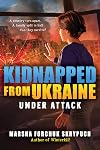
First sentence: I was snuggled deep in my bed with my twin sister, Rada. We had heard that the Russians might be attacking, but I didn't believe it. Mariupol may have been a Ukrainian city, but everyone here could speak Russian. We weren't their enemies.
My thoughts preview: I will want to read ANYTHING Marsha Forchuk Skrypuch writes. I will. She has proven she is a great writer over and over again. Though really all it took was one book to make me a forever fan.
Premise/plot: While Marsha show more Forchuk Skrypuch typically writes action-packed, dramatic historical fiction novels, this time she has written a contemporary, realistic novel that opens in February 2022 with the Russians attacking Ukraine. We see these dark days--dark but not so distant--through the eyes of a child, Dariia Popkova. (She's twelve. Perhaps (though fiction) she wouldn't appreciate being called a child.) When the attack begins--bombing--Dariia and her mother are out of the apartment and running a quick errand--picking up a few things from a corner market. So close to home yet so far when the attack begins. Soon the two find themselves unable to return home and reunite with their family because of the destruction and danger. This danger is unrelenting--there is little calm in the storm their lives become. As the two try to survive hour by hour, day by day, week by week--in the basement where they have found temporary refuge--they have both too much time and too little time to worry.
Readers get to see everything through Dariia's eyes and it's not a comfy, cozy story with a few boo-boos. The whole novel is [realistically] intense.
My thoughts: What a novel!!!! Truly I cannot do the book justice. It's an incredible read from cover to cover. I am not surprised--I'd expect nothing less from Skrypuch. She excels at everything--writing, plotting, characterization. But it is the characterization that particularly wows me every time. Because though it shouldn't be rare, it mostly is. The depth of characterization is outstanding. It isn't just that there's depth and substance of the main character, but it is how expansive the characterization is. There's no shortcuts, no character too small to not get treated as important. It makes it impossible not to get invested and thoroughly absorbed in the story. show less
My thoughts preview: I will want to read ANYTHING Marsha Forchuk Skrypuch writes. I will. She has proven she is a great writer over and over again. Though really all it took was one book to make me a forever fan.
Premise/plot: While Marsha show more Forchuk Skrypuch typically writes action-packed, dramatic historical fiction novels, this time she has written a contemporary, realistic novel that opens in February 2022 with the Russians attacking Ukraine. We see these dark days--dark but not so distant--through the eyes of a child, Dariia Popkova. (She's twelve. Perhaps (though fiction) she wouldn't appreciate being called a child.) When the attack begins--bombing--Dariia and her mother are out of the apartment and running a quick errand--picking up a few things from a corner market. So close to home yet so far when the attack begins. Soon the two find themselves unable to return home and reunite with their family because of the destruction and danger. This danger is unrelenting--there is little calm in the storm their lives become. As the two try to survive hour by hour, day by day, week by week--in the basement where they have found temporary refuge--they have both too much time and too little time to worry.
Readers get to see everything through Dariia's eyes and it's not a comfy, cozy story with a few boo-boos. The whole novel is [realistically] intense.
My thoughts: What a novel!!!! Truly I cannot do the book justice. It's an incredible read from cover to cover. I am not surprised--I'd expect nothing less from Skrypuch. She excels at everything--writing, plotting, characterization. But it is the characterization that particularly wows me every time. Because though it shouldn't be rare, it mostly is. The depth of characterization is outstanding. It isn't just that there's depth and substance of the main character, but it is how expansive the characterization is. There's no shortcuts, no character too small to not get treated as important. It makes it impossible not to get invested and thoroughly absorbed in the story. show less
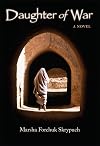
I don’t know why man’s inhumanities to man still has the power to shock me but the fact is that they do. In the spring of 1915 the Turkish government drove all the Armenians from their homes. Under the guise of relocation they were marched hundreds of mile into the Syrian Desert without food or water. Death of thirst, malnutrition and exhaustion was common. Many more were shot. In all more than one million Armenians died. Some of the children were rescued by German missionaries, and some show more were rescued by compassionate Muslim families. Unfortunately some of the young girls were taken as slaves or concubines. These survivors lived in constant fear that they would be discovered and shot or marched into the desert to die.
In Daughter of War by Marsha Forchuk Skrypuch tells the story of three young Armenians and how they survived. Sisters Marta and Miriam, along with Marta’s betrothed, Kevork had found safety in a German Orphanage but the soldiers deemed them, at fourteen and fifteen, too old to stay there. The three were separated and each underwent their own traumatic experiences in order to survive. They had vowed to each other to live and try to find each other again.
The author has a powerful story to tell and does so beautifully. She caught the emotions of these displaced people by keeping her story simple and without embellishment. Although the main characters are fictionalized, Daughter of War is based on first hand accounts and bears witness to the Armenian genocide and the horrors these people suffered. show less
In Daughter of War by Marsha Forchuk Skrypuch tells the story of three young Armenians and how they survived. Sisters Marta and Miriam, along with Marta’s betrothed, Kevork had found safety in a German Orphanage but the soldiers deemed them, at fourteen and fifteen, too old to stay there. The three were separated and each underwent their own traumatic experiences in order to survive. They had vowed to each other to live and try to find each other again.
The author has a powerful story to tell and does so beautifully. She caught the emotions of these displaced people by keeping her story simple and without embellishment. Although the main characters are fictionalized, Daughter of War is based on first hand accounts and bears witness to the Armenian genocide and the horrors these people suffered. show less
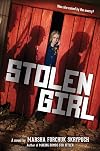
Nadia is haunted by World War II. Her memories of the war are messy, coming back to her in pieces and flashes she can't control. Though her adoptive mother says they are safe now, Nadia's flashbacks keep coming.Sometimes she remembers running, hunger, and isolation. But other times she remembers living with a German family, and attending big rallies where she was praised for her light hair and blue eyes. The puzzle pieces don't quite fit together, and Nadia is scared by what might be true. show more Could she have been raised by Nazis? Were they her real family? What part did she play in the war? show less
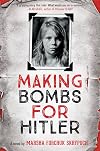
A well done exploration of the life of a child slave laborer in the latter half of World War II. I don't normally read this genre (I get that the Nazis were despicable, and don't enjoy messing with my emotions), but was intrigued by the idea of tampering with the Nazi bombs. This turned out to be a very minor part of the book though. I appreciated that the author portrayed a realistic account of the horrors of being a Nazi prisoner, but didn't go over the top either. There were times where a show more sentence or two would communicate everything it needed to, and if you managed to miss that you could move on. For example, if I tracked the time correctly, I think the majority of 1944 was spent as a prisoner in worse than the labor camp. But very little page time was given to it. I also appreciated that it gave a (though necessarily much abbreviated) conclusion over a few months and then suddenly years as a refugee before neatly wrapping up. The post-Allied-arrival period is not a period I normally hear about.
I'm going to disagree with a few tags and reviews. This isn't a book about the Holocaust. There is a Jewish character, but she keeps that identity hidden. There are various types of prisoners for various reasons, but it's not because they're Jews. This isn't a concentration camp. It's a work camp. They're here to be useful and forcibly help the Nazi war effort. I appreciated this. The concentration camp story has been well told. But the plight of Ukrainian children being traumatized both by the Soviets and then the Nazis and then again by the Soviets (there's a late plot about whether it's safe to go home to Ukraine or not) is a less told tale. show less
I'm going to disagree with a few tags and reviews. This isn't a book about the Holocaust. There is a Jewish character, but she keeps that identity hidden. There are various types of prisoners for various reasons, but it's not because they're Jews. This isn't a concentration camp. It's a work camp. They're here to be useful and forcibly help the Nazi war effort. I appreciated this. The concentration camp story has been well told. But the plight of Ukrainian children being traumatized both by the Soviets and then the Nazis and then again by the Soviets (there's a late plot about whether it's safe to go home to Ukraine or not) is a less told tale. show less
Lists
Awards


You May Also Like


Associated Authors
Statistics
- Works
- 35
- Members
- 3,574
- Popularity
- #7,092
- Rating
- 4.1
- Reviews
- 62
- ISBNs
- 156
- Languages
- 4
- Favorited
- 2

