
Eleonore Stump
Author of The Cambridge Companion to Aquinas
About the Author
Works by Eleonore Stump
Reasoned Faith: Essays in Philosophical Theology in Honor of Norman Kretzmann (1993) — Editor — 41 copies
Grains of Wheat: Suffering and Biblical Narratives (Oxford Studies in Analytic Theology) (2025) 8 copies
Biblical Narratives and Human Flourishing: Knowledge Through Narrative (Routledge Studies in Analytic and Systematic Theology) (2025) 3 copies
Göttliches Vorherwissen und menschliche Freiheit: Beiträge aus der aktuellen analytischen Religionsphilosophie (German Edition) (2015) 2 copies
Associated Works
God and the Philosophers: The Reconciliation of Faith and Reason (1994) — Contributor — 307 copies, 1 review
The Cambridge History of Later Medieval Philosophy: From the Rediscovery of Aristotle to the Disintegration of Scholasticism, 1100-1600 (1982) — Contributor — 115 copies
The Incarnation: An Interdisciplinary Symposium on the Incarnation of the Son of God (2002) — Contributor — 61 copies
The Redemption: An Interdisciplinary Symposium on Christ as Redeemer (2004) — Contributor — 39 copies
Oxford Readings in Philosophical Theology: Volume 1: Trinity, Incarnation, and Atonement (2009) — Contributor — 36 copies
Philosophy and the Christian Faith (University of Notre Dame Studies in the Philosophy of Religion, No. 5) (1988) — Contributor — 27 copies
Being and Goodness: The Concept of the Good in Metaphysics and Philosophical Theology (1990) — Contributor — 25 copies
Oxford Readings in Philosophical Theology: Volume 2: Providence, Scripture, and Resurrection (2009) — Contributor — 20 copies
Studies in Medieval Philosophy (Studies in Philosophy and the History of Philosophy) (1987) — Contributor — 10 copies
Aristotle and His Medieval Interpreters (Canadian Journal of Philosophy Supplementary Volume) (1992) — Contributor — 10 copies
Tagged
Common Knowledge
- Gender
- female
- Education
- Cornell University (Ph.D., philosophy)
- Occupations
- Professor of Philosophy, St. Louis University
Members
Reviews

This book was decades in the making. This book has all the major current Thomistic scholars composing chapters on their own specific area of expertise. This work is marvelous to read. It shows St Thomas in the breadth and depth of philosophical and theological advocacy. Davies and Stump serve as editors but they orient all the contributors toward a crafted summary which gives the reader a mini-encyclopedia on Thomas. This book is not religious in foundation (Aquinas in the title denotes the show more historical man and his own respective thought) although it does cover the outlook which Thomas indeed had as a Parisian professor of theology. This book is now the new standard for students to reference on any topic involving the life and thought of Thomas Aquinas. Excellent. show less
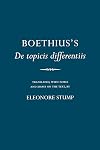
Boethius is mainly remembered for his Consolation of Philosophy, but he certainly was a prolific writer. Quite a bit of his output has survived. He's one of the major formative philosophers for the subsequent scholastic movement of the middle ages. His status as one of the encyclopedists is the reason why I'm getting acquainted with his more obscure works right now.
This work is philosophically Aristotelian, but Aristotelian by way of Themistius and Cicero. Both Themistius and Cicero wrote on show more the Topics and Categories of Aristotle. Boethius spends some time comparing and contrasting the former writers and adding his own thoughts on the subject. His major purpose with this work is to lay out means for finding arguments. He differentiates between rhetorical and dialectical philosophical purposes early on and is primarily concerned with the latter. He seems to have been most idiosyncratic in the way he dealt with the differentiae.
To be perfectly honest, this isn't an incredibly engaging work. It deals with categorical and topical minutiae that is quite dry and probably only matters to specialists. That said, I was quite impressed with, not only Eleonore Stump's translation, but with her notes and essays. She certainly attempted to make the subject matter more accessible. I can't fault her effort at all. Her input certainly added to this book overall.
If someone wants to be acquainted with streams of Aristotelian thought and the way it influenced the scholastics, or just wants to be better acquainted with Boethius, I might recommend this book. I doubt the average reader would want to delve into discussions that often seem to be semantical and not all that practical in matters of logic. show less
This work is philosophically Aristotelian, but Aristotelian by way of Themistius and Cicero. Both Themistius and Cicero wrote on show more the Topics and Categories of Aristotle. Boethius spends some time comparing and contrasting the former writers and adding his own thoughts on the subject. His major purpose with this work is to lay out means for finding arguments. He differentiates between rhetorical and dialectical philosophical purposes early on and is primarily concerned with the latter. He seems to have been most idiosyncratic in the way he dealt with the differentiae.
To be perfectly honest, this isn't an incredibly engaging work. It deals with categorical and topical minutiae that is quite dry and probably only matters to specialists. That said, I was quite impressed with, not only Eleonore Stump's translation, but with her notes and essays. She certainly attempted to make the subject matter more accessible. I can't fault her effort at all. Her input certainly added to this book overall.
If someone wants to be acquainted with streams of Aristotelian thought and the way it influenced the scholastics, or just wants to be better acquainted with Boethius, I might recommend this book. I doubt the average reader would want to delve into discussions that often seem to be semantical and not all that practical in matters of logic. show less
If you are weird and like Early Church treatises on rhetoric and logic, then this is for you. I found Stump's translation very pleasing to the eye and I'm definitely hoping on In Ciceronis Topica
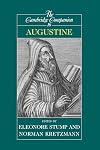
It is hard to overestimate the importance of the work of Augustine of Hippo, both in his own period and in the subsequent history of Western philosophy. Until the thirteenth century, when he may have had a competitor in Thomas Aquinas, he was the most important philosopher of the medieval period. Many of his views, including his theory of the just war, his account of time and eternity, his understanding of the will, his attempted resolution of the problem of evil, and his approach to the show more relation of faith and reason, have continued to be influential up to the present time. In this volume of specially-commissioned essays, sixteen scholars provide a wide-ranging and stimulating contribution to our understanding of Augustine, covering all the major areas of his philosophy and theology. show less
Lists
You May Also Like


Associated Authors
Statistics
- Works
- 25
- Also by
- 19
- Members
- 1,148
- Popularity
- #22,369
- Rating
- 4.0
- Reviews
- 5
- ISBNs
- 72
- Languages
- 3