
Richard Armour (1906–1989)
Author of Twisted Tales from Shakespeare
About the Author
Image credit: Alfred Carlson, ca. 1945.
Works by Richard Armour
It All Started With Stones and Clubs: Being a Short History of War and Weaponry From Earliest Times to the Present (1967) 58 copies, 2 reviews
It all started with freshman English;: A survival kit for students and teachers of English and a relaxed review for those who are happily past it all, (1973) 17 copies, 2 reviews
It all would have startled Columbus: A further mangling of American history that started with It all started with Columbus (1976) 11 copies
YOURS FOR THE ASKING 2 copies
Todo empezo con Eva 1 copy
Pills, Potions and Granny 1 copy
Associated Works
Tagged
Common Knowledge
- Canonical name
- Armour, Richard
- Legal name
- Armour, Richard Willard
- Birthdate
- 1906-07-15
- Date of death
- 1989-02-28
- Gender
- male
- Education
- Pomona College (BA|1927 )
Harvard University (MA|1928|Ph.D|1933) - Occupations
- English professor
American Specialist for the State Department - Organizations
- Scripps College
Wells College
College of the Ozarks
Northwestern University
University of Texas
California Writers Guild (show all 10)
Modern Language Association
American Association of University Professors
P.E.N.
U. S. State Department (WWII) - Awards and honors
- Harvard Research Scholar
Ford Foundation Faculty Fellow - Cause of death
- Parkinson's disease
- Nationality
- USA
- Birthplace
- San Pedro, California, USA
- Places of residence
- Claremont, California, USA
- Place of death
- Claremont, California, USA
- Associated Place (for map)
- California, USA
Members
Reviews

This is pretty relentlessly silly, but it still gets at the crux of the plays, or at least makes good points about traditional interpretations of them. It’s not something I’d recommend to a Shakespeare newbie unless I’m pairing it with the play(s) in question, simply because the stories don’t quite line up, some of the jokes will fly over the head of someone who doesn’t know the stories already, and I’m a bit of a Shakespeare purist. But it’s still fun and entertaining and show more holds up surprisingly well considering it’s sixty-something years old.
The humour and satire here are a mix of pithy quips, puns and deliberate misunderstandings of Shakespeare’s words, and modernisations of some of the scenes. So you get “Juliet withdraws (her lips)” and comments about Rosencrantz and Guildenstern being completely interchangeable and “[Lysander] has an aunt who lives in a town some distance away, where the marriage laws are more lax than Athens. The town isn’t named, but it’s probably in Nevada.” Taken a bit at a time, they’re worthy of a snort or an eye roll, but reading the whole book, with a joke every line or two, got wearing.
Another note: I think I’ve read this before, actually. It’s from my dad’s library and he loaned it to me over Christmas, and I have vague memories of reading a book like this in high school. If I did, I think I found it funnier then, so “slightly bored teenage book nerd” is probably the perfect audience. On the other hand, I have a good memory as a rule and the fact that I’m not sure if I’ve read this or not, well. That says something too.
In sum: this lasted me an amusing few days but I’m probably going to find it pretty forgettable in the long run. I’d rec it if you’re interested or you happen to like Shakespeare and see it secondhand somewhere, but it’s not really something to rush out and get. English teachers will probably find a winner, though.
6/10
To bear in mind: The humour is very 1950s, so not every joke lands well on 21st century ears. Especially some of the jokes about the women. show less
The humour and satire here are a mix of pithy quips, puns and deliberate misunderstandings of Shakespeare’s words, and modernisations of some of the scenes. So you get “Juliet withdraws (her lips)” and comments about Rosencrantz and Guildenstern being completely interchangeable and “[Lysander] has an aunt who lives in a town some distance away, where the marriage laws are more lax than Athens. The town isn’t named, but it’s probably in Nevada.” Taken a bit at a time, they’re worthy of a snort or an eye roll, but reading the whole book, with a joke every line or two, got wearing.
Another note: I think I’ve read this before, actually. It’s from my dad’s library and he loaned it to me over Christmas, and I have vague memories of reading a book like this in high school. If I did, I think I found it funnier then, so “slightly bored teenage book nerd” is probably the perfect audience. On the other hand, I have a good memory as a rule and the fact that I’m not sure if I’ve read this or not, well. That says something too.
In sum: this lasted me an amusing few days but I’m probably going to find it pretty forgettable in the long run. I’d rec it if you’re interested or you happen to like Shakespeare and see it secondhand somewhere, but it’s not really something to rush out and get. English teachers will probably find a winner, though.
6/10
To bear in mind: The humour is very 1950s, so not every joke lands well on 21st century ears. Especially some of the jokes about the women. show less

Richard Armour's 1962 book “Golf Is a Four-Letter Word” might be seen as a long introduction to his doggerel about golf, which comes at the end and makes reading the first 80 pages worthwhile.
Not that the humorous memoir that makes up most of the book is not worth reading. It may not be as amusing today as it once was, yet readers will at least smile several times along the way. Armour tells about getting hooked on golf as a teenager and staying hooked despite never becoming accomplished show more at the game.
One line that made me smile is this one: "Putting on the carpet my wife didn't mind, except when we had guests and I kept asking them to move their feet."
Most of the book tells of his youthful efforts to master the game. While in college, he says, he would wear his golf clothes and carry his clubs to his classes so that he could get to the course without delay afterward. Noticing this, the college president asked him for golf lessons, even though the president was already a better golfer than Armour.
Yes, all this is fun, but the real fun comes at the end when Armour, who himself became a college professor, presents some of his best light verse about golf. It is only a small sampling, he confesses. "Since I write more light verse about golf than could ever be published (there being a limited market), our attic and cellar are filled with boxes and bales of the stuff, and there is little room left for clothes in our closets."
One need not be a golfer — I am not one — to enjoy Armour's verses. My favorite:
The locker room's one
Place at least, where a guy,
When the round is done,
Can improve his lie. show less
Not that the humorous memoir that makes up most of the book is not worth reading. It may not be as amusing today as it once was, yet readers will at least smile several times along the way. Armour tells about getting hooked on golf as a teenager and staying hooked despite never becoming accomplished show more at the game.
One line that made me smile is this one: "Putting on the carpet my wife didn't mind, except when we had guests and I kept asking them to move their feet."
Most of the book tells of his youthful efforts to master the game. While in college, he says, he would wear his golf clothes and carry his clubs to his classes so that he could get to the course without delay afterward. Noticing this, the college president asked him for golf lessons, even though the president was already a better golfer than Armour.
Yes, all this is fun, but the real fun comes at the end when Armour, who himself became a college professor, presents some of his best light verse about golf. It is only a small sampling, he confesses. "Since I write more light verse about golf than could ever be published (there being a limited market), our attic and cellar are filled with boxes and bales of the stuff, and there is little room left for clothes in our closets."
One need not be a golfer — I am not one — to enjoy Armour's verses. My favorite:
The locker room's one
Place at least, where a guy,
When the round is done,
Can improve his lie. show less

Richard Armour's “Drug Store Days: My Youth Among the Pills and Potions” (1959) may be one of the funniest memoirs you will ever read, even if it is far from the funniest of Armour's books.
Armour grew up the son and grandson of California druggists. He did not follow the family tradition and instead became a college professor and humorist, author of numerous textbook parodies such as “It All Started with Columbus” and light verse.
Most of the humor in “Drug Store Days” comes at show more his own family's expense. Both of his quirky grandmothers complicated family life. His dad's mother had been married to the drug store's original owner and continued to act as if the store were hers, coming in every day and staking out a position near the ladies' restroom and making announcements whenever it was occupied. "Besides, as long as he owed her anything she felt that the store was really hers and that she was entitled to drop in and criticize and help herself to peppermints," Armour writes.
As for his maternal grandmother, she lived with the family for several years and insisted upon a nip of alcohol at bedtime. When Prohibition came in, she refused to change her habit, and in fact refused to go to bed without her nightcap. Fortunately his father, being a druggist, had remedies in his store containing enough alcohol to give his mother-in-law a good night's sleep and himself a little peace in his home.
Another frequent subject of Armour's memories is his Uncle Lester, his father's unmarried brother, who seem favored by their mother, at least as long as he stayed unmarried. She did her best to discourage any woman who might take an interest in Lester.
Armor's father was a tightwad who squeezed maximum profit out of everything, while refusing to install a soda fountain in his drug store at a time when soda fountains were a major source of revenue for his competitors. He probably didn't like the thought of his son, and perhaps his mother, consuming most of the profits. As for his mother, she had a jealous streak, especially after her husband installed a couch in the basement of his store.
Richard Armour had a gift for finding the humor in just about anything, including Christopher Columbus, Karl Marx and his own grandmothers. Thank goodness he chose not to become a druggist. show less
Armour grew up the son and grandson of California druggists. He did not follow the family tradition and instead became a college professor and humorist, author of numerous textbook parodies such as “It All Started with Columbus” and light verse.
Most of the humor in “Drug Store Days” comes at show more his own family's expense. Both of his quirky grandmothers complicated family life. His dad's mother had been married to the drug store's original owner and continued to act as if the store were hers, coming in every day and staking out a position near the ladies' restroom and making announcements whenever it was occupied. "Besides, as long as he owed her anything she felt that the store was really hers and that she was entitled to drop in and criticize and help herself to peppermints," Armour writes.
As for his maternal grandmother, she lived with the family for several years and insisted upon a nip of alcohol at bedtime. When Prohibition came in, she refused to change her habit, and in fact refused to go to bed without her nightcap. Fortunately his father, being a druggist, had remedies in his store containing enough alcohol to give his mother-in-law a good night's sleep and himself a little peace in his home.
Another frequent subject of Armour's memories is his Uncle Lester, his father's unmarried brother, who seem favored by their mother, at least as long as he stayed unmarried. She did her best to discourage any woman who might take an interest in Lester.
Armor's father was a tightwad who squeezed maximum profit out of everything, while refusing to install a soda fountain in his drug store at a time when soda fountains were a major source of revenue for his competitors. He probably didn't like the thought of his son, and perhaps his mother, consuming most of the profits. As for his mother, she had a jealous streak, especially after her husband installed a couch in the basement of his store.
Richard Armour had a gift for finding the humor in just about anything, including Christopher Columbus, Karl Marx and his own grandmothers. Thank goodness he chose not to become a druggist. show less
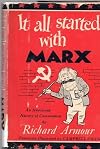
Imagine making light of the reign of Ivan the Terrible, the Russian Revolution and Stalin’s bloody purges. Well, more than 60 years ago Richard Armour not only imagined it but wrote a book about it, “It All Started With Marx.” All these years later, it remains a funny and, oddly enough, educational book.
Armour was, after all, an educator first and foremost. His students at the California college where he taught English knew him as Dr. Armour. So when he wrote his satirical books (or show more perhaps they should be called parodies of textbooks), he based his humor on facts, usually those found in other, more serious books on the same subjects. Like Mad magazine during its heyday, Armour informed about the very things he ridiculed.
Thus we find lines like this: “Marx did not live to complete ‘Das Kapital,’ nor have many readers lived to finish it.” The facts, then the gag, all in one neat sentence. Two pages later, commenting on the size of Russia, Armour writes, “From the earliest times the Russian has had plenty of elbow room, which explains why he puts his hands on his hips while dancing.”
Like Henny Youngman, a contemporary of Armour’s, he keeps the one-liners coming, one after another. Some fall flat, but they come so quickly that readers never breaks stride. If one gag isn’t funny, the next one will be.
Armour’s books on history, art, literature and a variety of other subjects were popular during the Fifties and Sixties. I discovered them when I was in high school. Much of what I read in them reenforced what I read in traditional textbooks. I missed “It All Started With Marx” back then. It was good to catch up with it now. It’s never too late to learn. show less
Armour was, after all, an educator first and foremost. His students at the California college where he taught English knew him as Dr. Armour. So when he wrote his satirical books (or show more perhaps they should be called parodies of textbooks), he based his humor on facts, usually those found in other, more serious books on the same subjects. Like Mad magazine during its heyday, Armour informed about the very things he ridiculed.
Thus we find lines like this: “Marx did not live to complete ‘Das Kapital,’ nor have many readers lived to finish it.” The facts, then the gag, all in one neat sentence. Two pages later, commenting on the size of Russia, Armour writes, “From the earliest times the Russian has had plenty of elbow room, which explains why he puts his hands on his hips while dancing.”
Like Henny Youngman, a contemporary of Armour’s, he keeps the one-liners coming, one after another. Some fall flat, but they come so quickly that readers never breaks stride. If one gag isn’t funny, the next one will be.
Armour’s books on history, art, literature and a variety of other subjects were popular during the Fifties and Sixties. I discovered them when I was in high school. Much of what I read in them reenforced what I read in traditional textbooks. I missed “It All Started With Marx” back then. It was good to catch up with it now. It’s never too late to learn. show less
Lists
Awards

You May Also Like


Associated Authors
Statistics
- Works
- 64
- Also by
- 3
- Members
- 2,286
- Popularity
- #11,228
- Rating
- 3.8
- Reviews
- 57
- ISBNs
- 95
- Languages
- 1
- Favorited
- 7