
Will Cuppy (1884–1949)
Author of The Decline and Fall of Practically Everybody
About the Author
Image credit: Will Cuppy
Works by Will Cuppy
Associated Works
Tagged
Common Knowledge
- Legal name
- Cuppy, William Jacob
- Birthdate
- 1884-08-23
- Date of death
- 1949-09-19
- Gender
- male
- Education
- University of Chicago (AB|1907)
- Occupations
- book critic
- Organizations
- New York Herald Tribune
- Nationality
- USA
- Birthplace
- Auburn, Indiana, USA
- Places of residence
- Long Island, New York, USA
Chicago, Illinois, USA
Greenwich Village, New York, New York, USA
Auburn, Indiana, USA - Place of death
- New York, New York, USA
- Burial location
- Evergreen Cemetery, Auburn, Indiana, USA
- Associated Place (for map)
- USA
Members
Reviews
The Decline and Fall of Practically Everybody: Great Figures of History Hilariously Humbled by Will Cuppy
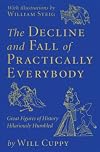
This book is hilarious and also historically accurate and very carefully researched. It was published posthumously and one can only imagine the wonderful updates that would have occurred to subsequent additions if he had lived.
The footnotes are witty and sharp and in no way detract from the rest of the work. This is the way history should be written and taught. The historical characters are brought back to earth and are written as real humans with all of their foibles exposed for laughs.
For show more those that love history, this is a must read. For those who love humour, you will get plenty of laughs while also getting educated. Don't forget to read the afterword. It discusses Will Cuppy in depth. I can only imagine that my place will look like his by the time I am dead. He was a misanthrope after my own heart. show less
The footnotes are witty and sharp and in no way detract from the rest of the work. This is the way history should be written and taught. The historical characters are brought back to earth and are written as real humans with all of their foibles exposed for laughs.
For show more those that love history, this is a must read. For those who love humour, you will get plenty of laughs while also getting educated. Don't forget to read the afterword. It discusses Will Cuppy in depth. I can only imagine that my place will look like his by the time I am dead. He was a misanthrope after my own heart. show less

This is my father's paperback copy which I nearly read to death. I would give it 6 stars if possible. Cuppy did genuine serious research and included real, if bizarre, facts, but he told everything with a marvelous light style and was a master of the comic footnote. The book is lives of the great (chiefly rulers, plus some early settlers of the Americas) running from Khufu to George III and Leif the Lucky to Miles Standish, as well as two essays on royal pranks and royal stomachs. The witty show more line drawings by William Steig add a great deal to the fun. As with some of Cuppy's other work, this was edited after his death by Fred Feldkamp. show less
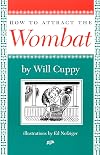
This was Cuppy's third book of complaints about animals. It is mostly about mammals, but also gets into amphibians, birds, insects, worms, Greek poets, and practically everything else. It is rich in empirical science, such as, "A decapitated salamander cannot make quick decisions," and philosophical insights, such as, "Intelligence is the capacity to know what we are doing and instinct is just instinct. The results are about the same." And even aesthetics: "The wart hog is often called the show more ugliest of all animals but the rhinoceros is uglier because he is larger and there is more of him to be ugly."
There is a section titled “Problem Mammals” but Cuppy seemed to have had problems with all the animals in this book, including “birds who can’t even fly” and “birds who can’t sing and know it.” And wombats, of course. “Are wombats people?” he asks, rhetorically. Because animals are, after all, only human. Three whole chapters are devoted to wombats but I can’t say they offer any useful advice on attracting them. No matter. After reading the three chapters you probably won’t even want to attract them!
Some people have accused Cuppy of making up things. I have never found any proof of this, but where did he get the factoid on page 116, that a snail can do the hundred yard dash in thirty hours flat? Can’t help wondering about that one!
Very funny. Cuppy-strength funny. One does not need to be a wombat fancier to enjoy this book, which is lavishly and delightfully illustrated by Ed Nofziger. show less
There is a section titled “Problem Mammals” but Cuppy seemed to have had problems with all the animals in this book, including “birds who can’t even fly” and “birds who can’t sing and know it.” And wombats, of course. “Are wombats people?” he asks, rhetorically. Because animals are, after all, only human. Three whole chapters are devoted to wombats but I can’t say they offer any useful advice on attracting them. No matter. After reading the three chapters you probably won’t even want to attract them!
Some people have accused Cuppy of making up things. I have never found any proof of this, but where did he get the factoid on page 116, that a snail can do the hundred yard dash in thirty hours flat? Can’t help wondering about that one!
Very funny. Cuppy-strength funny. One does not need to be a wombat fancier to enjoy this book, which is lavishly and delightfully illustrated by Ed Nofziger. show less

Will Cuppy was a great humorist. This is not his best book or his funniest, but it is as close as he ever got to writing autobiography. It provides fascinating glimpses into his life during the 1920s, when he was still an obscure and impecunious book reviewer.
The New York Times said that Cuppy was known as the hermit of Jones Beach "because he used to retire to a shack there to brood from time to time." In fact he brooded there full-time from 1921 to 1929, which should qualify him as an show more expert. A hermit, said Cuppy, "is simply a person to whom civilization has failed to adjust itself." This book provides all you will need to know, including recipes, housekeeping tips, important information about the history of spinach, and full particulars on "living from can to mouth"— "new, novel and palatable ways of opening tin cans." Advice to cooks: "When you smell it burning, it's done." I hesitate to recommend his recipes, even in emergencies, but his "Cuppy Plan of Motionless Housekeeping" works for me!
He tells how to discourage visitors and how to hide private food stashes from them. He discusses whether a hermit should keep pets, such as fish or clams, concluding in the negative. Pet fish wound one's vanity past bearing with their complete lack of response. And "the appearance of the clam is all against it for anything approaching intimate relations. For what becomes of high romance when you can't tell whether the small exposed portion of the other party is its foot or its face?"
A book of deep philosophical reflections on topics important to hermits: sardine sandwiches, canned corn, ham and eggs, cabbages and beans, coffee and pancakes, free food. Even prunes—did they ask to be stewed? And spinach, also known as succory pottage. The humor is subtle and not for everyone, but this is must reading for Cuppy fans. show less
The New York Times said that Cuppy was known as the hermit of Jones Beach "because he used to retire to a shack there to brood from time to time." In fact he brooded there full-time from 1921 to 1929, which should qualify him as an show more expert. A hermit, said Cuppy, "is simply a person to whom civilization has failed to adjust itself." This book provides all you will need to know, including recipes, housekeeping tips, important information about the history of spinach, and full particulars on "living from can to mouth"— "new, novel and palatable ways of opening tin cans." Advice to cooks: "When you smell it burning, it's done." I hesitate to recommend his recipes, even in emergencies, but his "Cuppy Plan of Motionless Housekeeping" works for me!
He tells how to discourage visitors and how to hide private food stashes from them. He discusses whether a hermit should keep pets, such as fish or clams, concluding in the negative. Pet fish wound one's vanity past bearing with their complete lack of response. And "the appearance of the clam is all against it for anything approaching intimate relations. For what becomes of high romance when you can't tell whether the small exposed portion of the other party is its foot or its face?"
A book of deep philosophical reflections on topics important to hermits: sardine sandwiches, canned corn, ham and eggs, cabbages and beans, coffee and pancakes, free food. Even prunes—did they ask to be stewed? And spinach, also known as succory pottage. The humor is subtle and not for everyone, but this is must reading for Cuppy fans. show less
Lists
Awards


You May Also Like


Associated Authors
Statistics
- Works
- 11
- Also by
- 2
- Members
- 1,574
- Popularity
- #16,405
- Rating
- 3.8
- Reviews
- 36
- ISBNs
- 49
- Languages
- 6
- Favorited
- 8
