
Wendy McClure
Author of The Wilder Life: My Adventures in the Lost World of Little House on the Prairie
About the Author
Image credit: Galleycat
Series
Works by Wendy McClure
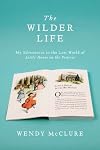
The Wilder Life: My Adventures in the Lost World of Little House on the Prairie (2011) 798 copies, 79 reviews
The Amazing Mackerel Pudding Plan: Classic Diet Recipe Cards from the 1970s (2006) 115 copies, 4 reviews
Don't Trade the Baby for a Horse: And Other Ways to Make Your Life a Little More Laura Ingalls Wilder (2012) 13 copies, 1 review
The Rural Town: Design 1 copy
It's a Pumpkin! 1 copy
Tagged
Common Knowledge
- Birthdate
- 1971
- Gender
- female
- Birthplace
- Oak Park, Illinois, USA
- Associated Place (for map)
- Illinois, USA
Members
Discussions
Found: orphans, travel, juvenile fiction, title says wonder... in Name that Book (November 2023)
Reviews
Full disclosure: if you did not spend a huge chunk of your childhood as a Laura Ingalls Wilder geek, if you never cajoled your grandmother into making a handsewn sunbonnet, never dreamed of eating snow candy or churning your own butter or making a nine-patch quilt, then this might not be the book for you. I adored Laura Ingalls Wilder. I loved the books so much that my father regularly sat me down for lectures about daydreams vs. real life until he eventually forbade the books altogether. show more (Yes, I am the only person I have ever heard of who was actually forbidden to read wholesome stories about pioneer life. I still don't know what he was thinking.) A couple of years ago, when my daughter read the books for the first time, we visited the Wilder house in Mansfield, Missouri, and I--a grown woman who hadn't actually read the books in at least a decade, who should have outgrown sentimentality and hokum--caught myself tearing up at the sight of Pa's fiddle. (And after we toured the house, I insisted on going back to the museum for one more look at the fiddle.) The point I am making: I am the exact audience for this book, and I loved every last word of it. And now I just want to hang out with Wendy McClure and trade Laura anecdotes. show less
I was one of those little girls who wanted to step into the world of Laura Ingalls Wilder. One of my last Halloween costumes was as a pioneer girl, complete with sunbonnet. I didn't have the long hair, so I couldn't complete the outfit with pigtail braids, but I had a shawl and everything. Of course, wearing a sunbonnet at night probably wasn't the safest idea, but I was adamant. I also have the Laura Ingalls Wilder cookbook and have made quite a few things from its pages. Thanks to Ms. show more McClure, I know I was not alone in my obsession.
The Wilder Life is Ms. McClure's acceptance and fulfillment of her own Laura obsession. She talks frequently about her need to find Laura World. Her visits to the various homesites are thrilling and make me want to take a similar trip one day. Yet, what is truly fascinating is her uncovering of the factual versus fictional elements of these novels. I never considered the fact that they are on the fiction shelves in the library for a reason. Like, Ms. McClure, this discovery left me a bit shaken, much to my chagrin.
Ms. McClure's writing is engaging and thoroughly enjoyable. She lets the reader inside her head and inside her life as she made this journey. Her frankness and humor makes her an author the reader can easily see becoming a close friend. This conversational tone lends itself well to the material, as it really is all about her journey of self-discovery, what was driving her need to find Laura World and what she uncovered along the way.
Never preachy and definitely not boring, Ms. McClure shares what makes Laura so fascinating to her and sheds light on why others have been so intrigued by her. Whether one is a fan from the novels or from the TV show, The Wilder Life has something for anyone who has wanted to see a sod dugout, ride in a covered wagon, or make vanity cakes just because they want to know what it was like for Laura. show less
The Wilder Life is Ms. McClure's acceptance and fulfillment of her own Laura obsession. She talks frequently about her need to find Laura World. Her visits to the various homesites are thrilling and make me want to take a similar trip one day. Yet, what is truly fascinating is her uncovering of the factual versus fictional elements of these novels. I never considered the fact that they are on the fiction shelves in the library for a reason. Like, Ms. McClure, this discovery left me a bit shaken, much to my chagrin.
Ms. McClure's writing is engaging and thoroughly enjoyable. She lets the reader inside her head and inside her life as she made this journey. Her frankness and humor makes her an author the reader can easily see becoming a close friend. This conversational tone lends itself well to the material, as it really is all about her journey of self-discovery, what was driving her need to find Laura World and what she uncovered along the way.
Never preachy and definitely not boring, Ms. McClure shares what makes Laura so fascinating to her and sheds light on why others have been so intrigued by her. Whether one is a fan from the novels or from the TV show, The Wilder Life has something for anyone who has wanted to see a sod dugout, ride in a covered wagon, or make vanity cakes just because they want to know what it was like for Laura. show less
A wonderful, fabulous, fantastic book. Wendy McClure inhabited the world of the Little House books in the same way I did, when she was growing up. Frequently I would say out loud "YES!" or "Me too!" or "I agree!" while reading. She clarified quite a few things about the series that had been bugging me (books, timing, characters, storylines, etc). I'm glad she did all the research so I didn't have to!
This is not a strictly scholarly work, by the way. She does do quite a bit of research but show more the book is about her physical and mental journies and what she learns along the way - about Laura, Rose, herself.
If you liked the Little House on the Prairie books, you should give this a try. I loved this book! I can't stop thinking about it. It will stay with me for a very long time. show less
This is not a strictly scholarly work, by the way. She does do quite a bit of research but show more the book is about her physical and mental journies and what she learns along the way - about Laura, Rose, herself.
If you liked the Little House on the Prairie books, you should give this a try. I loved this book! I can't stop thinking about it. It will stay with me for a very long time. show less
Surprisingly poignant, not surprisingly fun to read and hilarious. From one Little House nerd to a million, a love letter to Laura Ingalls Wilder, her known and unknown lives, sadnesses and legions of loving, weird and earnest fans.
Awards


You May Also Like


Associated Authors
Statistics
- Works
- 16
- Members
- 1,576
- Popularity
- #16,374
- Rating
- 3.7
- Reviews
- 101
- ISBNs
- 49
- Favorited
- 1
