
Susan Gregg Gilmore
Author of Looking for Salvation at the Dairy Queen
About the Author
Works by Susan Gregg Gilmore
Lunch at the Piccadilly 1 copy
Associated Works
Tagged
Common Knowledge
- Birthdate
- 1961-09-07
- Gender
- female
- Education
- University of Virginia
University of Texas at Austin - Nationality
- USA
- Birthplace
- Nashville, Tennessee, USA
- Places of residence
- Nashville, Tennessee, USA
Chattanooga, Tennessee, USA - Associated Place (for map)
- Tennessee, USA
Members
Reviews
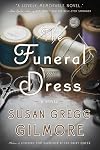
By Susan Gregg Gilmore
Broadway Books (Random House), 356 pgs
978-0-307-88621-7
Submitted by the publisher
Rating: 3
The Funeral Dress by Susan Gregg Gilmore is pornographic. No, not sexually pornographic. This is Appalachia poverty porn. I felt like a voyeur reading this one, almost like watching a train wreck. It's already hideous and only going to get worse but you can't tear your gaze from imminent catastrophe. Is our gaze prurient? I felt like a tourist confronting Calcutta for the first show more time. Does the mere fact of bearing witness obligate us to action? Is there anything "mere" about witnessing? Should the witnessing compel us to action? If so, what sort of action?
Emmalee Bullard is nineteen, a high school dropout, seamstress (she makes collars) at the local shirt factory, virtual orphan, and new single mother of infant daughter, Kelly Faye. Emmalee's mother died of cancer when she was very young so she lives with her father, Nolan Bullard, in a two-room "house" (no plumbing, no running water, tar paper for walls and a roof with more holes than a cheese grater) in a holler of eastern Tennessee known as Red Chert. It is 1974. Nolan is ninety-three percent useless. He is physically and emotionally abusive, a drunk, and makes a habit of disappearing for days on end.
There is one point of light in all of this bleakness. An older woman at the shirt factory, Leona Lane, has befriended Emmalee. Leona knows that without intervention the infant will not live and Emmalee might as well not. So she talks to her husband Curtis (a saint, I'm pretty sure) and they plan to collect Emmalee and her baby from Red Chert and bring them to live in their trailer house on the top of Old Lick mountain. The trailer may sway like a drunk in a high wind but no drunks live there, which is a plus. Also, heat. Winter is moving in fast. The night before the Lanes are going to rescue Emmalee and her baby their pickup is forced off a narrow, twisty mountain road by a logging semi and both Lanes are dead on impact.
Emmalee hears the news the next day when Nolan is called out by Mr. Fulton, the funeral home director, to retrieve the bodies. She determines to sew Leona's funeral dress because nothing in Leona's closet or at the funeral home is special enough for the woman who was going to save her life. This seemingly simple gesture unleashes the following in the community: gossip, contempt, the identity of Kelly Faye's father, Baptists, fear, preachers, bigotry, betrayal, fury, social workers, envy, the Church of Christ, pride, greed, doctors, assault, battery, kidnapping, the sheriff, and I'm positive I'm overlooking several other factors. It all shakes out in the end but not in any way you might suspect. I'd like to commend the author for not going after an all-tied-up-in-a-bow-happily-ever-after-assured conclusion. In fact, the conclusion is satisfying but not actually a conclusion. See?
The Funeral Dress is Susan Gregg Gilmore's third book. She has written for the Chattanooga Times Free Press, the Los Angeles Times and the Christian Science Monitor. Her first novel, Looking for Salvation at the Dairy Queen, was a Southern Independent Booksellers Alliance (SIBA) 2009 Book Award Nominee. Her second novel, The Improper Life of Bezellia Grove, was named a 2010 SIBA Summer OKRA Pick.
So what's the take-away? Two things:
1) In answer to the ignorant question "Why doesn't she just leave?" please see page 319, paragraph two, in which Emmalee first steps foot in the Cullen Church of Christ:
The walls were a creamy white, and the windows were clear, not all different colors like they were at the Baptist and Methodist churches in Cullen. Emmalee darted like a field mouse trying to find cover. She longed to be back in Red Chert, hugged tight there at the mountain's base. At least there she understood the landscape. )
2) Mothering is essential. Emmalee Bullard needed mothering desperately, for herself and so that she would know how to mother Kelly Faye. Also, that mothering is not only acquired from mothers. Fathers can do it. Not Nolan Bullard, but human fathers can do it. Friends can do the mothering. From whom you get your mothering doesn't matter. What matters is that you get it. show less
Broadway Books (Random House), 356 pgs
978-0-307-88621-7
Submitted by the publisher
Rating: 3
The Funeral Dress by Susan Gregg Gilmore is pornographic. No, not sexually pornographic. This is Appalachia poverty porn. I felt like a voyeur reading this one, almost like watching a train wreck. It's already hideous and only going to get worse but you can't tear your gaze from imminent catastrophe. Is our gaze prurient? I felt like a tourist confronting Calcutta for the first show more time. Does the mere fact of bearing witness obligate us to action? Is there anything "mere" about witnessing? Should the witnessing compel us to action? If so, what sort of action?
Emmalee Bullard is nineteen, a high school dropout, seamstress (she makes collars) at the local shirt factory, virtual orphan, and new single mother of infant daughter, Kelly Faye. Emmalee's mother died of cancer when she was very young so she lives with her father, Nolan Bullard, in a two-room "house" (no plumbing, no running water, tar paper for walls and a roof with more holes than a cheese grater) in a holler of eastern Tennessee known as Red Chert. It is 1974. Nolan is ninety-three percent useless. He is physically and emotionally abusive, a drunk, and makes a habit of disappearing for days on end.
There is one point of light in all of this bleakness. An older woman at the shirt factory, Leona Lane, has befriended Emmalee. Leona knows that without intervention the infant will not live and Emmalee might as well not. So she talks to her husband Curtis (a saint, I'm pretty sure) and they plan to collect Emmalee and her baby from Red Chert and bring them to live in their trailer house on the top of Old Lick mountain. The trailer may sway like a drunk in a high wind but no drunks live there, which is a plus. Also, heat. Winter is moving in fast. The night before the Lanes are going to rescue Emmalee and her baby their pickup is forced off a narrow, twisty mountain road by a logging semi and both Lanes are dead on impact.
Emmalee hears the news the next day when Nolan is called out by Mr. Fulton, the funeral home director, to retrieve the bodies. She determines to sew Leona's funeral dress because nothing in Leona's closet or at the funeral home is special enough for the woman who was going to save her life. This seemingly simple gesture unleashes the following in the community: gossip, contempt, the identity of Kelly Faye's father, Baptists, fear, preachers, bigotry, betrayal, fury, social workers, envy, the Church of Christ, pride, greed, doctors, assault, battery, kidnapping, the sheriff, and I'm positive I'm overlooking several other factors. It all shakes out in the end but not in any way you might suspect. I'd like to commend the author for not going after an all-tied-up-in-a-bow-happily-ever-after-assured conclusion. In fact, the conclusion is satisfying but not actually a conclusion. See?
The Funeral Dress is Susan Gregg Gilmore's third book. She has written for the Chattanooga Times Free Press, the Los Angeles Times and the Christian Science Monitor. Her first novel, Looking for Salvation at the Dairy Queen, was a Southern Independent Booksellers Alliance (SIBA) 2009 Book Award Nominee. Her second novel, The Improper Life of Bezellia Grove, was named a 2010 SIBA Summer OKRA Pick.
So what's the take-away? Two things:
1) In answer to the ignorant question "Why doesn't she just leave?" please see page 319, paragraph two, in which Emmalee first steps foot in the Cullen Church of Christ:
The walls were a creamy white, and the windows were clear, not all different colors like they were at the Baptist and Methodist churches in Cullen. Emmalee darted like a field mouse trying to find cover. She longed to be back in Red Chert, hugged tight there at the mountain's base. At least there she understood the landscape. )
2) Mothering is essential. Emmalee Bullard needed mothering desperately, for herself and so that she would know how to mother Kelly Faye. Also, that mothering is not only acquired from mothers. Fathers can do it. Not Nolan Bullard, but human fathers can do it. Friends can do the mothering. From whom you get your mothering doesn't matter. What matters is that you get it. show less
For some, life during the mid 20th century in the rural south was happy and fulfilling, complete with considerate neighbors, a good job, a supportive church, and a loving family. For others, like Emmalee Bullard, life was a hardscrabble existence, trying to survive from one day to the next any way one could.
Nothing has ever gone right for Emmalee. Born to poor parents, her father was drunk much of the time and her down-trodden mother died of cancer when Emmalee was but a child. Emmalee grew show more up mostly unloved and uncared for. She leaves school to work in a shirt factory, a pretty, shy girl desperate for friendship and affection. A fellow seamstress, Leona, takes her under her wing, teaching her and befriending her. But Emmalee also attracts the attention of the funeral director’s son, and what she interprets as love is just his idea of fun with no commitment. Emmalee bears his child, and, refusing to name him, now must endure the censor of the more righteous townsfolk alone. Though she tries mightily to care for her infant, she is unsure and unable to cope. Leona, seeing the need, insists that Emmalee and her baby come to stay with her and her husband. Emmalee can’t believe her good fortune, that someone actually wants to care for her, help her, and provide for her. But before this miracle occurs, a tragic accident takes this caring couple, and Emmalee is again left on her own.
Emmalee, heartbroken, wants to do something for her friend, one last thing, and that is to make her a special dress for her funeral. And so she does. But though this novel is entitled Funeral Dress, it is much more than a story about a girl making a burial dress. It’s a story about survival and perseverance. It’s about judgments and prejudices. It’s about family and friends and caring. It’s about pulling together to overcome injustices. The main thrust that ties the ends together may be the overlying theme of a young woman making a special dress as her last show of affection for her friend, but it is much more than that.
This Southern tale of life is teeming with undercurrents of many other storylines, woven together to create a tapestry of life that you won’t soon forget. Masterfully penned by Susan Gregg Gilmore, these characters come alive on the page, many touching your heart even while others draw your ire. As you come to know Emmalee, you will witness her growth from an unkempt and dirty youngster, fearful and backward, into a woman who can and will stand up for herself and her child and make her own way. An exceptional read. show less
Nothing has ever gone right for Emmalee. Born to poor parents, her father was drunk much of the time and her down-trodden mother died of cancer when Emmalee was but a child. Emmalee grew show more up mostly unloved and uncared for. She leaves school to work in a shirt factory, a pretty, shy girl desperate for friendship and affection. A fellow seamstress, Leona, takes her under her wing, teaching her and befriending her. But Emmalee also attracts the attention of the funeral director’s son, and what she interprets as love is just his idea of fun with no commitment. Emmalee bears his child, and, refusing to name him, now must endure the censor of the more righteous townsfolk alone. Though she tries mightily to care for her infant, she is unsure and unable to cope. Leona, seeing the need, insists that Emmalee and her baby come to stay with her and her husband. Emmalee can’t believe her good fortune, that someone actually wants to care for her, help her, and provide for her. But before this miracle occurs, a tragic accident takes this caring couple, and Emmalee is again left on her own.
Emmalee, heartbroken, wants to do something for her friend, one last thing, and that is to make her a special dress for her funeral. And so she does. But though this novel is entitled Funeral Dress, it is much more than a story about a girl making a burial dress. It’s a story about survival and perseverance. It’s about judgments and prejudices. It’s about family and friends and caring. It’s about pulling together to overcome injustices. The main thrust that ties the ends together may be the overlying theme of a young woman making a special dress as her last show of affection for her friend, but it is much more than that.
This Southern tale of life is teeming with undercurrents of many other storylines, woven together to create a tapestry of life that you won’t soon forget. Masterfully penned by Susan Gregg Gilmore, these characters come alive on the page, many touching your heart even while others draw your ire. As you come to know Emmalee, you will witness her growth from an unkempt and dirty youngster, fearful and backward, into a woman who can and will stand up for herself and her child and make her own way. An exceptional read. show less
 This review was written for LibraryThing Early Reviewers.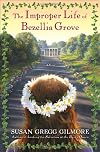
When "they" say that the lifestyles of the rich and famous are not as glorious as we simple lay people imagine, the infamous "they" are probably referring to something along the lines of pretty little, poor little, rich girl, Bezellia Grove.
Born in a stately southern mansion on the outskirts of Nashville, baby Bezellia has, not shoes, but a legacy and a name to fill. Wearing her full name (unabridged as her predecessors chose before her, opting for Zee, Bea, and others) like a blessing a show more curse, the most recent descendant of the prominent family is determined to break away from her lineage, once and for all.
Weaving period-appropriate strands of rebellion (inter racial courtship, the rise of feminism and exploration of sexual freedom) through a more solid tapestry of teenage angst as old as time, Bezellia's story is one of heartbreak and headache, impossible choices and potential silver linings.
In June of 2009, I was a reader but not yet a blogger. I was seriously considering it but hadn't made my final steps in the direction of publication. Then, one evening, while at the wonderful Blue Elephant book store in Decatur, I almost literally bumped into a woman named Susan Gregg Gilmore. She was at the store to discuss her, then new book Looking for Salvation at the Dairy Queen. It was a small group but a lively one. We ended up discussing more of the ins and outs of writing and publishing than southern living. This was fine since, at that point, I hadn't heard of, never mind picked up or read her first book.
It was after that night that I decided I would move forward with my blog. I enjoyed Looking for Salvation at the Dairy Queen but I need to say this: I've fallen out of love. Yes, it's tragic but true. Unfortunately (for the book) or, rather, fortunately (for me) I have a new love.
She is an amazing new love and her name is Bezellia Grove.
What a sophomore offering! What power! What emotion! The book is not terribly hefty but it packs quite a punch. Bezellia's voice is clear and strong, even when she is facing her deepest, darkest decisions. Race, class, war and peace are not so much touched on but, rather, lived. Each hurdle is put up as, not some, name dropping, Forrest Gumpesque, silliness but, instead, an organic experience of living life through a tumultuous time both locally and globally.
I came away from this novel with a sense of retroactive star-stuck awe. I am so proud of the depth put into Susan Gregg Gilmore's second novel. I will definitely recommend the first but if you have to choose one, over the other (for some horrible reason) I have to put my bid in for the most recent story, the lovely and beautiful The Improper Life of Bezellia Grove. show less
Born in a stately southern mansion on the outskirts of Nashville, baby Bezellia has, not shoes, but a legacy and a name to fill. Wearing her full name (unabridged as her predecessors chose before her, opting for Zee, Bea, and others) like a blessing a show more curse, the most recent descendant of the prominent family is determined to break away from her lineage, once and for all.
Weaving period-appropriate strands of rebellion (inter racial courtship, the rise of feminism and exploration of sexual freedom) through a more solid tapestry of teenage angst as old as time, Bezellia's story is one of heartbreak and headache, impossible choices and potential silver linings.
In June of 2009, I was a reader but not yet a blogger. I was seriously considering it but hadn't made my final steps in the direction of publication. Then, one evening, while at the wonderful Blue Elephant book store in Decatur, I almost literally bumped into a woman named Susan Gregg Gilmore. She was at the store to discuss her, then new book Looking for Salvation at the Dairy Queen. It was a small group but a lively one. We ended up discussing more of the ins and outs of writing and publishing than southern living. This was fine since, at that point, I hadn't heard of, never mind picked up or read her first book.
It was after that night that I decided I would move forward with my blog. I enjoyed Looking for Salvation at the Dairy Queen but I need to say this: I've fallen out of love. Yes, it's tragic but true. Unfortunately (for the book) or, rather, fortunately (for me) I have a new love.
She is an amazing new love and her name is Bezellia Grove.
What a sophomore offering! What power! What emotion! The book is not terribly hefty but it packs quite a punch. Bezellia's voice is clear and strong, even when she is facing her deepest, darkest decisions. Race, class, war and peace are not so much touched on but, rather, lived. Each hurdle is put up as, not some, name dropping, Forrest Gumpesque, silliness but, instead, an organic experience of living life through a tumultuous time both locally and globally.
I came away from this novel with a sense of retroactive star-stuck awe. I am so proud of the depth put into Susan Gregg Gilmore's second novel. I will definitely recommend the first but if you have to choose one, over the other (for some horrible reason) I have to put my bid in for the most recent story, the lovely and beautiful The Improper Life of Bezellia Grove. show less
After hearing Susan Gregg Gilmore as a guest on the Southern fiction episode of the Books on the Nightstand podcast, I realized that my love for the genre had been limited to the Gothic side. I had assumed novels like this would be too sweet for my taste, but thankfully I was won over by Gilmore’s discussion and encouraged to expand my horizons.
“She knew the sound of death, its tone and rhythm, as well as she did that of a popular song played over and over on the radio. At her show more father’s house, death never acted hesitant or shy. It came barreling out of nowhere, walking straight up to the front door and announcing itself with a bold and repetitive rap.”
The most striking thing about The Funeral Dress is how real Gilmore’s characters feel. From the first page, I was pulled into Emmalee’s life as her early moments in the Tennewa Shirt Factory are detailed and the stories of those around her established. As the novel progresses, the harsh realities of life in the small Tennessee town make it easy to feel sympathetic toward both Emmalee and Leona. Still, there are multiple dimensions to the characters Gilmore has created, which are revealed in the alternating narrative of the story and come together in a touching end.
Blog: www.rivercityreading.com show less
“She knew the sound of death, its tone and rhythm, as well as she did that of a popular song played over and over on the radio. At her show more father’s house, death never acted hesitant or shy. It came barreling out of nowhere, walking straight up to the front door and announcing itself with a bold and repetitive rap.”
The most striking thing about The Funeral Dress is how real Gilmore’s characters feel. From the first page, I was pulled into Emmalee’s life as her early moments in the Tennewa Shirt Factory are detailed and the stories of those around her established. As the novel progresses, the harsh realities of life in the small Tennessee town make it easy to feel sympathetic toward both Emmalee and Leona. Still, there are multiple dimensions to the characters Gilmore has created, which are revealed in the alternating narrative of the story and come together in a touching end.
Blog: www.rivercityreading.com show less
Lists
Awards

You May Also Like


Associated Authors
Statistics
- Works
- 5
- Also by
- 1
- Members
- 1,081
- Popularity
- #23,777
- Rating
- 3.6
- Reviews
- 89
- ISBNs
- 24
- Favorited
- 3
