
Olivia Campbell
Author of Women in White Coats: How the First Women Doctors Changed the World of Medicine
About the Author
Olivia Campbell is a journalist and author specializing in medicine and women; her work has appeared in The Guardian, the Washington Post, New York Magazine and The Cut, among others. This is her first book.
Image credit: Copyright: Ian Campbell
Works by Olivia Campbell
Women in White Coats: How the First Women Doctors Changed the World of Medicine (2021) 369 copies, 13 reviews
Associated Works
Tagged
Common Knowledge
- Birthdate
- 1981-04
- Gender
- female
- Occupations
- science journalist
novelist - Birthplace
- Harrisonburg, Virginia, USA
- Map Location
- USA
Members
Reviews

If you can read this entire book without being furious, I would be shocked. It's a nonfiction account of the first female doctors who had to fight tooth and nail just to have the right to earn their medical licenses. It focuses on Elizabeth Blackwell, Lizzie Garrett Anderson, and Sophia Jex-Blake and the unbelievable impact they had on the world of medicine. The stupid things they had to fight against, like "You can't be a doctor, we don't have a female word for doctor." just made my blood show more boil. Everyone should read this. It's so well-written and will give you a greater appreciation for the women who fought so hard just to have the right to be a doctor.
“She recognized that precedent setting required people to be above reproach in every respect.” show less
“She recognized that precedent setting required people to be above reproach in every respect.” show less
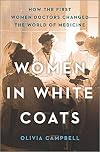
4.25 stars
This is mainly a biography of three of the first women doctors in the mid- to late-19th century, but also a history of the fight for the right of women to become doctors. Elizabeth Blackwell was the first woman in the US to earn an MD, in the mid-1800s. It took a while longer, but Lizzie Garret was the first in England. Sophia Jax-Blake was not immediately next in the UK, but she worked hard fighting for the right of women to be able to earn that designation; she did get her MD show more later s well, but she also helped start up two women’s medical schools – in London and Edinburgh.
Every step of the way took months and years of hard work for these women to be able to earn that MD. With the stereotypes and fears of male doctors, professors, and medical students pushing back with excuses to deny them this. Before the women’s schools were set up, these women had to take classes (many privately, and at a much higher cost), as well as find a placement for clinical practice to gain that experience; very very difficult to do when most hospitals continually turned them down. There were some male doctors (and professors) who were sympathetic and did help out as much as they could.
I’ve left out so much of the struggles! This book is nonfiction, but it reads like fiction. Very readable. Oh, the frustration, though, at the male students, doctors, and professors! They call the women “delicate” and such, but as far as I can tell, the men were the “delicate” ones with their temper tantrums (the phrase entered my head even before she used it in the book!), not able to handle that there are women just as smart and can do the job just as well as they (possibly) could (although I do wonder about some of those men!). And these men were supposed to be trusted to tend to women’s health issues!? Ugh! (Many women at the time avoided, if possible, seeing male doctors for their ailments.) Many of the women students had better grades than the men, but of course, were never really acknowledged for it. show less
This is mainly a biography of three of the first women doctors in the mid- to late-19th century, but also a history of the fight for the right of women to become doctors. Elizabeth Blackwell was the first woman in the US to earn an MD, in the mid-1800s. It took a while longer, but Lizzie Garret was the first in England. Sophia Jax-Blake was not immediately next in the UK, but she worked hard fighting for the right of women to be able to earn that designation; she did get her MD show more later s well, but she also helped start up two women’s medical schools – in London and Edinburgh.
Every step of the way took months and years of hard work for these women to be able to earn that MD. With the stereotypes and fears of male doctors, professors, and medical students pushing back with excuses to deny them this. Before the women’s schools were set up, these women had to take classes (many privately, and at a much higher cost), as well as find a placement for clinical practice to gain that experience; very very difficult to do when most hospitals continually turned them down. There were some male doctors (and professors) who were sympathetic and did help out as much as they could.
I’ve left out so much of the struggles! This book is nonfiction, but it reads like fiction. Very readable. Oh, the frustration, though, at the male students, doctors, and professors! They call the women “delicate” and such, but as far as I can tell, the men were the “delicate” ones with their temper tantrums (the phrase entered my head even before she used it in the book!), not able to handle that there are women just as smart and can do the job just as well as they (possibly) could (although I do wonder about some of those men!). And these men were supposed to be trusted to tend to women’s health issues!? Ugh! (Many women at the time avoided, if possible, seeing male doctors for their ailments.) Many of the women students had better grades than the men, but of course, were never really acknowledged for it. show less
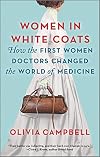

I wish I had enjoyed this more. I learned a lot about a couple of the earliest women pioneers in the field of medicine. Unfortunately too often I got mixed up (names were too similar) and the telling of the back story was interspersed with events in a way that confused rather than illuminated. I really admire the tenacity with which those early women engaged in the fight to earn a place in medical schools and in medical practice.
Lists
Awards


You May Also Like


Statistics
- Works
- 5
- Also by
- 1
- Members
- 484
- Popularity
- #51,010
- Rating
- 3.8
- Reviews
- 16
- ISBNs
- 19
- Languages
- 1