
Janice P. Nimura
Author of The Doctors Blackwell: How Two Pioneering Sisters Brought Medicine to Women and Women to Medicine
About the Author
Janice P. Nimura is the winner of a 2017 Public Scholar award from the National Endowment for the Humanities and the author of Daughters of the Samurai: A Journey from East to West and Back, a New York Times Notable Book. She lives in New York City.
Image credit: credit: Lucy Schaeffer
Works by Janice P. Nimura
The Doctors Blackwell: How Two Pioneering Sisters Brought Medicine to Women and Women to Medicine (2021) 421 copies, 20 reviews
Tagged
Common Knowledge
- Birthdate
- 1971
- Gender
- female
- Education
- Yale University (BA | English)
Columbia University (MA ∙ East Asian Studies) - Occupations
- historian
reviewer
writer - Organizations
- Biographers International Organization
- Agent
- Rob McQuilkin (Massie & McQuilkin)
- Nationality
- USA
- Places of residence
- New York, New York, USA
- Associated Place (for map)
- New York, USA
Members
Reviews
The doctors Blackwell : how two pioneering sisters brought medicine to women--and women to medicine by Janice P. Nimura

“I love mankind...it’s people I can’t stand!!” (Linus Van Pelt, 1959). Elizabeth Blackwell, America’s first woman M.D., wrote something similar to her brother one hundred years before Linus made his famous statement. Samuel Blackwell moved his large family – his wife, their eight children, and other relatives – from England to the United States in the 1830s. The Blackwells were a clannish, intellectual family, who preferred their own company above the company of show more others.
Elizabeth was the first in the family, and the first woman in the United States, to receive a medical degree. Elizabeth had a low opinion of women in general, and she set out to improve women by setting the example for other women to follow. Elizabeth decided that her sister, Emily, was worthy to follow in her footsteps and assist her in her lofty aspirations, so she pushed Emily into the medical field as well.
This is a well-written biography, with an impressive use of correspondence, diaries, and other archival sources. Its biggest problem is its subject, Elizabeth Blackwell. She wasn’t a likable person. Her contemporaries must have felt the same way about her, because she never achieved the accolades she thought were her due. She earned respect through her determined pursuit of her medical profession, but she was not the inspiration she set out to be at the beginning of her career. show less
Elizabeth was the first in the family, and the first woman in the United States, to receive a medical degree. Elizabeth had a low opinion of women in general, and she set out to improve women by setting the example for other women to follow. Elizabeth decided that her sister, Emily, was worthy to follow in her footsteps and assist her in her lofty aspirations, so she pushed Emily into the medical field as well.
This is a well-written biography, with an impressive use of correspondence, diaries, and other archival sources. Its biggest problem is its subject, Elizabeth Blackwell. She wasn’t a likable person. Her contemporaries must have felt the same way about her, because she never achieved the accolades she thought were her due. She earned respect through her determined pursuit of her medical profession, but she was not the inspiration she set out to be at the beginning of her career. show less
The Doctors Blackwell: How Two Pioneering Sisters Brought Medicine to Women and Women to Medicine by Janice P. Nimura
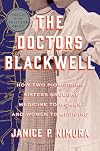
While the focus of this biography sounded interesting, in the end, I didn't particularly enjoy it and skimmed through the last half. The main irritant for me was Elizabeth Blackwell herself. While her determination to become a medical doctor--the first woman to earn the degree in the US--is admirable, I found her to be an extremely unpleasant and unlikable woman. Instead of the empathetic personality I had expected to find, she comes across as selfish and misanthropic. You would expect the show more founder of a hospital for indigent women to care about those she served and strive to change their living conditions, but Elizabeth's only concern was achieving her own "greatness." She could turn on the charm for those who had something she wanted or needed, but she seemed incapable of true friendship, especially with other women. As soon as someone disagreed with her or had any ideas of her own, the two parted ways. With Elizabeth, it was clearly "My way or the highway," even in the case of her fellow physician sister, Emily. Of the two, Emily was more devoted to practicing medicine, while Elizabeth preferred teaching and giving lectures on hygiene and morality. When the sisters clashed regarding how to run their medical college for women, Elizabeth packed up and moved to Scotland. (Her disdain for the US is another point that rankled.) Elizabeth was also strongly against women's suffrage, and I found it annoying that someone who spent her life trying to prove that an intelligent, determined woman could be as capable as a man should argue against her sex's participation in governance. She also came across as jealous of other women who achieved "greatness," such as Florence Nightingale or Dorothea Dix. More than two thirds of the book focused on Elizabeth, which explains why I started to skim and speed read the last half. Emily was the more human and admirable sister, but she got short shrift here, perhaps because Elizabeth had expected her to become little more than an assistant to her own greatness. Emily had ideas of her own and actually cared about her female patients, coworkers, and friends. But I guess that made her less interesting to the author. show less
The doctors Blackwell : how two pioneering sisters brought medicine to women--and women to medicine by Janice P. Nimura
While the author did a good job researching her subjects, I found Elizabeth Blackwell to be unlikable. She looked down her nose at everybody--even her own family members. She was the first female to gain admittance to a reputable medical school--but only because the students thought it was a joke. She didn't seem to enjoy practicing medicine once she became a doctor although she did fight for other women to have that right. She along with her sister Emily (who always ended up doing most of show more the work without the notice Elizabeth gained) founded a medical school for women in New York. The incorporation of social history was also impressive. I came away with more respect for the sister Emily who probably would not have chosen medicine as her career without her sister's influence than for Elizabeth. I suspect Emily would have chosen a career as a naturalist or something similar if she'd been left to her own devices. We can't rewrite history, but we can wonder what might have happened if she'd been willing to stand up to her sister. show less
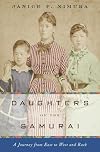
A rather charming book detailing the lives of a trio of women who, having wound up on the wrong side of the restoration of imperial rule in Japan, were able to take advantage of the opportunity to study in America to rather spectacular affect. While Ume Tsuda's eventual founding of a well-regarded women's college in Tokyo was the most lasting impact, that her compatriots were able to become part of the highest reaches of Japanese society after having fallen so low is also worthy of notice. show more The author's urge to write this book mostly came from her own needs to understand the stresses of being caught in cross-cultural strain; having married a Japanese man who was all but assimilated into American society before returning to Japan. show less
Lists
Awards


You May Also Like


Associated Authors
Statistics
- Works
- 2
- Members
- 697
- Popularity
- #36,316
- Rating
- 3.7
- Reviews
- 25
- ISBNs
- 13
- Languages
- 1