
Marie Mutsuki Mockett
Author of Where the Dead Pause, and the Japanese Say Goodbye: A Journey
About the Author
Marie Mutsuki Mocketts novel Picking Bones from Ash was shortlisted for the 2010 Saroyan Prize and the Asian American Literary Awards for Fiction and was a finalist for the Paterson Prize. She lives in San Francisco.
Works by Marie Mutsuki Mockett
The Tree Doctor 1 copy
Tagged
Common Knowledge
- Gender
- female
- Education
- Columbia University (BA|East Asian Languages and Cultures)
- Agent
- Irene Skolnick Literary Agency
- Short biography
- Marie was born in Carmel, California to a Japanese mother and American father, who saw to it that she learned her mother's native tongue. Marie resides in New York with her Scottish husband, her delightful son, and three precocious cats.
- Places of residence
- New York, New York, USA
San Francisco, California, USA - Associated Place (for map)
- USA
Members
Reviews

I read Picking Bones from Ash as part of Book Club. I don't think I would have otherwise heard of this novel and that would have been a shame because I loved it. This review consists of the thoughts and comments I shared with the group last month. Although I've cleaned them up a bit, I couldn't really write a better review. I finished the novel the night before and they capture my thoughts and feelings well.
While reading about Satomi's early life, I felt as if I was in Japan and soaking up show more the differences in culture. The story and characters felt so real and honest. It was as fascinating to me as Snow Flower and the Secret Fan. I also kept making connections to The Thousand Autumns of Jacob De Zoet.
I could so much relate to Satomi. While I’m no prodigy, my mother has very distinct beliefs about how life should be lead. I kept to those while I lived with her, but when I moved away from home and encountered other ways of living, I explored and kept those explorations from her. I also very much related to Satomi’s experiences after giving birth. I am grateful that I never left Allison alone or ran away, but I daydreamed about it constantly during her first 4 or 5 months. I think with all that panic and anxiety her pregnancy and birth created, she fell back on her mother's ideals for life in order to find herself again. I do understand that daydreaming about leaving and actually leaving are two different things, but I could understand what led to Satomi's decision. Reading about it can be uncomfortable, but for many women, those types of feelings are an unwanted companion duriung those post-partum days.
Not everyone could buy that Satomi's decisions after giving birth to Rumi could be attributed to post-partum depression. It was never explicitly mentioned in the book. I could only respond by saying that I recognized what I saw in Satomi, so I didn’t need any other evidence. If what I was thinking and feeling after Allison were born were written into a book, I’m sure I would seem as narcissistic as Satomi seemed. I was so miserable I just wanted to feel good again. For me, that meant daydreaming about running away and leaving my entire life behind. To an outside person, I had a perfectly healthy and beautiful baby girl. Sure, she may have been fussy, but babies grow out of fussiness. At that moment in time, it didn’t feel that way to me. It felt like a permanent hell. I believe that Satomi felt equally trapped.
The second half of Satomi's life worked for me where it did not necessarily work for others. Here is why: In addition to a good dose of post-partum depression after Rumi was born, Satomi became a lot like her mother. She formed a commune of sorts where women had to live like her mother had wanted her to live – without men and to be the best at their art. After I moved to Virginia, I “left” my mother’s ways in a manner of speaking. After Allison was born, I tried to compensate for being so miserable by returning to a life more in tune to my mother’s way of thinking. Zs painful as it all was, I’m just glad that all that backfired. Now I’ve found my own path and am much happier with myself and with being a mother. I can’t say that this was the type of ending I dreamed of for Picking Bones from Ash, but it made sense.
I really enjoyed Mockett's writing and the glimpse she provided into Japanese life. I don't know if she intended for Satomi to have post-partum depression, but she certainly wrote what was true about it as I experienced it. Not everyone loved the book like I did, but it certainly created a great deal of open, in depth conversation the day of Book Club. I recommend Picking Bones from Ash to book clubs and other readers interested in Japanese culture and spirituality. When reading with others, your certain to have a lively conversation. show less
While reading about Satomi's early life, I felt as if I was in Japan and soaking up show more the differences in culture. The story and characters felt so real and honest. It was as fascinating to me as Snow Flower and the Secret Fan. I also kept making connections to The Thousand Autumns of Jacob De Zoet.
I could so much relate to Satomi. While I’m no prodigy, my mother has very distinct beliefs about how life should be lead. I kept to those while I lived with her, but when I moved away from home and encountered other ways of living, I explored and kept those explorations from her. I also very much related to Satomi’s experiences after giving birth. I am grateful that I never left Allison alone or ran away, but I daydreamed about it constantly during her first 4 or 5 months. I think with all that panic and anxiety her pregnancy and birth created, she fell back on her mother's ideals for life in order to find herself again. I do understand that daydreaming about leaving and actually leaving are two different things, but I could understand what led to Satomi's decision. Reading about it can be uncomfortable, but for many women, those types of feelings are an unwanted companion duriung those post-partum days.
Not everyone could buy that Satomi's decisions after giving birth to Rumi could be attributed to post-partum depression. It was never explicitly mentioned in the book. I could only respond by saying that I recognized what I saw in Satomi, so I didn’t need any other evidence. If what I was thinking and feeling after Allison were born were written into a book, I’m sure I would seem as narcissistic as Satomi seemed. I was so miserable I just wanted to feel good again. For me, that meant daydreaming about running away and leaving my entire life behind. To an outside person, I had a perfectly healthy and beautiful baby girl. Sure, she may have been fussy, but babies grow out of fussiness. At that moment in time, it didn’t feel that way to me. It felt like a permanent hell. I believe that Satomi felt equally trapped.
The second half of Satomi's life worked for me where it did not necessarily work for others. Here is why: In addition to a good dose of post-partum depression after Rumi was born, Satomi became a lot like her mother. She formed a commune of sorts where women had to live like her mother had wanted her to live – without men and to be the best at their art. After I moved to Virginia, I “left” my mother’s ways in a manner of speaking. After Allison was born, I tried to compensate for being so miserable by returning to a life more in tune to my mother’s way of thinking. Zs painful as it all was, I’m just glad that all that backfired. Now I’ve found my own path and am much happier with myself and with being a mother. I can’t say that this was the type of ending I dreamed of for Picking Bones from Ash, but it made sense.
I really enjoyed Mockett's writing and the glimpse she provided into Japanese life. I don't know if she intended for Satomi to have post-partum depression, but she certainly wrote what was true about it as I experienced it. Not everyone loved the book like I did, but it certainly created a great deal of open, in depth conversation the day of Book Club. I recommend Picking Bones from Ash to book clubs and other readers interested in Japanese culture and spirituality. When reading with others, your certain to have a lively conversation. show less
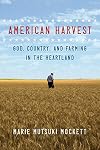
Not sure what to make of this. Despite many interesting bits of writing, the end result was just kind of an unformed lump of information. There are really no conclusions drawn from the topics covered, and no answers to the questions discussed. I don't really see the point of the book.
I found many aspects extremely frustrating. Discussing modern farming without mentioning climate change and water management? How is it even possible to gloss over those fundamental issues? There's a brief show more section about the farming monoculture, but the concerns are immediately dismissed by saying that farmers raise more than one crop. That's not the point at all. The point is that vast portions of the earth's surface have been converted from a diverse ecosystem of hundreds or thousands of species to just a few species, with disastrous consequences for wildlife, insects, invertebrates, and ultimately humans.
The questions around religion and politics, though discussed at length, are not really looked at in any depth. The slices of Christianity examined are likewise extremely narrow and superficial.
The book promised a lot more than it delivered. Very disappointing. show less
I found many aspects extremely frustrating. Discussing modern farming without mentioning climate change and water management? How is it even possible to gloss over those fundamental issues? There's a brief show more section about the farming monoculture, but the concerns are immediately dismissed by saying that farmers raise more than one crop. That's not the point at all. The point is that vast portions of the earth's surface have been converted from a diverse ecosystem of hundreds or thousands of species to just a few species, with disastrous consequences for wildlife, insects, invertebrates, and ultimately humans.
The questions around religion and politics, though discussed at length, are not really looked at in any depth. The slices of Christianity examined are likewise extremely narrow and superficial.
The book promised a lot more than it delivered. Very disappointing. show less
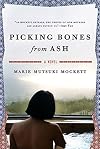
Picking Bones from Ash is one of those subtle stories that has more depth than a reader initially realizes. Not just a ghost story, this is ultimately a story about family - what brings one together and what tears one apart. For those unfamiliar with Japan and their culture, Ms. Mockett introduces the reader to the intricacies of Japanese families, the beauty of its geography, and the grandeur of its religious sites while bridging the gap between East and West with a story that resonates no show more matter who is reading it.
Told in three distinct sections, the strongest of these belongs to Satomi as a young girl. As a girl who is desperately seeking love and acceptance by her mother, whose main goal is to see her daughter succeed, the reader's heart goes out to this conflicted narrator as she struggles to determine whether her fate lies with piano or elsewhere.
My mother always told me that there is only one way a woman can be truly safe in this world. And that is to be fiercely, inarguably, and masterfully talented. (pg. 3)
Love through talent - this drive on the part of Atsuko can resonate with readers who have been pushed down career paths or into after-school activities that they may not want in an effort to live up to their parents' expectations. Satomi's plight takes on greater resonance when she experiences life in the West and the pull of another way of life.
Rumi's story, as she unravels bits of her past, is not quite as compelling. Her relationship with her father is not as angst-filled or torturous, and Rumi is not as spirited or as willing to defy tradition and her family as her mother was. This makes for a less intriguing narrator. The Gothic feel of this section is a bit jarring as well, as it is out of place from the rest of the novel.
The two sections come together quite nicely during the denouement, as the reader understands the symbolism behind Satomi's and Rumi's stories. As they come together and meet face-to-face, the reader gets a clearer picture of the complexities of the Japanese culture and how the two main religions have created this unique landscape. More importantly, the reader gets the chance to delve into the ideas behind parenthood and the sacrifices that being a parent may or may not entail. Atsuko is quite a different mother than Satomi, but is either one right or wrong? Ultimately, it is up to the reader to decide.
Picking Bones from Ash was a great introduction to the nuances and beliefs behind the Japanese culture. Satomi is a strong character, and her problems finding her path in her world resonates well with the reader. The rest of the cast is not quite as strong, and the story itself loses steam as Ms. Mockett deviates from Satomi's quest. Thankfully, the stunning descriptions and flawless prose balance these minor concerns, and the overall story is one that is poignant in its simplicity but lingers like a fine wine upon one's palate. For a reader who is looking for a way to broaden his or her horizons and become acquainted with another culture without straying too far from the familiar, Picking Bones from Ash is a great novel to accomplish this. show less
Told in three distinct sections, the strongest of these belongs to Satomi as a young girl. As a girl who is desperately seeking love and acceptance by her mother, whose main goal is to see her daughter succeed, the reader's heart goes out to this conflicted narrator as she struggles to determine whether her fate lies with piano or elsewhere.
My mother always told me that there is only one way a woman can be truly safe in this world. And that is to be fiercely, inarguably, and masterfully talented. (pg. 3)
Love through talent - this drive on the part of Atsuko can resonate with readers who have been pushed down career paths or into after-school activities that they may not want in an effort to live up to their parents' expectations. Satomi's plight takes on greater resonance when she experiences life in the West and the pull of another way of life.
Rumi's story, as she unravels bits of her past, is not quite as compelling. Her relationship with her father is not as angst-filled or torturous, and Rumi is not as spirited or as willing to defy tradition and her family as her mother was. This makes for a less intriguing narrator. The Gothic feel of this section is a bit jarring as well, as it is out of place from the rest of the novel.
The two sections come together quite nicely during the denouement, as the reader understands the symbolism behind Satomi's and Rumi's stories. As they come together and meet face-to-face, the reader gets a clearer picture of the complexities of the Japanese culture and how the two main religions have created this unique landscape. More importantly, the reader gets the chance to delve into the ideas behind parenthood and the sacrifices that being a parent may or may not entail. Atsuko is quite a different mother than Satomi, but is either one right or wrong? Ultimately, it is up to the reader to decide.
Picking Bones from Ash was a great introduction to the nuances and beliefs behind the Japanese culture. Satomi is a strong character, and her problems finding her path in her world resonates well with the reader. The rest of the cast is not quite as strong, and the story itself loses steam as Ms. Mockett deviates from Satomi's quest. Thankfully, the stunning descriptions and flawless prose balance these minor concerns, and the overall story is one that is poignant in its simplicity but lingers like a fine wine upon one's palate. For a reader who is looking for a way to broaden his or her horizons and become acquainted with another culture without straying too far from the familiar, Picking Bones from Ash is a great novel to accomplish this. show less
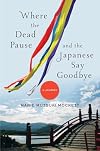
An interesting one this. At times it felt like the Lonely Planet Guide for Japan and at other times a Buddhist Primer and at other times like a poignant memoir. Like a lot of Japanese stuff I constantly felt like I was missing a bit or that there was a gap running all the way though it like a small silence.
The author, who is half Japanese seems to have experienced the same kind of feeling through most of her journeys too. The constant reminders to her that: "only the Japanese would show more understand that" only seemed to add to the otherworldness of this book.
Having been through the New Zealand Christchurch earthquakes in 2011 I felt that shadow of disaster as she recounts some of the statistics of the small places she visits like: "the waves here were 100 foot tall and 10,000 people died here". It is tempting to say that the Christchurch earthquakes were nothing compared to what happened in Japan, and on a statistical level that is true. But in terms of the shadow left on your spirit I am not sure that size matters at all when it comes to human response to disaster.
And this is a book about disaster, in a way it is a book for all those souls lost, both the ones missed and the ones that no-one survived to miss them. A book for all the lost bodies, remans that were never recovered and never will be. A book for all those who had no body to bury. A book about how a nation that has such strict protocols about death is dealing with a situation that doesn’t account for something like a protocol. It is also a book about displacement, longing and remembering.
I found it strangely moving and strangely repressed at the same time. It is not a simple book although it is easy to read. I guess that's it really. show less
The author, who is half Japanese seems to have experienced the same kind of feeling through most of her journeys too. The constant reminders to her that: "only the Japanese would show more understand that" only seemed to add to the otherworldness of this book.
Having been through the New Zealand Christchurch earthquakes in 2011 I felt that shadow of disaster as she recounts some of the statistics of the small places she visits like: "the waves here were 100 foot tall and 10,000 people died here". It is tempting to say that the Christchurch earthquakes were nothing compared to what happened in Japan, and on a statistical level that is true. But in terms of the shadow left on your spirit I am not sure that size matters at all when it comes to human response to disaster.
And this is a book about disaster, in a way it is a book for all those souls lost, both the ones missed and the ones that no-one survived to miss them. A book for all the lost bodies, remans that were never recovered and never will be. A book for all those who had no body to bury. A book about how a nation that has such strict protocols about death is dealing with a situation that doesn’t account for something like a protocol. It is also a book about displacement, longing and remembering.
I found it strangely moving and strangely repressed at the same time. It is not a simple book although it is easy to read. I guess that's it really. show less
Lists
Awards


You May Also Like


Associated Authors
Statistics
- Works
- 5
- Members
- 328
- Popularity
- #72,310
- Rating
- 3.8
- Reviews
- 15
- ISBNs
- 17