
David Aaronovitch
Author of Voodoo Histories: The Role of the Conspiracy Theory in Shaping Modern History
About the Author
Works by David Aaronovitch
Voodoo Histories: The Role of the Conspiracy Theory in Shaping Modern History (2010) 610 copies, 33 reviews
Tagged
Common Knowledge
- Birthdate
- 1954-07-08
- Gender
- male
- Education
- Gospel Oak Primary School
Holloway County Comprehensive
William Ellis School
University of Oxford (Balliol College)
Victoria University of Manchester - Occupations
- journalist
author
broadcaster - Relationships
- Aaronovitch, Ben (brother)
Aaronovitch, Sam (father) - Nationality
- UK
- Places of residence
- London, England, UK
- Associated Place (for map)
- England, UK
Members
Reviews

Really enjoyed this one. Aaronovitch packs a lot of details and research into this book, but it's necessary when he's skewering some of the greatest conspiracy theories of the last 100 years or so.
I picked this one up because I really am one of those people who roll their eyes at the multiple killer theories for JFK, RFK and Marilyn Monroe. I smile indulgently at those that believe Obama was born in Kenya and that 9/11 was an inside job. Telling me the moon landing I watched when I was six show more years old was all faked will make me laugh.
But I love a good story, so I gobble up movies like JFK and Capricorn One because, for me, it's as much how these people spin up the stories to try and make all the "facts" fit in their convoluted stories.
In this book, the author carefully builds up each theory, citing names, sources, etc, then systematically tears each one back down again. And through it all, I could hear each conspiracy theorist screaming, "YOU FOOL! THAT'S EXACTLY WHAT THEY WANT YOU TO THINK!" like some ersatz Charlton Heston revealing that Soylent Green is people.
Anyway, I was very much educated by this book while also being entertained by it. You really can't ask for more, can you? show less
I picked this one up because I really am one of those people who roll their eyes at the multiple killer theories for JFK, RFK and Marilyn Monroe. I smile indulgently at those that believe Obama was born in Kenya and that 9/11 was an inside job. Telling me the moon landing I watched when I was six show more years old was all faked will make me laugh.
But I love a good story, so I gobble up movies like JFK and Capricorn One because, for me, it's as much how these people spin up the stories to try and make all the "facts" fit in their convoluted stories.
In this book, the author carefully builds up each theory, citing names, sources, etc, then systematically tears each one back down again. And through it all, I could hear each conspiracy theorist screaming, "YOU FOOL! THAT'S EXACTLY WHAT THEY WANT YOU TO THINK!" like some ersatz Charlton Heston revealing that Soylent Green is people.
Anyway, I was very much educated by this book while also being entertained by it. You really can't ask for more, can you? show less
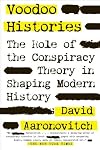
From the perspective of 2023, Voodoo History, English journalist David Aaronovitch’s interesting but slightly disjointed 2009 critical analysis of conspiracy theory through the lens of historical memory feels a bit quaint. However, he does provide an insightful glimpse of the evolution of misinformation in the first decades of the 21st century and perhaps some of the currents that presaged the later trends we are currently living through.
Curious about the persistence of conspiratorial show more thinking after encountering a man who believed that the moon landings were faked, Aaronovitch begins a lighthearted exploration of what he calls a “period of fashionable conspiracism,” an endeavor that quickly turns more serious. Hoping to understand the psychology of conspiracy theories, what he defines as “the attribution of deliberate agency to something that is more likely to be accidental or unintended” or “the attribution of secret action to one party that might far more reasonably be explained as the less covert and less complicated action of another,” and what makes them often more engaging to popular culture than actual history, in each chapter he delves chronologically into some of the last centuries most infamous hoaxes and myths.
As Aaronovitch explores in depth such paranoid tales as the Protocols of the Elders of Zion, the idea that FDR had prior knowledge about Pearl Harbor, the secret bloodline of Jesus as described in Holy Blood, Holy Grail and, of course, 9/11 being an inside job, he searches for some of the commonalities each share and hits on some thought-provoking threads. While I wouldn’t call the work prescient exactly (that would risk falling into the “historian’s fallacy” Aaronvitch describes, “the tendency to forget at the time that the actors in a historical drama simply did not know, at the time, what was coming next”), there was a lot that rang true for me as misinformation has only strengthened its grip on the publication imagination during the 2010s.
In particular, he describes the way that conspiracy theories can be used to aid an authoritarian regime. Aaronovitch’s account of the Kagonovitch trial in 1940s USSR, for instance, in which a prominent bureaucrat in the Stalinist regime was accused of being embroiled in a Trotskyist plot of sabotage, illustrates how conspiracy can become a convenient tool by the authorities by allowing them to explain away their failures on perfidious outside forces. I can see echoes of this in the Pizzagate and Qanon accounts of a deep state being behind the Trump administration’s lack of success.
In addition, the slow evolution of the Protocols of the Elders of Zion from 19th century French anti-Napoleonic literature to antisemitic ur-text through the plagiarism and repurposing of numerous bad faith actors in Germany and Russia, reminded me of the mutation of memes online in the 21st century. On that note, it was interesting to see Aaronovitch’s discussion of the capital-I Internet’s effect on 9/11 conspiracy theories, bringing into orbit strange political bedfellows, and how such drawings together of paranoid ideas across the conspiratorial landscape has only increased as algorithms rewarded engagement regardless of its truth.
It’s in Aaronovitch’s conclusion, I think, where the work's major weaknesses are shown, lacking a strong argument of how our culture may remedy this increasingly sinister situation. As he attempts to brush off such “alternative truths” as merely false assumptions broken by critical thinking, the last decade of mostly unmoderated digital disinformation, is a simplistic hope. In any case, though, Voodoo Histories as a whole is a loose but fascinating collection of essays that provides some valuable information even a decade later. show less
Curious about the persistence of conspiratorial show more thinking after encountering a man who believed that the moon landings were faked, Aaronovitch begins a lighthearted exploration of what he calls a “period of fashionable conspiracism,” an endeavor that quickly turns more serious. Hoping to understand the psychology of conspiracy theories, what he defines as “the attribution of deliberate agency to something that is more likely to be accidental or unintended” or “the attribution of secret action to one party that might far more reasonably be explained as the less covert and less complicated action of another,” and what makes them often more engaging to popular culture than actual history, in each chapter he delves chronologically into some of the last centuries most infamous hoaxes and myths.
As Aaronovitch explores in depth such paranoid tales as the Protocols of the Elders of Zion, the idea that FDR had prior knowledge about Pearl Harbor, the secret bloodline of Jesus as described in Holy Blood, Holy Grail and, of course, 9/11 being an inside job, he searches for some of the commonalities each share and hits on some thought-provoking threads. While I wouldn’t call the work prescient exactly (that would risk falling into the “historian’s fallacy” Aaronvitch describes, “the tendency to forget at the time that the actors in a historical drama simply did not know, at the time, what was coming next”), there was a lot that rang true for me as misinformation has only strengthened its grip on the publication imagination during the 2010s.
In particular, he describes the way that conspiracy theories can be used to aid an authoritarian regime. Aaronovitch’s account of the Kagonovitch trial in 1940s USSR, for instance, in which a prominent bureaucrat in the Stalinist regime was accused of being embroiled in a Trotskyist plot of sabotage, illustrates how conspiracy can become a convenient tool by the authorities by allowing them to explain away their failures on perfidious outside forces. I can see echoes of this in the Pizzagate and Qanon accounts of a deep state being behind the Trump administration’s lack of success.
In addition, the slow evolution of the Protocols of the Elders of Zion from 19th century French anti-Napoleonic literature to antisemitic ur-text through the plagiarism and repurposing of numerous bad faith actors in Germany and Russia, reminded me of the mutation of memes online in the 21st century. On that note, it was interesting to see Aaronovitch’s discussion of the capital-I Internet’s effect on 9/11 conspiracy theories, bringing into orbit strange political bedfellows, and how such drawings together of paranoid ideas across the conspiratorial landscape has only increased as algorithms rewarded engagement regardless of its truth.
It’s in Aaronovitch’s conclusion, I think, where the work's major weaknesses are shown, lacking a strong argument of how our culture may remedy this increasingly sinister situation. As he attempts to brush off such “alternative truths” as merely false assumptions broken by critical thinking, the last decade of mostly unmoderated digital disinformation, is a simplistic hope. In any case, though, Voodoo Histories as a whole is a loose but fascinating collection of essays that provides some valuable information even a decade later. show less
This is definitely one of the best books on the topic of conspiracy theories that I have yet read. Although several years old now, having come out in 2010, it remains as relevant today as it was then. Chapter by chapter, theory by theory, this book examines the history of the big hitters. JFK, Princess Diana, Madonna, the bloodline of Jesus, the Birther movement, and the Clinton deaths. All of that and more. Rather than simply going into what the conspiracy theories are, it also goes into show more why we believe them.
This all leads to the biggest, and most recent and relevant theory to most of the reader's lives. The 9/11 Truther movement.
The 9/11 chapter is likely the longest one in the book, only with the possible exception of the Protocols of the Elders of Zion chapter. The book ends on the 9/11 conspiracy for a reason. All the chapters prior are leading up to what constitutes conspiracy thought, and 9/11 draws upon most of these traditions. Ultimately the conclusion drawn is the same that [a: Jon Ronson|1218|Jon Ronson|https://images.gr-assets.com/authors/1428023511p2/1218.jpg] reaches in the brilliant [b: Them: Adventures with Extremists|1823|Them Adventures with Extremists|Jon Ronson|https://images.gr-assets.com/books/1400199696s/1823.jpg|5946].
Conspiracies are ultimately a comfort to us, as they imply that the world is under some sort of control rather than simply predicated upon random chance. Conspiracies allow us the knowledge that, perhaps, some could figure this out and work for good. Conspiracies tell us a lot about how people think, what they believe, and their stations in life. They're an interesting topic, for sure, but a very, very dangerous one. show less
This all leads to the biggest, and most recent and relevant theory to most of the reader's lives. The 9/11 Truther movement.
The 9/11 chapter is likely the longest one in the book, only with the possible exception of the Protocols of the Elders of Zion chapter. The book ends on the 9/11 conspiracy for a reason. All the chapters prior are leading up to what constitutes conspiracy thought, and 9/11 draws upon most of these traditions. Ultimately the conclusion drawn is the same that [a: Jon Ronson|1218|Jon Ronson|https://images.gr-assets.com/authors/1428023511p2/1218.jpg] reaches in the brilliant [b: Them: Adventures with Extremists|1823|Them Adventures with Extremists|Jon Ronson|https://images.gr-assets.com/books/1400199696s/1823.jpg|5946].
Conspiracies are ultimately a comfort to us, as they imply that the world is under some sort of control rather than simply predicated upon random chance. Conspiracies allow us the knowledge that, perhaps, some could figure this out and work for good. Conspiracies tell us a lot about how people think, what they believe, and their stations in life. They're an interesting topic, for sure, but a very, very dangerous one. show less
An intelligent, well-researched book about conspiracies, their origins, what they mean, and why they matter. Aaranovich covers both the biggies (JFK, The Protocols of the Elders of Zion) and a few I'd never even heard of (the strange death of Marilyn Monroe, the murder of Hilda Murrell). He knows his material well, having a firm grasp on the various rhetorical gambits and logical fallacies that seem to reappear in almost every conspiracy theory. Presenting himself as a sincere advocate for show more rational, independent thought, he manages to keep his head about him as he patiently reviewing the available evidence about him without getting upset at these rather ridiculous theories' very existence. And some of these theories are truly ridiculous; there's plenty hear for anyone who's spent an afternoon surfing bizarre conspiracy Web sites just to laugh at them. The author's research also takes him to some genuinely interesting and unexpected places, a shadowy world of ideologically-motivated fraudsters and kooks that might as well be respectable history's seedy underbelly.
If I've got a complaint about "Voodoo Histories," it's about its sequencing. While Aaranovich writes elegantly and includes bits of cogent analysis throughout this book, it isn't until its conclusion that he begins to elucidate why so many people find so conspiracy theories so attractive. While much of his analysis is spot-on, it probably should have come earlier. Without this context, some readers might mistake "Voodoo Histories" for a useful but but insufficiently incisive recounting of and rebuttal to some annoying persistent popular historical myths. It isn't until the final chapter of this book that Aaranovich really goes in for the kill: those who treat conspiracies as quirky "counternarrative" to official histories ignore the harm they do. The myths of the Third Reich, to use the most famous example, drew heavily from conspiracy theories and conspiracist logic. Although Aaranovich concedes that it's sometimes difficult to see the world with clear, reasonable eyes, he argues that the price of refusing to do so, of succumbing to sloppy, emotionally reassuring popular narratives, is just too high. I tend to think that after finishing "Voodoo Histories," many of his readers will be inclined to agree with him. show less
If I've got a complaint about "Voodoo Histories," it's about its sequencing. While Aaranovich writes elegantly and includes bits of cogent analysis throughout this book, it isn't until its conclusion that he begins to elucidate why so many people find so conspiracy theories so attractive. While much of his analysis is spot-on, it probably should have come earlier. Without this context, some readers might mistake "Voodoo Histories" for a useful but but insufficiently incisive recounting of and rebuttal to some annoying persistent popular historical myths. It isn't until the final chapter of this book that Aaranovich really goes in for the kill: those who treat conspiracies as quirky "counternarrative" to official histories ignore the harm they do. The myths of the Third Reich, to use the most famous example, drew heavily from conspiracy theories and conspiracist logic. Although Aaranovich concedes that it's sometimes difficult to see the world with clear, reasonable eyes, he argues that the price of refusing to do so, of succumbing to sloppy, emotionally reassuring popular narratives, is just too high. I tend to think that after finishing "Voodoo Histories," many of his readers will be inclined to agree with him. show less
Lists
Awards


You May Also Like


Statistics
- Works
- 4
- Members
- 677
- Popularity
- #37,311
- Rating
- 3.5
- Reviews
- 34
- ISBNs
- 22
- Languages
- 2