
Jeffrey Andrew Weinstock
Author of The Monster Theory Reader
About the Author
Jeffrey Andrew Weinstock is Professor of English at Central Michigan University, an Associate Editor for The Journal of the Fantastic in the Arts, and the host of the long-running internet goth/industrial radio broadcast DJ cypher's Dark Nation Radio. He is the author or editor of 25 books, show more including The Mad Scientist's Guide to Composition (Broadview), The Monster Theory Reader (University of Minnesota Press), Giving the Devil His Due: Satan and Cinema (with Regina Hansen, Fordham UP), The Vampire Film: Undead Cinema (Wallflower). Visit him at JeffreyAndrewWeinstock.com. show less
Image credit: MEMSI
Works by Jeffrey Andrew Weinstock
Return to Twin Peaks: New Approaches to Materiality, Theory, and Genre on Television (2015) — Editor — 10 copies
The Mad Scientist’s Guide to Composition: A Somewhat Cheeky but Exceedingly Useful Introduction to Academic Writing (2019) 5 copies
Associated Works
The Other Gods and More Unearthly Tales (Barnes & Noble Library of Essential Reading) (2010) — Introduction — 18 copies
Tagged
Common Knowledge
There is no Common Knowledge data for this author yet. You can help.
Members
Reviews
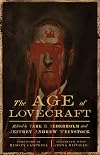
These kinds of things are always hit or miss. The basic idea is: Why Lovecraft, Why Now? And it's a good question. The essays in this book purportedly try to get at this question, and some actually do, while others seem to have sneaked in. Whether they address the main topic or wander off in another Lovecraftian direction they are all mostly interesting and some even thought provoking. Still, there is some hot air and some over the top theorizing. A case is well made that much posthumanist show more philosophy was spawned by spotty teenagers' readings of The Great Old Ones. And maybe Lovecraft's uncomfortable breathless awkward adjective driven purplish prose was an attempt at describing the indescribable, like explaining color to a blind man, but maybe we are also reading too much into it as they say.
Not for the faint hearted, so if you are not up on your post humanist philosophy, or Kant, or Heidegger, or object-oriented ontology, etc., well you're not going to lose a lot of sleep over this one. Stuff like this fascinates me but it is a limited audience of water-heads like me that like this sort of thing. I'm not sure if all these things were really rattling around inside Lovecraft's conscious (or unconscious) brain but it's still fun to talk about it. show less
Not for the faint hearted, so if you are not up on your post humanist philosophy, or Kant, or Heidegger, or object-oriented ontology, etc., well you're not going to lose a lot of sleep over this one. Stuff like this fascinates me but it is a limited audience of water-heads like me that like this sort of thing. I'm not sure if all these things were really rattling around inside Lovecraft's conscious (or unconscious) brain but it's still fun to talk about it. show less

This book is a collection of essays about how the Devil has been portrayed on screen since the earliest times of cinema. It shows how even from the earliest times Lucifer / Satan/ The Devil has been a popular figure to portray onscreen. Initially these films tended to use folklore and traditional tales as their basis and Faust was used as a source for some of the earliest films made in a post WW1 Germany. The essays use a wide variety of films to illustrate their narratives, from some of the show more very first movies in the late 1800’s right up until the 2005 film ‘Constantine’ and even include discussion on Disney’s use of the Devil on screen. The book focuses on how these films tended to change how the Devil was pictured and portrayed dependent on the era in which the films were made and these representations not only reflected this but also the social morals, anxieties and beliefs of the era in which they were made. As a fan of the movies, I found this book to be an enjoyable and interesting read, which benefitted from the way it was set out in short essay form so it was a book that was easy to read in short segments if needed. show less
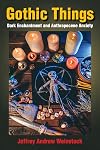
Fascinating and accessible discussion of objects and places in the Gothic. I loved the author's choice of example texts such as Twin Peaks, The Haunting of Hill House, House of Leaves, and more.
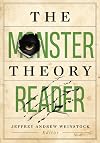
A collection of scholarship on monsters and their meaning—across genres, disciplines, methodologies, and time—from foundational texts to the most recent contributions
Zombies and vampires, banshees and basilisks, demons and wendigos, goblins, gorgons, golems, and ghosts. From the mythical monstrous races of the ancient world to the murderous cyborgs of our day, monsters have haunted the human imagination, giving shape to the fears and desires of their time. And as long as there have been show more monsters, there have been attempts to make sense of them, to explain where they come from and what they mean. This book collects the best of what contemporary scholars have to say on the subject, in the process creating a map of the monstrous across the vast and complex terrain of the human psyche.
Editor Jeffrey Andrew Weinstock prepares the way with a genealogy of monster theory, traveling from the earliest explanations of monsters through psychoanalysis, poststructuralism, and cultural studies, to the development of monster theory per se—and including Jeffrey Jerome Cohen’s foundational essay “Monster Theory (Seven Theses),” reproduced here in its entirety. There follow sections devoted to the terminology and concepts used in talking about monstrosity; the relevance of race, religion, gender, class, sexuality, and physical appearance; the application of monster theory to contemporary cultural concerns such as ecology, religion, and terrorism; and finally the possibilities monsters present for envisioning a different future.
Including the most interesting and important proponents of monster theory and its progenitors, from Sigmund Freud to Julia Kristeva to J. Halberstam, Donna Haraway, Barbara Creed, and Stephen T. Asma—as well as harder-to-find contributions such as Robin Wood’s and Masahiro Mori’s—this is the most extensive and comprehensive collection of scholarship on monsters and monstrosity across disciplines and methods ever to be assembled and will serve as an invaluable resource for students of the uncanny in all its guises.
Contributors: Stephen T. Asma, Columbia College Chicago; Timothy K. Beal, Case Western Reserve U; Harry Benshoff, U of North Texas; Bettina Bildhauer, U of St. Andrews; Noel Carroll, The Graduate Center, CUNY; Jeffrey Jerome Cohen, Arizona State U; Barbara Creed, U of Melbourne; Michael Dylan Foster, UC Davis; Sigmund Freud; Elizabeth Grosz, Duke U; J. Halberstam, Columbia U; Donna Haraway, UC Santa Cruz; Julia Kristeva, Paris Diderot U; Anthony Lioi, The Julliard School; Patricia MacCormack, Anglia Ruskin U; Masahiro Mori; Annalee Newitz; Jasbir K. Puar, Rutgers U; Amit A. Rai, Queen Mary U of London; Margrit Shildrick, Stockholm U; Jon Stratton, U of South Australia; Erin Suzuki, UC San Diego; Robin Wood, York U; Alexa Wright, U of Westminster. show less
Zombies and vampires, banshees and basilisks, demons and wendigos, goblins, gorgons, golems, and ghosts. From the mythical monstrous races of the ancient world to the murderous cyborgs of our day, monsters have haunted the human imagination, giving shape to the fears and desires of their time. And as long as there have been show more monsters, there have been attempts to make sense of them, to explain where they come from and what they mean. This book collects the best of what contemporary scholars have to say on the subject, in the process creating a map of the monstrous across the vast and complex terrain of the human psyche.
Editor Jeffrey Andrew Weinstock prepares the way with a genealogy of monster theory, traveling from the earliest explanations of monsters through psychoanalysis, poststructuralism, and cultural studies, to the development of monster theory per se—and including Jeffrey Jerome Cohen’s foundational essay “Monster Theory (Seven Theses),” reproduced here in its entirety. There follow sections devoted to the terminology and concepts used in talking about monstrosity; the relevance of race, religion, gender, class, sexuality, and physical appearance; the application of monster theory to contemporary cultural concerns such as ecology, religion, and terrorism; and finally the possibilities monsters present for envisioning a different future.
Including the most interesting and important proponents of monster theory and its progenitors, from Sigmund Freud to Julia Kristeva to J. Halberstam, Donna Haraway, Barbara Creed, and Stephen T. Asma—as well as harder-to-find contributions such as Robin Wood’s and Masahiro Mori’s—this is the most extensive and comprehensive collection of scholarship on monsters and monstrosity across disciplines and methods ever to be assembled and will serve as an invaluable resource for students of the uncanny in all its guises.
Contributors: Stephen T. Asma, Columbia College Chicago; Timothy K. Beal, Case Western Reserve U; Harry Benshoff, U of North Texas; Bettina Bildhauer, U of St. Andrews; Noel Carroll, The Graduate Center, CUNY; Jeffrey Jerome Cohen, Arizona State U; Barbara Creed, U of Melbourne; Michael Dylan Foster, UC Davis; Sigmund Freud; Elizabeth Grosz, Duke U; J. Halberstam, Columbia U; Donna Haraway, UC Santa Cruz; Julia Kristeva, Paris Diderot U; Anthony Lioi, The Julliard School; Patricia MacCormack, Anglia Ruskin U; Masahiro Mori; Annalee Newitz; Jasbir K. Puar, Rutgers U; Amit A. Rai, Queen Mary U of London; Margrit Shildrick, Stockholm U; Jon Stratton, U of South Australia; Erin Suzuki, UC San Diego; Robin Wood, York U; Alexa Wright, U of Westminster. show less
Awards


You May Also Like


Associated Authors
Statistics
- Works
- 26
- Also by
- 2
- Members
- 259
- Popularity
- #88,670
- Rating
- 3.9
- Reviews
- 5
- ISBNs
- 67