
Mark Teague
Author of Dear Mrs. LaRue: Letters from Obedience School
About the Author
Mark Teague is an American author and illustrator of children's books. Teague has illustrated over 40 books including the Poppleton series, the First Graders from Mars series, The Great Gracie Chase, and other favorites. He wrote and self-illustarted several Mrs. LaRue children's books. (Bowker show more Author Biography) show less
Image credit: Mark Teague, on sept. 2016
Series
Works by Mark Teague
How Do Dinosaurs Say Goodnight?; How Do Dinosaurs Say I Love You?; How Do Dinosaurs Eat Their Food?; and How Do Dinosaurs Go to School? Four Book Hardcover Set (How Do Dinosaurs… (2000) — Illustrator — 5 copies
The Conquering Dreamer: Using Your Dreams to Conquer the Obstacles of Life With Passion and Purpose 3 copies
'Dear Mrs. LaRue - Letters from Obedience School' & 'Detective LaRue - Letters from the Investigation' - (2 Volume Set) (2004) 2 copies
Tree Terrible Trins 1 copy
Associated Works
First Graders From Mars, Episode 1: Horus's Horrible Day (2001) — Illustrator — 348 copies, 3 reviews
The Art of Reading: Forty Illustrators Celebrate RIF's 40th Anniversary (2005) — Contributor — 273 copies, 3 reviews
The Emperor's New Clothes : An All-Star Retelling of the Classic Fairy Tale (with Audio CD) (1998) — Illustrator — 260 copies, 6 reviews
How Do Dinosaurs Learn Their Colors? / How Do Dinosaurs Play with Their Friends? (2007) — Illustrator — 176 copies
First Graders From Mars, Episode 2: The Problem with Pelly (2002) — Illustrator — 143 copies, 1 review
First Graders From Mars, Episode 3: Nergal and the Great Space Race (2002) — Illustrator — 121 copies, 2 reviews
Tagged
Common Knowledge
- Birthdate
- 1976
- Gender
- male
- Nationality
- USA
- Places of residence
- Coxsackie, New York, USA
- Associated Place (for map)
- New York, USA
Members
Reviews
Fly! by Mark Teague
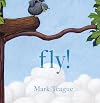
I'm always looking for that one perfect funny book to show the kids at school visits. It's tricky, because I have to keep finding new ones. I have found this year's choice and, believe it or not, it's a wordless book!
The end pages are decorated with a fuzzy gray robin fledgling considered all the angles around her nest. Then the story begins with mom feeding the baby, who quickly grows over the first spread from a pin-feathered pink baby to a plump gray baby bird with a charming tuft of show more feathers on her head.
And that's when all the trouble begins. Mom Robin thinks the baby could at least try hopping out of the nest a little to get her worm. Baby Robin sees no reason why Mom shouldn't keep bringing the food right to her! After a very impressive tantrum, Baby winds up... on the ground! How will she ever get back to the nest? Mom and Baby both have ideas, but they're both very different! Fine, Baby will just stay on the ground. She doesn't need to fly. What about migration? She'll ride a bike! Her suggestions get sillier and sillier until Mom brings her back to earth with a pointed reminder about the dangers on the ground and safety in the air and Baby finally makes her first flight. The endpages show the fledgling in full, happy flight, zooming all over the place.
The story is told without words, but in comic speech bubbles, Mom and Baby using pictures to communicate. Of course, the funniest part is the mix of Baby's expressions and the wacky ideas she is obviously suggesting to Mom. Fly? Not her! Mom can carry her back to the nest, no problem. And feed her that worm while she's at it!
Verdict: If you've never done wordless storytime, now's the time to start with this hilarious, clever book.
ISBN: 9781534451285; Published September 2019 by Beach Lane Books; Review copy provided by publisher; Purchased for the library show less
The end pages are decorated with a fuzzy gray robin fledgling considered all the angles around her nest. Then the story begins with mom feeding the baby, who quickly grows over the first spread from a pin-feathered pink baby to a plump gray baby bird with a charming tuft of show more feathers on her head.
And that's when all the trouble begins. Mom Robin thinks the baby could at least try hopping out of the nest a little to get her worm. Baby Robin sees no reason why Mom shouldn't keep bringing the food right to her! After a very impressive tantrum, Baby winds up... on the ground! How will she ever get back to the nest? Mom and Baby both have ideas, but they're both very different! Fine, Baby will just stay on the ground. She doesn't need to fly. What about migration? She'll ride a bike! Her suggestions get sillier and sillier until Mom brings her back to earth with a pointed reminder about the dangers on the ground and safety in the air and Baby finally makes her first flight. The endpages show the fledgling in full, happy flight, zooming all over the place.
The story is told without words, but in comic speech bubbles, Mom and Baby using pictures to communicate. Of course, the funniest part is the mix of Baby's expressions and the wacky ideas she is obviously suggesting to Mom. Fly? Not her! Mom can carry her back to the nest, no problem. And feed her that worm while she's at it!
Verdict: If you've never done wordless storytime, now's the time to start with this hilarious, clever book.
ISBN: 9781534451285; Published September 2019 by Beach Lane Books; Review copy provided by publisher; Purchased for the library show less
Recommended by Carolyn E.
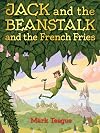
A fun twist on the classic tale. Jack returns home with his magic beans, and then he and his mom (and soon their whole village) is eating beans morning, noon, and night. Jack goes up the beanstalk to the giant's castle, where the giant is also eating beans round the clock and is just as grumpy about it. Mrs. Giant reasonably suggests, "If you don't like beans, plant something else." So Jack and the Giant go down and plant a garden: carrots, corn, potatoes, tomatoes, show more asparagus. (Best of all were the potatoes, which could be made into French fries.)
Unclear why the villagers didn't consider farming in the first place, but perhaps the magic, giant-supplied seeds grew much better in the soil. show less
A fun twist on the classic tale. Jack returns home with his magic beans, and then he and his mom (and soon their whole village) is eating beans morning, noon, and night. Jack goes up the beanstalk to the giant's castle, where the giant is also eating beans round the clock and is just as grumpy about it. Mrs. Giant reasonably suggests, "If you don't like beans, plant something else." So Jack and the Giant go down and plant a garden: carrots, corn, potatoes, tomatoes, show more asparagus. (Best of all were the potatoes, which could be made into French fries.)
Unclear why the villagers didn't consider farming in the first place, but perhaps the magic, giant-supplied seeds grew much better in the soil. show less
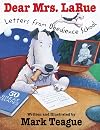
Teague, M. (2002). Dear Mrs. LaRue: Letters from Obedience School. New York: Scholastic Press.
0439206634
Appetizer: Ike LaRue, a dog, has been sentenced to go to obedience school for two months after proving to be a bit of a trouble maker at home. Ike shares his worst daydreams about what is happening at the Igor Brotweiler Canine Academy to Mrs. LaRue through the letters he writes home. Growing frustrated with his situation and Mrs. LaRue's refusal to help, Ike decides to attempt a daring show more escape.
To balance and contrast Ike's letters, excerpts from newspapers are also included reporting on why Ike was imprisoned. This also draws out more parallels to positioning Ike as a criminal.
Ike's imaginings of being taken to a scary school building, dragged off by prison guards, etc. are all shown in black and white and include humorous touches to prevent the imagery from becoming too upsetting or scary. Also, preventing the imagined events from being upsetting is the fact that the readers are shown--in bright colors--what Ike's real school experiences are like (let's just say pats on the head and doggie treats are not denied). Readers will like how imaginative Ike is.
It's also worth noting that there are some difficult vocabulary words throughout the text--they're not only difficult for first and second graders, but for fourth and fifth graders as well. Terms like "melodramatic" and "hypochondriac" are included, which could become brief teaching moments. A teacher, on the second or third time sharing the book with students, could also explain the historical significance of "I like Ike."
Dinner Conversation:
"Dear Mrs. LaRue,
How could you do this to me? This is a PRISON, not a school! You should see the other dogs. They are BAD DOGS, Mrs. LaRue! I do not fit in."
"Day after day I'm forced to perform the most meaningless tasks. Today it was "sit" and "roll over," all day long."
"Finally, I had to be taken to the vet. Dr. Wilfrey claims that he can't find anything wrong with me, but I am certain I have an awful disease. I must come home at once.
Honestly yours,
Ike"
"By the time you read this I will be gone. I have decided to attempt a daring escape. I'm sorry it has come to this, since I am really a very good dog, but frankly you left me no choice."
"So I have decided to return home. You may try to lock me up again, but that is a risk I must take. And frankly, even more than myself, I worry about you. You may not know it, Mrs. LaRue, but you need a dog!"
To Go with the Meal:
This picturebook could also be used in a lesson on letter (or email!) writing. A teacher could go into how to open and close a letter. Plus, since there's a huge difference between Ike's black and white imaginings of what the obedience school is like and the sunny reality, a teacher could discuss the books in terms of it having an unreliable narrator. With younger students this will almost certainly turn to a discussion of trust and how wrong lying is.
This would also be a great read for students nervous to go off to school or summer camp for the first time. And the idea of using Dear Mrs. LaRue for that purpose has special meaning for me. My first letters home to my parents from a girl scouts summer camp when I was 7 said something to the effect of "I hate it here. Come and get me now!!!!!!!" Clearly, I found Ike's experiences and voice to be relatable.
I also like this picturebook because the story begins with a newspaper article about Ike's sentencing. From the wording and incidents described, the reader may conclude that Ike is a bad dog. But as the letters are being written, the reader is shown Ike's reasonings for his past and current actions.
In terms of this book being about the experience of going to school, it shows the real teachers as supportive and encouraging even during assignments that Ike doesn't see the purpose of completing. But a student will understand why it's good for a dog to be able to sit. So, by extension, this can be a lesson on why it's still important for kids to do their lessons, even when they don't always immediately see the point.
Tasty Rating: !!!! show less
0439206634
Appetizer: Ike LaRue, a dog, has been sentenced to go to obedience school for two months after proving to be a bit of a trouble maker at home. Ike shares his worst daydreams about what is happening at the Igor Brotweiler Canine Academy to Mrs. LaRue through the letters he writes home. Growing frustrated with his situation and Mrs. LaRue's refusal to help, Ike decides to attempt a daring show more escape.
To balance and contrast Ike's letters, excerpts from newspapers are also included reporting on why Ike was imprisoned. This also draws out more parallels to positioning Ike as a criminal.
Ike's imaginings of being taken to a scary school building, dragged off by prison guards, etc. are all shown in black and white and include humorous touches to prevent the imagery from becoming too upsetting or scary. Also, preventing the imagined events from being upsetting is the fact that the readers are shown--in bright colors--what Ike's real school experiences are like (let's just say pats on the head and doggie treats are not denied). Readers will like how imaginative Ike is.
It's also worth noting that there are some difficult vocabulary words throughout the text--they're not only difficult for first and second graders, but for fourth and fifth graders as well. Terms like "melodramatic" and "hypochondriac" are included, which could become brief teaching moments. A teacher, on the second or third time sharing the book with students, could also explain the historical significance of "I like Ike."
Dinner Conversation:
"Dear Mrs. LaRue,
How could you do this to me? This is a PRISON, not a school! You should see the other dogs. They are BAD DOGS, Mrs. LaRue! I do not fit in."
"Day after day I'm forced to perform the most meaningless tasks. Today it was "sit" and "roll over," all day long."
"Finally, I had to be taken to the vet. Dr. Wilfrey claims that he can't find anything wrong with me, but I am certain I have an awful disease. I must come home at once.
Honestly yours,
Ike"
"By the time you read this I will be gone. I have decided to attempt a daring escape. I'm sorry it has come to this, since I am really a very good dog, but frankly you left me no choice."
"So I have decided to return home. You may try to lock me up again, but that is a risk I must take. And frankly, even more than myself, I worry about you. You may not know it, Mrs. LaRue, but you need a dog!"
To Go with the Meal:
This picturebook could also be used in a lesson on letter (or email!) writing. A teacher could go into how to open and close a letter. Plus, since there's a huge difference between Ike's black and white imaginings of what the obedience school is like and the sunny reality, a teacher could discuss the books in terms of it having an unreliable narrator. With younger students this will almost certainly turn to a discussion of trust and how wrong lying is.
This would also be a great read for students nervous to go off to school or summer camp for the first time. And the idea of using Dear Mrs. LaRue for that purpose has special meaning for me. My first letters home to my parents from a girl scouts summer camp when I was 7 said something to the effect of "I hate it here. Come and get me now!!!!!!!" Clearly, I found Ike's experiences and voice to be relatable.
I also like this picturebook because the story begins with a newspaper article about Ike's sentencing. From the wording and incidents described, the reader may conclude that Ike is a bad dog. But as the letters are being written, the reader is shown Ike's reasonings for his past and current actions.
In terms of this book being about the experience of going to school, it shows the real teachers as supportive and encouraging even during assignments that Ike doesn't see the purpose of completing. But a student will understand why it's good for a dog to be able to sit. So, by extension, this can be a lesson on why it's still important for kids to do their lessons, even when they don't always immediately see the point.
Tasty Rating: !!!! show less
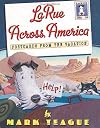
LaRue Across America: Postcards From the Vacation by Mark Teague is one of a series of books featuring Ike LaRue, a dog, his owner Gertrude LaRue, and the (horrid) cats who live next door. In this book, the cat's owner, Mrs. Hibbins, needs to be hospitalized due to a heat wave. Mrs. LaRue offers to care for her cats. She cancels their planned vacation, an ocean cruise with Ike, and replaces it with a cross country trip by car with the cats. Ike immediately starts sending postcards to Mrs. show more Hibbins in an attempt to get rid of the cats.
This book is hilarious and the illustrations are wonderful. Teague has Ike picturing the way he remembers the event in black and white (since dogs are colorblind) while the real scenes are in color. It's a nice juxtaposition. The endpapers include a map of the United States with their route marked. Ike's self-delusion while he thinks he is covering his true motives should be obvious to children in the target age range, 4-8. (The Lexile score is AD900L, so it's based on adult directed reading.)
I do have one nagging question running through my mind, however. Do people still write postcards? It occurred to me that having Ike send email pleas might be more current than postcards. Certainly most children would now understand email messages.
I am passing this gem of a book along to my niece show less
This book is hilarious and the illustrations are wonderful. Teague has Ike picturing the way he remembers the event in black and white (since dogs are colorblind) while the real scenes are in color. It's a nice juxtaposition. The endpapers include a map of the United States with their route marked. Ike's self-delusion while he thinks he is covering his true motives should be obvious to children in the target age range, 4-8. (The Lexile score is AD900L, so it's based on adult directed reading.)
I do have one nagging question running through my mind, however. Do people still write postcards? It occurred to me that having Ike send email pleas might be more current than postcards. Certainly most children would now understand email messages.
I am passing this gem of a book along to my niece show less
Lists
Best Dog Stories (1)
Awards


You May Also Like


Associated Authors
Statistics
- Works
- 65
- Also by
- 24
- Members
- 32,628
- Popularity
- #593
- Rating
- 3.9
- Reviews
- 433
- ISBNs
- 407
- Languages
- 5
- Favorited
- 3
