
Mem Fox
Author of Whoever You Are
About the Author
Mem Fox was born on March 5, 1946 in Melbourne, Australia. She attended a drama school in London. She returned to Australia where she was a college professor. She writes children's books including Possum Magic, Night Noises, Wilfrid Gordon McDonald Partridge, Time for Bed, Koala Lou, Wombat Divine, show more Ten Little Fingers and Ten Little Toes, Hello Baby!, A Giraffe in the Bath (co-written with Olivia Rawson), Count Goats!, and The Little Dragon. She has also written several books for adults. She has received numerous awards including the 1990 Dromkeen Medal for distinguished services to children's literature, a 1991 Advance Australia Award for her outstanding contribution to Australian literature, and a medal in the 1993 Australia Day Honours awards for services to the cultural life of Australia. (Bowker Author Biography) show less
Series
Works by Mem Fox
Reading Magic: Why Reading Aloud to Our Children Will Change Their Lives Forever (2001) 625 copies, 20 reviews
Radical Reflections: Passionate Opinions on teaching, Learning and Living (1993) 110 copies, 2 reviews
Dear Mem Fox, I Have Read All Your Books Even the Pathetic Ones and Other Incidents in the Life of a Children's Book Author (1990) 76 copies
Morning Bells (New Dimensions in the World of Reading, Silver Burdett Ginn) (1993) 27 copies, 1 review
How to Teach Drama to Infants without Really Crying: Drama Classes for Fives to Eights (1984) 8 copies
Possum magic 3 copies
good night sleep tight 1 copy
Time For Bad 1 copy
Koala Lou 1 copy
Hunwick's Egg 1 copy
Hunwick’s Egg 1 copy
This & That 1 copy
Possum Magic Boxed Set 1 copy
Time For Bed Bedtime 1 copy
Whoever They Are 1 copy
Bear Play 1 copy
Papers of Mem Fox 1 copy
Feathers and Fools 1 copy
Associated Works
Confronting Our Discomfort: Clearing the Way for Anti-Bias in Early Childhood (2003) — Foreword, some editions — 4 copies
Possum Magic: The Musical — Original book — 1 copy
Tagged
Common Knowledge
- Legal name
- Partridge, Merrion Frances
- Birthdate
- 1946-03-05
- Gender
- female
- Education
- Hope Fountain mission school
- Occupations
- children's book author
educationalist - Awards and honors
- Dromkeen Medal (1990)
Flinders University Chancellor's Medal
Flinders University Convocation Medal
Australian Prime Minister's Centenary Medal (2003)
Order of Australia - Nationality
- Australia
- Birthplace
- Melbourne, Victoria, Australia
- Places of residence
- Adelaide, South Australia, Australia
Zimbabwe
London, Middlesex, England, UK - Associated Place (for map)
- Australia
Members
Reviews

From stardust to stardust, the narrative of a life is spun out in Australian author/illustrator team Mem Fox and Freya Blackwood's picture book, The Tiny Star. Falling to earth one night, a star takes the shape of a tiny baby, is adopted by loving parents, leads a full, long and loving life surrounded by relatives and friends, before passing away—back into stardom. Shining from the celestial heavens, the star gives comfort to the loved ones left behind...
When I first happened upon this show more book at my public library, I mistook it for a Christmas title for some reason. I'm trying to recall whether it had been mistakenly placed on the Christmas display—I think it had been, but couldn't swear to it. In any case, being on the hunt for new and new-to-me Christmas books, and being a devoted admirer of Freya Blackwood's artwork, I immediately snatched it up and brought it home. I was not all that dismayed to find it wasn't a Christmas story (Freya Blackwood, after all), and was intrigued by the idea of a star living out the life of a human. It brought back memories of my college astronomy class, and the time my professor informed we students that the old hippie belief in humanity being nothing but stardust was in fact scientifically sound, as every atom that goes to make up our world, and us, comes from massive stellar explosions in the cosmic prehistory of our area of the universe.
In any case, I certainly didn't approach this one with anything other than a pleasant expectation of enjoyment, given my fondness for the illustrator, and the fact that author Mem Fox is a titan in children's literature, both Australian and global. Unfortunately, despite all this, The Tiny Star was a miss for me. I found the narrative unconvincing, and even unmoving. Many other online reviewers apparently found it emotionally resonant, and quite poignant, and I can certainly see that this narrative of the seasons of life might evoke such feelings. For me however, I kept expecting there to be something more meaningful, some insight that a star living as a human would give us—something more than just the idea of a long life well-lived, and well-loved. I found myself thinking of Kurt Vonnegut's most unusual Nativity Story, Sun Moon Star, in which the creator of the universe finds himself in a baby's body, and must see the universe in a different way. Here there is none of that—no sense of how the star perceives the world and the cosmos, now that it has become flesh. I also found myself thinking of Marion Dane Bauer's magisterial The Stuff of Stars, in which the author constructs a story beginning with the birth of the universe and concluding with the birth of a baby made of stardust. There the link to stars is deeply meaningful, tying the infinitesimal smallness of a human to the great scope of the cosmos, but here it feels incidental. The human who comes from a star in this story is referred to as "it" throughout, constantly reminding the reader that "it" is a star in human shape, rather than a human (a person, not an object) made of stars. As if to emphasize the star-ness of this person, "it" returns to the heavens after death, leaving no mortal remains, and resuming its status as a star. It is a reversal of the idea of people being made from stardust, and in turn making other stardust creatures and objects, when their bodies return to their constituent elements.
Reactions will vary of course, and some will (and have) found this one meaningful, where I have not. That said, I was so repelled by this book, so unexpectedly put off by the narrative, that I might have given it a two-star rating, were it not for Blackwood's lovely illustrations, which depict a loving, diverse family. Her artwork is always worth the price of entry, so I'm not sorry to have read this one, but I don't really recommend it. Seek out the Bauer, if you are looking for a truly meaningful cosmological baby book, and the Vonnegut, if you want a story about the ties between divinity and humanity. show less
When I first happened upon this show more book at my public library, I mistook it for a Christmas title for some reason. I'm trying to recall whether it had been mistakenly placed on the Christmas display—I think it had been, but couldn't swear to it. In any case, being on the hunt for new and new-to-me Christmas books, and being a devoted admirer of Freya Blackwood's artwork, I immediately snatched it up and brought it home. I was not all that dismayed to find it wasn't a Christmas story (Freya Blackwood, after all), and was intrigued by the idea of a star living out the life of a human. It brought back memories of my college astronomy class, and the time my professor informed we students that the old hippie belief in humanity being nothing but stardust was in fact scientifically sound, as every atom that goes to make up our world, and us, comes from massive stellar explosions in the cosmic prehistory of our area of the universe.
In any case, I certainly didn't approach this one with anything other than a pleasant expectation of enjoyment, given my fondness for the illustrator, and the fact that author Mem Fox is a titan in children's literature, both Australian and global. Unfortunately, despite all this, The Tiny Star was a miss for me. I found the narrative unconvincing, and even unmoving. Many other online reviewers apparently found it emotionally resonant, and quite poignant, and I can certainly see that this narrative of the seasons of life might evoke such feelings. For me however, I kept expecting there to be something more meaningful, some insight that a star living as a human would give us—something more than just the idea of a long life well-lived, and well-loved. I found myself thinking of Kurt Vonnegut's most unusual Nativity Story, Sun Moon Star, in which the creator of the universe finds himself in a baby's body, and must see the universe in a different way. Here there is none of that—no sense of how the star perceives the world and the cosmos, now that it has become flesh. I also found myself thinking of Marion Dane Bauer's magisterial The Stuff of Stars, in which the author constructs a story beginning with the birth of the universe and concluding with the birth of a baby made of stardust. There the link to stars is deeply meaningful, tying the infinitesimal smallness of a human to the great scope of the cosmos, but here it feels incidental. The human who comes from a star in this story is referred to as "it" throughout, constantly reminding the reader that "it" is a star in human shape, rather than a human (a person, not an object) made of stars. As if to emphasize the star-ness of this person, "it" returns to the heavens after death, leaving no mortal remains, and resuming its status as a star. It is a reversal of the idea of people being made from stardust, and in turn making other stardust creatures and objects, when their bodies return to their constituent elements.
Reactions will vary of course, and some will (and have) found this one meaningful, where I have not. That said, I was so repelled by this book, so unexpectedly put off by the narrative, that I might have given it a two-star rating, were it not for Blackwood's lovely illustrations, which depict a loving, diverse family. Her artwork is always worth the price of entry, so I'm not sorry to have read this one, but I don't really recommend it. Seek out the Bauer, if you are looking for a truly meaningful cosmological baby book, and the Vonnegut, if you want a story about the ties between divinity and humanity. show less
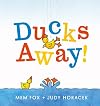
Very cute. Mama duck pauses on a bridge with her five ducklings. They fall over one by one in a low-stakes oops while Mama worries about what she should do. The text highlights the number above and below, reinforcing some number and math concepts, and the repeated rhyming text is fun to say. The fact that the mama is a little scatterbrained is funny, and the reunion in the river gives us all a chance to quack. Illustrations convey the falling ducklings in momentum inspired poses, and the show more primary color scheme is bold and eye catching. A great option for groups. show less
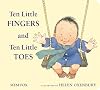
This was one of the most simplistic books I could find in the library, but it was surprisingly full of substance. One thing I liked about it was that it had such a deep message for such a short book. It did a spectacular job of teaching acceptance and diversity in a way that very young children could understand. The big idea of the book was that even though everyone is different, we are all human. The book told of several babies who were all born on the same day, but all in different show more countries and circumstances. The book described these circumstances, and then went on to say that despite this, all the babies had ten fingers and ten toes: “There was one little baby who was born on the ice, and another in a tent, who was just as nice. And both of these babies, as everyone knows, had 10 little fingers and 10 little toes.” The simplistic illustrations did a great job of highlighting the important points of the story, as well. For example, one of the pages highlighted a baby “wrapped in an eiderdown.” The illustration on that page consisted of only a baby wrapped in a blanket. This way, children are able to figure out what the word means by looking at the picture. Overall, the book did a great job of weaving an important message into a fun, enjoyable story. show less
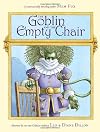
I cried all the way through this book the first time I read it. These insightful and amazing creators, the Dillons and Mem Fox, obviously understand grief. The description of this pain in each of the characters is so simple, so perfect, so exact: "The goblin saw the farmer/woman/child sigh, set down his/her tools/pail/book, and bury his/her head in his/her hands." Which is exactly what happens when faced with unbearable loss. The way that the Goblin is able to see and understand, and then, show more help each character in the way that was most meaningful to them was moving. In the end, kindness breeds kindness and all the characters receive healing. Gentle, insightful, sensitive. This book is a treasure. show less
Lists
Awards


You May Also Like


Associated Authors
Statistics
- Works
- 105
- Also by
- 3
- Members
- 39,162
- Popularity
- #458
- Rating
- 4.0
- Reviews
- 1,453
- ISBNs
- 757
- Languages
- 15
- Favorited
- 16


