
Mem Fox
Author of Whoever You Are
About the Author
Mem Fox was born on March 5, 1946 in Melbourne, Australia. She attended a drama school in London. She returned to Australia where she was a college professor. She writes children's books including Possum Magic, Night Noises, Wilfrid Gordon McDonald Partridge, Time for Bed, Koala Lou, Wombat Divine, show more Ten Little Fingers and Ten Little Toes, Hello Baby!, A Giraffe in the Bath (co-written with Olivia Rawson), Count Goats!, and The Little Dragon. She has also written several books for adults. She has received numerous awards including the 1990 Dromkeen Medal for distinguished services to children's literature, a 1991 Advance Australia Award for her outstanding contribution to Australian literature, and a medal in the 1993 Australia Day Honours awards for services to the cultural life of Australia. (Bowker Author Biography) show less
Series
Works by Mem Fox
Reading Magic: Why Reading Aloud to Our Children Will Change Their Lives Forever (2001) 627 copies, 20 reviews
Radical Reflections: Passionate Opinions on teaching, Learning and Living (1993) 110 copies, 2 reviews
Dear Mem Fox, I Have Read All Your Books Even the Pathetic Ones and Other Incidents in the Life of a Children's Book Author (1990) 76 copies
Morning Bells (New Dimensions in the World of Reading, Silver Burdett Ginn) (1993) 27 copies, 1 review
How to Teach Drama to Infants without Really Crying: Drama Classes for Fives to Eights (1984) 8 copies
Possum magic 3 copies
Koala Lou 1 copy
good night sleep tight 1 copy
Time For Bad 1 copy
Hunwick's Egg 1 copy
Possum Magic Boxed Set 1 copy
Hunwick’s Egg 1 copy
This & That 1 copy
Time For Bed Bedtime 1 copy
Papers of Mem Fox 1 copy
Whoever They Are 1 copy
Bear Play 1 copy
Feathers and Fools 1 copy
Associated Works
Confronting Our Discomfort: Clearing the Way for Anti-Bias in Early Childhood (2003) — Foreword, some editions — 4 copies
Possum Magic: The Musical — Original book — 1 copy
Tagged
Common Knowledge
- Legal name
- Partridge, Merrion Frances
- Birthdate
- 1946-03-05
- Gender
- female
- Education
- Hope Fountain mission school
- Occupations
- children's book author
educationalist - Awards and honors
- Dromkeen Medal (1990)
Flinders University Chancellor's Medal
Flinders University Convocation Medal
Australian Prime Minister's Centenary Medal (2003)
Order of Australia - Nationality
- Australia
- Birthplace
- Melbourne, Victoria, Australia
- Places of residence
- Adelaide, South Australia, Australia
Zimbabwe
London, Middlesex, England, UK - Associated Place (for map)
- Australia
Members
Reviews

From stardust to stardust, the narrative of a life is spun out in Australian author/illustrator team Mem Fox and Freya Blackwood's picture book, The Tiny Star. Falling to earth one night, a star takes the shape of a tiny baby, is adopted by loving parents, leads a full, long and loving life surrounded by relatives and friends, before passing away—back into stardom. Shining from the celestial heavens, the star gives comfort to the loved ones left behind...
When I first happened upon this show more book at my public library, I mistook it for a Christmas title for some reason. I'm trying to recall whether it had been mistakenly placed on the Christmas display—I think it had been, but couldn't swear to it. In any case, being on the hunt for new and new-to-me Christmas books, and being a devoted admirer of Freya Blackwood's artwork, I immediately snatched it up and brought it home. I was not all that dismayed to find it wasn't a Christmas story (Freya Blackwood, after all), and was intrigued by the idea of a star living out the life of a human. It brought back memories of my college astronomy class, and the time my professor informed we students that the old hippie belief in humanity being nothing but stardust was in fact scientifically sound, as every atom that goes to make up our world, and us, comes from massive stellar explosions in the cosmic prehistory of our area of the universe.
In any case, I certainly didn't approach this one with anything other than a pleasant expectation of enjoyment, given my fondness for the illustrator, and the fact that author Mem Fox is a titan in children's literature, both Australian and global. Unfortunately, despite all this, The Tiny Star was a miss for me. I found the narrative unconvincing, and even unmoving. Many other online reviewers apparently found it emotionally resonant, and quite poignant, and I can certainly see that this narrative of the seasons of life might evoke such feelings. For me however, I kept expecting there to be something more meaningful, some insight that a star living as a human would give us—something more than just the idea of a long life well-lived, and well-loved. I found myself thinking of Kurt Vonnegut's most unusual Nativity Story, Sun Moon Star, in which the creator of the universe finds himself in a baby's body, and must see the universe in a different way. Here there is none of that—no sense of how the star perceives the world and the cosmos, now that it has become flesh. I also found myself thinking of Marion Dane Bauer's magisterial The Stuff of Stars, in which the author constructs a story beginning with the birth of the universe and concluding with the birth of a baby made of stardust. There the link to stars is deeply meaningful, tying the infinitesimal smallness of a human to the great scope of the cosmos, but here it feels incidental. The human who comes from a star in this story is referred to as "it" throughout, constantly reminding the reader that "it" is a star in human shape, rather than a human (a person, not an object) made of stars. As if to emphasize the star-ness of this person, "it" returns to the heavens after death, leaving no mortal remains, and resuming its status as a star. It is a reversal of the idea of people being made from stardust, and in turn making other stardust creatures and objects, when their bodies return to their constituent elements.
Reactions will vary of course, and some will (and have) found this one meaningful, where I have not. That said, I was so repelled by this book, so unexpectedly put off by the narrative, that I might have given it a two-star rating, were it not for Blackwood's lovely illustrations, which depict a loving, diverse family. Her artwork is always worth the price of entry, so I'm not sorry to have read this one, but I don't really recommend it. Seek out the Bauer, if you are looking for a truly meaningful cosmological baby book, and the Vonnegut, if you want a story about the ties between divinity and humanity. show less
When I first happened upon this show more book at my public library, I mistook it for a Christmas title for some reason. I'm trying to recall whether it had been mistakenly placed on the Christmas display—I think it had been, but couldn't swear to it. In any case, being on the hunt for new and new-to-me Christmas books, and being a devoted admirer of Freya Blackwood's artwork, I immediately snatched it up and brought it home. I was not all that dismayed to find it wasn't a Christmas story (Freya Blackwood, after all), and was intrigued by the idea of a star living out the life of a human. It brought back memories of my college astronomy class, and the time my professor informed we students that the old hippie belief in humanity being nothing but stardust was in fact scientifically sound, as every atom that goes to make up our world, and us, comes from massive stellar explosions in the cosmic prehistory of our area of the universe.
In any case, I certainly didn't approach this one with anything other than a pleasant expectation of enjoyment, given my fondness for the illustrator, and the fact that author Mem Fox is a titan in children's literature, both Australian and global. Unfortunately, despite all this, The Tiny Star was a miss for me. I found the narrative unconvincing, and even unmoving. Many other online reviewers apparently found it emotionally resonant, and quite poignant, and I can certainly see that this narrative of the seasons of life might evoke such feelings. For me however, I kept expecting there to be something more meaningful, some insight that a star living as a human would give us—something more than just the idea of a long life well-lived, and well-loved. I found myself thinking of Kurt Vonnegut's most unusual Nativity Story, Sun Moon Star, in which the creator of the universe finds himself in a baby's body, and must see the universe in a different way. Here there is none of that—no sense of how the star perceives the world and the cosmos, now that it has become flesh. I also found myself thinking of Marion Dane Bauer's magisterial The Stuff of Stars, in which the author constructs a story beginning with the birth of the universe and concluding with the birth of a baby made of stardust. There the link to stars is deeply meaningful, tying the infinitesimal smallness of a human to the great scope of the cosmos, but here it feels incidental. The human who comes from a star in this story is referred to as "it" throughout, constantly reminding the reader that "it" is a star in human shape, rather than a human (a person, not an object) made of stars. As if to emphasize the star-ness of this person, "it" returns to the heavens after death, leaving no mortal remains, and resuming its status as a star. It is a reversal of the idea of people being made from stardust, and in turn making other stardust creatures and objects, when their bodies return to their constituent elements.
Reactions will vary of course, and some will (and have) found this one meaningful, where I have not. That said, I was so repelled by this book, so unexpectedly put off by the narrative, that I might have given it a two-star rating, were it not for Blackwood's lovely illustrations, which depict a loving, diverse family. Her artwork is always worth the price of entry, so I'm not sorry to have read this one, but I don't really recommend it. Seek out the Bauer, if you are looking for a truly meaningful cosmological baby book, and the Vonnegut, if you want a story about the ties between divinity and humanity. show less

Australian author/artist team Mem Fox and Vivienne Goodman lead the reader through a guessing game about "that crazy lady called Daisy O'Grady" in this witchy picture-book. Each two-page spread features a question about the lady in question - is she tall?, does she wear a black dress? - on the right-hand-side page, and a full-page illustration on the left. Gradually, the reader realizes that Daisy O'Grady is a witch, although the narrative concludes with the information that she is not a show more mean one...
The fourth picture-book I have read from the prolific Fox, Guess What? is a title I expected to enjoy immensely, given my interest in witchy picture-books, and my appreciation for some of the author's other work. I did end up finding it quite interesting, and think that its question/answer format, when paired with the attention-grabbing, photo-realistic paintings of Goodman, make it an excellent read-aloud title for story-time. That said, somehow I just didn't warm to it, despite my interest. The artwork is apparently quite controversial, with a number of elements - bits of nudity, disturbing dead fish in underwear, and so on - that have led to it being challenged in various places. For my part, I found these elements more humorous than offensive, and suspect child readers will simply accept them as one more detail in the strange and surreal world depicted so vividly by Goodman. I struggled with my rating on this one, as I didn't find the book appealing, from a personal aesthetic perspective, but did find the design interesting, and the artwork striking. Recommended to fans of the author and/or artist, or to readers looking for unusual question-answer style picture-book narratives. show less
The fourth picture-book I have read from the prolific Fox, Guess What? is a title I expected to enjoy immensely, given my interest in witchy picture-books, and my appreciation for some of the author's other work. I did end up finding it quite interesting, and think that its question/answer format, when paired with the attention-grabbing, photo-realistic paintings of Goodman, make it an excellent read-aloud title for story-time. That said, somehow I just didn't warm to it, despite my interest. The artwork is apparently quite controversial, with a number of elements - bits of nudity, disturbing dead fish in underwear, and so on - that have led to it being challenged in various places. For my part, I found these elements more humorous than offensive, and suspect child readers will simply accept them as one more detail in the strange and surreal world depicted so vividly by Goodman. I struggled with my rating on this one, as I didn't find the book appealing, from a personal aesthetic perspective, but did find the design interesting, and the artwork striking. Recommended to fans of the author and/or artist, or to readers looking for unusual question-answer style picture-book narratives. show less
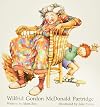
Wilfrid Gordon McDonald Partridge is no ordinary child. He spends his days making friends with the people in the nursing home by his house. Though he enjoys all the people living there, he has a soft spot for one lady in particular, Nancy Alison Delacourt Cooper, because she had four names, just like him. Ms. Cooper is losing her memory, though, and WGMP finds a new mission; to bring them back to her. In order to do this, he asks his wise friends at the old people’s home what a memory is show more exactly. As he sets about his mission, he touches the heart of readers and Nancy Alison Delacourt Cooper both.
Personal Reaction:
I’ve read this story many times to my own daughter and I tear up every time. I had a special person who lost her memory in my life; my great-grandmother, GiGi. Growing up, I knew her as the Alzheimer patient. Occasionally, my GiGi would light up and tell me stories of her past; of riding trains with her brother to find migrant farm work, of shooting tin cans, of falling in love, of my own grandmother as a child. The book, “Wilfrid Gordon McDonald Partridge,” touches my heart and reminds me that everyone, even those who lost their memories, have special stories that live forever in their hearts.
Classroom extension:
1. Wilfrid Gordon brings Nancy Alison items to jog her memory; something warm, something that makes you laugh, something that makes you cry, something as precious as gold, and something from long ago. Share with students one from each thing that is a memory to you. Then, ask the students to source pictures and create their own memory boards. Each student will write a description of why they chose each item for their memory board.
2. The phrases that describe a memory (something as precious as gold) is a simile. Explain to the students what makes a simile (like or as) and ask students to write sentences using similies. show less
Personal Reaction:
I’ve read this story many times to my own daughter and I tear up every time. I had a special person who lost her memory in my life; my great-grandmother, GiGi. Growing up, I knew her as the Alzheimer patient. Occasionally, my GiGi would light up and tell me stories of her past; of riding trains with her brother to find migrant farm work, of shooting tin cans, of falling in love, of my own grandmother as a child. The book, “Wilfrid Gordon McDonald Partridge,” touches my heart and reminds me that everyone, even those who lost their memories, have special stories that live forever in their hearts.
Classroom extension:
1. Wilfrid Gordon brings Nancy Alison items to jog her memory; something warm, something that makes you laugh, something that makes you cry, something as precious as gold, and something from long ago. Share with students one from each thing that is a memory to you. Then, ask the students to source pictures and create their own memory boards. Each student will write a description of why they chose each item for their memory board.
2. The phrases that describe a memory (something as precious as gold) is a simile. Explain to the students what makes a simile (like or as) and ask students to write sentences using similies. show less

Convinced that his face is so ugly that it will frighten others, a tender-hearted goblin hides himself away from the world, growing more and more lonely as the years pass. Then one day, happening upon a family suffering from a terrible (and unspoken) loss, he sets out to help in the only way he knows: in secret...
This lovely little tale from Mem Fox - author of such children's favorites as Time for Bed and Possum Magic - touches upon the communal and reciprocal nature of healing: the goblin show more sets out to help the family, but it is clear to the reader that he too needs help. Although the exact nature of the family's loss is never stated, the empty chair at mealtime, and a family portrait seen in one of the illustrations, makes it plain that a child has died. In a moment of true psychological insight, the family's healing begins (much as it did with the goblin) when they decide to help another: to include him in their community.
The simple narrative of The Goblin and the Empty Chair, with no more than a sentence per page, is made all-the-more powerful by the gorgeous ink and watercolor art of Caldecott-winning illustrators Leo and Diane Dillon. With Renaissance-inspired details, an appealing palette, and expressive characters, their panels are a joy to behold. A definite must for fairy-tale readers! show less
This lovely little tale from Mem Fox - author of such children's favorites as Time for Bed and Possum Magic - touches upon the communal and reciprocal nature of healing: the goblin show more sets out to help the family, but it is clear to the reader that he too needs help. Although the exact nature of the family's loss is never stated, the empty chair at mealtime, and a family portrait seen in one of the illustrations, makes it plain that a child has died. In a moment of true psychological insight, the family's healing begins (much as it did with the goblin) when they decide to help another: to include him in their community.
The simple narrative of The Goblin and the Empty Chair, with no more than a sentence per page, is made all-the-more powerful by the gorgeous ink and watercolor art of Caldecott-winning illustrators Leo and Diane Dillon. With Renaissance-inspired details, an appealing palette, and expressive characters, their panels are a joy to behold. A definite must for fairy-tale readers! show less
Lists
Awards


You May Also Like


Associated Authors
Statistics
- Works
- 106
- Also by
- 3
- Members
- 39,429
- Popularity
- #453
- Rating
- 4.0
- Reviews
- 1,456
- ISBNs
- 757
- Languages
- 15
- Favorited
- 16


