
Hao Jingfang
Author of Vagabonds
About the Author
Hao Jingfang is a Chinese author born on July 27, 1984 in Tianjin, China. She studied and worked in physics at the Tsinghua University. Later her interests turned to economics and earned a doctoral degree in economics. She currently works as an economic researcher at China Development Research show more Foundation. She has continued to develop her writing since high school, from winning the 2002 first prize at the 4th national high school "New Concept" writing competition, to winning the 2016 Hugo Award for Best Novelette for her work Folding Beijing. (Bowker Author Biography) show less
Works by Hao Jingfang
Associated Works
Broken Stars: Contemporary Chinese Science Fiction in Translation (2019) — Contributor — 457 copies, 12 reviews
Sinopticon 2021: A Celebration of Chinese Science Fiction (2021) — Contributor — 108 copies, 8 reviews
SFマガジン 2019年 04 月号 — Contributor — 1 copy
Tagged
Common Knowledge
- Canonical name
- Hao Jingfang
- Birthdate
- 1984-07-27
- Gender
- female
- Education
- Tsinghua University (Bx|Physics)
Tsinghua University (PhD|Economics) - Occupations
- economist
writer - Nationality
- China
- Birthplace
- Tianjin, China
- Associated Place (for map)
- Tianjin, China
Members
Reviews
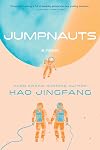
This book is definitely science fiction but it is also an exploration of Chinese culture and philosophy. The author did a good job of explaining these aspects to Western readers but I couldn't help but feel that Chinese readers would get more out of it. Nevertheless, I enjoyed it and since it's the first book in a trilogy I will be anxiously awaiting the next installment.
Archaeologist Yun Fan has been convinced for some time that extraterrestrials visited the Earth a number of times and show more helped humans with innovations that would have taken centuries to achieve otherwise. Jiang Liu met Yun Fan once and thinks that she may have clues about an interstellar ship that appears to be approaching Earth. He heads to the Mausoleum of the First Qin Emperor to meet with her. Almost next door to the Mausoleum, Qi Fei, a researcher with the Pacific League, is tasked by his superior to find out what is happening there. It turns out Qi Fei and Yun Fan are quite well acquainted. At one time they were dating and were expected to marry. (We find out later in the book what happened to break them up.) Qi Fei is friends with an ex-pilot who can take them in one of the Jiang family's space craft to meet the alien craft. Yun Fan has several artifacts that will enable them to enter the ship. At first, the three stay together but Yun Fan is separated from the others. Qi Fei and Jiang Liu almost kill each other as they traverse the ship but at the last moment realize they have to co-operate in order to reach Yun Fan. When they do, they finally encounter the extraterrestrial who has lessons to pass on just as it did on previous visits to Earth. This time the lessons are about human survival instead of perpetual warfare between factions. Can these three pass on these lessons and stave off mutual destruction?
One of the main philosophical concepts explored in this book is the Confucian concept of "ren". There is no English equivalent but "ren" is central to the idea of goodness in humanity. Compassion, empathy, and love for others are emphasized and it is felt that kindness within a family will expand to the wider community. Let it be so. show less
Archaeologist Yun Fan has been convinced for some time that extraterrestrials visited the Earth a number of times and show more helped humans with innovations that would have taken centuries to achieve otherwise. Jiang Liu met Yun Fan once and thinks that she may have clues about an interstellar ship that appears to be approaching Earth. He heads to the Mausoleum of the First Qin Emperor to meet with her. Almost next door to the Mausoleum, Qi Fei, a researcher with the Pacific League, is tasked by his superior to find out what is happening there. It turns out Qi Fei and Yun Fan are quite well acquainted. At one time they were dating and were expected to marry. (We find out later in the book what happened to break them up.) Qi Fei is friends with an ex-pilot who can take them in one of the Jiang family's space craft to meet the alien craft. Yun Fan has several artifacts that will enable them to enter the ship. At first, the three stay together but Yun Fan is separated from the others. Qi Fei and Jiang Liu almost kill each other as they traverse the ship but at the last moment realize they have to co-operate in order to reach Yun Fan. When they do, they finally encounter the extraterrestrial who has lessons to pass on just as it did on previous visits to Earth. This time the lessons are about human survival instead of perpetual warfare between factions. Can these three pass on these lessons and stave off mutual destruction?
One of the main philosophical concepts explored in this book is the Confucian concept of "ren". There is no English equivalent but "ren" is central to the idea of goodness in humanity. Compassion, empathy, and love for others are emphasized and it is felt that kindness within a family will expand to the wider community. Let it be so. show less
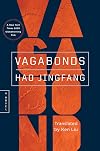
This book is long, exactly 600 pages, and, even though it takes place on Mars, there's a lot more philosophy than action in those pages. Nevertheless, I never felt it dragged or that I was bored.
A group of young Martians were sent to Earth for five years and are just returning to Mars at the start of the book. Mars and Earth are very different in societal terms. Earth is a laissez-faire capitalist society while Mars is a communal socialist enterprise. For the group of young people just show more returning to Mars and the start of their adult life, these five years have made them question Mars society and their place in it. Luoying, a dancer and granddaughter of the consul of Mars, is our lens on the changes to come. On Earth she often heard her grandfather referred to as a dictator. Back on Mars she continually thinks about whether he is or isn't. The other main character is a filmmaker from Earth, Eko, sent to document the interactions of the Earth delegation with the Mars government. There are still tensions from the war between Earth and Mars over 100 years ago and it is still a question whether the two planets can exist peacefully. And there are factions on Mars who want to change the status quo but some want to do it peacefully and legally and some want to start another war. So, with all this going down, it's easy to see why it would take 600 pages to bring the narrative to a conclusion.
I couldn't help but feel that this book was an allegory for the relationship between China and the USA. Jingfang lives in Beijing and works as a macroeconomics researcher so I don't think it's unlikely that she has a good understanding of both the capitalist and socialist economies. She doesn't seem to approve of capitalism but, at the same time, she seems to see flaws in the restrictive world of Communism. And, in the end, I think she sees Mars (China) evolving but not to absolute capitalism. show less
A group of young Martians were sent to Earth for five years and are just returning to Mars at the start of the book. Mars and Earth are very different in societal terms. Earth is a laissez-faire capitalist society while Mars is a communal socialist enterprise. For the group of young people just show more returning to Mars and the start of their adult life, these five years have made them question Mars society and their place in it. Luoying, a dancer and granddaughter of the consul of Mars, is our lens on the changes to come. On Earth she often heard her grandfather referred to as a dictator. Back on Mars she continually thinks about whether he is or isn't. The other main character is a filmmaker from Earth, Eko, sent to document the interactions of the Earth delegation with the Mars government. There are still tensions from the war between Earth and Mars over 100 years ago and it is still a question whether the two planets can exist peacefully. And there are factions on Mars who want to change the status quo but some want to do it peacefully and legally and some want to start another war. So, with all this going down, it's easy to see why it would take 600 pages to bring the narrative to a conclusion.
I couldn't help but feel that this book was an allegory for the relationship between China and the USA. Jingfang lives in Beijing and works as a macroeconomics researcher so I don't think it's unlikely that she has a good understanding of both the capitalist and socialist economies. She doesn't seem to approve of capitalism but, at the same time, she seems to see flaws in the restrictive world of Communism. And, in the end, I think she sees Mars (China) evolving but not to absolute capitalism. show less

Three groups of travelers are bound for an independent Mars on the only ship allowed to make the journey between the estranged planets. The returning delegates of Mars are excited to get home, the Terran delegates are anxious about the forthcoming negotiations, and the returning children of Mars, sent to study on Earth 5 years previously, are ready to get back home but uncertain of their place there.
It's 30 years after the war for Martian independence ended, but relations between the show more planets are still delicate. Earth views Mars as an authoritarian society without freedom and Mars views Earth as devoid of morality and ideals. Stuck between the vastly different lifestyles and societies of the two are the group of students sent to learn about life on Earth but expected to conform back into the vastly different Martian society on their return.
Hao Jingfang's Vagabonds is a meditation on humanity and the meaning of freedom. Mars represents the collective ideals of societies, placing familial bonds and the betterment of the whole over individual freedom. Earth represents the individual, the pursuit of freedom and profit over the collective good. The students shuttled between these two worlds are thrown into internal conflict. Seeing the flaws of both societies, but unable to live in either, they must decide if struggling to fix the problems they have found is a worthwhile or achievable goal. Are revolutions ever truly successful, is it possible to build something without flaw?
This contemplation of societies is understandable and raises good questions, but Vagabonds struggles with finding direction through it. Reading more like a selection from de Montaigne's Essais than a novel, the book features circular arguments, abrupt jumps in time, constantly adds new point of view characters and completely drops others. Structurally, it's a bit of a mess. While Hao Jinfang's lyrical writing often makes individual sections of this book unforgettable, the overall effect is a lengthy, overly descriptive slog. Entire pages are spent, paragraph after paragraph, on describing the same thing using slightly different words for sentence after sentence. Sometimes this is done to good effect, often when a character is using their surrounding to parse their conflicts. However, when combined with the time jumps and point of view changes, it leads to an overall muddle reading experience.
Hao Jingfang is clearly a talented writer. Vagabonds will appeal to people who would rather ponder than go on a journey. There are some truly wonderfully written sections of this book and I do look forward to reading future works from this author. Having said that, I will not be picking this one back up for a revisit.
Thank you the Gallery / Saga Press and Netgalley for a copy of this book to review. show less
It's 30 years after the war for Martian independence ended, but relations between the show more planets are still delicate. Earth views Mars as an authoritarian society without freedom and Mars views Earth as devoid of morality and ideals. Stuck between the vastly different lifestyles and societies of the two are the group of students sent to learn about life on Earth but expected to conform back into the vastly different Martian society on their return.
Hao Jingfang's Vagabonds is a meditation on humanity and the meaning of freedom. Mars represents the collective ideals of societies, placing familial bonds and the betterment of the whole over individual freedom. Earth represents the individual, the pursuit of freedom and profit over the collective good. The students shuttled between these two worlds are thrown into internal conflict. Seeing the flaws of both societies, but unable to live in either, they must decide if struggling to fix the problems they have found is a worthwhile or achievable goal. Are revolutions ever truly successful, is it possible to build something without flaw?
This contemplation of societies is understandable and raises good questions, but Vagabonds struggles with finding direction through it. Reading more like a selection from de Montaigne's Essais than a novel, the book features circular arguments, abrupt jumps in time, constantly adds new point of view characters and completely drops others. Structurally, it's a bit of a mess. While Hao Jinfang's lyrical writing often makes individual sections of this book unforgettable, the overall effect is a lengthy, overly descriptive slog. Entire pages are spent, paragraph after paragraph, on describing the same thing using slightly different words for sentence after sentence. Sometimes this is done to good effect, often when a character is using their surrounding to parse their conflicts. However, when combined with the time jumps and point of view changes, it leads to an overall muddle reading experience.
Hao Jingfang is clearly a talented writer. Vagabonds will appeal to people who would rather ponder than go on a journey. There are some truly wonderfully written sections of this book and I do look forward to reading future works from this author. Having said that, I will not be picking this one back up for a revisit.
Thank you the Gallery / Saga Press and Netgalley for a copy of this book to review. show less
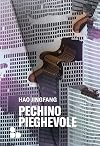
Non tutti i racconti funzionano bene come il primo (che a ragione dà titolo alla raccolta), che riesce a unire un brillante spunto fantascientifico a una lettura critica di una società classista, controllata e separata in cui è facile rivedere la Cina odierna (e forse non solo). In alcuni casi la critica emerge più forte della fantascienza, che resta "di maniera"; in altri la fantascienza prende il sopravvento e la lettura sociale non risulta più così chiara e incisiva. A ogni modo, show more autrice da conoscere per avere un'idea della letteratura cinese contemporanea (e provare a capire la società cinese in generale). show less
Lists
Awards


You May Also Like


Associated Authors
Statistics
- Works
- 20
- Also by
- 15
- Members
- 578
- Popularity
- #43,350
- Rating
- 3.7
- Reviews
- 32
- ISBNs
- 46
- Languages
- 9
- Favorited
- 1