
Kirstin Valdez Quade
Author of The Five Wounds
About the Author
Image credit: Author Kirstin Valdez Quade at the 2015 Texas Book Festival. By Larry D. Moore, CC BY-SA 4.0, https://commons.wikimedia.org/w/index.php?curid=44341428
Works by Kirstin Valdez Quade
Jubilee 1 copy
Associated Works
Tales of Two Americas: Stories of Inequality in a Divided Nation (2017) — Contributor — 227 copies, 7 reviews
The O. Henry Prize Stories 2014: The Best Stories of the Year (2014) — Contributor — 84 copies, 4 reviews
Tagged
Common Knowledge
- Birthdate
- 1980
- Gender
- female
- Education
- Stanford University (BA)
Phillips Exeter Academy - Awards and honors
- National Book Foundation, 5 Under 35 Honoree (2014)
- Nationality
- USA
- Associated Place (for map)
- USA
Members
Reviews
Originally posted on ars shatomica.
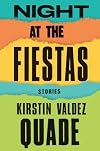
I’m on a Southwest kick, having read Claire Vaye Watkins’ [b:Battleborn|13163921|Battleborn|Claire Vaye Watkins|https://d.gr-assets.com/books/1348814807s/13163921.jpg|18342979] recently. It was actually CVW’s Twitter that introduced me to Night at the Fiestas, another short story anthology. Instead of Nevada, Night at the Fiestas takes place in northern New Mexico in the areas in and surrounding Albuquerque and Santa Fe. It is an incredibly engrossing show more and good read.
These stories were dark. No spoilers here for a story as good as “The Five Wounds,” but damn, that ending! If you’re going to read any story in this collection, read “The Five Wounds.” The story that unsettled me the most was “Family Reunion” — a tale about a misfit, who’s only a misfit because she’s not Mormon like everyone else, who agrees to go to a secluded cabin with a friend and said friend’s mother, whom the misfit barely knows. The unsettled feeling that most of these stories left me with was what I loved about this book. I don’t want to read to smile and think “how nice” — I want someone to tell me a story that’s striking enough for me to still be pondering it the next day. Which, frankly, was the case for every story in this collection.
Some qualms: I found the circumstances of the characters to be repetitive — academics, young pregnant women, precocious children. But I’m also not familiar with the area, so what do I know about the prevalence of pregnant women in New Mexico? I also found the collection overall to be a little depressing as the stories rang more of despair than hope.
That despair, however, does not detract from the undeniable fact that Valdez Quade writes beautifully. I found myself hanging onto every word, every turn of phrase. Whatever she writes next is hopefully just as good as the promise she’s shown with this collection. show less
I’m on a Southwest kick, having read Claire Vaye Watkins’ [b:Battleborn|13163921|Battleborn|Claire Vaye Watkins|https://d.gr-assets.com/books/1348814807s/13163921.jpg|18342979] recently. It was actually CVW’s Twitter that introduced me to Night at the Fiestas, another short story anthology. Instead of Nevada, Night at the Fiestas takes place in northern New Mexico in the areas in and surrounding Albuquerque and Santa Fe. It is an incredibly engrossing show more and good read.
These stories were dark. No spoilers here for a story as good as “The Five Wounds,” but damn, that ending! If you’re going to read any story in this collection, read “The Five Wounds.” The story that unsettled me the most was “Family Reunion” — a tale about a misfit, who’s only a misfit because she’s not Mormon like everyone else, who agrees to go to a secluded cabin with a friend and said friend’s mother, whom the misfit barely knows. The unsettled feeling that most of these stories left me with was what I loved about this book. I don’t want to read to smile and think “how nice” — I want someone to tell me a story that’s striking enough for me to still be pondering it the next day. Which, frankly, was the case for every story in this collection.
Some qualms: I found the circumstances of the characters to be repetitive — academics, young pregnant women, precocious children. But I’m also not familiar with the area, so what do I know about the prevalence of pregnant women in New Mexico? I also found the collection overall to be a little depressing as the stories rang more of despair than hope.
That despair, however, does not detract from the undeniable fact that Valdez Quade writes beautifully. I found myself hanging onto every word, every turn of phrase. Whatever she writes next is hopefully just as good as the promise she’s shown with this collection. show less
I first came across Kristin Valdez Quade from her story Original Sins, published in The New Yorker. It was so different than the typical New Yorker offering, I had to look at the cover and make sure what I was reading. The story was simple, in form and in style. It was deeply tied to my native New Mexico, the patchwork culture bubbling from each word. Her collection, [Night at the Fiestas], is all like that first story.
The jacket blurb says that Quade’s stories examine characters who are show more defined by their desire to escape the past or to plumb its depths. It could have more easily said that they are ineffably human. Whether the secretly alcoholic priest or the shiftless penitente, these are people with pasts, and ones you imagine have left scars or limps. But each one is recognizable, relatable. They are people riding on the bus with you every morning but about whom you’ve never been curious enough. Quade gives you access to their stories, and in so doing, your own story, revealing your own struggles for redemption.
Bottom Line: This is what short fiction was meant to be – powerfully simple and boiling with emotion.
5 bones!!!!! show less
The jacket blurb says that Quade’s stories examine characters who are show more defined by their desire to escape the past or to plumb its depths. It could have more easily said that they are ineffably human. Whether the secretly alcoholic priest or the shiftless penitente, these are people with pasts, and ones you imagine have left scars or limps. But each one is recognizable, relatable. They are people riding on the bus with you every morning but about whom you’ve never been curious enough. Quade gives you access to their stories, and in so doing, your own story, revealing your own struggles for redemption.
Bottom Line: This is what short fiction was meant to be – powerfully simple and boiling with emotion.
5 bones!!!!! show less
Ever since I studied O Henry and Edgar Allan Poe in junior high, I have loved short stories. With this collection, Kristin Valdez Quade is added to my list of authors who have perfected this format.
It’s difficult to rate a collection, because some of the stories resonate more with me than others. Quade gives us ten beautifully written stories in this collection.
In The Five Wounds Amadeo tries to atone for past (and current) failures by playing the part of Jesus in the annual Good Friday show more re-enactment of the crucifixion, while his pregnant teen-aged daughter looks on. Andrea struggles between hating the wealthy land owner who employs her father, and desperately wishing she could be more like his daughter, Parker in Jubilee. In Mojave Rats Monica is feeling trapped with her two daughters, seven-year-old Cordelia and the infant Beatrice, in a sparsely populated trailer park, while her husband is off doing fieldwork for his Ph.D. Pregnant Crystal has found work and maybe a little hope as a secretary for the local parish priest in Original Sins. When the reader meets Frances in Night at the Fiestas, “she is pretending to be someone else, someone whose father is not the bus driver.”
What Quade’s characters share is that desire to “be someone else” and/or somewhere else, but no real means of achieving that. They dream, but are somehow powerless to change their circumstances, falling back on old patterns of behavior, afraid to let go of their past to head into the future.
Quade’s short story collection won the National Book Critics Circle Award for John Leonard Prize in 2015, and Sue Kaufman Prize for First Fiction (2016). She was named a National Book Foundation “Five Under Thirty-Five” Author. show less
It’s difficult to rate a collection, because some of the stories resonate more with me than others. Quade gives us ten beautifully written stories in this collection.
In The Five Wounds Amadeo tries to atone for past (and current) failures by playing the part of Jesus in the annual Good Friday show more re-enactment of the crucifixion, while his pregnant teen-aged daughter looks on. Andrea struggles between hating the wealthy land owner who employs her father, and desperately wishing she could be more like his daughter, Parker in Jubilee. In Mojave Rats Monica is feeling trapped with her two daughters, seven-year-old Cordelia and the infant Beatrice, in a sparsely populated trailer park, while her husband is off doing fieldwork for his Ph.D. Pregnant Crystal has found work and maybe a little hope as a secretary for the local parish priest in Original Sins. When the reader meets Frances in Night at the Fiestas, “she is pretending to be someone else, someone whose father is not the bus driver.”
What Quade’s characters share is that desire to “be someone else” and/or somewhere else, but no real means of achieving that. They dream, but are somehow powerless to change their circumstances, falling back on old patterns of behavior, afraid to let go of their past to head into the future.
Quade’s short story collection won the National Book Critics Circle Award for John Leonard Prize in 2015, and Sue Kaufman Prize for First Fiction (2016). She was named a National Book Foundation “Five Under Thirty-Five” Author. show less
4.5****
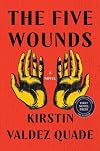
Amadeo Padilla can never catch a break, but maybe now, finally, he’s on his way. He’s been chosen to play Jesus in the annual Good Friday procession, and he’s determined to give it his all. But on his big day, his fifteen-year-old daughter, Angel, shows up, hugely pregnant and needing shelter.
The opening chapter of this marvelous character-driven work was a short story in Quade’s collection, Night At the Fiestas. I admit that I could not imagine how she would turn that short show more story into a full-length novel, but she did a marvelous job of building on the idea to flesh out the characters.
What I wrote about the short-story collection holds true here as well: ”What Quade’s characters share is that desire to “be someone else” and/or somewhere else, but no real means of achieving that. They dream, but are somehow powerless to change their circumstances, falling back on old patterns of behavior, afraid to let go of their past to head into the future.”
Amadeo, his mother, Yolanda, and Angel all struggle with the unfairness of life. With limited education and few opportunities to succeed they stay stuck in a pattern of repeated mistakes. Yolanda has never stopped babying Amadeo, her youngest child and the prized son, whose father died too young. She has never allowed him to learn how to fail and, more importantly, how to recover from failure. He’s like a full-grown toddler in his approach to life. He’s dependent on his mother for shelter, food, gas and beer money. And he is powerless to help his own daughter, whom he’s barely seen since she was a tiny child.
Yolanda deals with her problems by denying they exist. She soldiers on, taking one exhausted (and exhausting) step after another, with no way out of her difficulties. She cannot bring herself to ask for help or to accept it if it’s offered … but who would offer since she doesn’t let anyone know there IS a problem.
And Angel, the poor kid, is genuinely trying her best to finish high school, get the right nutrition for her baby, ensure that the infant is cared for and nurtured to develop appropriately. I loved the scenes where she would talk to him to enrich him and encourage the development of language. But the reader cannot forget that she is still a child herself. And desperately seeking love wherever she can find it.
Quade gives us a marvelous cast of supporting characters as well, from Tio Tive (the family patriarch) to Brianna, who leads the program for teen mothers at Angel’s alternative school, to Angel’s mom, Marissa, all of them are fully realized and add to the dynamic of this family’s difficult relationships.
Despite how they infuriated me, and how often I wanted to just shake some sense into them, I wound up really loving these characters. Some of that was because Quade often gave the reader some hope for a change in circumstances (often short-lived hope, but hope nonetheless). One character sums it up best: Love is both a gift and a challenge. show less
Amadeo Padilla can never catch a break, but maybe now, finally, he’s on his way. He’s been chosen to play Jesus in the annual Good Friday procession, and he’s determined to give it his all. But on his big day, his fifteen-year-old daughter, Angel, shows up, hugely pregnant and needing shelter.
The opening chapter of this marvelous character-driven work was a short story in Quade’s collection, Night At the Fiestas. I admit that I could not imagine how she would turn that short show more story into a full-length novel, but she did a marvelous job of building on the idea to flesh out the characters.
What I wrote about the short-story collection holds true here as well: ”What Quade’s characters share is that desire to “be someone else” and/or somewhere else, but no real means of achieving that. They dream, but are somehow powerless to change their circumstances, falling back on old patterns of behavior, afraid to let go of their past to head into the future.”
Amadeo, his mother, Yolanda, and Angel all struggle with the unfairness of life. With limited education and few opportunities to succeed they stay stuck in a pattern of repeated mistakes. Yolanda has never stopped babying Amadeo, her youngest child and the prized son, whose father died too young. She has never allowed him to learn how to fail and, more importantly, how to recover from failure. He’s like a full-grown toddler in his approach to life. He’s dependent on his mother for shelter, food, gas and beer money. And he is powerless to help his own daughter, whom he’s barely seen since she was a tiny child.
Yolanda deals with her problems by denying they exist. She soldiers on, taking one exhausted (and exhausting) step after another, with no way out of her difficulties. She cannot bring herself to ask for help or to accept it if it’s offered … but who would offer since she doesn’t let anyone know there IS a problem.
And Angel, the poor kid, is genuinely trying her best to finish high school, get the right nutrition for her baby, ensure that the infant is cared for and nurtured to develop appropriately. I loved the scenes where she would talk to him to enrich him and encourage the development of language. But the reader cannot forget that she is still a child herself. And desperately seeking love wherever she can find it.
Quade gives us a marvelous cast of supporting characters as well, from Tio Tive (the family patriarch) to Brianna, who leads the program for teen mothers at Angel’s alternative school, to Angel’s mom, Marissa, all of them are fully realized and add to the dynamic of this family’s difficult relationships.
Despite how they infuriated me, and how often I wanted to just shake some sense into them, I wound up really loving these characters. Some of that was because Quade often gave the reader some hope for a change in circumstances (often short-lived hope, but hope nonetheless). One character sums it up best: Love is both a gift and a challenge. show less
Lists
Awards


You May Also Like


Associated Authors
Statistics
- Works
- 6
- Also by
- 5
- Members
- 781
- Popularity
- #32,596
- Rating
- 3.9
- Reviews
- 30
- ISBNs
- 26
- Languages
- 5
- Favorited
- 2