
Nick Turse
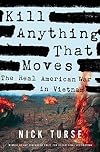
Author of Kill Anything That Moves: The Real American War in Vietnam
About the Author
Nick Turse, an award-winning journalist and historian, is the author and editor of several books, including The Changing Face of Empire: Special Ops, Drones, Spies, Proxy Fighters, Secret Bases, and Cyberwar-fare (Haymarket Books), the managing editor of TomDispatch, and a fellow at the Nation show more Institute. show less
Image credit: Photo by Tam Turse
Works by Nick Turse
The Changing Face of Empire: Special Ops, Drones, Spies, Proxy Fighters, Secret Bases, and Cyberwarfare (2012) 68 copies, 1 review
Tomorrow's Battlefield: U.S. Proxy Wars and Secret Ops in Africa (Dispatch Books) (2015) 57 copies, 2 reviews
Associated Works
The World According to Tomdispatch: America In The New Age of Empire (2008) — Contributor — 31 copies
Tagged
Common Knowledge
- Birthdate
- 1975
- Gender
- male
- Education
- Columbia University (PhD | Sociomedical Sciences)
- Occupations
- writer
historian - Awards and honors
- Ridenhour Prize for Reportorial Distinction, 2009
James Aronson Award for Social Justice Journalism, 2008 - Agent
- Melissa Flashman (Trident Media Group)
- Short biography
- Nick Turse is an award-winning journalist, historian, essayist, and the associate editor of the Nation Institute’s Tomdispatch.com. He is the author of The Complex: How the Military Invades Our Everyday Lives (Metropolitan Books/Henry Holt, 2008) and has written for The Los Angeles Times, The San Francisco Chronicle, The Nation, Adbusters, GOOD magazine, Le Monde Diplomatique (English- and German- language), In These Times, Mother Jones and The Village Voice, among other print and on-line publications.
- Nationality
- USA
- Associated Place (for map)
- USA
Members
Reviews
The Changing Face of Empire: Special Ops, Drones, Spies, Proxy Fighters, Secret Bases, and Cyberwarfare (Dispatch Books) by Nick Turse
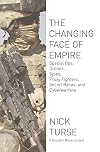
This very short book (around 90 pages) is summary of the author's online articles. They follow slow progress of US war waging strategy from direct combat to proxy wars using incited and nations put under "cooperation" that get used as front-line meat instead of US soldiers, while they fight for US interest.
Basically what happens is that US co-opts the governments (via usual financial means, or in case they do not like them coups that put people that will work with US in power), builds show more logistic bases from where weapons and equipment are delivered to governments in question and remote air strikes (drones or fighter-bombers) are coordinated and finally US special operations or armed forces training teams are deployed to train and lead respected government forces in the field against US opposition.
So in total this is what is Moore's Utopia all about - use others to fight your battles. They are nothing more than expendable assets. And US does this very well, all done with cut-offs like mercenaries and black operations teams and consultants for plausible deniability when required. And if there is need, these "allies" can be also bombed, raided and degraded as required. This is world of constant warfare and constant tension and most importantly constant control over pressure points to make everyone bend to US interests as required.
All in all, wet dream of every country aspiring to control the world. And for all the masses out there the constant goal of defending freedom and democracy is on such constant move that after a few cycles everyone will be certain that there is enemy at every corner because everyone can be marked as enemy. Who is going to check the data, or remember what was said in the past.
What is troubling about all of this? It started as part of anti-terror operations, hunting the dangerous and ever elusive terrorists with every means possible. As such it de-evolved US diplomatic corps and basically made it rely more and more on use of military might for every problem(remember that old adage about people with hammers and every problem seen as a nail). With time, when your job is just twisting other nation's arms because you know they cannot strike back arrogance start to show up, and soon every issue is just target for escalation. Because you only need just a bit more force - right?
This might work while hunting guerillas but soon appetites went up and peer nation was targeted for the same scenario, this time with more heavily armed proxy forces. And believe me whoever planned this is feeling very bad, because problem with peer opponent is in the word peer.
So basically, while developing very high tech forces, US tied their own hands with no escape from constant escalation and seeing solution only through use of military might. It seems that all US institutions went through such level of militarization that it seems there are no non-military organizations involved in the international relations any more. What US seems to have achieved is to apply Israeli style militarism on a world level. And while I can understand Israel, because it is as it is due to its location and relations with neighbors, world level militarization is Metal Gear Solid level of dystopia.
As author notes - if you expect that military power will be successful, think again. Not a single COIN campaign in last 20-ish years finished as expected. Disaster.
And if you think author is against US, think again. He is worried about the way US so lightly chooses war over everything else, but he has no sympathy for US enemies, not for a second. And to make things more ridiculous he actually sees all the North African colored revolutions as spontaneous events :D this made me laugh, oh my.....
Very interesting book that today makes more sense than when it was published.
Highly recommended. show less
Basically what happens is that US co-opts the governments (via usual financial means, or in case they do not like them coups that put people that will work with US in power), builds show more logistic bases from where weapons and equipment are delivered to governments in question and remote air strikes (drones or fighter-bombers) are coordinated and finally US special operations or armed forces training teams are deployed to train and lead respected government forces in the field against US opposition.
So in total this is what is Moore's Utopia all about - use others to fight your battles. They are nothing more than expendable assets. And US does this very well, all done with cut-offs like mercenaries and black operations teams and consultants for plausible deniability when required. And if there is need, these "allies" can be also bombed, raided and degraded as required. This is world of constant warfare and constant tension and most importantly constant control over pressure points to make everyone bend to US interests as required.
All in all, wet dream of every country aspiring to control the world. And for all the masses out there the constant goal of defending freedom and democracy is on such constant move that after a few cycles everyone will be certain that there is enemy at every corner because everyone can be marked as enemy. Who is going to check the data, or remember what was said in the past.
What is troubling about all of this? It started as part of anti-terror operations, hunting the dangerous and ever elusive terrorists with every means possible. As such it de-evolved US diplomatic corps and basically made it rely more and more on use of military might for every problem(remember that old adage about people with hammers and every problem seen as a nail). With time, when your job is just twisting other nation's arms because you know they cannot strike back arrogance start to show up, and soon every issue is just target for escalation. Because you only need just a bit more force - right?
This might work while hunting guerillas but soon appetites went up and peer nation was targeted for the same scenario, this time with more heavily armed proxy forces. And believe me whoever planned this is feeling very bad, because problem with peer opponent is in the word peer.
So basically, while developing very high tech forces, US tied their own hands with no escape from constant escalation and seeing solution only through use of military might. It seems that all US institutions went through such level of militarization that it seems there are no non-military organizations involved in the international relations any more. What US seems to have achieved is to apply Israeli style militarism on a world level. And while I can understand Israel, because it is as it is due to its location and relations with neighbors, world level militarization is Metal Gear Solid level of dystopia.
As author notes - if you expect that military power will be successful, think again. Not a single COIN campaign in last 20-ish years finished as expected. Disaster.
And if you think author is against US, think again. He is worried about the way US so lightly chooses war over everything else, but he has no sympathy for US enemies, not for a second. And to make things more ridiculous he actually sees all the North African colored revolutions as spontaneous events :D this made me laugh, oh my.....
Very interesting book that today makes more sense than when it was published.
Highly recommended. show less
"War is hell."
- William Tecumseh Sherman
“The only thing necessary for the triumph of evil is for good men to do nothing.”
― Edmund Burke
Most brutal armies: The Mongol Horde. The Nazi Wehrmacht. Military Assistance Command Vietnam? Yes, it was that bad.
This book fills a vital gap in the literature. According to Turse, roughly 30,000 non-fiction books have been written about Vietnam (I have quite a few to go. *gulp*). Those that concern war crimes tend to focus on specific incidents, show more particularly My Lai. None look synopticly at how America fought the war. Drawing on the files of the US military Vietnam War Crimes Working Group (those that haven't mysterious disappeared), and interviews with veterans and Vietnamese survivors, Turse has compile a chilling account of the routine occurrence and sanctioning of war crimes.
An estimated million civilians were killed in South Vietnam during the American war. Some of these were the collateral of the American juggernaut: victims of aerial bombardment, Agent Orange, and random shellings. Many more were callously personal: village bunkers cleared with grenades, children run over by convoys, girls on bicycles knocked down by passing troops. And a final category is chillingly inhumane: torture and execution of prisoners, buzzing farmers with helicopters until they ran in terror and then machine gunning them as Viet Cong, hours long gang rapes of teenage girls by combat patrols. Day after day for years on end, in every province of the country, American soldiers mistreated Vietnamese civilians in ways that violated every law of war.
Turse admits that this book is not a complete story, but he tells enough to show a clear pattern of abuse starting at the highest echelons of command. Body count-driven strategy meant that commanders were encourage to manufacture kills by any means necessary. Higher echelons didn't bother to check that the bodies were accompanied by weapons. Similarly, nobody was sanctioned for war crimes. Lt. Calley became the fall man for 40 more senior officers, and suffered only a few months of house arrest and the loss of his reputation. The Mere Gook Rule, which started that American lives were precious, firepower was cheap, and Vietnamese lives worth nothing at all, was applied at every level-from shooting 'escaping' prisoners to flattening villages and relocating the population to squalid strategic hamlets.
I believe strongly that war is a moral enterprise, and in Vietnam those in command showed the utmost moral cowardice and disregard for the honor of their uniforms and the American flag. In seven years of war, Vietnam experienced something equivalent to the My Lai massacre every week. What happened there was just as bad as anything on the Eastern Front in WW2, my previous gold standard for man's inhumanity to man. show less
- William Tecumseh Sherman
“The only thing necessary for the triumph of evil is for good men to do nothing.”
― Edmund Burke
Most brutal armies: The Mongol Horde. The Nazi Wehrmacht. Military Assistance Command Vietnam? Yes, it was that bad.
This book fills a vital gap in the literature. According to Turse, roughly 30,000 non-fiction books have been written about Vietnam (I have quite a few to go. *gulp*). Those that concern war crimes tend to focus on specific incidents, show more particularly My Lai. None look synopticly at how America fought the war. Drawing on the files of the US military Vietnam War Crimes Working Group (those that haven't mysterious disappeared), and interviews with veterans and Vietnamese survivors, Turse has compile a chilling account of the routine occurrence and sanctioning of war crimes.
An estimated million civilians were killed in South Vietnam during the American war. Some of these were the collateral of the American juggernaut: victims of aerial bombardment, Agent Orange, and random shellings. Many more were callously personal: village bunkers cleared with grenades, children run over by convoys, girls on bicycles knocked down by passing troops. And a final category is chillingly inhumane: torture and execution of prisoners, buzzing farmers with helicopters until they ran in terror and then machine gunning them as Viet Cong, hours long gang rapes of teenage girls by combat patrols. Day after day for years on end, in every province of the country, American soldiers mistreated Vietnamese civilians in ways that violated every law of war.
Turse admits that this book is not a complete story, but he tells enough to show a clear pattern of abuse starting at the highest echelons of command. Body count-driven strategy meant that commanders were encourage to manufacture kills by any means necessary. Higher echelons didn't bother to check that the bodies were accompanied by weapons. Similarly, nobody was sanctioned for war crimes. Lt. Calley became the fall man for 40 more senior officers, and suffered only a few months of house arrest and the loss of his reputation. The Mere Gook Rule, which started that American lives were precious, firepower was cheap, and Vietnamese lives worth nothing at all, was applied at every level-from shooting 'escaping' prisoners to flattening villages and relocating the population to squalid strategic hamlets.
I believe strongly that war is a moral enterprise, and in Vietnam those in command showed the utmost moral cowardice and disregard for the honor of their uniforms and the American flag. In seven years of war, Vietnam experienced something equivalent to the My Lai massacre every week. What happened there was just as bad as anything on the Eastern Front in WW2, my previous gold standard for man's inhumanity to man. show less
“Kill anything that moves” suffers from the shrill marketing of its author. Perhaps that is necessary to gain the attention of a wider audience. While it refreshes or even creates the public memory that the Vietnam War was devastating to the Vietnamese, the claim that the atrocities were not known or were distinctive are not actually true.
Extreme violence against indigenous people is as American as apple pie. From the early settlement to the conquest of the West, “only a dead Indian show more was a good Indian”. US imperial efforts in the Philippines and Central America produced a steady stream of atrocities that continues to this day with the largely unpunished war crimes in Afghanistan, Iraq and Yemen as stark reminders. The United States is nothing special, however. Other empires like the Spanish, the French, the British, the Russians and other were not squeamish either in destroying other people’s lives and fortunes. At the very heart of the idea of an empire lies the concept that some are more equal and their lives much more valuable. Official propaganda, however, requires doublespeak and acquiescence to actions such as destroying the village in order to save it.
What makes the Vietnam War different, is the scale of the American force to distribute punishment and violence. While the Italians could send biplanes to bomb insurgent Libyans and the French shelled the compounds of unruly Syrians with artillery, the economic might of the United States and the power of its military meant that they could bomb and set up free-fire zones in areas which lesser empires would not have had neither the potential nor the incentive to do. The American corporate media is also highly proficient in shielding the general public from learning about the damage inflicted (see Manufactured Consent).
Apart from reminding the public about the horrors the Us military inflicted upon Vietnamese civilians (and has not paid reparations for), the value of Turse’s book is showing how the leadership protected and protects the blackest of its black sheep. The recent failure to prosecute war crimes has a long history in Vietnam, from the George Zimmermann spiel of eliminating all survivors in order to make prosecution difficult to the lenient punishments of the perpetrators and even quiet admiration by the public (Dick Cheney’s torture specialist in Iraq is now a “motivational speaker” in Texas). The failure to look back promotes future crimes, especially if the idea of empire continues to be pursued. show less
Extreme violence against indigenous people is as American as apple pie. From the early settlement to the conquest of the West, “only a dead Indian show more was a good Indian”. US imperial efforts in the Philippines and Central America produced a steady stream of atrocities that continues to this day with the largely unpunished war crimes in Afghanistan, Iraq and Yemen as stark reminders. The United States is nothing special, however. Other empires like the Spanish, the French, the British, the Russians and other were not squeamish either in destroying other people’s lives and fortunes. At the very heart of the idea of an empire lies the concept that some are more equal and their lives much more valuable. Official propaganda, however, requires doublespeak and acquiescence to actions such as destroying the village in order to save it.
What makes the Vietnam War different, is the scale of the American force to distribute punishment and violence. While the Italians could send biplanes to bomb insurgent Libyans and the French shelled the compounds of unruly Syrians with artillery, the economic might of the United States and the power of its military meant that they could bomb and set up free-fire zones in areas which lesser empires would not have had neither the potential nor the incentive to do. The American corporate media is also highly proficient in shielding the general public from learning about the damage inflicted (see Manufactured Consent).
Apart from reminding the public about the horrors the Us military inflicted upon Vietnamese civilians (and has not paid reparations for), the value of Turse’s book is showing how the leadership protected and protects the blackest of its black sheep. The recent failure to prosecute war crimes has a long history in Vietnam, from the George Zimmermann spiel of eliminating all survivors in order to make prosecution difficult to the lenient punishments of the perpetrators and even quiet admiration by the public (Dick Cheney’s torture specialist in Iraq is now a “motivational speaker” in Texas). The failure to look back promotes future crimes, especially if the idea of empire continues to be pursued. show less
Kill Anything That Moves is based on previously unused archival material and interviews, and tells the tale of American systematic disregard for Vietnamese lives and the atrocities that were committed during the Vietnam war.
In some of the first pages, Turse recounts the well known story of the My Lai massacre from 1964, in which American soldiers murdered around 400 unarmed South Vietnamese civilians, both men, women-many of whom were raped, children and infants. Only one soldier, Second show more Lieutenant William Calley, was convicted, and he ended up servicing only a few years under house arrest. Contrary to what is oftentimes thought today, however, the My Lai massacre was the rule of American warfare in Vietnam, and not an abhorrent exception. The rest of the book reads a descent into more and more indiscriminate violence and successively increasing depravity. Although the book at times becomes a catalogue of violence and horror, we are never brought out of context.
Turse traces the various factors that contributed this culture. He starts with boot camp, which consciously dehumanized the soldiers and taught that obedience was paramount. Illegal orders were common, and soldiers, who did not have extensive training in the legality of war, often had to be uncertain about how to respond. Often those who gave the orders did not themselves know what was legal and not.
"Body count"- enemies killed, is term that runs through the book. The ubiquitous focus on body counts seems to have been partly an effect of the system's priorities, but became also a driver itself, since both honor and more tangible rewards were distributed on the basis of that measure. This lead to a practice in which any killed civilian (or even water buffalo) was labelled as Viet Cong, and also incentivized the killing of those civilians. A part of this was Pentagon pursuit of the "crossover point", at which enemies were killed faster than they were replaced. The "mere gook rule" said killings of Vietnamese were nothing to worry about.
"Free fire zones," special areas of dubious legality in which everyone could be killed, were instituted.
A number of actions by the US army served only to alienate the Vietnamese population: people were driven away from their homes, villages, hamlets and crops were burnt, animals were killed, people were shot at, collective punishment enforced, corpses were mutilated. Sometimes the population starved and raided the garbage of the soldiers for food. Some soldiers started making adornment of their victims, e.g. ears on cords.
In the chapter on torture, the practices initially described bears a sinister resemblance to the revelations of the maltreatment of prisoners that occurred in the Abu Ghraib prison in Iraq in the early 2000's: Electricity to body parts, water torture, beatings, humiliations. The torture was not restricted to these practices, though, Turse goes on to list among other things, hanging people upside down, inserting needles under fingernails, ripping out nails, shackling people tightly in tiny "tiger cells", severe beatings, and free reign being given to Vietnamese interrogators, and claims that all this was widespread. Even applied to the enemy, these practices are controversial, to say the least. In a context were those in the field had huge discretion, soldiers often did not know who were the enemy and were constantly in danger, and proper trials were not held, a large number of innocents had to be harmed.
A chilling question is whether also the graver torture that is documented for the Vietnam war have occurred in recent wars, in particular in Afghanistan and Iraq. Given the similarity of at least some of the practices, there is perhaps no good reason not to suspect that there may be more.
Turse allocates much time to "Speedy Express," an operation that took place in a few months from December 1968 to May 1969. This operation condoned massive deadly force on a previously unseen scale, with possibly thousands of civilians killed.
A bipartisan delegation visited, two members saw some mistreatment, etc. and reported on it, but were suppressed in the final report. Whistle blowers were not listened to.
In general resistance to the war not in the news to begin with. A little more after a while, much with My Lai, then more. Veterans started to come forward and make the atrocities known. These were often harassed. Daniel Ellsberg leaked "the pentagon papers," partly about American disregard for Vietnam lives, etc. Pentagon fought against publication. Conference in Oslo just a week after publication of the pentagon papers, about warfare in Indo-China. Damning statement from commission.
Turse does not offer any quick fixes for current or future war-makers to avoid the atrocities of Vietnam, he seems content to document how bad the war really was. It is a worthwhile endeavor. show less
In some of the first pages, Turse recounts the well known story of the My Lai massacre from 1964, in which American soldiers murdered around 400 unarmed South Vietnamese civilians, both men, women-many of whom were raped, children and infants. Only one soldier, Second show more Lieutenant William Calley, was convicted, and he ended up servicing only a few years under house arrest. Contrary to what is oftentimes thought today, however, the My Lai massacre was the rule of American warfare in Vietnam, and not an abhorrent exception. The rest of the book reads a descent into more and more indiscriminate violence and successively increasing depravity. Although the book at times becomes a catalogue of violence and horror, we are never brought out of context.
Turse traces the various factors that contributed this culture. He starts with boot camp, which consciously dehumanized the soldiers and taught that obedience was paramount. Illegal orders were common, and soldiers, who did not have extensive training in the legality of war, often had to be uncertain about how to respond. Often those who gave the orders did not themselves know what was legal and not.
"Body count"- enemies killed, is term that runs through the book. The ubiquitous focus on body counts seems to have been partly an effect of the system's priorities, but became also a driver itself, since both honor and more tangible rewards were distributed on the basis of that measure. This lead to a practice in which any killed civilian (or even water buffalo) was labelled as Viet Cong, and also incentivized the killing of those civilians. A part of this was Pentagon pursuit of the "crossover point", at which enemies were killed faster than they were replaced. The "mere gook rule" said killings of Vietnamese were nothing to worry about.
"Free fire zones," special areas of dubious legality in which everyone could be killed, were instituted.
A number of actions by the US army served only to alienate the Vietnamese population: people were driven away from their homes, villages, hamlets and crops were burnt, animals were killed, people were shot at, collective punishment enforced, corpses were mutilated. Sometimes the population starved and raided the garbage of the soldiers for food. Some soldiers started making adornment of their victims, e.g. ears on cords.
In the chapter on torture, the practices initially described bears a sinister resemblance to the revelations of the maltreatment of prisoners that occurred in the Abu Ghraib prison in Iraq in the early 2000's: Electricity to body parts, water torture, beatings, humiliations. The torture was not restricted to these practices, though, Turse goes on to list among other things, hanging people upside down, inserting needles under fingernails, ripping out nails, shackling people tightly in tiny "tiger cells", severe beatings, and free reign being given to Vietnamese interrogators, and claims that all this was widespread. Even applied to the enemy, these practices are controversial, to say the least. In a context were those in the field had huge discretion, soldiers often did not know who were the enemy and were constantly in danger, and proper trials were not held, a large number of innocents had to be harmed.
A chilling question is whether also the graver torture that is documented for the Vietnam war have occurred in recent wars, in particular in Afghanistan and Iraq. Given the similarity of at least some of the practices, there is perhaps no good reason not to suspect that there may be more.
Turse allocates much time to "Speedy Express," an operation that took place in a few months from December 1968 to May 1969. This operation condoned massive deadly force on a previously unseen scale, with possibly thousands of civilians killed.
A bipartisan delegation visited, two members saw some mistreatment, etc. and reported on it, but were suppressed in the final report. Whistle blowers were not listened to.
In general resistance to the war not in the news to begin with. A little more after a while, much with My Lai, then more. Veterans started to come forward and make the atrocities known. These were often harassed. Daniel Ellsberg leaked "the pentagon papers," partly about American disregard for Vietnam lives, etc. Pentagon fought against publication. Conference in Oslo just a week after publication of the pentagon papers, about warfare in Indo-China. Damning statement from commission.
Turse does not offer any quick fixes for current or future war-makers to avoid the atrocities of Vietnam, he seems content to document how bad the war really was. It is a worthwhile endeavor. show less
Lists
Awards


You May Also Like


Associated Authors
Statistics
- Works
- 8
- Also by
- 2
- Members
- 928
- Popularity
- #27,658
- Rating
- 4.3
- Reviews
- 30
- ISBNs
- 25
- Languages
- 4


