
Angela Garbes
Author of Like a Mother: A Feminist Journey Through the Science and Culture of Pregnancy
About the Author
Angela Garbe's writing has appeared in the New York Times, New York magazine's "The Cut," and featured on NPR's Fresh Air. She was a staff writer at the Seattle newsweekly The Stranger. Garbes grew up in a food-obsessed immigrant Filipino household and now lives in Seattle with her husband and show more daughters. show less
Image credit: via No Mama Left Behind the Podcast
Works by Angela Garbes
Like a Mother: A Feminist Journey Through the Science and Culture of Pregnancy (2018) 211 copies, 5 reviews
Associated Works
Tagged
Common Knowledge
- Gender
- female
Members
Reviews
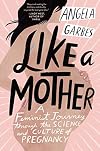
Becoming a mother is something that many women will do, and also one of the most profoundly transformative things that a woman can do. And it is shrouded in mystique, overlapping layers of folk wisdom from the world's deep cultural heritage, a surprisingly shallow pool of scientific advice (pregnant women are understudied for reasons relating to institutional sexism and the extra IRB review layers in place to protect them), and a million morally charged 'proper motherhood' lifestyle show more consultants.
Garbes uses her own pregnancy as a lens to understand the motherhood-industrial complex. The way that her body changed, the ways in which she was supported and let down by her medical partners, and the fraught experience of her friends. Garbes has a day job as a journalist, which helps her make sense of the latest research about the physiological changes of pregnancy, and the importance of emotional support.
The feminist lens is used to frame the subjectivity and multiplicity of pregnancy. There are few universes, except that this is a moment of supreme change. There will be joy, and sorrow, and expectations that cannot possibly be met, but the mother's needs should be central to the journey. show less
Garbes uses her own pregnancy as a lens to understand the motherhood-industrial complex. The way that her body changed, the ways in which she was supported and let down by her medical partners, and the fraught experience of her friends. Garbes has a day job as a journalist, which helps her make sense of the latest research about the physiological changes of pregnancy, and the importance of emotional support.
The feminist lens is used to frame the subjectivity and multiplicity of pregnancy. There are few universes, except that this is a moment of supreme change. There will be joy, and sorrow, and expectations that cannot possibly be met, but the mother's needs should be central to the journey. show less
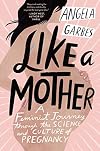
I really enjoyed this, mostly because this is probably the tone/approach I'd take if I were to write about my own pregnancy and what I'm learning throughout it (but also: bodies are incredibly weird and I love learning about the fascinating biological changes we undergo, including microchimerism). Unlike [b:Birth Without Fear: The Judgment-Free Guide to Taking Charge of Your Pregnancy, Birth, and Postpartum|40697004|Birth Without Fear The Judgment-Free Guide to Taking Charge of Your show more Pregnancy, Birth, and Postpartum|January Harshe|https://i.gr-assets.com/images/S/compressed.photo.goodreads.com/books/1537196977l/40697004._SY75_.jpg|63294922], Garbes talks about research and how little the rich vein of maternal science has been dug into, pointing to a lot of really interesting discoveries that have only been published within the last decade despite humans giving birth for millennia. You'd think something like birth would make for a sexy funding topic but alas.
I should've expected it, but I was also delighted to see both Dr. Katie Hinde and Dr. Melissa Wilson from Arizona State University show up as interviewees in this! I am mostly familiar with them via Mammal March Madness and other science twitter shenanigans, and their research on milk and genetics respectively is nice to see in a popular/lay audience! I'm going to be thinking about baby backwash re: breastfeeding for a while.
Definitely going to pick up Garbes' second book that came out recently, [b:Essential Labor: Mothering as Social Change|58782831|Essential Labor Mothering as Social Change|Angela Garbes|https://i.gr-assets.com/images/S/compressed.photo.goodreads.com/books/1639948672l/58782831._SX50_.jpg|92554853]. show less
I should've expected it, but I was also delighted to see both Dr. Katie Hinde and Dr. Melissa Wilson from Arizona State University show up as interviewees in this! I am mostly familiar with them via Mammal March Madness and other science twitter shenanigans, and their research on milk and genetics respectively is nice to see in a popular/lay audience! I'm going to be thinking about baby backwash re: breastfeeding for a while.
Definitely going to pick up Garbes' second book that came out recently, [b:Essential Labor: Mothering as Social Change|58782831|Essential Labor Mothering as Social Change|Angela Garbes|https://i.gr-assets.com/images/S/compressed.photo.goodreads.com/books/1639948672l/58782831._SX50_.jpg|92554853]. show less
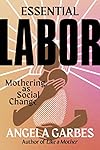
This book is part contemporary political commentary, part memoir. I wasn’t expecting the memoir part. I wanted more theory, more history, and didn’t get as much as I wanted. But I do appreciate how she built her points around stories of her own life, and I appreciated learning more about Filipino/a history, including her analysis and perspective around care work from the lens of being a Filipinx American with a deep connection to her heritage.
Many of the initial chapters were told in show more the context of caregiving during COVID-19 lockdowns which was just too much for me. I was honestly resentful - a personal problem - because she had a couple families she “bubbled” with and a babysitter.
The last two chapters were the best and I’m glad I stuck with it. The second to last was about mothering and pleasure. The last was about mothering and nature. We do need more books like this so I am grateful to her for writing it. There’s a strong disability lens, fat positivity lens, and sex positivity lens throughout. show less
Many of the initial chapters were told in show more the context of caregiving during COVID-19 lockdowns which was just too much for me. I was honestly resentful - a personal problem - because she had a couple families she “bubbled” with and a babysitter.
The last two chapters were the best and I’m glad I stuck with it. The second to last was about mothering and pleasure. The last was about mothering and nature. We do need more books like this so I am grateful to her for writing it. There’s a strong disability lens, fat positivity lens, and sex positivity lens throughout. show less
A bit of a speed read because it was due yesterday, and there's a hold on it so I can't renew. This ended up being a really nice way to spend my first Mother's Day weekend, though! [b:Like a Mother: A Feminist Journey Through the Science and Culture of Pregnancy|35068708|Like a Mother A Feminist Journey Through the Science and Culture of Pregnancy|Angela Garbes|https://i.gr-assets.com/images/S/compressed.photo.goodreads.com/books/1519836595l/35068708._SX50_.jpg|56364139] was one of my show more favorite pregnancy reads, so it follows that Essential Labor would also be one of my favorite meditations on motherhood thus far (not that I've read much, given, well, new motherhood). Garbes considers caregiving, specifically for children within her own context as a Filipinx American daughter of immigrants living in the PNW. I found a lot of resonance for me, especially when she talked about growing up in rural Pennsylvania and her parents having to adjust what they knew of parenting from the Philippines to meet this new American context. I've also been thinking about the division of labor, and expectations when they differ from lived contexts (my husband and I are not within driving distance of either of our families, and it would be prohibitively expensive for them to regularly be available for care unless big changes are made).
Short, and definitely leans on the autobiographical. For further digging into any of the topics Garbes brings up, would probably pursue her cited sources from the bibliography (which include many other things I'd like to read such as [b:Work Won't Love You Back: How Devotion to Our Jobs Keeps Us Exploited, Exhausted, and Alone|53241562|Work Won't Love You Back How Devotion to Our Jobs Keeps Us Exploited, Exhausted, and Alone|Sarah Jaffe|https://i.gr-assets.com/images/S/compressed.photo.goodreads.com/books/1589823549l/53241562._SY75_.jpg|80653244] or things I've already read and loved such as [b:Minor Feelings: An Asian American Reckoning|52845775|Minor Feelings An Asian American Reckoning|Cathy Park Hong|https://i.gr-assets.com/images/S/compressed.photo.goodreads.com/books/1580788273l/52845775._SX50_SY75_.jpg|72657866]). show less
Short, and definitely leans on the autobiographical. For further digging into any of the topics Garbes brings up, would probably pursue her cited sources from the bibliography (which include many other things I'd like to read such as [b:Work Won't Love You Back: How Devotion to Our Jobs Keeps Us Exploited, Exhausted, and Alone|53241562|Work Won't Love You Back How Devotion to Our Jobs Keeps Us Exploited, Exhausted, and Alone|Sarah Jaffe|https://i.gr-assets.com/images/S/compressed.photo.goodreads.com/books/1589823549l/53241562._SY75_.jpg|80653244] or things I've already read and loved such as [b:Minor Feelings: An Asian American Reckoning|52845775|Minor Feelings An Asian American Reckoning|Cathy Park Hong|https://i.gr-assets.com/images/S/compressed.photo.goodreads.com/books/1580788273l/52845775._SX50_SY75_.jpg|72657866]). show less
Lists
Awards


You May Also Like


Associated Authors
Statistics
- Works
- 3
- Also by
- 1
- Members
- 359
- Popularity
- #66,804
- Rating
- 3.8
- Reviews
- 11
- ISBNs
- 13