
Anne Helen Petersen
Author of Too Fat, Too Slutty, Too Loud: The Rise and Reign of the Unruly Woman
About the Author
A former senior culture writer for BuzzFeed, Anne Helen Petersen now writes her newsletter, Culture Study, as a full-time venture on Substack. Petersen received her PhD at the University of Texas at Austin, where she focused on the history of celebrity gossip. Her previous books, Too Fat, Too show more Slutty, Too Loud and Scandals of Classic Hollywood, were featured on NPR and in Elle and the Atlantic. She lives in Missoula, Montana. show less
Works by Anne Helen Petersen
Scandals of Classic Hollywood: Sex, Deviance, and Drama from the Golden Age of American Cinema (2014) 214 copies, 21 reviews
Associated Works
Tagged
Common Knowledge
- Birthdate
- 19xx-05-20
- Gender
- female
- Education
- Whitman College
University of Oregon
University of Texas - Occupations
- journalist
- Awards and honors
- Phi Beta Kappa
- Relationships
- Warzel, Charlie (partner)
- Nationality
- USA
- Places of residence
- Missoula, Montana, USA
- Associated Place (for map)
- Montana, USA
Members
Reviews

Anne Helen Petersen (an "old millennial" by her own definition) elucidates the problems millennials face and how our individual solutions to them (work harder, work all the time, make it work) lead to burnout, because it is a societal issue - but IT DOESN'T HAVE TO BE THIS WAY.
The current form of free-market capitalism, in which consultants work with companies to figure out how to make the most money the fastest, and in which the stock market is completely divorced from the economy's effect show more on most workers, has led to a desperate struggle for most millennials, who emerged into the job market just before, during, or just after the Great Recession. People are now responsible for shouldering the (ever more expensive) education and training, and college degrees are no longer a guarantee of a good job and a middle-class life. Government-mandated workplace protections and unions have both been largely stripped of their power, so workers, instead of being in solidarity with each other, compete in a culture of presentism, where it's assumed that whoever works the most works the best. Carrying crushing student debt and financial anxiety, many are delaying or opting not to have children (the U.S., of course, does not provide paid parental leave, and daycare is expensive).
All of this when evidence shows that people are more efficient and effective workers when they work less and rest more. (A few companies, like Trader Joe's and Costco, offer their employees regular schedules and good benefits, but most don't.)
Petersen doesn't offer solutions, except to say that they must be systemic and holistic - in other words, not something individuals can conquer on their own through meditation apps or bullet journaling. We need real change - protection for laborers (including "essential" workers, who are treated as disposable, and unpaid caregivers), The idea that workers - not CEOs and shareholders - should benefit from their own labor should not be so unthinkable.
See also: Too Fat, Too Slutty, Too Loud (same author), Invisible Women by Caroline Criado Perez, additional book list below
Quotes/Notes/Sources
This isn't a personal problem. It's a societal one. (xxvi)
...boomers are, in many ways, responsible for [millennials]... (2)
[in the 1970s]...after decades of prosperity, things in America seemed to be getting markedly worse. (5)
National Labor Relations Act 1935; Fair Labor Standards Act of 1938
Middle class kids become mini-adults earlier and earlier - but as the rise of "adulting" rhetoric makes clear, they're not necessarily prepared for its realities. (33)
When one's value depends on the capacity to work, people who are disabled or elderly, people who cannot labor full-time or who provide care in ways that aren't paid at all or valued as highly - all become "less than" in the larger societal equation....To be valuable in American society is to be able to work. (51)
When students are working, what they're working on is their own ability to work....This is an incredibly utilitarian view of education, implying that the ultimate goal of the system is to mold us into efficient workers, as opposed to preparing us to think, or to be good citizens. (52)
The desirability of "lovable" jobs is part of what makes them so unsustainable: So many people are competing for so few positions that compensation standards can be continuously lowered with little effect. (70)
virtue/capital: wealth = hard work, hard work = wealth (90)
"contingent" labor - the precariat (96)
Does a company run better when its employees are happy and provide a livable income for their families? When its profit margins are larger? (100)
Ultimately, temp work was so thoroughly feminized, and effectively trivialized, that little thought was paid to whether or not it was exploitative. (102)
These work situations [instability, irregular scheduling, lack of benefits] don't just exacerbate burnout, but feel designed to create it. (113)
(~1946-1969) Unions and government regulation forced companies to treat the humans who worked for them as...humans. (113)
This is how precarity becomes the status quo: We convince workers that poor conditions are normal; that rebelling against them is a symbol of generational entitlement; that free-market capitalism is what makes America great... (115)
"...an individual working himself to death is evidence of a flawed economic system." (Jia Tolentino, 128)
The goal of surveillance might be productivity, or quality control - but the psychological effects on workers is substantial. (130)
That's what happens when you don't have options: You have no negotiating power, or power of any sort, at least when it comes to the workplace. (136)
[Over 8.8 million jobs eliminated during the Great Recession...the jobs that returned weren't the same kind as before, but "contingent" or "alternative" or "gig"] (137)
[Freelancing] means complete independence, which in the current capitalist marketplace is another way of saying it means complete insecurity. (139)
The gig economy isn't replacing the traditional economy. It's propping it up in a way that convinces people it's not broken. (144)
...social media robs us of the moments that could counterbalance our burnout....it distances us from actual experiences....it turns us into needless multitaskers....it erodes what used to be known as leisure time. (164)
Our leisure rarely feels restorative... (182)
In 1930, John Maynard Keynes predicted that his grandchildren would work only fifteen hours a week [due to increased mechanization and automation and resulting productivity]. With abundant time and leisure across the classes, society would flourish. Democratic participation would go up...as would social cohesion, familial bonds, philanthropic and volunteer work. (183)
...the easiest way to signal that you were working harder and were more essential to the company than [other employees] was to work longer....
Even as actual productivity continued to rise, year after year, companies continued to reduce paid time off. (185)
In the modern workplace, it seems that everyone [on a salary]...is so anxious about proving their value that we neglect a veritable cornucopia of evidence that better work is almost always achieved through less work. (188)
...American society is still arranged as if every family has a caretaker who stays home, even as fewer and fewer families are arranged that way. (209)
...we continue to treat this social issue as a personal issue. More specifically, a mother's issue. (220)
Affordable, universally available childcare...would be revelatory...So why hasn't it happened? ...Men still don't value domestic labor as labor, and men predominate our legislative bodies and the vast majority of our corporations. (240)
The causes are systemic. Which is why the solutions have to be holistic. (241)
Other books/sources mentioned:
Annie Lowrey / The Atlantic: https://www.theatlantic.com/ideas/archive/2020/04/millennials-are-new-lost-gener...
Emma / The Mental Load / "You Should've Asked": https://english.emmaclit.com/2017/05/20/you-shouldve-asked/
Jia Tolentino / The New Yorker
Temp by Louis Hyman
The Good Jobs Strategy by Zeynep Ton
The Job by Ellen Ruppel Shell
Free Time by Benjamin Hunnicutt
The Overworked American by Juliet B. Schor
Bowling Alone by Robert Putnam
The Second Shift by Arlie Hochschild
How to Do Nothing by Jenny Odell
Palaces for the People by Eric Klinenberg
Overwhelmed by Brigid Schulte
All the Rage by Darcy Lockman
Scarcity by Sendhil Mullainathan
The Playdate
Kids These Days by Malcolm Harris show less
The current form of free-market capitalism, in which consultants work with companies to figure out how to make the most money the fastest, and in which the stock market is completely divorced from the economy's effect show more on most workers, has led to a desperate struggle for most millennials, who emerged into the job market just before, during, or just after the Great Recession. People are now responsible for shouldering the (ever more expensive) education and training, and college degrees are no longer a guarantee of a good job and a middle-class life. Government-mandated workplace protections and unions have both been largely stripped of their power, so workers, instead of being in solidarity with each other, compete in a culture of presentism, where it's assumed that whoever works the most works the best. Carrying crushing student debt and financial anxiety, many are delaying or opting not to have children (the U.S., of course, does not provide paid parental leave, and daycare is expensive).
All of this when evidence shows that people are more efficient and effective workers when they work less and rest more. (A few companies, like Trader Joe's and Costco, offer their employees regular schedules and good benefits, but most don't.)
Petersen doesn't offer solutions, except to say that they must be systemic and holistic - in other words, not something individuals can conquer on their own through meditation apps or bullet journaling. We need real change - protection for laborers (including "essential" workers, who are treated as disposable, and unpaid caregivers), The idea that workers - not CEOs and shareholders - should benefit from their own labor should not be so unthinkable.
See also: Too Fat, Too Slutty, Too Loud (same author), Invisible Women by Caroline Criado Perez, additional book list below
Quotes/Notes/Sources
This isn't a personal problem. It's a societal one. (xxvi)
...boomers are, in many ways, responsible for [millennials]... (2)
[in the 1970s]...after decades of prosperity, things in America seemed to be getting markedly worse. (5)
National Labor Relations Act 1935; Fair Labor Standards Act of 1938
Middle class kids become mini-adults earlier and earlier - but as the rise of "adulting" rhetoric makes clear, they're not necessarily prepared for its realities. (33)
When one's value depends on the capacity to work, people who are disabled or elderly, people who cannot labor full-time or who provide care in ways that aren't paid at all or valued as highly - all become "less than" in the larger societal equation....To be valuable in American society is to be able to work. (51)
When students are working, what they're working on is their own ability to work....This is an incredibly utilitarian view of education, implying that the ultimate goal of the system is to mold us into efficient workers, as opposed to preparing us to think, or to be good citizens. (52)
The desirability of "lovable" jobs is part of what makes them so unsustainable: So many people are competing for so few positions that compensation standards can be continuously lowered with little effect. (70)
virtue/capital: wealth = hard work, hard work = wealth (90)
"contingent" labor - the precariat (96)
Does a company run better when its employees are happy and provide a livable income for their families? When its profit margins are larger? (100)
Ultimately, temp work was so thoroughly feminized, and effectively trivialized, that little thought was paid to whether or not it was exploitative. (102)
These work situations [instability, irregular scheduling, lack of benefits] don't just exacerbate burnout, but feel designed to create it. (113)
(~1946-1969) Unions and government regulation forced companies to treat the humans who worked for them as...humans. (113)
This is how precarity becomes the status quo: We convince workers that poor conditions are normal; that rebelling against them is a symbol of generational entitlement; that free-market capitalism is what makes America great... (115)
"...an individual working himself to death is evidence of a flawed economic system." (Jia Tolentino, 128)
The goal of surveillance might be productivity, or quality control - but the psychological effects on workers is substantial. (130)
That's what happens when you don't have options: You have no negotiating power, or power of any sort, at least when it comes to the workplace. (136)
[Over 8.8 million jobs eliminated during the Great Recession...the jobs that returned weren't the same kind as before, but "contingent" or "alternative" or "gig"] (137)
[Freelancing] means complete independence, which in the current capitalist marketplace is another way of saying it means complete insecurity. (139)
The gig economy isn't replacing the traditional economy. It's propping it up in a way that convinces people it's not broken. (144)
...social media robs us of the moments that could counterbalance our burnout....it distances us from actual experiences....it turns us into needless multitaskers....it erodes what used to be known as leisure time. (164)
Our leisure rarely feels restorative... (182)
In 1930, John Maynard Keynes predicted that his grandchildren would work only fifteen hours a week [due to increased mechanization and automation and resulting productivity]. With abundant time and leisure across the classes, society would flourish. Democratic participation would go up...as would social cohesion, familial bonds, philanthropic and volunteer work. (183)
...the easiest way to signal that you were working harder and were more essential to the company than [other employees] was to work longer....
Even as actual productivity continued to rise, year after year, companies continued to reduce paid time off. (185)
In the modern workplace, it seems that everyone [on a salary]...is so anxious about proving their value that we neglect a veritable cornucopia of evidence that better work is almost always achieved through less work. (188)
...American society is still arranged as if every family has a caretaker who stays home, even as fewer and fewer families are arranged that way. (209)
...we continue to treat this social issue as a personal issue. More specifically, a mother's issue. (220)
Affordable, universally available childcare...would be revelatory...So why hasn't it happened? ...Men still don't value domestic labor as labor, and men predominate our legislative bodies and the vast majority of our corporations. (240)
The causes are systemic. Which is why the solutions have to be holistic. (241)
Other books/sources mentioned:
Annie Lowrey / The Atlantic: https://www.theatlantic.com/ideas/archive/2020/04/millennials-are-new-lost-gener...
Emma / The Mental Load / "You Should've Asked": https://english.emmaclit.com/2017/05/20/you-shouldve-asked/
Jia Tolentino / The New Yorker
Temp by Louis Hyman
The Good Jobs Strategy by Zeynep Ton
The Job by Ellen Ruppel Shell
Free Time by Benjamin Hunnicutt
The Overworked American by Juliet B. Schor
Bowling Alone by Robert Putnam
The Second Shift by Arlie Hochschild
How to Do Nothing by Jenny Odell
Palaces for the People by Eric Klinenberg
Overwhelmed by Brigid Schulte
All the Rage by Darcy Lockman
Scarcity by Sendhil Mullainathan
The Playdate
Kids These Days by Malcolm Harris show less

Anne Helen Petersen examines the star-making machines of the Hollywood movie studios and what that means for the actual people whose lives are manipulated in the press, and for how those stories reflect the desires and prejudices of America at the time. Scandals of Classic Hollywood looks at thirteen star stories, almost entirely sourced from newspapers and magazines, with the occasional public record or star's own writings to give a glimpse to the truth behind the headlines.
In an effort to show more focus on specific facets of society and how that influenced the studios' PR, the aspects of the stars' stories are occasionally elided or truncated for space, but otherwise Petersen takes a broad picture view, much as the gossip columns and magazine spreads did. Each story begins with the "discovery" - how the star became a star - and traces out how that set a star image, which was then further developed by movie roles and offscreen behavior. There are hundreds of potential stories to choose from, and Petersen selected this baker's dozen carefully: they are arranged chronologically, and also grouped to highlight certain themes. The first batch shows the formation of the Hollywood Star Image in the early days of the studios, followed by sex symbols of the 1920s, then sex symbols of the 1930s, two iconic romantic couples, women that were destroyed by the studios, and men who rejected the studio system.
I had originally come to the Scandals from The Hairpin, where I thoroughly enjoyed learning more about the media and gossip surrounding the old movie stars and how that reflected contemporary American society, and also how the expectations of society and big business constrained the stars' actions. That series, which I read almost from the beginning in 2011, greatly changed how I watch and appreciate movies, and even gave me a new understanding of modern celebrity gossip. So I was predisposed to like the book, which provides almost entirely new material of the same theme. I was surprised to realized that a lot of my enjoyment of the series came from seeing the magazine covers and publicity photos alongside Petersen's analysis. While the book has a very thorough list of every single article or headline referenced in the stories, it's not quite the same as seeing the headlines and the context of clothing or pose or even other headlines and titles on the same page. At least the references allow me to look them up, and the different format of the book to the Hairpin posts means the lack of images wasn't a complete loss. It would have been nice to see at least a few. (How amusing that the book's cover design is an explicit callout to the Confidential rag, which was so influential in its short lifespan, which I only know because of the Hairpin posts.)
It was also a little strange to read a few different anecdotes and to realize that certain parts of the star images and accepted truths may very well be pure fabrication, which Petersen only occasionally reminds of. She does point out that she's analyzing the gossip and PR and what it means on a sociological level, so it doesn't necessarily matter what the "real" truth is - the falsehood is still true to millions of people. But there's a short bit in the story about Clark Gable and Carole Lombard that refers to his on-set romance with Loretta Young, and the resulting secret baby - only a few months after she wrote this, Petersen herself learned from Young's son that it was no romance at all, and she felt unable to speak out about it or name it as anything else, partly because she didn't know for over 60 years that there were words to describe what had happened. It was only a brief paragraph reference in Scandals, but this additional knowledge of this specific incident really drove home for me how much was fabricated, and how much the studios controlled the stars, beyond what Petersen describes.
This is a fascinating book and it charts the rise and fall of the Hollywood studio system in an interesting way. I suspect that much of my appreciation and enjoyment comes from being an avid reader of Petersen's work online as well as in the book. I would love to have a print version of the essays she had originally wrote for her blog about modern starmaking and the additional ones from the Hairpin that go into more depth about the gossip columnists and the fan magazines, to accompany this book. show less
In an effort to show more focus on specific facets of society and how that influenced the studios' PR, the aspects of the stars' stories are occasionally elided or truncated for space, but otherwise Petersen takes a broad picture view, much as the gossip columns and magazine spreads did. Each story begins with the "discovery" - how the star became a star - and traces out how that set a star image, which was then further developed by movie roles and offscreen behavior. There are hundreds of potential stories to choose from, and Petersen selected this baker's dozen carefully: they are arranged chronologically, and also grouped to highlight certain themes. The first batch shows the formation of the Hollywood Star Image in the early days of the studios, followed by sex symbols of the 1920s, then sex symbols of the 1930s, two iconic romantic couples, women that were destroyed by the studios, and men who rejected the studio system.
I had originally come to the Scandals from The Hairpin, where I thoroughly enjoyed learning more about the media and gossip surrounding the old movie stars and how that reflected contemporary American society, and also how the expectations of society and big business constrained the stars' actions. That series, which I read almost from the beginning in 2011, greatly changed how I watch and appreciate movies, and even gave me a new understanding of modern celebrity gossip. So I was predisposed to like the book, which provides almost entirely new material of the same theme. I was surprised to realized that a lot of my enjoyment of the series came from seeing the magazine covers and publicity photos alongside Petersen's analysis. While the book has a very thorough list of every single article or headline referenced in the stories, it's not quite the same as seeing the headlines and the context of clothing or pose or even other headlines and titles on the same page. At least the references allow me to look them up, and the different format of the book to the Hairpin posts means the lack of images wasn't a complete loss. It would have been nice to see at least a few. (How amusing that the book's cover design is an explicit callout to the Confidential rag, which was so influential in its short lifespan, which I only know because of the Hairpin posts.)
It was also a little strange to read a few different anecdotes and to realize that certain parts of the star images and accepted truths may very well be pure fabrication, which Petersen only occasionally reminds of. She does point out that she's analyzing the gossip and PR and what it means on a sociological level, so it doesn't necessarily matter what the "real" truth is - the falsehood is still true to millions of people. But there's a short bit in the story about Clark Gable and Carole Lombard that refers to his on-set romance with Loretta Young, and the resulting secret baby - only a few months after she wrote this, Petersen herself learned from Young's son that it was no romance at all, and she felt unable to speak out about it or name it as anything else, partly because she didn't know for over 60 years that there were words to describe what had happened. It was only a brief paragraph reference in Scandals, but this additional knowledge of this specific incident really drove home for me how much was fabricated, and how much the studios controlled the stars, beyond what Petersen describes.
This is a fascinating book and it charts the rise and fall of the Hollywood studio system in an interesting way. I suspect that much of my appreciation and enjoyment comes from being an avid reader of Petersen's work online as well as in the book. I would love to have a print version of the essays she had originally wrote for her blog about modern starmaking and the additional ones from the Hairpin that go into more depth about the gossip columnists and the fan magazines, to accompany this book. show less
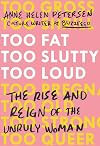
A thoughtful analysis of ten different modes of "unruliness," as represented by eleven different women in the public eye. A forceful argument against anyone who thinks that sexism isn't still powerful or that feminism is no longer necessary.
Quotes
Introduction
The more you analyze what makes these behaviors transgressive, the easier it is to see what they're threatening: what it means to be a woman, of course, but also entrenched understandings of women's passive role in society. (xii)
Too show more Strong: Serena Williams
Yet this supposed equality [Title IX]...amplified anxiety around women in sports....If one played 'like a boy,' she'd never get a husband - or, even more dangerous, perhaps start to ask for the same privileges as men in other areas outside of sport, and never even need a husband. (12)
"The notable difference between black excellence and white excellence is white excellence is achieved without having to battle racism." (Claudia Rankine, 25)
Too Fat: Melissa McCarthy
Unlikability...is just another way of saying that a character doesn't comply with expectations of femininity. (40)
...she's still saying what most people know but are reticent to say - that fat people receive vastly different treatment than non-fat people. (45)
Asserting that women are more interesting than their size or what they put on their body shouldn't be a radical or unruly idea. But that doesn't mean, in today's society, that it isn't. (47)
Too Gross: Abbi Jacobson and Ilana Glazer (Broad City)
...men's bodily functions are funny - but women's bodies are fundamentally obscene. (62)
A woman navigating the world with the confidence of a man is a beautiful, magnetic, and periodically unnerving sight to behold. (65)
Too Slutty: Nicki Minaj
What others might perceive as a maddening insistence on obliqueness doesn't just blur lines; it calls the very need for them into question. (82)
Too Old: Madonna
The aging body is grotesque - but so, too, are the attempts to keep that aging process a secret. (100)
Too Pregnant: Kim Kardashian
When the body becomes public property, as the pregnant body has indubitably become, it not only liberates the populace at large to comment and cast judgment on it, but the (male-dominated) legislature to institute legal controls over it. (133)
Too Shrill: Hillary Clinton
While the other unruly women in this book have learned to tread a narrow lane of acceptability, Clinton's lane has attenuated to a tightrope. She should be assertive but not bossy, feminine but not prissy, experienced but not condescending, fashionable but not superficial, forceful but not shrill. (136)
"Shrillness" is just a word to describe what happens when a woman, with her higher-toned voice, attempts to speak loudly. A pejorative, in other words, developed specifically to shame half of the population when they attempt to command attention in the same manner as men. (137)
Charisma has become the defining trait of the television-era campaign: the ability to make massive swaths of people believe that you deserve to lead them in more important than actual experience or leadership qualities. (148)
"Sometimes when a woman speaks out, some people think it's shouting." (Hillary in response to Bernie, 153)
Too Queer: Caitlyn Jenner
Some believe there's little progress to be made in fighting for the right to join an oppressive, exclusionary institution instead of forcing that institution to change. (168)
When you're trans, at least in this cultural moment, the personal is always political. (174)
"Trans women are disrespected and treated terribly when they don't pass, but if they do pass they're called out for upholding the gender binary and cis standards of beauty. It's an impossible bind." (Jos Truitt, Feministing, 178)
...when hate and fear become the status quo, the simple act of trying to understand others who don't live and act the same as you do...becomes a profoundly unruly act. (183)
Too Loud: Jennifer Weiner
Masscult and Midcult (Dwight Macdonald) --> Anything that makes you feel like you're doing something smart, but you're still pretty comfortable or unchallenged doing it, that's midcult. (191)
Weiner's initial complaint was the treatment of her genre, but her argument began to point toward a greater problem within culture at large - one in which the thoughts of men, either in the books they write or in the articles they write about other ideas or books, take precedence over the ideas of women. (202)
Too Naked: Lena Dunham
Instead of perfecting her body, she underlines the power of not doing so. (228)
Conclusion
To refuse others' understanding of yourself and your capabilities doesn't just feel like self-determination: it's moving from being the object in someone else's narrative to the subject of one's own. (233) show less
Quotes
Introduction
The more you analyze what makes these behaviors transgressive, the easier it is to see what they're threatening: what it means to be a woman, of course, but also entrenched understandings of women's passive role in society. (xii)
Too show more Strong: Serena Williams
Yet this supposed equality [Title IX]...amplified anxiety around women in sports....If one played 'like a boy,' she'd never get a husband - or, even more dangerous, perhaps start to ask for the same privileges as men in other areas outside of sport, and never even need a husband. (12)
"The notable difference between black excellence and white excellence is white excellence is achieved without having to battle racism." (Claudia Rankine, 25)
Too Fat: Melissa McCarthy
Unlikability...is just another way of saying that a character doesn't comply with expectations of femininity. (40)
...she's still saying what most people know but are reticent to say - that fat people receive vastly different treatment than non-fat people. (45)
Asserting that women are more interesting than their size or what they put on their body shouldn't be a radical or unruly idea. But that doesn't mean, in today's society, that it isn't. (47)
Too Gross: Abbi Jacobson and Ilana Glazer (Broad City)
...men's bodily functions are funny - but women's bodies are fundamentally obscene. (62)
A woman navigating the world with the confidence of a man is a beautiful, magnetic, and periodically unnerving sight to behold. (65)
Too Slutty: Nicki Minaj
What others might perceive as a maddening insistence on obliqueness doesn't just blur lines; it calls the very need for them into question. (82)
Too Old: Madonna
The aging body is grotesque - but so, too, are the attempts to keep that aging process a secret. (100)
Too Pregnant: Kim Kardashian
When the body becomes public property, as the pregnant body has indubitably become, it not only liberates the populace at large to comment and cast judgment on it, but the (male-dominated) legislature to institute legal controls over it. (133)
Too Shrill: Hillary Clinton
While the other unruly women in this book have learned to tread a narrow lane of acceptability, Clinton's lane has attenuated to a tightrope. She should be assertive but not bossy, feminine but not prissy, experienced but not condescending, fashionable but not superficial, forceful but not shrill. (136)
"Shrillness" is just a word to describe what happens when a woman, with her higher-toned voice, attempts to speak loudly. A pejorative, in other words, developed specifically to shame half of the population when they attempt to command attention in the same manner as men. (137)
Charisma has become the defining trait of the television-era campaign: the ability to make massive swaths of people believe that you deserve to lead them in more important than actual experience or leadership qualities. (148)
"Sometimes when a woman speaks out, some people think it's shouting." (Hillary in response to Bernie, 153)
Too Queer: Caitlyn Jenner
Some believe there's little progress to be made in fighting for the right to join an oppressive, exclusionary institution instead of forcing that institution to change. (168)
When you're trans, at least in this cultural moment, the personal is always political. (174)
"Trans women are disrespected and treated terribly when they don't pass, but if they do pass they're called out for upholding the gender binary and cis standards of beauty. It's an impossible bind." (Jos Truitt, Feministing, 178)
...when hate and fear become the status quo, the simple act of trying to understand others who don't live and act the same as you do...becomes a profoundly unruly act. (183)
Too Loud: Jennifer Weiner
Masscult and Midcult (Dwight Macdonald) --> Anything that makes you feel like you're doing something smart, but you're still pretty comfortable or unchallenged doing it, that's midcult. (191)
Weiner's initial complaint was the treatment of her genre, but her argument began to point toward a greater problem within culture at large - one in which the thoughts of men, either in the books they write or in the articles they write about other ideas or books, take precedence over the ideas of women. (202)
Too Naked: Lena Dunham
Instead of perfecting her body, she underlines the power of not doing so. (228)
Conclusion
To refuse others' understanding of yourself and your capabilities doesn't just feel like self-determination: it's moving from being the object in someone else's narrative to the subject of one's own. (233) show less

Although I expected a whining polemic about how tough millennials have it, I was wrong. This serious book presents lays out an intense indictment of our social and political systems and the impact on all of us, while focusing on what has gone so wrong for the young people, who only wanted to achieve what their parents had. The author states that burnout at work and at home are endemic now due to dependence on devices and on unfairly demanding employers. There's intense condemnation of gig show more work, employer-dependent health insurance, insane college debt, the cost of home ownership, and on the lack of paid parental leave. Refreshingly, an acknowledgement of the even more severe problems for people of color is emphasized.
Quotes: "If you don't think that each of us matter, and not just because of our capacity to work, if you think that's too radical an idea, I don't know how to make you care about other people."
"In essence, the worker committed years of their life to making the company profitable; the company then commits some extra years of its profits to the employee. Before the Great Depression, the American Way was abject insecurity, which is why it can feel so mind-boggling that anyone would willingly return to that American way again."
"I have high career aspirations and my heart still beats to the rhythm of productivity, but I am also so very tired."
"If a child is reared as capital, with the implicit goal of creating a "valuable" asset that will make enough money to obtain or sustain the parents' middle class status, it would make sense that they have internalized that a high salary is the only thing that matters about a job."
"The promise that the free market would fix everything was a persuasive one in the '80s and the '90s, but left to its own devices, capitalism is not benevolent. Most history shows the complete divorce of the best interests of the corporation from the best interests of most employees."
"We've conditioned ourselves to ignore every signal from the body saying "this is too much" and we call that conditioning "grit" or "hustle".
"American society is still arranged as if every family has a caretaker who stays home. Men still don't value domestic labor as labor, and men predominate our legislative bodies and the vast majority of our corporations. They don't treat contemporary parenting - the cost, the burnout - as a problem, no less a crisis, because they cannot, or refuse to, empathize with it. " show less
Quotes: "If you don't think that each of us matter, and not just because of our capacity to work, if you think that's too radical an idea, I don't know how to make you care about other people."
"In essence, the worker committed years of their life to making the company profitable; the company then commits some extra years of its profits to the employee. Before the Great Depression, the American Way was abject insecurity, which is why it can feel so mind-boggling that anyone would willingly return to that American way again."
"I have high career aspirations and my heart still beats to the rhythm of productivity, but I am also so very tired."
"If a child is reared as capital, with the implicit goal of creating a "valuable" asset that will make enough money to obtain or sustain the parents' middle class status, it would make sense that they have internalized that a high salary is the only thing that matters about a job."
"The promise that the free market would fix everything was a persuasive one in the '80s and the '90s, but left to its own devices, capitalism is not benevolent. Most history shows the complete divorce of the best interests of the corporation from the best interests of most employees."
"We've conditioned ourselves to ignore every signal from the body saying "this is too much" and we call that conditioning "grit" or "hustle".
"American society is still arranged as if every family has a caretaker who stays home. Men still don't value domestic labor as labor, and men predominate our legislative bodies and the vast majority of our corporations. They don't treat contemporary parenting - the cost, the burnout - as a problem, no less a crisis, because they cannot, or refuse to, empathize with it. " show less
Lists
Awards


You May Also Like


Associated Authors
Statistics
- Works
- 5
- Also by
- 1
- Members
- 1,290
- Popularity
- #19,887
- Rating
- 3.7
- Reviews
- 58
- ISBNs
- 46
- Languages
- 3

