
Rafe Martin
Author of The Rough-Face Girl
About the Author
Rafe Martin is a lay teacher in the Harada-Yasutani koan line. He is founding teacher of Endless Path Zendo, Rochester, New York, and is also an award-winning author and storyteller whose work has been cited in Time, Newsweek, the New York Times and USA Today.
Works by Rafe Martin
Associated Works
Tagged
Common Knowledge
- Birthdate
- 1946
- Gender
- male
- Occupations
- children's book author
author
ordained lay Zen practitioner
storyteller - Organizations
- Time
Newsweek
USA Today - Nationality
- USA
- Places of residence
- New York, New York, USA
Rochester, New York, USA - Associated Place (for map)
- New York, USA
Members
Reviews
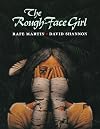
The finest clothes, jewelry, and looks, all external elements, do not compare to the importance of a pure and kind heart. In other words, it is what’s inside that matters most, not the outside. I enjoyed how the book pushes the reader to think beyond their own perspective. For example, when we find out that the Rough Face girl is the only one who can see the Invisible being, I was confronted with many perspectives and questions - Is she the only one who sees the invisible being because show more there is something magical and good inside her? Is the invisible man a real man or is there spiritual meaning here? Is the invisible man a past-life lover of the rough face girl, reflecting that we always will find the ones we love? The book leaves the end up for many posing questions and interpretations which foster critical thinking. I also enjoyed how well-developed the characters were, for example, it was clear that the two sisters of rough face girl were very cruel, such as forcing her to feed the flames which contributed to the burned scars on her face and arms. This gives the reader a sense of remorse for the protagonist. But we also get a sense of bravery of the rough face girl who, despite being teased and laughed at for making her own clothes to marry the invisible man, she stood tall – “The rough face girl had faith in herself and she had courage. She didn’t turn back. She just kept walking right through the village.” These well-developed characters helped give greater impact to the theme of the book. show less

Mistreated by her two older sisters, and made to do all of the work, a young Algonquin girl becomes so singed and covered with scars that she is called Rough-Face Girl in this Native American variant of the 'persecuted heroine' tale-type, sometimes called the Cinderella story. When her sisters visit the wigwam of the Invisible Being who lives in their village, each hoping to become his wife, they use all of the family's finery, but find that after telling lies, and pretending to see the show more great hunter, they are sent home in disgrace. Rough-Face Girl then sets out, clothed in the finery provided by the forest, but unlike her sisters her kind heart allows her to truly see the Invisible Being...
Rafe Martin's The Rough-Face Girl is the third retelling of this seemingly widespread tale from the Algonquin peoples of native North America, following upon Terri Cohlene's Little Firefly: An Algonquian Legend and Robert D. San Souci's Sootface: An Ojibwa Cinderella Story, that I have read. I found Martin's telling engaging, and David Shannon's accompanying artwork beautiful, although I think I prefer the San Souci, by just a margin. I do find it interesting, when considering this story, that the heroine's prospective bridegroom seems supernatural, with his bow made of the rainbow, and his sled made of the Milky Way. Is he meant to be a spirit being? Does Rough-Face Girl's union with him have some greater significance, beyond the usual 'kindness is rewarded with connubial bliss' that one sees in this kind of story? I'd love to know more about Martin's specific sources for this telling, but unlike San Souci, he does not provide that information. Still, leaving aside these questions, this is an enjoyable story, one that is paired with strikingly beautiful artwork. Recommended to young folklore enthusiasts, and to readers interested in worldwide variants of the Cinderella story. show less
Rafe Martin's The Rough-Face Girl is the third retelling of this seemingly widespread tale from the Algonquin peoples of native North America, following upon Terri Cohlene's Little Firefly: An Algonquian Legend and Robert D. San Souci's Sootface: An Ojibwa Cinderella Story, that I have read. I found Martin's telling engaging, and David Shannon's accompanying artwork beautiful, although I think I prefer the San Souci, by just a margin. I do find it interesting, when considering this story, that the heroine's prospective bridegroom seems supernatural, with his bow made of the rainbow, and his sled made of the Milky Way. Is he meant to be a spirit being? Does Rough-Face Girl's union with him have some greater significance, beyond the usual 'kindness is rewarded with connubial bliss' that one sees in this kind of story? I'd love to know more about Martin's specific sources for this telling, but unlike San Souci, he does not provide that information. Still, leaving aside these questions, this is an enjoyable story, one that is paired with strikingly beautiful artwork. Recommended to young folklore enthusiasts, and to readers interested in worldwide variants of the Cinderella story. show less
Review From Gooreads":
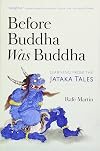
What a breath of fresh air. This book cuts right through our tendencies towards "spiritual materialism" and simply acting the part, and shows - through tales of the Buddha's lifetimes - that doing the actual work of the path towards enlightenment is messy and hard, but also beautiful and freeing and the only real way to get there. It's not about "pretending to be the Buddha," as Martin says, by walking around looking serene, smiling beatifically, spouting platitudes and show more always being calm. It's about showing up in every. single. moment. Here, NOW.
"It's not enough to sit and meditate and experience calm, silence, and peace - as good as those things are...But we must stand up, walk out of the zendo, and actualize the Way in our life, not just talk about it, not just make the meditation hall into a place to hide out from a crazed and crazy world. We are the way."
And the jataka tales of the thousands of lives of "the Buddha-before-he-was-the-Buddha," a few of which are given in this book and accompanied by insightful, straightforward commentary from Martin, are the map. The Buddha wasn't always perfect, wasn't always enlightened, was once (or a lot of times) just like us. But he seized opportunity after opportunity to learn, try, fail, try again, fail again, on and on until one day he sat under that bodhi tree and all that work paid off. And then he got up again, and got back to work.
"For one on the bodhisattva path, daily life is the context...Daily life and its responsibilities make the Way possible. Its challenges are the Way. They're not obstacles to the Way, nor are they in the way...It's about actualizing practice in the midst of the 'ten thousand things.'"
LOCATION: Scripture /Sutra show less
What a breath of fresh air. This book cuts right through our tendencies towards "spiritual materialism" and simply acting the part, and shows - through tales of the Buddha's lifetimes - that doing the actual work of the path towards enlightenment is messy and hard, but also beautiful and freeing and the only real way to get there. It's not about "pretending to be the Buddha," as Martin says, by walking around looking serene, smiling beatifically, spouting platitudes and show more always being calm. It's about showing up in every. single. moment. Here, NOW.
"It's not enough to sit and meditate and experience calm, silence, and peace - as good as those things are...But we must stand up, walk out of the zendo, and actualize the Way in our life, not just talk about it, not just make the meditation hall into a place to hide out from a crazed and crazy world. We are the way."
And the jataka tales of the thousands of lives of "the Buddha-before-he-was-the-Buddha," a few of which are given in this book and accompanied by insightful, straightforward commentary from Martin, are the map. The Buddha wasn't always perfect, wasn't always enlightened, was once (or a lot of times) just like us. But he seized opportunity after opportunity to learn, try, fail, try again, fail again, on and on until one day he sat under that bodhi tree and all that work paid off. And then he got up again, and got back to work.
"For one on the bodhisattva path, daily life is the context...Daily life and its responsibilities make the Way possible. Its challenges are the Way. They're not obstacles to the Way, nor are they in the way...It's about actualizing practice in the midst of the 'ten thousand things.'"
LOCATION: Scripture /Sutra show less
Native American version of the Cinderella story from the Algonquin tradition. As a teacher, I love sharing this story because it opens up discussions about cultural perspectives, inner beauty, and resilience. The language is rich and poetic, making it an excellent read-aloud that keeps students engaged. The story follows a girl who is scarred by fire while tending to her sisters' needs, yet her courage and honesty help her see the Invisible Being and win his love. I appreciate how this tale show more contrasts with the more familiar European Cinderella stories, providing students with a broader worldview and deeper appreciation for oral traditions. The illustrations are dramatic and help visualize the natural and spiritual elements of the story. It’s a powerful way to discuss storytelling across cultures and the importance of kindness and strength. show less
Lists
Awards


You May Also Like


Associated Authors
Statistics
- Works
- 34
- Also by
- 1
- Members
- 5,780
- Popularity
- #4,264
- Rating
- 4.1
- Reviews
- 196
- ISBNs
- 92
- Languages
- 3
