
Douglas R. Groothuis
Author of Truth Decay: Defending Christianity Against the Challenges of Postmodernism
About the Author
Douglas Groothuis (PhD, University of Oregon) is professor of philosophy at Denver Seminary in Denver, Colorado, where he heads the Apologetics and Ethics masters degree program. He has written numerous books, including Christian Apologetics and, most recently, Philosophy in Seven Sentences.
Works by Douglas R. Groothuis
Truth Decay: Defending Christianity Against the Challenges of Postmodernism (2000) 531 copies, 1 review
Philosophy in Seven Sentences: A Small Introduction to a Vast Topic (Introductions in Seven Sentences) (2016) 107 copies, 1 review
The Knowledge of God in the World and the Word: An Introduction to Classical Apologetics (2022) 59 copies
World Religions in Seven Sentences: A Small Introduction to a Vast Topic (Introductions in Seven Sentences) (2023) 15 copies
The Knowledge of God in the World and the Word Workbook: An Introduction to Classical Apologetics (2022) 3 copies
The Knowledge of God in the World and the Word Video Lectures : An Introduction to Classical Apologetics (2023) 1 copy
Deceived by the Light 1 copy
Associated Works
To Everyone an Answer: A Case for the Christian Worldview (2004) — Contributor — 389 copies, 1 review
Dictionary of Contemporary Religion in the Western World: Exploring Living Faiths on Postmodern Contexts (2002) — Editor — 107 copies, 1 review
Tagged
Common Knowledge
- Legal name
- Groothuis, Douglas R.
- Other names
- 格魯特斯
Groothuis, Doug
Groothuis, Douglas - Birthdate
- 1957-01-03
- Gender
- male
- Education
- University of Wisconsin-Madison
University of Oregon - Organizations
- Denver Seminary (Professor of Philosophy)
- Nationality
- USA
- Places of residence
- Colorado, USA
- Associated Place (for map)
- Colorado, USA
Members
Reviews

How do you continue to find God as dementia pulls your loved one into the darkness?Nothing is simple for a person suffering from dementia, and for those they love. When ordinary tasks of communication, such as using a phone, become complex, then difficult, and then impossible, isolation becomes inevitable. Helping becomes excruciating.In these pages philosopher Douglas Groothuis offers a window into his experience of caring for his wife as a rare form of dementia ravages her once-brilliant show more mind and eliminates her once-stellar verbal acuity. Mixing personal narrative with spiritual insight, he captures moments of lament as well as philosophical and theological reflection. Brief interludes provide poignant pictures of life inside the Groothuis household, and we meet a parade of caregivers, including a very skilled companion dog. Losses for both Doug and Becky come daily, and his questions for God multiply as he navigates the descending darkness. Here is a frank exploration of how one continues to find God in the twilight. show less
This book was difficult. It is a memoir of his experience walking his wife through primary progressive aphasia, a form of dementia. His wife, who was once a member of Mensa and is a published author, who used to edit his books, now struggles to find words for everyday things like shorts, and struggles to use simple things, like basic telephones. It is a memoir of pain and difficulty, as disjointed as the tumultuous life it now describes, yet following Job well: why does this happen, show more nevertheless may the Lord be glorified! I will definitely be rereading this, but it will take me several months or years before I can brave the waters again. show less
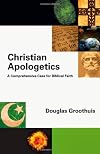
This is one of the best works on apologetics that I've ever encountered. The author approaches the subject from a philosophical perspective and uses arguments that show how to reason with persons of different religious persuasion whether they believe in a major religion, are atheist/agnostic, or are pluralists (as so many are today). He shows how popular culture has influenced some misconceptions that are frequently encountered as well. He avoids the use of jargon. When he does use a term show more that might be considered jargon, he explains it very simply and uses analogies/illustrations so that the concept is very understandable. There is also a glossary of some terms. The author's bibliography and footnotes demonstrate his mastery of the subject. The index is great. It is a HUGE book, but it's very readable. Highly recommended. show less
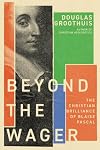
Summary: Argues that Pascal’s brilliance extends beyond his famous “wager” to his scientific, philosophic, and Christian insights.
Justly or unjustly, Blaise Pascal is often most known for his “Wager.” He argues that faith in God is in one’s best interest. If indeed God exists and rewards belief in him, this is of infinite gain while unbelief entails infinite loss. By contrast if one believes and God does not exist, the losses are relatively minimal. In Beyond the Wager, Douglas show more Groothuis not only defends the Wager but argues for the brilliance of Pascal, particularly as a Christian thinker, as revealed in Pensees.
Groothuis, a noted Christian apologist, has been reading Pensees since 1977. This work is a revision and expansion on an earlier work, On Pascal, published in 2003. Specifically, he adds chapters on miracles and prophecy pertaining to Christ, the excellence of Christ, “Christianity, Muhammad, and the Jews,” and on Pascals critique of politics. In addition, he includes a delightful imagined dialogue between Pascal and Descartes.
In introducing his subject, Groothuis proposes that Pascal is both well-known and unknown. He made contributions in math and science (as well as inventing the first prototype of mass transit, the omnibus). What is less understood is his brilliance as a Christian thinker. Pascal, without jettisoning reason, recognized that belief “involved submitting the core of one’s being to a supernatural being who calls one into a transformational encounter and ongoing engagement” in response to the heart’s perception of God. This is what is behind his statement that “the heart has its reasons of which reason knows nothing.” He understands Pascal as one who lived between the Medieval Age and the Enlightenment, both a devout Catholic and yet reformer in sympathy with the Jansenists. And he was both a philosopher who endorsed much of the Cartesian world, yet never separated science from God.
After a brief biography of Pascal, who died at 39, he explores how Pascal developed our understanding of both the nature and limits of science. Then he turns to the theological controversy he engaged on behalf of the Jansenists against the Jesuits. The Jesuits argued that divine choice and human freedom were incompatible and emphasized human choice. Pascal, anticipating the Protestant Reformers, argued for compatibilism, that external determination and personal choice were compatible.
Following this discussion, Groothuis turns to the Pensees, which will occupy the remainder of the book. Noting its fragmentary and incomplete nature, Groothuis calls attention to Pascal’s basic plan for the work. Pascal divided it in two parts: the wretchedness of man without God and the happiness of man with God. He defends it as an apologetic and delineates Pascal’s three orders of being: the body, the mind, and the heart. Each are essential to knowledge of God.
Subsequently, Groothuis deals first with Pascal’s arguments for God, including his sense of the limits of natural theology. Instead he shows how our human condition as “magnificent wretches” points us not only toward God but toward our need. He explores Pascal’s ideas in the light of skepticism about the hiddenness of God and how this relates to our fallenness. Groothuis show how Pascal argues from the human condition to our need for divine revelation and redemption. He then discusses Pascal’s treatment of miracles and prophecy to attest to the uniqueness of Christ as the Savior who atoned through the cross, addressing the human condition. All of this culminates in a chapter on the excellence of Christ, captured in Pascal’s description of Christ’s “offices” in 106 words. Groothuis discusses what this means for our spiritual life, our experience of suffering and for a thinking body of Christ.
Given the contemporary challenge of Islam, Groothuis shows how Pascal argued for the superiority of Christ and the Bible. Interestingly, he outlines Pascal’s argument for Christianity from Judaism and against Islam, that Jesus, not Muhammad, is the prophet foreseen by Moses. Then, Groothuis comes to the Wager, expositing Pascal’s framing of the Wager, showing how one must wager and addressing objections to the Wager. This is followed by a chapter summarizing Pascal’s critiques of culture and politics. Pascal had a penetrating view of the pomps and pretenses of politics and culture. He argues that Christ offers the only sane point in an insane world.
Groothuis concludes by commending Pascal as a guide. He is a mentor who exemplifies ardent love for Christ. Pascal’s grasp of the human condition helps us understand both ourselves and others. His literary gifts across multiple disciplines may motivate writers to excellence. As an innovative scientist, he models a philosophy of science reflecting a biblical worldview. His biting wit as he considers culture and politics challenges us to forsake worldly embraces of pomp and power for godliness. And Pensees is a goldmine of insight for apologists.
Douglas Groothuis makes a strong case for renewed attention to the life and writing of Blaise Pascal as a Christian thinker. He brings a framework to our reading of the fragmented and unfinished Pensees, helping us to recognize the intellectual as well as devotional brilliance of this work. He defends Pascal against his detractors, including the arguments against Pascal’s Wager. But beyond all this, his discussion of the thought of Pascal shows the far-reaching character of his brilliance. Now to find my copy of Pensees…. show less
Justly or unjustly, Blaise Pascal is often most known for his “Wager.” He argues that faith in God is in one’s best interest. If indeed God exists and rewards belief in him, this is of infinite gain while unbelief entails infinite loss. By contrast if one believes and God does not exist, the losses are relatively minimal. In Beyond the Wager, Douglas show more Groothuis not only defends the Wager but argues for the brilliance of Pascal, particularly as a Christian thinker, as revealed in Pensees.
Groothuis, a noted Christian apologist, has been reading Pensees since 1977. This work is a revision and expansion on an earlier work, On Pascal, published in 2003. Specifically, he adds chapters on miracles and prophecy pertaining to Christ, the excellence of Christ, “Christianity, Muhammad, and the Jews,” and on Pascals critique of politics. In addition, he includes a delightful imagined dialogue between Pascal and Descartes.
In introducing his subject, Groothuis proposes that Pascal is both well-known and unknown. He made contributions in math and science (as well as inventing the first prototype of mass transit, the omnibus). What is less understood is his brilliance as a Christian thinker. Pascal, without jettisoning reason, recognized that belief “involved submitting the core of one’s being to a supernatural being who calls one into a transformational encounter and ongoing engagement” in response to the heart’s perception of God. This is what is behind his statement that “the heart has its reasons of which reason knows nothing.” He understands Pascal as one who lived between the Medieval Age and the Enlightenment, both a devout Catholic and yet reformer in sympathy with the Jansenists. And he was both a philosopher who endorsed much of the Cartesian world, yet never separated science from God.
After a brief biography of Pascal, who died at 39, he explores how Pascal developed our understanding of both the nature and limits of science. Then he turns to the theological controversy he engaged on behalf of the Jansenists against the Jesuits. The Jesuits argued that divine choice and human freedom were incompatible and emphasized human choice. Pascal, anticipating the Protestant Reformers, argued for compatibilism, that external determination and personal choice were compatible.
Following this discussion, Groothuis turns to the Pensees, which will occupy the remainder of the book. Noting its fragmentary and incomplete nature, Groothuis calls attention to Pascal’s basic plan for the work. Pascal divided it in two parts: the wretchedness of man without God and the happiness of man with God. He defends it as an apologetic and delineates Pascal’s three orders of being: the body, the mind, and the heart. Each are essential to knowledge of God.
Subsequently, Groothuis deals first with Pascal’s arguments for God, including his sense of the limits of natural theology. Instead he shows how our human condition as “magnificent wretches” points us not only toward God but toward our need. He explores Pascal’s ideas in the light of skepticism about the hiddenness of God and how this relates to our fallenness. Groothuis show how Pascal argues from the human condition to our need for divine revelation and redemption. He then discusses Pascal’s treatment of miracles and prophecy to attest to the uniqueness of Christ as the Savior who atoned through the cross, addressing the human condition. All of this culminates in a chapter on the excellence of Christ, captured in Pascal’s description of Christ’s “offices” in 106 words. Groothuis discusses what this means for our spiritual life, our experience of suffering and for a thinking body of Christ.
Given the contemporary challenge of Islam, Groothuis shows how Pascal argued for the superiority of Christ and the Bible. Interestingly, he outlines Pascal’s argument for Christianity from Judaism and against Islam, that Jesus, not Muhammad, is the prophet foreseen by Moses. Then, Groothuis comes to the Wager, expositing Pascal’s framing of the Wager, showing how one must wager and addressing objections to the Wager. This is followed by a chapter summarizing Pascal’s critiques of culture and politics. Pascal had a penetrating view of the pomps and pretenses of politics and culture. He argues that Christ offers the only sane point in an insane world.
Groothuis concludes by commending Pascal as a guide. He is a mentor who exemplifies ardent love for Christ. Pascal’s grasp of the human condition helps us understand both ourselves and others. His literary gifts across multiple disciplines may motivate writers to excellence. As an innovative scientist, he models a philosophy of science reflecting a biblical worldview. His biting wit as he considers culture and politics challenges us to forsake worldly embraces of pomp and power for godliness. And Pensees is a goldmine of insight for apologists.
Douglas Groothuis makes a strong case for renewed attention to the life and writing of Blaise Pascal as a Christian thinker. He brings a framework to our reading of the fragmented and unfinished Pensees, helping us to recognize the intellectual as well as devotional brilliance of this work. He defends Pascal against his detractors, including the arguments against Pascal’s Wager. But beyond all this, his discussion of the thought of Pascal shows the far-reaching character of his brilliance. Now to find my copy of Pensees…. show less
You May Also Like


Associated Authors
Statistics
- Works
- 40
- Also by
- 2
- Members
- 2,656
- Popularity
- #9,663
- Rating
- 3.9
- Reviews
- 23
- ISBNs
- 56
- Languages
- 5