
Geoffrey O'Brien
Author of The Browser's Ecstasy: A Meditation on Reading
About the Author
Works by Geoffrey O'Brien
The Fall of the House of Walworth: A Tale of Madness and Murder in Gilded Age America (John MacRae Books) (2010) 149 copies, 4 reviews
The Reader's Catalog: An Annotated Selection of More Than 40,000 of the Best Books in Print in 208 Categories (Reader's (1989) 140 copies
The Difficulty of Being (Neversink) 2 copies
Montemora 2 1 copy
Associated Works
The Vintage Book of Amnesia: An Anthology of Writing on the Subject of Memory Loss (2000) — Contributor — 227 copies, 2 reviews
Conjunctions: 46, Selected Subversions: Essays on the World at Large (2006) — Contributor — 10 copies
Montemora No. 1 — Contributor — 2 copies
Talisman: A Journal of Contemporary Poetry and Poetics, Number 4, The Susan Howe Issue — Contributor — 1 copy
Tagged
Common Knowledge
- Legal name
- O'Brien, Geoffrey
- Birthdate
- 1948
- Gender
- male
- Occupations
- poet
editor
critic
translator
cultural historian - Organizations
- Library of America
- Awards and honors
- Whiting Writers' Award (1988)
- Nationality
- USA
- Birthplace
- New York, New York, USA
- Places of residence
- New York, USA
Great Neck, Long Island, New York, USA - Associated Place (for map)
- New York, USA
Members
Reviews
The Phantom Empire: Movies in the Mind of the Twentieth Century: Movies in the Mind of the 20th Century by Geoffrey O'Brien
This is a unique book — a fluid meditation on our collective experience of the movies.
Geoffrey O’Brien is a poet, and his book gives us an experience rather than an argument or a collection of facts. You have to give in to it and just let him go where he’s going.
The effect, for me anyway, is to provoke my own thinking about the movies and what their part in our lives is. Movies came along as something very different in our experience — different from live theater, different from show more novels, different from radio, even different from the experience of television that came later. You go into a darkened theater and, if you’re lucky and not distracted, you lose yourself in the movie. For an hour or two, or sometimes more, the movie is reality. What you see and hear genuinely affects you and may change you.
From the standpoint of the creature evolution built us to be, experiencing a movie is a strange thing. Our senses give us the experience of a reality that is not here or now and in which we cannot act or have effect. The whole point is to fool your senses and your mind into living in a world that isn’t “really” there.
But only for a time. And then you’re left to somehow make your experience in the world of the movie part of your experience in the real world. A movie that really affects us becomes part of our lives. We don’t leave it in the theater.
Although he doesn’t follow a timeline, O’Brien takes us through the history of movies from the days of D.W. Griffith and George Méliès to Stanley Kubrick and George Miller. But he doesn’t really focus in on how the movies have changed over time — the current of his writing is really how the movies have changed us, become not just another thing in our culture but a substantive part of modern life.
That said, he does visit the different genres of the movies — the western, film noir, suspense, horror, and all the other genres and sub-genres. What’s interesting to me in his repeat trips through the movies and genres is the blurring between our lives and the movies we watch. Our experiences in horror movies or suspense movies are part of our “real lives.
And it’s a two way street. Different genres arrive at different times in our collective lives — film noir in the forties, science fiction in the fifties, spy and secret agent movies in the seventies, . . . And they appeal to us at different parts of our own lives as well — maybe we were horror movie fans as teenagers, fans of suspense or mysteries later, and maybe historical drama later still.
And different genres have their unique characteristics in our experience.
Horror movies compel us to watch them. We are drawn to them even against our better judgement, and then they reward us with the reminder that everything normal is just a veneer over everything threatening, like a murderer stalking us on summer days or our Dr. Jekyll ready to burst out of our Mr. Hyde.
Movies can even double back on themselves to give us an experience of our experience of movies. O’Brien dwells for a chapter on the “Italian system” in which movies were made up of and about movies, like a commentary on themselves or an alternative world in which everything was predictable because it had all been done before in other movies. That the movies’ plots and scenarios were unoriginal even seems to have been the point, that we experience what our experience of the movies is.
The book was written well before the Trump presidency, and O’Brien was free to imagine that Ronald Reagan’s presidency was a culmination of advanced interplay between the movies and reality. He hadn’t seen what happens when the presidency is occupied by a character from “reality” television. I would love to know how the Trump presidency fits into the view he developed here (I did search for anything in his more recent writing but didn’t find anything like what I was looking for — maybe other readers can find something interesting).
In the final chapter, O’Brien repeats the reminder, “It’s only a movie,” several times. But what does that mean? I think there is irony in his reciting the line, and it comes back to the theme I began with. Movies are real. During the movie, it is reality itself, in the dark theater. The experiences we have had are real, not just “movie real” but “real” — we were scared during Alien, tormented during The Deer Hunter, and amazed during 2001. And the era of movies, beginning in the twentieth century, changed what life is for us. show less
Geoffrey O’Brien is a poet, and his book gives us an experience rather than an argument or a collection of facts. You have to give in to it and just let him go where he’s going.
The effect, for me anyway, is to provoke my own thinking about the movies and what their part in our lives is. Movies came along as something very different in our experience — different from live theater, different from show more novels, different from radio, even different from the experience of television that came later. You go into a darkened theater and, if you’re lucky and not distracted, you lose yourself in the movie. For an hour or two, or sometimes more, the movie is reality. What you see and hear genuinely affects you and may change you.
From the standpoint of the creature evolution built us to be, experiencing a movie is a strange thing. Our senses give us the experience of a reality that is not here or now and in which we cannot act or have effect. The whole point is to fool your senses and your mind into living in a world that isn’t “really” there.
But only for a time. And then you’re left to somehow make your experience in the world of the movie part of your experience in the real world. A movie that really affects us becomes part of our lives. We don’t leave it in the theater.
Although he doesn’t follow a timeline, O’Brien takes us through the history of movies from the days of D.W. Griffith and George Méliès to Stanley Kubrick and George Miller. But he doesn’t really focus in on how the movies have changed over time — the current of his writing is really how the movies have changed us, become not just another thing in our culture but a substantive part of modern life.
That said, he does visit the different genres of the movies — the western, film noir, suspense, horror, and all the other genres and sub-genres. What’s interesting to me in his repeat trips through the movies and genres is the blurring between our lives and the movies we watch. Our experiences in horror movies or suspense movies are part of our “real lives.
And it’s a two way street. Different genres arrive at different times in our collective lives — film noir in the forties, science fiction in the fifties, spy and secret agent movies in the seventies, . . . And they appeal to us at different parts of our own lives as well — maybe we were horror movie fans as teenagers, fans of suspense or mysteries later, and maybe historical drama later still.
And different genres have their unique characteristics in our experience.
Horror movies compel us to watch them. We are drawn to them even against our better judgement, and then they reward us with the reminder that everything normal is just a veneer over everything threatening, like a murderer stalking us on summer days or our Dr. Jekyll ready to burst out of our Mr. Hyde.
Movies can even double back on themselves to give us an experience of our experience of movies. O’Brien dwells for a chapter on the “Italian system” in which movies were made up of and about movies, like a commentary on themselves or an alternative world in which everything was predictable because it had all been done before in other movies. That the movies’ plots and scenarios were unoriginal even seems to have been the point, that we experience what our experience of the movies is.
The book was written well before the Trump presidency, and O’Brien was free to imagine that Ronald Reagan’s presidency was a culmination of advanced interplay between the movies and reality. He hadn’t seen what happens when the presidency is occupied by a character from “reality” television. I would love to know how the Trump presidency fits into the view he developed here (I did search for anything in his more recent writing but didn’t find anything like what I was looking for — maybe other readers can find something interesting).
In the final chapter, O’Brien repeats the reminder, “It’s only a movie,” several times. But what does that mean? I think there is irony in his reciting the line, and it comes back to the theme I began with. Movies are real. During the movie, it is reality itself, in the dark theater. The experiences we have had are real, not just “movie real” but “real” — we were scared during Alien, tormented during The Deer Hunter, and amazed during 2001. And the era of movies, beginning in the twentieth century, changed what life is for us. show less
The Fall of the House of Walworth: A Tale of Madness and Murder in Gilded Age America (John MacRae Books) by Geoffrey O'Brien
Early one June morning in 1873, Mansfield Tracy Walworth, a second-rate thriller writer and son of a well-known New York judge, stopped by the Sturtevant House in New York City. His 19 year old son, Frank, was visiting from Saratoga to settle some family business before leaving for Europe with his uncle - specifically to get Mansfield to stop harassing his mother (and Mansfield's ex-wife), Ellen. Somehow in the next few minutes, Frank shot Mansfield four times and calmly turned himself into show more the police, kicking off a celebrity trial of the first order.
Mansfield Walworth was nuts, everybody in Saratoga agreed. He made his wife's life a living hell before running off to the city after the divorce, which in those days was a heck of a big deal. Frank spent his late teenage years trying to shield his mother from all this, but was largely unsuccessful. But maybe he wasn't nuts; his publishers, for instance, never had any inkling of his violent side. On the other hand, Frank was either a saintly young man who cared for his mother very much or an epileptic with mental illnesses of his own. And Frank either coldly planned to entrap and kill his father or he was innocently defending himself, depending on which newspaper you read. In the end, Frank was found guilty of the new crime of second degree murder and sentenced to life at hard labor. Unfortunately, he was found guilty just as several powerful and rich men managed to get off essentially scotch-free from some big time crimes. So in spite of what appeared to be worsening mental illness, it was some time before he was pardoned from this sentence many thought was extremely out of bed for his crime. The family never recovered from this tragedy.
And really, that's what O'Brien is writing about - the decay from one generation to the next that happens as the sins of the fathers are visited on their children. His allusion to Poe is right on target. In between the history is a tragic family that cannot seem to keep from wounding each other. Madness runs in this family. and Ellen spends her life internally agonizing over the hardships in her life while externally becoming a respected educator and businesswoman, and founding numerous organizations like the Daughters of the American Revolution. It's a fascinating look at the Gilded Age behind the scenes. show less
Mansfield Walworth was nuts, everybody in Saratoga agreed. He made his wife's life a living hell before running off to the city after the divorce, which in those days was a heck of a big deal. Frank spent his late teenage years trying to shield his mother from all this, but was largely unsuccessful. But maybe he wasn't nuts; his publishers, for instance, never had any inkling of his violent side. On the other hand, Frank was either a saintly young man who cared for his mother very much or an epileptic with mental illnesses of his own. And Frank either coldly planned to entrap and kill his father or he was innocently defending himself, depending on which newspaper you read. In the end, Frank was found guilty of the new crime of second degree murder and sentenced to life at hard labor. Unfortunately, he was found guilty just as several powerful and rich men managed to get off essentially scotch-free from some big time crimes. So in spite of what appeared to be worsening mental illness, it was some time before he was pardoned from this sentence many thought was extremely out of bed for his crime. The family never recovered from this tragedy.
And really, that's what O'Brien is writing about - the decay from one generation to the next that happens as the sins of the fathers are visited on their children. His allusion to Poe is right on target. In between the history is a tragic family that cannot seem to keep from wounding each other. Madness runs in this family. and Ellen spends her life internally agonizing over the hardships in her life while externally becoming a respected educator and businesswoman, and founding numerous organizations like the Daughters of the American Revolution. It's a fascinating look at the Gilded Age behind the scenes. show less
Not a conventional novel, this is a kind of painting, in words, of Pre-Code America. Beginning in 1934, the Hays Code, governing the content and morals of movies, was enforced. Prior to that time, what was then a new popular medium, the movies, explored social, psychology, moral, and sometimes political themes broadly, in a reciprocal relationship with the world of its audiences. As audiences absorbed the movies, the movies absorbed its audiences.
O’Brien’s book conveys that relationship, show more so close a relationship that it’s misleading to say that the two — audience and movies — are separate. The ways the audience experiences the world is infused by images, themes, values, storylines, and the very logic of the movies. And the movies reflect it all back, applying their own shifts and changing currents.
O’Brien gives us two characters, “Dorothy at 17” and “Aloysius at 19”, as speakers, along with “Dorothy After the Show” at the end. Okay, there’s some irony in Dorothy and Aloysius playing the parts of “real” people as audience members, given that we are the “real” audience members for their own show, the book. But that’s too much for my head to deal with right now.
Dorothy and Aloysius are appropriately young, but not so young that they aren’t building persistent views of the world as they experience the movies.
What Dorothy and Aloysius report, and you’ll have to distinguish the characteristics of the two for yourself, is a stream of observations, moods, and reflections. It’s like a view into that chamber in which the interaction between movie and audience happens.
The experience starts in a limbo world, waiting in the theater for the movie to start. As an audience member you aren’t in your own life and you’re not yet in the lives on the screen either. Then the blender gets turned on, and you are in both at once. Dorothy and Aloysius tell us what they experience, but what their experiences are in that world of the blender, not in separate worlds of movies and reality.
When Aloysius says, “They’re in a play and they don’t know it,” he might be saying this of characters in a movie, the audience, or the people outside the theater.
When we get, in the book’s flow, to the Hays Code itself, we can wonder whether its proponents weren’t right, at least in the abstract sense that movie audiences will be affected profoundly by their experiences of the movies they see. It may also be true that after 1934, in the era of the Code, that relationship is broken — the unreality of the movies that must adhere to the code breaks the relationship.
As it turned out, I think the ingenuity of the moviemakers of the late 1930s, 40s, and 50s knew how to navigate the Code, and learned codes of their own to convey a more real experience of reality than the Code prescribed.
It’s certainly natural to think, in the present, of our own movies and shows, in the era of streaming media, and also of “social media” and the blender that we live in ourselves, and how we control or don’t control what the blender produces. show less
O’Brien’s book conveys that relationship, show more so close a relationship that it’s misleading to say that the two — audience and movies — are separate. The ways the audience experiences the world is infused by images, themes, values, storylines, and the very logic of the movies. And the movies reflect it all back, applying their own shifts and changing currents.
O’Brien gives us two characters, “Dorothy at 17” and “Aloysius at 19”, as speakers, along with “Dorothy After the Show” at the end. Okay, there’s some irony in Dorothy and Aloysius playing the parts of “real” people as audience members, given that we are the “real” audience members for their own show, the book. But that’s too much for my head to deal with right now.
Dorothy and Aloysius are appropriately young, but not so young that they aren’t building persistent views of the world as they experience the movies.
What Dorothy and Aloysius report, and you’ll have to distinguish the characteristics of the two for yourself, is a stream of observations, moods, and reflections. It’s like a view into that chamber in which the interaction between movie and audience happens.
The experience starts in a limbo world, waiting in the theater for the movie to start. As an audience member you aren’t in your own life and you’re not yet in the lives on the screen either. Then the blender gets turned on, and you are in both at once. Dorothy and Aloysius tell us what they experience, but what their experiences are in that world of the blender, not in separate worlds of movies and reality.
When Aloysius says, “They’re in a play and they don’t know it,” he might be saying this of characters in a movie, the audience, or the people outside the theater.
When we get, in the book’s flow, to the Hays Code itself, we can wonder whether its proponents weren’t right, at least in the abstract sense that movie audiences will be affected profoundly by their experiences of the movies they see. It may also be true that after 1934, in the era of the Code, that relationship is broken — the unreality of the movies that must adhere to the code breaks the relationship.
As it turned out, I think the ingenuity of the moviemakers of the late 1930s, 40s, and 50s knew how to navigate the Code, and learned codes of their own to convey a more real experience of reality than the Code prescribed.
It’s certainly natural to think, in the present, of our own movies and shows, in the era of streaming media, and also of “social media” and the blender that we live in ourselves, and how we control or don’t control what the blender produces. show less
My first draft of this review opened with the bald statement that "This is the worst book I have ever read!" But upon reflection it was clear that a softer approach would be more effective in conveying the actual nature of the work – and might have the added benefit of encouraging you to read on. After all, who am I to cast such a final judgment? While it may be the worst book I ever actually finished, it by no means is the worst book ever written. For example, I doubt that I am the only show more person for whom it is impossible to get beyond page two of anything by Danielle Steel.
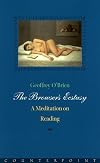
But I digress. The Browser's Ecstasy burst into my field of view while waiting in line at the local Barnes & Noble where it was displayed prominently on a rack filled with a plethora of items – some only tangentially related to books and reading – but assuredly designed for impulse buying. The title grabbed my imagination. Since the cover photo of a nude female was not nearly so seductive as it would have been were I a man, it still allowed for the possibility of imagining myself into that alluring pose in younger days. The whole notion of a meditation on reading while lying naked on a chaise longue conjured up other images inspired by books about reading. Of course, nothing could ever top the opening passages of Calvino's If on a winter's night a traveler. Now there is a truly imaginative meditation on reading. Or perhaps something Jean Rhys wrote about diving into a juicy thick tome:
"What is not there, you put in afterwards." Yes, that is the secret of a compelling book, like an old radio drama, one of those artifacts of the last century where you were enthralled and delighted and stymied only by the limits of your own imagination to fill in the pictures that were not there.
Perhaps that suggests what is wrong with The Browser's Ecstasy. The author is a compulsive mind dumper. He cannot stop himself from uttering everything that comes to mind. He cannot leave anything to the reader’s imagination. One becomes thoroughly disoriented in the stream of his consciousness, and one is not entertained because after a while one is looking for a point to the endless digressions and descriptions of minutiae. Where is this all leading? But even more -- where is the enjoyment? There is no subtlety, no irony, no wry wit, no wonder, no excitement, no thrill, secret or otherwise, no joy, no sorrow, no consolation. Just an endless stream of words, meant to dazzle the reader with the author's verbal facility, his linguistic pyrotechnics -- or is it merely a reflection of his clever use of a thesaurus?
Actually, The Browser's Ecstasy puts me in mind of a time when I was visiting my mother who likes to do fill-in puzzles while she watches TV. I happened to glance through her book of fill-ins and was surprised to see that each puzzle had a theme. All the words in a given puzzle were names of geographical features, or exotic animals, cities, famous people, trees, or some such. I started to do a puzzle, and it had the most amazing effect. As I filled in each name, it conjured up images in my mind of all the associations I had with that word. This particular puzzle featured great cities of the world – Rome, Casablanca, Atlanta, Auckland, Rio, Nairobi, Paris, Istanbul, Cairo. By the time the puzzle was completed, I had circumnavigated the globe, I had been reminded of great movies, coffee table books brimming with stunning photographs, snippets of conversations, great vacations. It amounted in its way to a meditation that allowed the imagination to soar to all corners of the globe. It wasn't exactly a literary experience, yet by its ungrammatical string of nouns it encouraged a satisfying reverie.
The Browser's Ecstasy attempts to be a literary experience. In fact, it tries too hard. It positively gushes with erudite words. By employing every word that could be thought or said over inconsequential minutiae, it kills the spirit, it is deadening, contrary to the lowly fill-in puzzle, which has no literary aspirations at all. The book does not make the spirit soar – or the imagination. Its outlook is bleak, its erudition hollow. My conclusion in the end is that the famous and by now hackneyed epithet of Gertrude Stein in describing Oakland, "There is no there there," applies to this sad little book, so full of promise, and so empty of fulfillment.
The book culminates – in the antepenultimate chapter – in a 15-page run-on sentence which some might call a tour de force and, paradoxically, may be the most coherent part of the book, although it breaks all the rules of narrative such as "Show, don't tell." Ah, shades of Danielle Steel. There she is again.
Driving home from the bookstore, delighted with my impulse purchase, I daydreamed about what treasures would be found in its pages about the ecstasy of reading. Alas! My dreams were unfulfilled by this sad, dark, disappointing and depressing little book. My suggestion: Do your own meditation on its title. You are apt to find more fulfillment in that. show less
But I digress. The Browser's Ecstasy burst into my field of view while waiting in line at the local Barnes & Noble where it was displayed prominently on a rack filled with a plethora of items – some only tangentially related to books and reading – but assuredly designed for impulse buying. The title grabbed my imagination. Since the cover photo of a nude female was not nearly so seductive as it would have been were I a man, it still allowed for the possibility of imagining myself into that alluring pose in younger days. The whole notion of a meditation on reading while lying naked on a chaise longue conjured up other images inspired by books about reading. Of course, nothing could ever top the opening passages of Calvino's If on a winter's night a traveler. Now there is a truly imaginative meditation on reading. Or perhaps something Jean Rhys wrote about diving into a juicy thick tome:
" . . . and you read one page of it or even one phrase of it, and then you gobble up all the rest and go about in a dream for weeks afterwards . . . . What is not there you put in afterwards, for it is alive, this book, and it grows in your head. "
"What is not there, you put in afterwards." Yes, that is the secret of a compelling book, like an old radio drama, one of those artifacts of the last century where you were enthralled and delighted and stymied only by the limits of your own imagination to fill in the pictures that were not there.
Perhaps that suggests what is wrong with The Browser's Ecstasy. The author is a compulsive mind dumper. He cannot stop himself from uttering everything that comes to mind. He cannot leave anything to the reader’s imagination. One becomes thoroughly disoriented in the stream of his consciousness, and one is not entertained because after a while one is looking for a point to the endless digressions and descriptions of minutiae. Where is this all leading? But even more -- where is the enjoyment? There is no subtlety, no irony, no wry wit, no wonder, no excitement, no thrill, secret or otherwise, no joy, no sorrow, no consolation. Just an endless stream of words, meant to dazzle the reader with the author's verbal facility, his linguistic pyrotechnics -- or is it merely a reflection of his clever use of a thesaurus?
Actually, The Browser's Ecstasy puts me in mind of a time when I was visiting my mother who likes to do fill-in puzzles while she watches TV. I happened to glance through her book of fill-ins and was surprised to see that each puzzle had a theme. All the words in a given puzzle were names of geographical features, or exotic animals, cities, famous people, trees, or some such. I started to do a puzzle, and it had the most amazing effect. As I filled in each name, it conjured up images in my mind of all the associations I had with that word. This particular puzzle featured great cities of the world – Rome, Casablanca, Atlanta, Auckland, Rio, Nairobi, Paris, Istanbul, Cairo. By the time the puzzle was completed, I had circumnavigated the globe, I had been reminded of great movies, coffee table books brimming with stunning photographs, snippets of conversations, great vacations. It amounted in its way to a meditation that allowed the imagination to soar to all corners of the globe. It wasn't exactly a literary experience, yet by its ungrammatical string of nouns it encouraged a satisfying reverie.
The Browser's Ecstasy attempts to be a literary experience. In fact, it tries too hard. It positively gushes with erudite words. By employing every word that could be thought or said over inconsequential minutiae, it kills the spirit, it is deadening, contrary to the lowly fill-in puzzle, which has no literary aspirations at all. The book does not make the spirit soar – or the imagination. Its outlook is bleak, its erudition hollow. My conclusion in the end is that the famous and by now hackneyed epithet of Gertrude Stein in describing Oakland, "There is no there there," applies to this sad little book, so full of promise, and so empty of fulfillment.
The book culminates – in the antepenultimate chapter – in a 15-page run-on sentence which some might call a tour de force and, paradoxically, may be the most coherent part of the book, although it breaks all the rules of narrative such as "Show, don't tell." Ah, shades of Danielle Steel. There she is again.
Driving home from the bookstore, delighted with my impulse purchase, I daydreamed about what treasures would be found in its pages about the ecstasy of reading. Alas! My dreams were unfulfilled by this sad, dark, disappointing and depressing little book. My suggestion: Do your own meditation on its title. You are apt to find more fulfillment in that. show less
Lists
Awards


You May Also Like


Associated Authors
Statistics
- Works
- 35
- Also by
- 15
- Members
- 1,140
- Popularity
- #22,523
- Rating
- 3.7
- Reviews
- 16
- ISBNs
- 60
- Favorited
- 2