
Melvin Konner
Author of The Tangled Wing: Biological Constraints on the Human Spirit
About the Author
Melvin Konner is the Samuel Candler Dobbs Professor of Anthropology and an associate professor and neurology at Emory University. A Fellow o f the American Association for the Advancement of Science, he lives in Atlanta.
Works by Melvin Konner
Tagged
Common Knowledge
- Birthdate
- 1946
- Gender
- male
- Education
- Brooklyn College
Harvard University - Occupations
- anthropologist
psychiatrist
neurologist - Organizations
- Emory University
Russell Sage Foundation - Awards and honors
- American Association for the Advancement of Science
American Academy of Arts and Sciences - Relationships
- Shostak, Marjorie (spouse)
- Nationality
- USA
- Birthplace
- New York, New York, USA
- Associated Place (for map)
- New York, USA
Members
Reviews
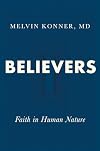
As a definite non-believer and staunch admirer of what Melvin Konner calls The Quartet (Dawkins, Hitchens, Dennett and Weinberg), I'm always up for a rousing critique of religious belief. I've also been an admirer of Konner's for decades, from his eloquent "The Tangled Wing" onwards. So I settled very happily into this, a thoughtful, scientific look at faith, belief, and religion from a an anthropological and historical point of view (anthropology being Konner's first area of expertise). His show more question almost boils down to: truth or mythology, why do humans seem to need it so much?
What is meant by "faith"? Do any animals exhibit "awe"? Can we map in the human brain what is going on with belief or religious experience? What about those magic mushrooms? Does goodness require religion? And if not God, then what? All thoughtfully explored, discussed, and questioned.
Fear not, believers. Konner is kind. He mentions "losing his faith" (he was raised in an Orthodox Jewish household) as a teenager, but he doesn't really explain what that means. (The magician Penn Jillette is more specific: he distinguishes between not believing in God and believing that there is no God.) He also felt it was important to raise his kids as Jews (with a non-believing spouse). He is sometimes critical of the Quartet for their disparagement of believers for willful ignorance, or foolish acceptance of what they deem to be fairy tales at best, and outright lies at worst. He tries hard, but the chapter on the neurology of faith, with a lot of talk about A1 receptors, left and right caudate nuclei, etc. is tough going. He is very respectful of the value hospital chaplains bring to suffering patients. And his present wife is a believing Presbyterian, so perhaps that has softened him a bit more.
All told, believers and non-believers will find something to illuminate the purpose religous faith might serve among humans. While unlikely to change anyone's mind - and that doesn't seem to be his intent in any case - Konner paints a useful picture of the possible origins of religion, and why (some) people need it. show less
What is meant by "faith"? Do any animals exhibit "awe"? Can we map in the human brain what is going on with belief or religious experience? What about those magic mushrooms? Does goodness require religion? And if not God, then what? All thoughtfully explored, discussed, and questioned.
Fear not, believers. Konner is kind. He mentions "losing his faith" (he was raised in an Orthodox Jewish household) as a teenager, but he doesn't really explain what that means. (The magician Penn Jillette is more specific: he distinguishes between not believing in God and believing that there is no God.) He also felt it was important to raise his kids as Jews (with a non-believing spouse). He is sometimes critical of the Quartet for their disparagement of believers for willful ignorance, or foolish acceptance of what they deem to be fairy tales at best, and outright lies at worst. He tries hard, but the chapter on the neurology of faith, with a lot of talk about A1 receptors, left and right caudate nuclei, etc. is tough going. He is very respectful of the value hospital chaplains bring to suffering patients. And his present wife is a believing Presbyterian, so perhaps that has softened him a bit more.
All told, believers and non-believers will find something to illuminate the purpose religous faith might serve among humans. While unlikely to change anyone's mind - and that doesn't seem to be his intent in any case - Konner paints a useful picture of the possible origins of religion, and why (some) people need it. show less
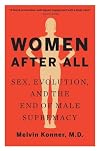
So this was a bit of an odd read. With a first sentence like "This is a book with a very simple argument: women are not equal to men; they are superior in many ways, and in most ways that will count in the future.", I was ready to hear what the author had to say. However, while the author cites several great studies and makes some well-reasoned out points, and has some nice moments of quotability, there are the other moments.
The author frequently uses a sort of layman-style speak that talks show more down a little to his audience (in the internet age, this style is no longer necessary). Most egregiously, the author incorrectly reinforces gender stereotypes by not only citing personal anecdotes and asking the reader to find examples that agree with him, but then goes on to cite studies that clearly either do not conclude what he takes from them or have problems in methodology. A quick summary of the author's main argument is that they want to exaggerate the already extant "positive sexism" in Western society using isolated examples and studies. To clarify these problems, I recommend reading Brainstorm: The Flaws in the Science of Sex Differences or Delusions of Gender: How Our Minds, Society, and Neurosexism Create Difference .
In fact, reading either of those books is preferable to reading this one, which, if recommended to anyone who has not spent time researching the topic, may leave the reader with many terrible "scientifically"-reinforced stereotypes about gender and transgender experiences. show less
The author frequently uses a sort of layman-style speak that talks show more down a little to his audience (in the internet age, this style is no longer necessary). Most egregiously, the author incorrectly reinforces gender stereotypes by not only citing personal anecdotes and asking the reader to find examples that agree with him, but then goes on to cite studies that clearly either do not conclude what he takes from them or have problems in methodology. A quick summary of the author's main argument is that they want to exaggerate the already extant "positive sexism" in Western society using isolated examples and studies. To clarify these problems, I recommend reading Brainstorm: The Flaws in the Science of Sex Differences or Delusions of Gender: How Our Minds, Society, and Neurosexism Create Difference .
In fact, reading either of those books is preferable to reading this one, which, if recommended to anyone who has not spent time researching the topic, may leave the reader with many terrible "scientifically"-reinforced stereotypes about gender and transgender experiences. show less
“I want to understand faith—its basis in brain function and genes, its growth in childhood, its deep evolutionary background, its countless cultural and historical varieties, its ties to morality, and its many roles in human life . . .”
Konner has a background in medicine, anthropology, and neuroscience. Raised as an Orthodox Jew, at the age of seventeen, he lost his faith but has retained a lifelong interest in the religious impulse. Technically an atheist, he’s not a strident one show more and differs from the well-known “Quartet” of uncompromising non-believers: Dawkins, Dennett, Harris, and Hitchens. Konner asserts that humans are not rational beings, that they’re more or less hardwired for religion, and that religion can be a force for good. Noting that even though fewer and fewer people in the developed world identify themselves as believers (statistics show that with material progress religiosity decreases), Konner is nevertheless convinced that religion will persist in a large minority, perhaps (in some form) in a majority. In his book (whose first three long chapters I read) he promises a scientific look at the evolution and history of faith, interspersed with elements of memoir—personal stories of religious and irreligious encounters.
In the few chapters I read, I became impatient with the author’s long-windedness. I also questioned some of his authorial choices. Instead of getting to the point, he likes to meander. For example, he states that as a college freshman he took a course in analytic philosophy that shook the belief out of him. However, the details he provides about this transformation seem extraneous rather than pertinent and supportive. We read about his inattentiveness in class and near failure of the course, and we wade through several abstruse quotations about “being” from the likes of Jean-Paul Sartre. How these details related to his loss of faith was beyond me. What I do know is that I was quickly losing confidence in him as a guide and dreading further (dull) “personal stories” of this kind.
It’s very possible that I didn’t give this book enough of a chance. The subject matter interests me, but I wanted sharper, cleaner writing. I felt I was going to be travelling a long and winding road that led mostly to frustration. show less
Konner has a background in medicine, anthropology, and neuroscience. Raised as an Orthodox Jew, at the age of seventeen, he lost his faith but has retained a lifelong interest in the religious impulse. Technically an atheist, he’s not a strident one show more and differs from the well-known “Quartet” of uncompromising non-believers: Dawkins, Dennett, Harris, and Hitchens. Konner asserts that humans are not rational beings, that they’re more or less hardwired for religion, and that religion can be a force for good. Noting that even though fewer and fewer people in the developed world identify themselves as believers (statistics show that with material progress religiosity decreases), Konner is nevertheless convinced that religion will persist in a large minority, perhaps (in some form) in a majority. In his book (whose first three long chapters I read) he promises a scientific look at the evolution and history of faith, interspersed with elements of memoir—personal stories of religious and irreligious encounters.
In the few chapters I read, I became impatient with the author’s long-windedness. I also questioned some of his authorial choices. Instead of getting to the point, he likes to meander. For example, he states that as a college freshman he took a course in analytic philosophy that shook the belief out of him. However, the details he provides about this transformation seem extraneous rather than pertinent and supportive. We read about his inattentiveness in class and near failure of the course, and we wade through several abstruse quotations about “being” from the likes of Jean-Paul Sartre. How these details related to his loss of faith was beyond me. What I do know is that I was quickly losing confidence in him as a guide and dreading further (dull) “personal stories” of this kind.
It’s very possible that I didn’t give this book enough of a chance. The subject matter interests me, but I wanted sharper, cleaner writing. I felt I was going to be travelling a long and winding road that led mostly to frustration. show less

Not as man-hatey as it sounds. The author is best when he sticks to biology, but he raises an interesting question: how will gender roles change as women gain social power and as technology replaces the need for brawn?
Lists
Awards


You May Also Like


Associated Authors
Statistics
- Works
- 15
- Members
- 1,240
- Popularity
- #20,703
- Rating
- 3.8
- Reviews
- 11
- ISBNs
- 46
- Languages
- 3
- Favorited
- 2