
Joyce K. Kessel
Author of Squanto and the First Thanksgiving
About the Author
Works by Joyce K. Kessel
Tagged
Common Knowledge
There is no Common Knowledge data for this author yet. You can help.
Members
Reviews

Author Joyce K. Kessel chronicles the life of Saint Patrick, the patron saint of Ireland, who is credited with converting that country to Christianity in the 5th century, in this work of biography and history for the beginning chapter-book reader. From Patrick's youth in Roman Britain, through his time as a slave in Ireland, from his escape from captivity, and then the vision that led him back to Ireland as a missionary, the major outlines of the saint's life are covered, as are some of the show more folktales associated with him. The book closes with a brief discussion of the celebration of St. Patrick's Day on March 17th, the anniversary of St. Patrick's death...
Part of Carolrhoda Books' On My Own Holidays series, St. Patrick's Day is a book I picked up with interest, given the fact that the holiday is around the corner. I expected to find it quite informative, given my enjoyment of two other titles in this series: Memorial Day and Labor Day, both written by Geoffrey Scott. Unfortunately, I was somewhat disappointed to find that this had very little about the holiday of St. Patrick's Day itself, and how the celebrations associated with it - particularly the parades here in the United States - got started. Rather, it focused almost exclusively on Saint Patrick himself—his biography, and the folktale associated with him. I understand the need to explore St. Patrick's own life story, as the day celebrates his role in Christianizing Ireland, but given the title here I would have liked a better balance, with more than just a few pages at the end discussing the holiday itself. In the end, this isn't really one I would recommend, either as a history of the holiday, or a biography of the saint. I will look for better titles for both purposes, going forward. show less
Part of Carolrhoda Books' On My Own Holidays series, St. Patrick's Day is a book I picked up with interest, given the fact that the holiday is around the corner. I expected to find it quite informative, given my enjoyment of two other titles in this series: Memorial Day and Labor Day, both written by Geoffrey Scott. Unfortunately, I was somewhat disappointed to find that this had very little about the holiday of St. Patrick's Day itself, and how the celebrations associated with it - particularly the parades here in the United States - got started. Rather, it focused almost exclusively on Saint Patrick himself—his biography, and the folktale associated with him. I understand the need to explore St. Patrick's own life story, as the day celebrates his role in Christianizing Ireland, but given the title here I would have liked a better balance, with more than just a few pages at the end discussing the holiday itself. In the end, this isn't really one I would recommend, either as a history of the holiday, or a biography of the saint. I will look for better titles for both purposes, going forward. show less

I liked this book for a few reasons. For one, I liked the illustrations because they supported the text. For example, there were illustrations of maps and different cities that were described in the text. This helps readers to connect where the cities are in comparison to where they live. Also, I liked the language because it was descriptive. The story described the history of St. Patrick’s Day, which would allow a reader who did not have much knowledge about St. Patrick’s Day to gain a show more better insight; I even learned some history about the holiday that I did not know about before. While I liked the concept of the story and its historical information about St. Patrick’s Day, I think it should be used in a fourth or fifth grade class rather than a second grade class. For example, the text talks about death and that “they say that people fed Patrick poison but he did not die.” I think this writing would not be appropriate in a second grade class. There is no major message of St. Patrick’s Day but it does explain part of the history of the holiday and how the Irish celebrate it even if they live in another country other than Ireland. show less
Opinion
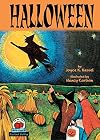
This is a classic storybook for children, and it informs about certain traditions and customs that take place during autumn. The illustrations are all reminiscent of hastily done ink sketches, yet they are appropriate in this sort of book. The story of Halloween is interesting to a lot of children, and it makes for a good read during the fall season.
Reasons
Illustrations: While they were not very detailed, the illustrations in Halloween contributed greatly to the story. The sketches show more on the pages appear dated and therefore contribute a historical perspective of the story. This essentially makes this book a kind of period piece, like “The Night Before Christmas” or any other story that tells the tale of a holiday or other tradition.
Point of View: I believe the third person omniscient point of view does well to deliver the story from an unfixed perspective. This allows the reader to view the scene as a fixed entity in its entirety, and not just from the perspective of a single person.
Writing: The text on each page is brief and pertinent to the topic of Halloween. The language is a bit archaic but that just contributes to the antiquity of the story as it was written quite a long time ago. Having a small amount of outdated or complex language will benefit students who are seeking to expand their vocabulary or even cement existing grammatical rules that they have already learned the fundamentals of. show less
This is a classic storybook for children, and it informs about certain traditions and customs that take place during autumn. The illustrations are all reminiscent of hastily done ink sketches, yet they are appropriate in this sort of book. The story of Halloween is interesting to a lot of children, and it makes for a good read during the fall season.
Reasons
Illustrations: While they were not very detailed, the illustrations in Halloween contributed greatly to the story. The sketches show more on the pages appear dated and therefore contribute a historical perspective of the story. This essentially makes this book a kind of period piece, like “The Night Before Christmas” or any other story that tells the tale of a holiday or other tradition.
Point of View: I believe the third person omniscient point of view does well to deliver the story from an unfixed perspective. This allows the reader to view the scene as a fixed entity in its entirety, and not just from the perspective of a single person.
Writing: The text on each page is brief and pertinent to the topic of Halloween. The language is a bit archaic but that just contributes to the antiquity of the story as it was written quite a long time ago. Having a small amount of outdated or complex language will benefit students who are seeking to expand their vocabulary or even cement existing grammatical rules that they have already learned the fundamentals of. show less
I liked this book for a few reasons. For one, I liked the illustrations. I think that they were detailed ink drawings that were appropriate in setting the mood. They were drawn in black and orange, which reflect the colors of Halloween. Also, I liked the writing in this book. The book described different symbols of Halloween and the historical reason behind them. The book would have subtitles about the different symbols. For example, the subtitle, “Jack-o-Lantern” would start to be show more described by, “We get our jack-o-lantern from Ireland.” While the book is written for a second or third grader to read, I think this book is more appropriate for a fourth or fifth grader. This is because some of the symbols described, have dark pasts and may be more appropriate to share with older students. The big message of Halloween is about how Halloween started and how it is celebrated today. The book ends with “Today Halloween is a happy way to say hello to winter.” show less
Lists
Awards

You May Also Like


Associated Authors
Statistics
- Works
- 5
- Members
- 435
- Popularity
- #56,231
- Rating
- 3.8
- Reviews
- 10
- ISBNs
- 26
- Languages
- 1