

Nancy Fairbanks (1934–2025)
Author of Crime Brûlée
About the Author
Image credit: Nancy Fairbanks Herndon
Series
Works by Nancy Fairbanks
Associated Works
Tagged
Common Knowledge
- Legal name
- Herndon, Nancy Ruth Fairbanks
- Other names
- Fairbanks, Nancy
Herndon, Nancy
Chadwick, Elizabeth - Birthdate
- 1934-05-29
- Date of death
- 2025-03-09
- Gender
- female
- Education
- University of Missouri (BA, English and Journalism)
Rice University (MA) - Occupations
- novelist
copywriter
proofreader - Organizations
- National Organization for Women
Sisters in Crime
University Women's Club
Smithsonian Association
Planned Parenthood
Phi Beta Kappa (show all 7)
Mortar Board - Nationality
- USA
- Places of residence
- St. Louis, Missouri, USA
El Paso, Texas, USA - Place of death
- Madison, Wisconsin, USA
- Associated Place (for map)
- USA
Members
Reviews

Have I mentioned how much I don't like mysteries with gimmicks? I should also mention that I don't like books with inconsistent characterization. Why would a woman who's a staunch feminist blame another woman when a man makes a pass at her? And why would that same feminist continually tell this other woman (and not in a sarcastic manner) that she shouldn't do something because her husband wouldn't like it? Gah. Also, it bounced around between 3 different first-person POV characters, as well show more as sections written in 3rd person from the POVs of the villains. And then there were the sterotypical & cliched accents and two-dimensional stock characters. This wasn't so much a mystery as it was an adventure--we always know whodunit and why and how. The heroine/sleuth is a food writer, taking a free cruise so she can write about the food, and she has her friend (cue stereotypes: hispanic ex-cop) and mother-in-law (the pseudo-feminist) along. The cruise ship gets hijacked, and she saves the day, with the help of various passengers and members of the crew. So why three stars? It did get entertaining, particularly toward the end. show less
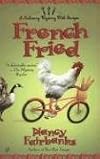
Carolyn Blue, culinary columnist, goes to Lyon, France with her husband, Jason, when he is invited to speak at an international conference. It's a great opportunity for her column and Jason is thrilled that some of the expenses can be written off due to her job. However, before they even arrive someone dies in their hotel room in what seems to have been poisoned pate that was meant for them. There is an interesting blend of French history and cuisine throughout the book, mixed in with the show more young grad student making a play for Jason and the multiple attempts on one or both of their lives. Liked it but don't think I'll search out more. show less
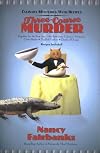
*** Crime Brulee. *yawn* I really don't like mysteries with gimmicks. The mystery is just an excuse to pontificate in an exceptionally boring manner about food and recipes. The amateur sleuth's "best friend" goes missing during a scientific convention in New Orleans, but nobody's concerned except the sleuth. I didn't care about any of the characters, and the solution of the mystery was an anti-climax.
**½ Truffled Feathers. Some humorous moments, which garnered this an extra half star. But show more otherwise, ho-hum. This time, the first person narration goes back and forth between the chemist husband and the food writer wife. The only problem with this is that they have identical voices. The husband drones on just as boringly about food as the wife does. Did I already mention how much I despise mysteries with a gimmick? Not only is the mystery in this one just an excuse to give excruciatingly long descriptions of every single bite of food they ate in a week, but also for obscure and pointless trivia. If that weren't bad enough, one clue hinges on the heroine being able to distinguish between Russian and Czech in an overheard phone conversation based on helping her college roommate with vocabulary words 20 years ago. I don't think so. And amazingly, everyone in NYC knows everyone else. The scientists the husband is meeting and the publishing people the wife is meeting all know each other, as do sundry waitresses and limo drivers.
** Death a l'Orange. I probably should have waited to read this--I'm so tired of these tedious characters, and the errors irritated me. Gah. You don't wear a "broach." And in 2002, why would you bring along a printer and a fax machine to send columns to a newspaper editor instead of just emailing them? And why would a group of college professors, of all people, be shocked by statues of naked people, or not know/be shocked by beef tartare being raw? And on losing their luggage, the heroine's main complaint was that she was going to have to sleep in... *gasp* a T-shirt. I was hoping somebody'd come along and just murder the lot of them. And that's not even getting to the story, which was a series of fairly minor "accidents," each one dissected after the fact--with charts!, interspersed with complaining, excruciatingly detailed descriptions of food. show less
**½ Truffled Feathers. Some humorous moments, which garnered this an extra half star. But show more otherwise, ho-hum. This time, the first person narration goes back and forth between the chemist husband and the food writer wife. The only problem with this is that they have identical voices. The husband drones on just as boringly about food as the wife does. Did I already mention how much I despise mysteries with a gimmick? Not only is the mystery in this one just an excuse to give excruciatingly long descriptions of every single bite of food they ate in a week, but also for obscure and pointless trivia. If that weren't bad enough, one clue hinges on the heroine being able to distinguish between Russian and Czech in an overheard phone conversation based on helping her college roommate with vocabulary words 20 years ago. I don't think so. And amazingly, everyone in NYC knows everyone else. The scientists the husband is meeting and the publishing people the wife is meeting all know each other, as do sundry waitresses and limo drivers.
** Death a l'Orange. I probably should have waited to read this--I'm so tired of these tedious characters, and the errors irritated me. Gah. You don't wear a "broach." And in 2002, why would you bring along a printer and a fax machine to send columns to a newspaper editor instead of just emailing them? And why would a group of college professors, of all people, be shocked by statues of naked people, or not know/be shocked by beef tartare being raw? And on losing their luggage, the heroine's main complaint was that she was going to have to sleep in... *gasp* a T-shirt. I was hoping somebody'd come along and just murder the lot of them. And that's not even getting to the story, which was a series of fairly minor "accidents," each one dissected after the fact--with charts!, interspersed with complaining, excruciatingly detailed descriptions of food. show less
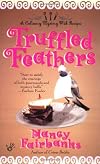
This promising and potentially enjoyable story unfortunately falls sadly short of expectations. Even to a ‘lay person’ it is clear that the finished product required critical and careful editing and rewriting. I am at a loss to understand how this book was published in its current form. Giving the author the benefit of the doubt, I would suggest it was written to a deadline and then given very little editorial attention. Even on a very basic level, the book contains some clumsily show more composed sentences that interrupt the flow of the author’s otherwise adept writing style. One might expect this in an unpublished, unrevised manuscript, but not in a published book.
Another reviewer has already commented on the highly unsatisfying ending, in which the police detective simply tells us ‘who dunnit’, over the course of four chapters. This is certainly an anti-climax. There is no action involved, and we are not given any further glimpses of the other characters introduced throughout the novel, although many would appear to have little relevance to the central story. Instead, we follow the main character as she eats and shops in New York. Much more could have been made of the dining experiences, to examine the chief suspects more closely. Instead, much of the action and most of the characters do little to further the story in any way.
One frustrating aspect of the book is the constant switching of narrators between the main character, Carolyn Blue, and her husband. Although we are told each time the narrator changes, the narrative voice and style does not substantially change, so the husband lacks authenticity; he has no voice of his own. Frequently, his narration simply tells us what his wife is doing. Surely, some other device or third person narration could have been used to explain any important events not witnessed by the narrator, Carolyn Blue. All of these things might easily have been improved with some thoughtful editing and rewriting.
The main problem is that the murder mystery, which should be the central story, feels like a subplot. Instead, the main plot seems to be ‘Carolyn Blue’s trip to New York’. Carolyn meets her editor. Carolyn attends an appointment. Carolyn goes out to lunch and orders scallops. Carolyn catches the subway. Carolyn goes to the opera. Carolyn goes shopping for a rug. Carolyn catches a Taxi. Carolyn goes shopping for clothes. It is a credit to the writer that we stick with her through all of this, because Carolyn’s narration is full of her condescending opinions about what constitutes good taste. At the end of the story, we know a lot about Carolyn’s taste in rugs and clothes (and how nice she looks in them), than we do about the murder.
However, I must confess to being irritated by the portrayal of ethnic characters throughout the book. The story starts with a crazy Indian limo driver, more reminiscent of a patronising 1970s caricature than a real Indian person. He is followed by other ‘foreign’ characters, all of whom speak with the kind of clichéd accents one might find in a B grade action film. The final straw, for me, was an astonishing guide to eating in a Japanese restaurant, a newspaper column purportedly written by the main character. I presume this was intended to be amusing. What I can’t tell, is whether the author is poking fun foreigners (again), or at culturally retarded Americans who find the idea of eating Japanese food challenging. Perhaps the latter, as the narrator repeatedly draws our attention to her cultural superiority over dumb waiters (pun intended).
Having looked up the author on the internet, she seems to be a well educated, well travelled sort of person, so I would like to give her the benefit of the doubt. Perhaps she is writing particularly for a culturally unsophisticated market. Either way, I can’t help feeling disappointed. show less
Another reviewer has already commented on the highly unsatisfying ending, in which the police detective simply tells us ‘who dunnit’, over the course of four chapters. This is certainly an anti-climax. There is no action involved, and we are not given any further glimpses of the other characters introduced throughout the novel, although many would appear to have little relevance to the central story. Instead, we follow the main character as she eats and shops in New York. Much more could have been made of the dining experiences, to examine the chief suspects more closely. Instead, much of the action and most of the characters do little to further the story in any way.
One frustrating aspect of the book is the constant switching of narrators between the main character, Carolyn Blue, and her husband. Although we are told each time the narrator changes, the narrative voice and style does not substantially change, so the husband lacks authenticity; he has no voice of his own. Frequently, his narration simply tells us what his wife is doing. Surely, some other device or third person narration could have been used to explain any important events not witnessed by the narrator, Carolyn Blue. All of these things might easily have been improved with some thoughtful editing and rewriting.
The main problem is that the murder mystery, which should be the central story, feels like a subplot. Instead, the main plot seems to be ‘Carolyn Blue’s trip to New York’. Carolyn meets her editor. Carolyn attends an appointment. Carolyn goes out to lunch and orders scallops. Carolyn catches the subway. Carolyn goes to the opera. Carolyn goes shopping for a rug. Carolyn catches a Taxi. Carolyn goes shopping for clothes. It is a credit to the writer that we stick with her through all of this, because Carolyn’s narration is full of her condescending opinions about what constitutes good taste. At the end of the story, we know a lot about Carolyn’s taste in rugs and clothes (and how nice she looks in them), than we do about the murder.
However, I must confess to being irritated by the portrayal of ethnic characters throughout the book. The story starts with a crazy Indian limo driver, more reminiscent of a patronising 1970s caricature than a real Indian person. He is followed by other ‘foreign’ characters, all of whom speak with the kind of clichéd accents one might find in a B grade action film. The final straw, for me, was an astonishing guide to eating in a Japanese restaurant, a newspaper column purportedly written by the main character. I presume this was intended to be amusing. What I can’t tell, is whether the author is poking fun foreigners (again), or at culturally retarded Americans who find the idea of eating Japanese food challenging. Perhaps the latter, as the narrator repeatedly draws our attention to her cultural superiority over dumb waiters (pun intended).
Having looked up the author on the internet, she seems to be a well educated, well travelled sort of person, so I would like to give her the benefit of the doubt. Perhaps she is writing particularly for a culturally unsophisticated market. Either way, I can’t help feeling disappointed. show less
Awards

You May Also Like


Associated Authors
Statistics
- Works
- 27
- Also by
- 1
- Members
- 1,736
- Popularity
- #14,815
- Rating
- 3.2
- Reviews
- 24
- ISBNs
- 87
- Languages
- 1
- Favorited
- 1