
Jon Stallworthy (1935–2014)
Author of A Book of Love Poetry
About the Author
Jon Stallworthy was born on January 18, 1935 in London, England. He served as second lieutenant in the Nigeria Regiment of the West African Frontier Force in the mid-1950s. After completing his national service, he studied English literature at Magdalen College, Oxford University, where he won the show more Newdigate Prize for his poem The Earthly Paradise in 1958. His first collection of poetry, The Astronomy of Love, was published in 1961. His other collections of poetry include Root and Branch, Hand in Hand, A Familiar Tree, The Anzac Sonata, The Guest from the Future, Rounding the Horn: Collected Poems, Body Language, and War Poet. He received the Wilfred Owen Poetry Award in 2010 in recognition of his sustained body of work as a poet. He also wrote an autobiography entitled Singing School: The Making of a Poet. He wrote biographies about several poets including Wilfred Owen, Boris Pasternak, Alexander Blok, Herbert Read, and Geoffrey Dearmer. His biography of Louis MacNeice won the Southern Arts Literature Prize. He edited several collections of poetry including The Penguin Book of Love Poetry, The Oxford Book of War Poetry, and Complete Poems and Fragments. He also taught English literature at Cornell University and Wolfson College, Oxford University. He died on November 19, 2014 at the age of 79. (Bowker Author Biography) show less
Image credit: Library of Congress
Works by Jon Stallworthy
The Norton anthology of poetry 2 copies
Associated Works
Literature: An Introduction to Fiction, Poetry, and Drama (1995) — Contributor, some editions — 1,017 copies, 7 reviews
The Norton Anthology of English Literature, 9th Edition, Volume F (2012) — Editor, some editions — 203 copies
Three poets of the First World War : Ivor Gurney, Isaac Rosenberg, Wilfred Owen (2011) — Editor — 38 copies
Selected Poems (English and Russian Edition) — Translator — 5 copies
Tagged
Common Knowledge
- Legal name
- Stallworthy, Jonathan Howie
- Birthdate
- 1935-01-18
- Date of death
- 2014-11-19
- Gender
- male
- Education
- Dragon School
Rugby School
University of Oxford (Magdalen College) - Occupations
- poet
literary critic
professor emeritus
editor - Organizations
- University of Oxford
- Awards and honors
- E. M. Forster Award (1976)
Royal Society of Literature (Fellow)
British Academy (Fellow) - Relationships
- Stallworthy, John (great-grandfather)
- Nationality
- UK
- Birthplace
- Kew, London, UK
- Places of residence
- Old Marston, Oxfordshire, UK
- Associated Place (for map)
- UK
Members
Reviews

There is undeniable poignancy in the life of a young man who died in action aged twenty-five, just one week before the Armistice. But what made me want to read this biography was to learn more about the poet whose words first struck me as Benjamin Britten set them in his War Requiem. This biography celebrates what Stallworthy calls “the disciplined sensuality, the passionate intelligence that distinguish Owen’s poetry at its best.” It also shows the challenge in publishing a show more full-length biography about such a short life. I grew impatient while reading the first chapters, which traced his ancestry and his unremarkable childhood. I could have also done with less background information on military matters, such as the German retrenchment to the Hindenburg line. This made the book seem padded.
Nevertheless, I appreciated the context Stallworthy offers for several poems and his explanation of Owen’s technical innovation, pararhyme. This helped my understanding and enjoyment (if one can say that about some of the most harrowing poems I’ve ever read).
I read the first edition, since it is what I owned, but the revised edition (2014) benefits from what Stallworthy learned in preparing the critical edition of Owen’s poems. It also considers the influence he had on poets who came after him, such as Auden, Spender, Hughes, and Heaney, as well as the rise in Owen’s reputation. show less
Nevertheless, I appreciated the context Stallworthy offers for several poems and his explanation of Owen’s technical innovation, pararhyme. This helped my understanding and enjoyment (if one can say that about some of the most harrowing poems I’ve ever read).
I read the first edition, since it is what I owned, but the revised edition (2014) benefits from what Stallworthy learned in preparing the critical edition of Owen’s poems. It also considers the influence he had on poets who came after him, such as Auden, Spender, Hughes, and Heaney, as well as the rise in Owen’s reputation. show less
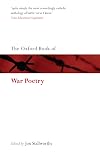
This is an outstanding Anthology of War Poetry, starting with The Bible and Homer (c.900) and ending, so appropriately, with Peter Porter's "Your Attention Please" about Nuclear Armageddon.
The thirteen-page introduction by Jon Stallworthy is excellent and should be read by all naval and military officers - it's a brief overview of the art of war, of the military profession over the past three millennia.
The thirteen-page introduction by Jon Stallworthy is excellent and should be read by all naval and military officers - it's a brief overview of the art of war, of the military profession over the past three millennia.
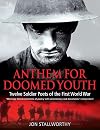
Good survey of the main poets of World War I, including the most famous but also some who are less well known. Written firmly from a pacifist perspective, and therefore shows some bias against those poets who saw the war in a better light than writers whose poetry is best known today (eg Julian Grenfell, whose beautiful paeon of praise to fighting, 'Into Battle' is described as 'rather horrifying' and loftily seen as the product of a culture of the past, as if that was not true of all the poets.
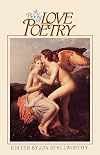
Meh. I'm sure this says something about me, but the most interesting poems in here were in the "Aberrations" section.
Lists
Awards


You May Also Like


Associated Authors
Statistics
- Works
- 35
- Also by
- 15
- Members
- 1,220
- Popularity
- #21,043
- Rating
- 3.9
- Reviews
- 7
- ISBNs
- 71