
Siegfried Sassoon (1886–1967)
Author of Memoirs of a Fox-Hunting Man
About the Author
Sassoon is unusual among the generation of World War I poets in that he survived the war and was able to write of it both immediately and retrospectively. Born into a wealthy family, Sassoon grew up steeped in the genteel pleasures of the Edwardian aristocracy. He enlisted as a second lieutenant in show more World War I, serving in France. Like many poets, Sassoon wrote of the war at first as a noble, chivalric undertaking. But, under the influence of Robert Graves, Sassoon soon developed a more cynical aesthetic. His poem "Repression of War Experience" helps explain the development of his war poetry: It describes the frustration of the soldier trying to communicate the nature of the war to those safe at home and vividly connotes the horror and madness that pervade the soldiers' sustained experience in the trenches. His eventual pacifism and distrust of the military are reflected in his short poem "The General," which blames an uncomprehending and facile wartime leadership for the needless deaths of masses of soldiers. (Bowker Author Biography) show less
Image credit: Photo by George Charles Beresford (1864-1938)
Series
Works by Siegfried Sassoon
Sassoon's Long Journey: An Illustrated Selection from Siegfried Sassoon's 'The Complete Memoirs of George Sherston' (1983) 28 copies, 1 review
Guardian Great Poets of the 20th Century: Siegfried Sassoon (No 7 in a series of 7) (2008) 18 copies
Poems from Italy : Verses Written By Members of the Eighth Army in Sicily and Italy July 1943 - March 1944 (1945) 8 copies
Nativity 7 copies
The War Poets: A Selection of World War I Poetry (2nd Edition) (2011) — Contributor — 7 copies, 1 review
To my mother 6 copies
Satirical Poems 6 copies
Recreations 3 copies
The General 2 copies
Prehistoric Burials 2 copies
An Octave 2 copies
A Suppressed Poem 2 copies
“Attack” 1 copy
Poems From Italy 1 copy
Siegfrieds journey 1 copy
Repression of War Experience 1 copy
Ancient History 1 copy
Everyone Sang 1 copy
The tasking 1 copy
In Sicily 1 copy
??? 1 copy
Sunday Morning Visitors 1 copy
Letter 1 copy
Associated Works
The Assassin's Cloak: An Anthology of the World's Greatest Diarists (2000) — Contributor, some editions — 623 copies, 9 reviews
Against Forgetting: Twentieth-Century Poetry of Witness (1993) — Contributor — 376 copies, 2 reviews
The Norton Anthology of English Literature, 4th Edition, Volume 2 (1979) — Contributor — 271 copies, 1 review
The Poetry Pharmacy: Tried-and-True Prescriptions for the Heart, Mind, and Soul (2017) 198 copies, 5 reviews
Poems to See By: A Comic Artist Interprets Great Poetry (2020) — Contributor — 130 copies, 33 reviews
Piers Prodigal: and Other Poems — Introduction — 2 copies
Ode to Boy: Vol. 2: An Anthology of Same-Sex Attraction in Literature from the 19th Century Through the First World War (2014) — Contributor — 2 copies
Tagged
Common Knowledge
- Legal name
- Sassoon, Siegfried Loraine
- Other names
- Lyre, Pinchbeck (pseudonym)
Kain, Saul (pseudonym)
Sherston, George
Kangar - Birthdate
- 1886-09-08
- Date of death
- 1967-09-01
- Gender
- male
- Education
- Marlborough College
Clare College, University of Cambridge - Occupations
- poet
writer
soldier
cricket player - Organizations
- Royal Welsh Fusiliers
- Awards and honors
- Order of the British Empire (Commander, 1951)
Military Cross (1916) - Relationships
- Sassoon, Philip (cousin)
Sassoon, George (son)
Graves, Robert (friend)
Owen, Wilfred (friend)
Waddell, Helen (friend)
Causley, Charles (friend) (show all 8)
Rivers, W. H. R. (friend)
Tennant, Stephen (lover) - Cause of death
- stomach cancer
- Nationality
- UK
- Birthplace
- Matfield, Kent, England, UK
- Places of residence
- London, England, UK
Heytesbury, Wiltshire, England, UK - Place of death
- Heytesbury, Wiltshire, England, UK
- Burial location
- St. Andrew's Church, Mells, Somerset, England, UK
- Map Location
- England, UK
Members
Reviews

I loved this book! Discovered in a second-hand store this beautifully written tale of an idyllic, country life shattered by the horrors of World War I led me to Sassoon's poetry and an appreciation and love for other World War I poets such as Owen and Brooke. This three-volume compilation is a work of true genius, evoking not only an idyllic period in English history before the war, but the destruction of that world (and millions of lives) in the trenches of France. The author's public show more protest on the conduct of the war and his refusal to fight are the subject of the later volumes and are unique in the history of warfare and place Sassoon in a class by himself, not only as a brave and decorated soldier, but a principled and courageous conscientious objector. show less
Memoirs of a Fox-Hunting Man: The Memoirs of George Sherston (Penguin Classics) by Siegfried Sassoon
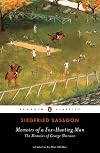
Hard to believe it's been ten years since Britain banned traditional fox hunting. I was working for the BBC when the ban came in, and I remember going up to spend a day with one hunt in the midlands, filming them as they defiantly flouted the act, and then following them down to London for yet another huge tweed-clad protest outside Parliament. It was widely bruited about that animal welfare was just a smokescreen for a more sinister attack on country life by the urban classes.
The ban marked show more the formal end to an era that was, I suppose, in practice already long gone – the time of local hunts that brought small country communities together, ruddy-faced farmers doffing their caps as the squire rode past in hunting pink, everyone knowing everyone else and everyone knowing their place. Nowadays these same picturesque little villages are more likely to hold bankers on weekend retreats, adulterous retirees, and women pulling in six figures selling gold lamé tea-towels on Etsy.
Anyway, it's that lost world of rural Britain that is evoked in this affecting memoir – fictionalised memoir, I should say, because Sassoon also wrote some ‘straight’ non-fiction versions of his childhood, which most critics seem to think were less interesting than this putative novel. It is full of very beautiful Hardyesque descriptions of the English countryside:
To watch the day breaking from purple to dazzling gold while we trotted up a deep-rutted lane; to inhale the early freshness when we were on the sheep-cropped uplands; to stare back at the low country with its cock-crowing farms and mist-coiled waterways; thus to be riding out with a sense of spacious discovery – was it not something stolen from the lie-a-bed world and the luckless city workers – even though it ended in nothing more than the killing of a leash of fox-cubs? (for whom, to tell the truth, I felt an unconfessed sympathy).
Many of these descriptions are shot through with a generalised melancholy (‘It is with a sigh that I remember simple moments such as those, when I understood so little of the deepening sadness of life…’), whose source looms up through the text although it is rarely mentioned. Instead we just have an uneasy sense that everything we read about has somehow been lost, and this gave the detailed explanations of fox hunting an interest that they wouldn't otherwise have had for me.
I knew Sassoon as a war poet, of course, but this book showed me a completely new side to him – dry, witty, full of a kind of naïve and faux-pompous enthusiasm that allows for some admirable characterisations – of hens (‘the providers of that universally respected object, the egg’), for instance, or a local churchwarden (‘his impressive demeanour led us to suppose that, if he was not yet on hat-raising terms with the Almighty, he at any moment expected to be’). Supporting characters have cartoonish names like Nigel Croplady, Fred Buzzaway, Joe Barless, and Sir Jocelyn Porteus-Porteous (‘note the majestic variation in spelling’).
All of this Edwardian badinage only makes it the more painful when he sees his cosy world come crashing down with the outbreak of the First World War, a narrative intrusion that is carefully held off until near the end of the book. It's consequently quite horrific to head off to the trenches with such a jovial narrator after endless chapters of cheerful rural pranks – like seeing Bertie Wooster given a rifle and thrown in a dug-out.
Our narrator's natural Conservatism and patriotism evaporate on exposure to the realities of trench warfare. And the measured judgements of this cheerful innocent are much more powerful than any number of angry denunciations from other quarters.
To him, as to me, the War was inevitable and justifiable. Courage remained a virtue. And that exploitation of courage, if I may be allowed to say a thing so obvious, was the essential tragedy of the War, which, as everyone now agrees, was a crime against humanity.
This is the first of three volumes, the second and third of which focus more closely on Sassoon's wartime experiences. But he clearly wants to root their power in this long, dreamy remembrance of pre-war country life, so that we all understand what was lost. For me it worked well. (And if you're one of those ‘humanitarian cranks’ who worry about animal cruelty, I'm pretty sure they barely catch a single fox in the whole book.) show less
The ban marked show more the formal end to an era that was, I suppose, in practice already long gone – the time of local hunts that brought small country communities together, ruddy-faced farmers doffing their caps as the squire rode past in hunting pink, everyone knowing everyone else and everyone knowing their place. Nowadays these same picturesque little villages are more likely to hold bankers on weekend retreats, adulterous retirees, and women pulling in six figures selling gold lamé tea-towels on Etsy.
Anyway, it's that lost world of rural Britain that is evoked in this affecting memoir – fictionalised memoir, I should say, because Sassoon also wrote some ‘straight’ non-fiction versions of his childhood, which most critics seem to think were less interesting than this putative novel. It is full of very beautiful Hardyesque descriptions of the English countryside:
To watch the day breaking from purple to dazzling gold while we trotted up a deep-rutted lane; to inhale the early freshness when we were on the sheep-cropped uplands; to stare back at the low country with its cock-crowing farms and mist-coiled waterways; thus to be riding out with a sense of spacious discovery – was it not something stolen from the lie-a-bed world and the luckless city workers – even though it ended in nothing more than the killing of a leash of fox-cubs? (for whom, to tell the truth, I felt an unconfessed sympathy).
Many of these descriptions are shot through with a generalised melancholy (‘It is with a sigh that I remember simple moments such as those, when I understood so little of the deepening sadness of life…’), whose source looms up through the text although it is rarely mentioned. Instead we just have an uneasy sense that everything we read about has somehow been lost, and this gave the detailed explanations of fox hunting an interest that they wouldn't otherwise have had for me.
I knew Sassoon as a war poet, of course, but this book showed me a completely new side to him – dry, witty, full of a kind of naïve and faux-pompous enthusiasm that allows for some admirable characterisations – of hens (‘the providers of that universally respected object, the egg’), for instance, or a local churchwarden (‘his impressive demeanour led us to suppose that, if he was not yet on hat-raising terms with the Almighty, he at any moment expected to be’). Supporting characters have cartoonish names like Nigel Croplady, Fred Buzzaway, Joe Barless, and Sir Jocelyn Porteus-Porteous (‘note the majestic variation in spelling’).
All of this Edwardian badinage only makes it the more painful when he sees his cosy world come crashing down with the outbreak of the First World War, a narrative intrusion that is carefully held off until near the end of the book. It's consequently quite horrific to head off to the trenches with such a jovial narrator after endless chapters of cheerful rural pranks – like seeing Bertie Wooster given a rifle and thrown in a dug-out.
Our narrator's natural Conservatism and patriotism evaporate on exposure to the realities of trench warfare. And the measured judgements of this cheerful innocent are much more powerful than any number of angry denunciations from other quarters.
To him, as to me, the War was inevitable and justifiable. Courage remained a virtue. And that exploitation of courage, if I may be allowed to say a thing so obvious, was the essential tragedy of the War, which, as everyone now agrees, was a crime against humanity.
This is the first of three volumes, the second and third of which focus more closely on Sassoon's wartime experiences. But he clearly wants to root their power in this long, dreamy remembrance of pre-war country life, so that we all understand what was lost. For me it worked well. (And if you're one of those ‘humanitarian cranks’ who worry about animal cruelty, I'm pretty sure they barely catch a single fox in the whole book.) show less

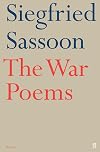
A collection of the poems Siegfried Sassoon wrote about World War I. Very thought-provoking in their observations of a war that Sassoon hated and yet felt compelled to support. A very sad commentary on war from the pen of a participant.
Wonderful poems, though.
Wonderful poems, though.
I love The Poetry Pharmacy: I love the concept, I love the execution, I love how it speaks to my soul and tells me what I need to hear. This particular book in the otherwise fantastic duology gets one less star than its predecessor because I noticed some poems were repeated from The Poetry Remedy and I wished for new content (is this just a problem for us Americans?). I also found myself completely skipping over the explanations of each emotion and just reading the poems. But the poems, they show more were beautiful! show less
Lists
Awards


You May Also Like


Associated Authors
Statistics
- Works
- 70
- Also by
- 31
- Members
- 3,829
- Popularity
- #6,622
- Rating
- 4.0
- Reviews
- 47
- ISBNs
- 119
- Languages
- 6
- Favorited
- 14