
Jon Silkin (1930–1997)
Author of The Penguin Book of First World War Poetry
About the Author
Works by Jon Silkin
Nature with man 3 copies
Stand. Third issue. 1 copy
An editorial impasse 1 copy
Three Poems 1 copy
The Centennial Review 1 copy
Associated Works
Tagged
Common Knowledge
- Birthdate
- 1930-12-02
- Date of death
- 1997-11-25
- Gender
- male
- Education
- Dulwich College, London
Wycliffe College - Occupations
- poet
editor - Nationality
- England
UK - Birthplace
- London, England, UK
- Places of residence
- London, England, UK
Wales, UK - Place of death
- Newcastle-upon-Tyne, Northumberland, England, UK
- Burial location
- Bushey Jewish Cemetery, Bushey, Hertfordshire, England, UK
- Associated Place (for map)
- England, UK
Members
Reviews
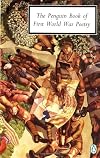
I'm not technically "finished", but I don't know why I ever expected myself to pick this up and read it through like a novel. In this second edition (a third edition, finished in 2007, is available as well), George Walter has supplied the hits (Brooke, McCrae, Owens), as well as expanding on his favourites (Edward Thomas, Blunden, Rosenberg), while not forgetting to include those voices who had been forgot hitherto (Ungaretti, a host of women, etc.).
The collection is sobering, powerful, and show more breathtaking in its variation. War is awful, who'd've thought? While not a comparison, when I struggled with PTSD and the emotional fallout of it, I often struggled to articulate the blinding pain I constantly felt, even in a medium like poetry. These poets who could capture that feeling in their work naturally feel very close to me then, and while I'll never produce like them, I appreciate the small, shared understanding of no understanding at all. I fell particular in love with some of the poets only represented by a poem or two, and has inspired me to look at them further, as any anthology is wont to do.
Unfortunately, I've been reading on-and-off a library copy the past three months, but I recommend buying this or the newer edition if interested. Walter's introduction was equal-parts stuffy and hilarious, probably owing to his stuffiness. I couldn’t understand it by the midpoint and it seems to have been written to a more expert audience versed in the philosophies of poetry, of which I am not a part of. Definetly a must-peruse for those interested in WWI though. You can't read this through like any old book: the emotional intensity, to be truly experienced, leaves one chewing on a few pages for days. show less
The collection is sobering, powerful, and show more breathtaking in its variation. War is awful, who'd've thought? While not a comparison, when I struggled with PTSD and the emotional fallout of it, I often struggled to articulate the blinding pain I constantly felt, even in a medium like poetry. These poets who could capture that feeling in their work naturally feel very close to me then, and while I'll never produce like them, I appreciate the small, shared understanding of no understanding at all. I fell particular in love with some of the poets only represented by a poem or two, and has inspired me to look at them further, as any anthology is wont to do.
Unfortunately, I've been reading on-and-off a library copy the past three months, but I recommend buying this or the newer edition if interested. Walter's introduction was equal-parts stuffy and hilarious, probably owing to his stuffiness. I couldn’t understand it by the midpoint and it seems to have been written to a more expert audience versed in the philosophies of poetry, of which I am not a part of. Definetly a must-peruse for those interested in WWI though. You can't read this through like any old book: the emotional intensity, to be truly experienced, leaves one chewing on a few pages for days. show less
Rodney Pybus, writing in Jon Silkin's obituary in "The Independent" on 1st December 1997, said of Silkin that:
"His poetry rarely made things easy for his readers - the style was the man to an unusual degree - and his terse and knotty syntax, the compaction and complexity of language, the dedicated exploration of human pain, suffering and cruelty, must have lost him some of his rightful constituency. But he loathed anything that smacked of smooth and easy elegance or playing to the show more gallery..."
This sums up so much of this difficult, at times exasperatingly opaque book but one which also contains work of exceptional quality, show less
"His poetry rarely made things easy for his readers - the style was the man to an unusual degree - and his terse and knotty syntax, the compaction and complexity of language, the dedicated exploration of human pain, suffering and cruelty, must have lost him some of his rightful constituency. But he loathed anything that smacked of smooth and easy elegance or playing to the show more gallery..."
This sums up so much of this difficult, at times exasperatingly opaque book but one which also contains work of exceptional quality, show less

BTW the Introduction by Jon Silkin is excellent. It’s not just a couple of pages, it’s almost a third of the book (77 pages in a book of 282 pages, though that includes the indexes and the bibliography.) He talks about the issue of evaluating the war poets for their explicit ideas, even if we disagree (as to militarism, patriotism, pacifism and so on) and his schema consists of two parts:
•… an arrangement, or progression, of poets according to a developing consciousness, in relation show more to the war and the ‘good’ of society as a whole
•…an attempt to group poets in terms of sensibility and language.
He places the war poets in context with the preceding Romantic poets, and he identifies four stages of consciousness:
•… a passive reflection of, or conduit for, the prevailing patriot ideas, and the cant that’s contingent on most social abstract impulsions.
•…’the role of the angry prophet’, protesting against the war through the recreation of physical horror, through anger and satire, and through sardonic distancing.
•…’compassion’ – with strength of feeling
•…’an active desire for change, a change that will re-align the elements of human society in such a way as to make it more creative and fruitful.
This is a very good collection, thoughtfully arranged and inclusive of both sides of the conflict.
To see the rest of my review please visit https://anzlitlovers.com/2018/04/25/the-penguin-book-of-first-world-war-poetry-e... show less
•… an arrangement, or progression, of poets according to a developing consciousness, in relation show more to the war and the ‘good’ of society as a whole
•…an attempt to group poets in terms of sensibility and language.
He places the war poets in context with the preceding Romantic poets, and he identifies four stages of consciousness:
•… a passive reflection of, or conduit for, the prevailing patriot ideas, and the cant that’s contingent on most social abstract impulsions.
•…’the role of the angry prophet’, protesting against the war through the recreation of physical horror, through anger and satire, and through sardonic distancing.
•…’compassion’ – with strength of feeling
•…’an active desire for change, a change that will re-align the elements of human society in such a way as to make it more creative and fruitful.
This is a very good collection, thoughtfully arranged and inclusive of both sides of the conflict.
To see the rest of my review please visit https://anzlitlovers.com/2018/04/25/the-penguin-book-of-first-world-war-poetry-e... show less
The Penguin Book of First World War Poetry: Revised Edition (Classic, 20th-Century, Penguin) by Jon Silkin
My experience with poetry anthologies is limited as an adult reader. Given my pleasant experience with this volume, that is likely to change. Over the last few years while browsing poetry sections I have discovered that this anthology is near ubiquitous. I feel grateful I finally approached it. I would be curious about corresponding verse from Turkey and the Balkans.
I discovered a few new poets I’ll approach again and my estimations of Sassoon, Owen and Blunden were undoubtedly confirmed.
I discovered a few new poets I’ll approach again and my estimations of Sassoon, Owen and Blunden were undoubtedly confirmed.
Lists
Awards

You May Also Like


Associated Authors
Statistics
- Works
- 33
- Also by
- 8
- Members
- 997
- Popularity
- #25,850
- Rating
- 4.0
- Reviews
- 8
- ISBNs
- 52