
Rachel Swirsky
Author of A Memory of Wind
About the Author
Works by Rachel Swirsky
Lightspeed Magazine, Issue 49 • June 2014 (Women Destroy Science Fiction! special issue) (2014) — Editor — 174 copies, 11 reviews
Great, Golden Wings 5 copies
Also, the Cat: A Tor.Com Original 3 copies
The Woman at the Tower Window 2 copies
Marrying The Sun 2 copies
Destroyed by the Waters 2 copies
Scene From A Dystopia 1 copy
Needle And Thread 1 copy
Mirror Images 1 copy
Skyscrapers 1 copy
Tea Time (short story) 1 copy
Silence 1 copy
Heartstrung 1 copy
The Sea Of Trees 1 copy
Single Card Spread 1 copy
Undocumented 1 copy
Associated Works
The Thackery T. Lambshead Cabinet of Curiosities: Exhibits, Oddities, Images, and Stories from Top Authors and Artists (2011) — Contributor — 487 copies, 17 reviews
Sisters of the Revolution: A Feminist Speculative Fiction Anthology (2015) — Contributor — 340 copies, 8 reviews
The Year's Best Science Fiction: Twenty-Eighth Annual Collection (2011) — Contributor — 327 copies, 3 reviews
The Year's Best Science Fiction: Thirty-Second Annual Collection (2015) — Contributor — 203 copies, 8 reviews
Oz Reimagined: New Tales from the Emerald City and Beyond (2013) — Contributor — 166 copies, 12 reviews
The Best Science Fiction and Fantasy of the Year Volume Five (2011) — Contributor — 161 copies, 4 reviews
Worlds Seen in Passing: Ten Years of Tor.com Short Fiction (2018) — Contributor — 161 copies, 1 review
The Best Science Fiction and Fantasy of the Year Volume Three (2009) — Contributor — 149 copies, 2 reviews
The Best Science Fiction and Fantasy of the Year, Volume Four (2010) — Contributor — 139 copies, 2 reviews
The Long List Anthology: More Stories From the Hugo Award Nomination List (2015) — Contributor — 126 copies, 6 reviews
Lightspeed Magazine, Issue 61 • June 2015 (Queers Destroy Science Fiction! special issue) (2015) — Contributor — 112 copies, 3 reviews
Chicks Unravel Time: Women Journey Through Every Season of Doctor Who (2012) — Contributor — 103 copies, 3 reviews
Some of the Best from Tor.com: 2020 Edition: A Tor.com Original (2021) — Contributor — 101 copies, 3 reviews
What the #@&% Is That?: The Saga Anthology of the Monstrous and the Macabre (2016) — Contributor — 93 copies, 1 review
Queers Dig Time Lords: A Celebration of Doctor Who by the LGBTQ Fans Who Love It (2013) — Contributor — 81 copies, 2 reviews
The Best Science Fiction and Fantasy of the Year Volume Nine (2015) — Contributor — 73 copies, 3 reviews
Glorifying Terrorism, Manufacturing Contempt: An Anthology (2006) — Contributor — 69 copies, 3 reviews
More Human Than Human: Stories of Androids, Robots, and Manufactured Humanity (2017) — Contributor — 62 copies, 2 reviews
Uncanny Magazine Issue 24: September/October 2018 (Disabled People Destroy Science Fiction) (2018) — Contributor — 52 copies
Solaris Rising 3: The New Solaris Book of Science Fiction (2014) — Contributor — 47 copies, 6 reviews
Heiresses of Russ 2011: The Year's Best Lesbian Speculative Fiction (2011) — Contributor — 41 copies
Last Drink Bird Head : A Flash Fiction Anthology for Charity (2009) — Contributor — 33 copies, 1 review
The WisCon Chronicles, Vol. 2: Provocative essays on feminism, race, revolution, and the future (2008) — Contributor — 25 copies, 1 review
Talking Back: Epistolary Fantasies (Conversation Pieces, Volume 11) (2006) — Contributor — 12 copies
Asimov's Science Fiction: Vol. 42, No. 3 & 4 [March/April 2018] (2018) — Contributor — 12 copies, 1 review
Six Tor.com Science Fiction & Fantasy Stories from the 2010 Locus Recommended Reading List (2011) — Contributor — 8 copies, 2 reviews
The Best of Beneath Ceaseless Skies Online Magazine, Year Two (2011) — Contributor — 5 copies, 1 review
Climbing Lightly Through Forests: A Poetry Anthology Honoring Ursula K. Le Guin (2021) — Contributor — 4 copies
Dark Fantasies. Antología de fantasía oscura, terror y horror internacional (Nova Fantástica #5) (2017) — Contributor — 3 copies, 1 review
Subterranean Magazine Summer 2010 — Contributor — 2 copies
Tagged
Common Knowledge
- Birthdate
- 1982-04-14
- Gender
- agender
- Education
- Clarion West (2005)
- Short biography
- Rachel Swirsky uses she/they/ze pronouns.
- Nationality
- USA
- Birthplace
- San Jose, California, USA
- Associated Place (for map)
- California, USA
Members
Reviews
Lightspeed Magazine, June 2014 (Women Destroy Science Fiction special issue) (Volume 49) by Christie Yant
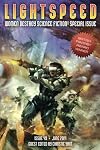
If the apocalypse comes, beep me.
This special double issue of Lightspeed magazine is easily one of my all-time favorite science fiction collections – and not just because it was written, edited, and illustrated (etc.) entirely by women (109 women, to be precise, not counting the one thousand ladies+ who submitted stories!). The writing isn’t merely solid, but oftentimes downright spectacular – and at just $3.99, it’s practically a steal.
Many of the short stories are worth the show more purchase price by their very lonesomes. Off the top of my head, there’s “Like Daughter,” by Tananarive Due (a woman gives birth to a clone of herself in order to right the many wrongs done to her in childhood); Maria Romasco Moore’s “The Great Loneliness” (a post-apocalyptic world populated by painfully lonely human-animal-plant hybrids); and Alice Sheldon’s “Love Is the Plan the Plan Is Death” (in which two spiders fall in love, the captor becoming the prey, the son the absent father). Eleanor Arnason’s “Knapsack Poems: A Goxhat Travel Journal” introduces a complicated and exciting vision of sexuality and gender in multiple bodied beings (the titular Goxhats).
While these are reprints, there’s quite a bit of original fiction to savor as well. Seanan McGuire’s “Each to Each” is a true gem (a mermaid Navy!) – it’s one I can see myself returning to time and again in the future – as are “The Case of the Passionless Bees” (a scifi reimagining of Sherlock Holmes by Rhonda Eikamp) and K.C. Norton’s “Canth” (a perpetual motion submarine powered by the heart of the Captain’s mother seemingly runs away from its owner/daughter). And Amal El-Mohtar’s “The Lonely Sea in the Sky” is heartbreakingly beautiful. Diamonds from the planet Triton “blink” towards one another – a talent humans rapidly learn to exploit for teleportation, spawning the rise of Meisner Syndrome and the Melee Liberation Front (“Friends of Lucy”).
Though I’m not as much as fan of flash fiction, a number of these stories managed to grab my imagination and pull on ye old heartstrings. “The Hymn of the Ordeal” (“How else do you see the stars, but to join the war?”); “The Sewell Home” (an old folk’s home for “timeslingers”); and “Ro-Sham-Bot” (about a faulty chore bot endowed with a “pesky” personality) are all worth a read or two or three.
Along with the reprints, original short stories, and flash fiction, there’s also an excerpt from Jane Lindskold’s recently published novel, Artemis Awakening (which I skipped seeing as the ARC is in my to-read pile), as well as author spotlights, nonfiction (including artist galleries and a roundtable talk with Ursula K. Le Guin, Pat Cadigan, Ellen Datlow, and Nancy Kress), and a plethora of personal essays, written for the project’s Kickstarter fundraiser. It wasn’t my plan to read the nonfiction – I’m just not into NF as of late – but much to my surprise, I plowed through it all. The personal essays are a little more hit or miss than the short stories, but overall I was engaged, excited, nodding my head in vociferous agreement.
I jumped at this collection the second I saw Maureen McHugh’s name in the blurb. I’m 99.9% sure that I’ve read everything she’s published – usually in multiple formats – but I can always wish for more, right? As it turns out, hers is a reprint of “The Cost to Be Wise” (which went on to become the opening chapters of Mission Child, a book I cannot recommend highly enough), leaving me bummed but not surprised. (I still read it anyway, for the cagillionth time!) I was however both shocked and delighted to find an interview of McHugh (by Jude Griffin) in the Author Spotlight section – and she hopes to start a new novel soon. (Yay!) So it wasn’t a total wash on the McHugh front.
5/5 stars. Most of the stories found here are amazing and stand on their own. There are very few “duds” to be found, and even these fall in the 3- to 4-star range. (It’s relative, yo.) 490 pages of grade-A, woman-made science fiction for just $3.99 – what are you waiting for? You need this magazine!
(No, I don’t work for Lightspeed. I’m just crazy excited about this project, okay! Destroy ALL the genres!)
http://www.easyvegan.info/2014/07/09/lightspeed-magazine-june-2014/ show less
This special double issue of Lightspeed magazine is easily one of my all-time favorite science fiction collections – and not just because it was written, edited, and illustrated (etc.) entirely by women (109 women, to be precise, not counting the one thousand ladies+ who submitted stories!). The writing isn’t merely solid, but oftentimes downright spectacular – and at just $3.99, it’s practically a steal.
Many of the short stories are worth the show more purchase price by their very lonesomes. Off the top of my head, there’s “Like Daughter,” by Tananarive Due (a woman gives birth to a clone of herself in order to right the many wrongs done to her in childhood); Maria Romasco Moore’s “The Great Loneliness” (a post-apocalyptic world populated by painfully lonely human-animal-plant hybrids); and Alice Sheldon’s “Love Is the Plan the Plan Is Death” (in which two spiders fall in love, the captor becoming the prey, the son the absent father). Eleanor Arnason’s “Knapsack Poems: A Goxhat Travel Journal” introduces a complicated and exciting vision of sexuality and gender in multiple bodied beings (the titular Goxhats).
While these are reprints, there’s quite a bit of original fiction to savor as well. Seanan McGuire’s “Each to Each” is a true gem (a mermaid Navy!) – it’s one I can see myself returning to time and again in the future – as are “The Case of the Passionless Bees” (a scifi reimagining of Sherlock Holmes by Rhonda Eikamp) and K.C. Norton’s “Canth” (a perpetual motion submarine powered by the heart of the Captain’s mother seemingly runs away from its owner/daughter). And Amal El-Mohtar’s “The Lonely Sea in the Sky” is heartbreakingly beautiful. Diamonds from the planet Triton “blink” towards one another – a talent humans rapidly learn to exploit for teleportation, spawning the rise of Meisner Syndrome and the Melee Liberation Front (“Friends of Lucy”).
Though I’m not as much as fan of flash fiction, a number of these stories managed to grab my imagination and pull on ye old heartstrings. “The Hymn of the Ordeal” (“How else do you see the stars, but to join the war?”); “The Sewell Home” (an old folk’s home for “timeslingers”); and “Ro-Sham-Bot” (about a faulty chore bot endowed with a “pesky” personality) are all worth a read or two or three.
Along with the reprints, original short stories, and flash fiction, there’s also an excerpt from Jane Lindskold’s recently published novel, Artemis Awakening (which I skipped seeing as the ARC is in my to-read pile), as well as author spotlights, nonfiction (including artist galleries and a roundtable talk with Ursula K. Le Guin, Pat Cadigan, Ellen Datlow, and Nancy Kress), and a plethora of personal essays, written for the project’s Kickstarter fundraiser. It wasn’t my plan to read the nonfiction – I’m just not into NF as of late – but much to my surprise, I plowed through it all. The personal essays are a little more hit or miss than the short stories, but overall I was engaged, excited, nodding my head in vociferous agreement.
I jumped at this collection the second I saw Maureen McHugh’s name in the blurb. I’m 99.9% sure that I’ve read everything she’s published – usually in multiple formats – but I can always wish for more, right? As it turns out, hers is a reprint of “The Cost to Be Wise” (which went on to become the opening chapters of Mission Child, a book I cannot recommend highly enough), leaving me bummed but not surprised. (I still read it anyway, for the cagillionth time!) I was however both shocked and delighted to find an interview of McHugh (by Jude Griffin) in the Author Spotlight section – and she hopes to start a new novel soon. (Yay!) So it wasn’t a total wash on the McHugh front.
5/5 stars. Most of the stories found here are amazing and stand on their own. There are very few “duds” to be found, and even these fall in the 3- to 4-star range. (It’s relative, yo.) 490 pages of grade-A, woman-made science fiction for just $3.99 – what are you waiting for? You need this magazine!
(No, I don’t work for Lightspeed. I’m just crazy excited about this project, okay! Destroy ALL the genres!)
http://www.easyvegan.info/2014/07/09/lightspeed-magazine-june-2014/ show less

“No, Naeva. You can still help the Queen. She’s given me the keystone to a spell—a piece of pure leucite, powerful enough to tug a spirit from its rest. If I blow its power into you, your spirit won’t sink into sleep. It will only rest, waiting for her summons.”
Blood welled in my mouth. “I won’t let you bind me…”
His voice came even closer, his lips on my ear. “The Queen needs you, Naeva. Don’t you love her?”
Love: the word caught me like a thread on a bramble. Oh, yes. show more I loved the queen. My will weakened, and I tumbled out of my body. Cold crystal drew me in like a great mouth, inhaling.
Lady Naeva is the queen's sorceress and lover living in a strange matrilineal society, in which women are split into women and the broods who bear their children, and men are known as worms. The reader finds out in the first sentence of the story that she is dead, andI most of the story concerns the eons after her death, as Naeva's spirit is conjured back into consciousness time and time again by magicians wanting to use her power. Firstly by the queen and her daughter, and then by strangers, women who have never heard of The Land of Flowered Hills, and unbelievably to her, a long succession of the despised men.
It's a good story and I gradually realised that Naeva's attitudes were set in stone when she died. As a spirit she is unable to change, and forever thinks of men as worms, and when conjured into a body made of straw in a magic college thousands of years after her death, she will only teach the female students. show less
Blood welled in my mouth. “I won’t let you bind me…”
His voice came even closer, his lips on my ear. “The Queen needs you, Naeva. Don’t you love her?”
Love: the word caught me like a thread on a bramble. Oh, yes. show more I loved the queen. My will weakened, and I tumbled out of my body. Cold crystal drew me in like a great mouth, inhaling.
Lady Naeva is the queen's sorceress and lover living in a strange matrilineal society, in which women are split into women and the broods who bear their children, and men are known as worms. The reader finds out in the first sentence of the story that she is dead, andI most of the story concerns the eons after her death, as Naeva's spirit is conjured back into consciousness time and time again by magicians wanting to use her power. Firstly by the queen and her daughter, and then by strangers, women who have never heard of The Land of Flowered Hills, and unbelievably to her, a long succession of the despised men.
It's a good story and I gradually realised that Naeva's attitudes were set in stone when she died. As a spirit she is unable to change, and forever thinks of men as worms, and when conjured into a body made of straw in a magic college thousands of years after her death, she will only teach the female students. show less
A worthwhile concept - fighting for recognition against the male-centred manocracy* - and, as it turns out, a bloody good book. The stories are of a consistently high standard and a diverse reach. I didn't read the novel extract (I've never really seen the point of novel extracts included in collections) but everything else was great.
As well as sections broken into original fiction, reprinted fiction and flash fiction (most of which was perfectly adequate short story length, so the only show more point to it I can see is if you wanted to dip in knowing you can burn through a few tales if you're in that mood without hitting something longer) there is a non-fiction section beginning with a superb artists' gallery, a collection of essays which are superb and then a bunch of short 'personal essays', which are individual writers' views on the subject of Women Destroying Science Fiction - their influences and their own experiences or backgrounds - many of which are great, all of which are interesting although some are obviously tossed-off-in-an-hour filler.
All the 'proper' essays are excellent, one of my favourite being a round-table type discussion between Ursula le Guin, Pat Cadigan, Ellen Datlow & Nancy Kress on being a women within SF, being a feminist and on the changes over the recent decades - in the field in general, as well as the particular feminist slant. So it was bound to be brilliant, really.
From le Guin:
"Long ago, my children, in the days of my youth, our tribe was small and poor, skulking in exile on the margins of the rich kingdom of Literaturia. When we attempted to approach we were driven back with execrations and the throwing of fecal matter by the armed Critics with their battle cry of "Genre! Kill!". We found, however, that many readers so loved us that they came into exile to join us, calling their settlement Fandom, and even in Literaturia, many secretly welcomed us into the their hearts and homes. Over the years, we have grown in number and strength, and there is much intercourse of various kinds and exchange of mental goods. Nowadays, blue-blooded Literaturians, believing they understand our simple customs, often imitate them, badly. Some of our tribe have become somewhat respectable in the streets of Literaturia and pass, at times, almost unscathed among the Critics, The heights of the cities, however, and the great prizes to be found there, are still closed to us. I urge you to continue on the way if your tribal Elders, my children; Ignore execrations, seduce critics, infiltrate curricula, and keep on truckin'."
Damn, but I adore Ursula le Guin.
*I probably don't need to invite discourse of the value of feminism but am more than happy to do so. Bring it on. show less
As well as sections broken into original fiction, reprinted fiction and flash fiction (most of which was perfectly adequate short story length, so the only show more point to it I can see is if you wanted to dip in knowing you can burn through a few tales if you're in that mood without hitting something longer) there is a non-fiction section beginning with a superb artists' gallery, a collection of essays which are superb and then a bunch of short 'personal essays', which are individual writers' views on the subject of Women Destroying Science Fiction - their influences and their own experiences or backgrounds - many of which are great, all of which are interesting although some are obviously tossed-off-in-an-hour filler.
All the 'proper' essays are excellent, one of my favourite being a round-table type discussion between Ursula le Guin, Pat Cadigan, Ellen Datlow & Nancy Kress on being a women within SF, being a feminist and on the changes over the recent decades - in the field in general, as well as the particular feminist slant. So it was bound to be brilliant, really.
From le Guin:
"Long ago, my children, in the days of my youth, our tribe was small and poor, skulking in exile on the margins of the rich kingdom of Literaturia. When we attempted to approach we were driven back with execrations and the throwing of fecal matter by the armed Critics with their battle cry of "Genre! Kill!". We found, however, that many readers so loved us that they came into exile to join us, calling their settlement Fandom, and even in Literaturia, many secretly welcomed us into the their hearts and homes. Over the years, we have grown in number and strength, and there is much intercourse of various kinds and exchange of mental goods. Nowadays, blue-blooded Literaturians, believing they understand our simple customs, often imitate them, badly. Some of our tribe have become somewhat respectable in the streets of Literaturia and pass, at times, almost unscathed among the Critics, The heights of the cities, however, and the great prizes to be found there, are still closed to us. I urge you to continue on the way if your tribal Elders, my children; Ignore execrations, seduce critics, infiltrate curricula, and keep on truckin'."
Damn, but I adore Ursula le Guin.
*I probably don't need to invite discourse of the value of feminism but am more than happy to do so. Bring it on. show less
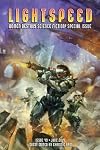
A little while back I was thinking that most of the scifi I've read recently is written by men, and a lot of it contains strains of mysogyny, often so subtle that it seems like the author may not have even realized it was there. This was triggered in particular on a review I saw on here of one of the things on my to read shelf saying it could have been a really interesting exploration of gender in an alien society but the author was unable to get past his own cultural stereotypes to truly show more imagine the culture he was trying to describe. And that's true of a lot of books, and even when the author is trying to be feminist it can come in the form of women making exactly the same arguments about how they're just as good at piloting spaceships, etc. as men, and the thought that women still have to make those same arguments in the 24th century is just so exhaustingly depressing. And a lot of the scifi written by women that I've read lately is of the Handmaid's Tale variety, which is also incredibly depressing. So I started looking for other sorts of science fiction written by women, and when this came out the next day I snatched it up.
I don't generally read Lightspeed Magazine so I have no idea if this is a standard example of their usual quality, but this is a really excellent set of short stories. Not an excellent collection of short stories written by women, an excellent collection full stop. As in, better than many standalone anthologies I've read. As with any collection, some are better than others, but there weren't any clunkers and quite a few gems. I think my favorites were probably Dim Sun, which was sort of scifi magical realism, and A Burglary, Addressed by a Young Lady, a sort of Jane Austen-style story in which all polite young ladies are thieves (I want to see a full book expanding on that one), but there are many other good things in here. show less
I don't generally read Lightspeed Magazine so I have no idea if this is a standard example of their usual quality, but this is a really excellent set of short stories. Not an excellent collection of short stories written by women, an excellent collection full stop. As in, better than many standalone anthologies I've read. As with any collection, some are better than others, but there weren't any clunkers and quite a few gems. I think my favorites were probably Dim Sun, which was sort of scifi magical realism, and A Burglary, Addressed by a Young Lady, a sort of Jane Austen-style story in which all polite young ladies are thieves (I want to see a full book expanding on that one), but there are many other good things in here. show less
Lists
Shelf 101 (1)
Awards


You May Also Like


Associated Authors
Statistics
- Works
- 57
- Also by
- 107
- Members
- 1,079
- Popularity
- #23,833
- Rating
- 3.7
- Reviews
- 65
- ISBNs
- 23
- Favorited
- 2