
Eva Gesine Baur
Author of Rococo
About the Author
Image credit: Eva Gesine Baur
Works by Eva Gesine Baur
Tagged
Common Knowledge
- Legal name
- Baur, Eva Gesine
- Other names
- Singer, Lea
- Birthdate
- 1960-08-11
- Gender
- female
- Occupations
- Historikerin
Musikwissenschaftlerin - Awards and honors
- Bodensee-Literaturpreis der Stadt Überlingen (2018)
- Nationality
- Germany
- Places of residence
- München, Bayern, Germany
- Associated Place (for map)
- Bayern, Germany
Members
Reviews
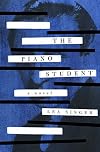
A strange offering from author Lea Singer, THE PIANO STUDENT is fiction based on never-published letters of famous pianist, Vladimir Horowitz to a Nico Kauffman who studied with him in the 1930s. At once a story of hidden passion, the book explores Horowitz's true sexuality and imagines the life of Nico Kauffman, years later. The author uses the name Lea Singer for her fictional works. She writes biography under her real name of Eva Gesine Baur. One wonders why she didn't write a biography show more of Horowitz as she seems to have deep knowledge of him and his music. Perhaps she didn't have access to enough material to write a biography so ended up writing this odd fictional look at the man. THE PIANO STUDENT reads a bit like an Italo Calvino novel as it goes here and there, back and forth, into the past and through the present. Readers who like clear narratives will probably not like this book. However, for those who have an affinity for experimental fiction, this may be a hit. It should be mentioned that Singer does a decent job writing cross-gender. Here is a woman who writes convincingly of gay men, and she should be commended for that. The book contains many, many references to classical music and many specific pieces. It seems as though someone with a good knowledge of classical music may enjoy the book more than someone who just has a passing acquaintance with the music mentioned or perhaps holds no interest at all in the classical. Overall, a rather mixed bag. show less
 This review was written for LibraryThing Early Reviewers.
Completely wonderful. This is a historical piece, a solemn, nuanced meditation on love, and a love letter to piano.
I did like the writing, though it was a bit challenging and required my full attention. There's something about books with dialogue without quotation marks... It creates a sort of distance between the storyteller and reader, and while I don't generally like it, I think it worked with the tone of "The Piano Student."
This is the sort of book I feel I'll enjoy even more on my show more second read through. show less
I did like the writing, though it was a bit challenging and required my full attention. There's something about books with dialogue without quotation marks... It creates a sort of distance between the storyteller and reader, and while I don't generally like it, I think it worked with the tone of "The Piano Student."
This is the sort of book I feel I'll enjoy even more on my show more second read through. show less
This review was written for LibraryThing Early Reviewers.A solid and engaging biographical story. I confess I'm unclear how much of this is fiction, and how much is novelized fact, which does detract a bit. When reading Wikipedia entries for both Horowitz and Kaufman there is little mention of any of the story here, other than that Kaufman once studied with Horowitz and that Horowitz had some homosexual tendencies. A preface, or an epilogue clarifying the source material, and what was added for dramatic purposes, would have been very helpful show more here.
But on its own, as a story, it is well told and utterly riveting. There was some confusion about who was speaking, as the author eschews quotation marks and overuses generic pronouns. Perhaps this was a deliberate device, but it did find that it called one out of the text in order to decipher who was the speaker. When the cast is all male, saying "he" is generally not enough.
Perhaps the book has had its intended effect; although I'm familiar with the name of Horowitz, I'm now interested to hear one of his recordings to see if I think he was "all that." show less
But on its own, as a story, it is well told and utterly riveting. There was some confusion about who was speaking, as the author eschews quotation marks and overuses generic pronouns. Perhaps this was a deliberate device, but it did find that it called one out of the text in order to decipher who was the speaker. When the cast is all male, saying "he" is generally not enough.
Perhaps the book has had its intended effect; although I'm familiar with the name of Horowitz, I'm now interested to hear one of his recordings to see if I think he was "all that." show less
This review was written for LibraryThing Early Reviewers.I received a copy of this book through LibraryThing's Early Reviewers program, and I am grateful to the publisher for the opportunity to read this.
A compelling read based on real life letters between classical pianist Vladimir Horowitz and his student. Singer's frame story may confuse some readers or turn them off, but I found the beats between the content of the letters compelling and I think the ending pushed it from 3 stars to 4 for me; it just feels beautiful and a fascinating bringing show more together of art and politics, art and the personal, and the personal and the politics. It has that sort of old school melodramatic feeling of older gay fiction which I think can also be polarizing, but seems to work really well with the content of the letters. show less
A compelling read based on real life letters between classical pianist Vladimir Horowitz and his student. Singer's frame story may confuse some readers or turn them off, but I found the beats between the content of the letters compelling and I think the ending pushed it from 3 stars to 4 for me; it just feels beautiful and a fascinating bringing show more together of art and politics, art and the personal, and the personal and the politics. It has that sort of old school melodramatic feeling of older gay fiction which I think can also be polarizing, but seems to work really well with the content of the letters. show less
This review was written for LibraryThing Early Reviewers.Lists
You May Also Like


Associated Authors
Statistics
- Works
- 58
- Members
- 281
- Popularity
- #82,781
- Rating
- 3.5
- Reviews
- 14
- ISBNs
- 102
- Languages
- 10
