
Catherine de Zegher
Author of The Activist Drawing: Retracing Situationist Architectures from Constant's New Babylon to Beyond
About the Author
Works by Catherine de Zegher
The Activist Drawing: Retracing Situationist Architectures from Constant's New Babylon to Beyond (1997) 57 copies
3 x Abstraction: New Methods of Drawing by Hilma af Klint, Emma Kunz, and Agnes Martin (2005) — Editor — 37 copies, 1 review
Inside the Visible: An Elliptical Traverse of 20th Century Art in, of, and From the Feminine (1996) 35 copies, 1 review
Street Selections 1 copy
18th Biennale of Sydney 1 copy
18th Biennale of Sydney 2012 1 copy
Simryn Gill, De (hemi)cyclus van bladeren en papier = L'(hémi)cycle de feuilles et papier = The (hemi)cycle of leaves and paper (2016) 1 copy, 1 review
Gabriel Orozco 1 copy
Tagged
Common Knowledge
- Legal name
- Zegher, Marie-Catherine de
Zegher, Cathy de - Other names
- Zegher, Catherine de
- Birthdate
- 1955-04-14
- Gender
- female
- Occupations
- curator
art historian
art critic - Nationality
- Netherlands
- Birthplace
- Groningen, Groningen, Nederland
- Places of residence
- Groningen, Netherlands
- Associated Place (for map)
- Groningen, Netherlands
Members
Reviews
Simryn Gill, De (hemi)cyclus van bladeren en papier = L'(hémi)cycle de feuilles et papier = The (hemi)cycle of leaves and paper by Jan Braet

In 2012, Simryn Gill (Malaysia, 1959) gave one of her major works to the Museum of Fine Arts Ghent (MSK), comprising 12 panels with work on paper called 'Let Go, Lets Go'. To honor this gift, it was presented to the public, eventually accompanied by a book containing an essay by Jan Braet and Catherine de Zegher, in the exhibition 'The (hemi)cycle of leaves and paper'.
Educated in India and the United Kingdom, Gill works in sculpture, photography, drawing, and writing. She is a systematic show more collector, especially of books as objects of reverence and dispute. Several of her projects involve erasing or excising the printed word in a microcosmic struggle with authority as embodied by canonical texts. In 'Pearls' (2000– ), for example, she turns beloved volumes into paper pulp beads. Gill is a tinkerer, altering mundane objects and sites via poetically critical sleight of hand. She aggregates her modest interventions into encyclopedic series comprised of dozens of components, in which the smallest gestures — often repeated or expanded — generate resounding statements. show less
Educated in India and the United Kingdom, Gill works in sculpture, photography, drawing, and writing. She is a systematic show more collector, especially of books as objects of reverence and dispute. Several of her projects involve erasing or excising the printed word in a microcosmic struggle with authority as embodied by canonical texts. In 'Pearls' (2000– ), for example, she turns beloved volumes into paper pulp beads. Gill is a tinkerer, altering mundane objects and sites via poetically critical sleight of hand. She aggregates her modest interventions into encyclopedic series comprised of dozens of components, in which the smallest gestures — often repeated or expanded — generate resounding statements. show less

Published in conjunction with Belgian artist Joëlle Tuerlinckx's first American museum exhibitions at The Renaissance Society and New York's Drawing Center, this brilliant book, conceived and designed by the artist, is an artwork in its own right, a project of equal standing with the exhibitions themselves.
For Chicago Studies: Les etants donnes at The Renaissance Society, Tuerlinckx combined video and slide projections, classroom furniture, sculptural elements, and moveable walls into a show more constantly changing installation whose conceptual identity incorporated the educational, administrative, and exhibition functions of the Society and the University building in which it is housed.
For Drawing Inventory at The Drawing Center, the artist created a constellation of marks, which she measured and arranged in an infinitely additive process that mirrored the institution?s methods of broadening the definition of drawing.
In this book Tuerlinckx applies institutional critique to the various forms of exhibition documentation, from installation photographs to registrar's condition photos, using it as yet another reconfiguration of the materials, forms, and concepts she arranges and rearranges, breaks down and rebuilds, examining the relations between objects, spaces, and people.
In addition to exhibition documentation that redefines the term "exhaustive," the book includes an introduction by curators of the Drawing Center exhibition Catherine de Zegher and Katherine Carl, and essays by Jaleh Mansoor and Michael Newman.
Co-published with The Drawing Center, New York. show less
For Chicago Studies: Les etants donnes at The Renaissance Society, Tuerlinckx combined video and slide projections, classroom furniture, sculptural elements, and moveable walls into a show more constantly changing installation whose conceptual identity incorporated the educational, administrative, and exhibition functions of the Society and the University building in which it is housed.
For Drawing Inventory at The Drawing Center, the artist created a constellation of marks, which she measured and arranged in an infinitely additive process that mirrored the institution?s methods of broadening the definition of drawing.
In this book Tuerlinckx applies institutional critique to the various forms of exhibition documentation, from installation photographs to registrar's condition photos, using it as yet another reconfiguration of the materials, forms, and concepts she arranges and rearranges, breaks down and rebuilds, examining the relations between objects, spaces, and people.
In addition to exhibition documentation that redefines the term "exhaustive," the book includes an introduction by curators of the Drawing Center exhibition Catherine de Zegher and Katherine Carl, and essays by Jaleh Mansoor and Michael Newman.
Co-published with The Drawing Center, New York. show less
3x An Abstraction: New Methods of Drawing by Hilma af Klint, Emma Kunz, and Agnes Martin by Catherine de Zegher
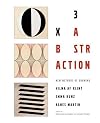
3x an Abstraction presents the extraordinary work of three important women artists whose innovative ideas and approaches to drawing had a significant impact on the history of modern abstraction. Hilma af Klint (Sweden, 1862–1944), Emma Kunz (Switzerland, 1892–1963), and Agnes Martin (Canada, b. 1912; U.S. citizenship 1950) approached geometric abstraction not as formalism, but as a means of structuring philosophical, scientific, and spiritual ideas. Using line, geometry, and the grid, show more each of these artists created diagrammatic drawings of their exploration of complex belief systems and restorative practices.
Noteworthy among the 150 illustrations in the volume are a large number of works by Hilma af Klint, reproduced here for the first time in a major publication; Emma Kunz’s drawings, exhibited in the United States for the first time in 2005; and approximately 20 early works by Agnes Martin. The book also includes writings by each of the artists, an introduction by Catherine de Zegher, seven essays by distinguished contributors, and brief statements from five contemporary artists.
By considering collectively the works of these three artists anew, 3x an Abstraction highlights the artistic contributions of af Klint and Kunz and revisits the work of Martin from a new perspective. show less
Noteworthy among the 150 illustrations in the volume are a large number of works by Hilma af Klint, reproduced here for the first time in a major publication; Emma Kunz’s drawings, exhibited in the United States for the first time in 2005; and approximately 20 early works by Agnes Martin. The book also includes writings by each of the artists, an introduction by Catherine de Zegher, seven essays by distinguished contributors, and brief statements from five contemporary artists.
By considering collectively the works of these three artists anew, 3x an Abstraction highlights the artistic contributions of af Klint and Kunz and revisits the work of Martin from a new perspective. show less
Inside the visible an elliptical traverse of 20th century art : in, of and from the feminine by M. Catherine de Zegher
see also: issue 1 of n.paraqdoxa for an interview with Catherine De Zegher (copy in bildwechsel)
From amazon.co.u:
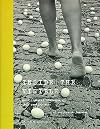
Published on the occasion of a major exhibition opening at the Institute of Contemporary Art in Boston, "Inside the Visible" presents a gendered reading of more than 30 women artists of vastly different background and experience. The work of important yet previously "invisible" figures is highlighted alongside the work of established artists to create a re-theorized interpretation show more of the art of this century. Structured in terms of recurrent cycles over time, "Inside the Visible" focuses on three periods (the 1930s and 1940s, the 1960s and 1970s, and the 1990s) that anticipated a wave of political repression, nationalism, and xenophobia, often stimulating artistic production that redefined practice. Illustrated essays document each artist in the collection. In addition, four general essays trace the connections among the artists. These take up such issues as why artistic recognition eluded certain artists and why their work is only just becoming visible today. They also address overlapping themes such as gender and sexuality; the intersection of racial, class, ethnic, sexual and regional identities; and the nature of the relationship between work and viewer. show less
From amazon.co.u:
Published on the occasion of a major exhibition opening at the Institute of Contemporary Art in Boston, "Inside the Visible" presents a gendered reading of more than 30 women artists of vastly different background and experience. The work of important yet previously "invisible" figures is highlighted alongside the work of established artists to create a re-theorized interpretation show more of the art of this century. Structured in terms of recurrent cycles over time, "Inside the Visible" focuses on three periods (the 1930s and 1940s, the 1960s and 1970s, and the 1990s) that anticipated a wave of political repression, nationalism, and xenophobia, often stimulating artistic production that redefined practice. Illustrated essays document each artist in the collection. In addition, four general essays trace the connections among the artists. These take up such issues as why artistic recognition eluded certain artists and why their work is only just becoming visible today. They also address overlapping themes such as gender and sexuality; the intersection of racial, class, ethnic, sexual and regional identities; and the nature of the relationship between work and viewer. show less
Jan 23, 2013German
You May Also Like


Associated Authors
Statistics
- Works
- 35
- Members
- 401
- Popularity
- #60,557
- Rating
- 4.3
- Reviews
- 4
- ISBNs
- 29
- Languages
- 5