
Andrea Seigel
Author of Like the Red Panda (Harvest Book)
Works by Andrea Seigel
Tagged
Common Knowledge
- Birthdate
- 1979
- Gender
- female
- Education
- Brown University
- Places of residence
- Los Angeles, California, USA
- Associated Place (for map)
- California, USA
Members
Reviews
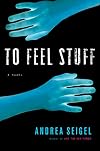
I was incredibly excited to read this, because I loved the author’s first novel, Like the Red Panda. This has the same sort of feel– deeply cynical narrator in a situation like a dark, twisted mirror version of your normal chick lit “girl meets boy,” careening towards an ending you’re almost sure will have more bitter than sweet. In Like the Red Panda, the main character was a so-called “perfect” student about to graduate from high school and go to a great college. Over the show more summer, she has problem with her foster parents, her friends, and gets back together with her drug-dealing ex-boyfriend she’s still sort of in love with. The snag? Well, she’s planning to kill herself. And no, it’s not that kind of novel. It’s snarky, it’s funny and at its best it isn’t so much sad as painful. So, you know, To Feel Stuff had a pretty high standard to rise up to.
And it did, for the most part. The similarities between the two novels are in sensibility and feel, not in plot (which is good) and therefore retained a lot of what made me love Like the Red Panda. The darkly cynical main character in To Feel Stuff is Elodie, a chronically ill student at Brown, so sick that she’s had to start living in the campus infirmary just to finish the school year. She’s not sick with anything specific—just a dozen different diseases of varying seriousness that it’s statistically impossible she could have contracted at the same time. And she’s seeing ghosts. A doctor interested in the medical mystery of her serial illnesses narrates part of the story as well, and is gradually convinced that her ghost-sightings are connected to her illnesses. The third narrative strand is completed by Chester, a wealthy, a-cappella singing jock anyone who’s spent any length of time at an ivy league institution would recognize. His life is changed dramatically when a random attacker smashes his knees with a crowbar, and he has to live in the infirmary as well. The romance between the two of them is incredibly deft and nuanced. At its best, this novel evokes the profoud ways that illness and injury, by removing the physical capabilities most of us take for granted, changes one’s perspective. It’s clear that neither Elodie nor Chester could have fallen in love had they met as their previously healthy selves. It required the strange world-apart of illness and the infirmary to bring them together.
The ending was bizarrely pat for such a subtle, nuanced story, however. It kind of left me with a bad taste in my mouth. Like the Red Panda is better, but To Feel Stuff is still a great book. show less
And it did, for the most part. The similarities between the two novels are in sensibility and feel, not in plot (which is good) and therefore retained a lot of what made me love Like the Red Panda. The darkly cynical main character in To Feel Stuff is Elodie, a chronically ill student at Brown, so sick that she’s had to start living in the campus infirmary just to finish the school year. She’s not sick with anything specific—just a dozen different diseases of varying seriousness that it’s statistically impossible she could have contracted at the same time. And she’s seeing ghosts. A doctor interested in the medical mystery of her serial illnesses narrates part of the story as well, and is gradually convinced that her ghost-sightings are connected to her illnesses. The third narrative strand is completed by Chester, a wealthy, a-cappella singing jock anyone who’s spent any length of time at an ivy league institution would recognize. His life is changed dramatically when a random attacker smashes his knees with a crowbar, and he has to live in the infirmary as well. The romance between the two of them is incredibly deft and nuanced. At its best, this novel evokes the profoud ways that illness and injury, by removing the physical capabilities most of us take for granted, changes one’s perspective. It’s clear that neither Elodie nor Chester could have fallen in love had they met as their previously healthy selves. It required the strange world-apart of illness and the infirmary to bring them together.
The ending was bizarrely pat for such a subtle, nuanced story, however. It kind of left me with a bad taste in my mouth. Like the Red Panda is better, but To Feel Stuff is still a great book. show less
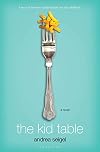
The Kid Table is Andrea Seigel's third book and her first for young adults. It was published in 2010, and there is talk of a possible movie adaptation, produced by Ivan Reitman.
The story follows the main character, 16-year-old Ingrid Bell, through different family events over the course of a year or so. It follows her and her five cousins who have been sitting at the "kid table" during family functions for as long as they can remember. The story opens at the Bar Mitzvah of their uncle who show more has decided to convert to judaism. It is here that Ingrid's older cousin Brianne, a psychology major, wonders aloud whether Ingrid might be a psychopath. From this point forward Ingrid's actions are judged with intense scrutiny by her family, especially after she laughs audibly at her uncle's heartfelt speech. The book follows Ingrid and her flirtation with Trevor, Brianne's boyfriend, over the course of a number of family events. Along the way her quirky cast of cousins develop and recover from eating disorders, try to get their parents to "out" them, and swim naked at a family barbecue. It all comes to a conclusion at a somewhat unorthodox wedding, where for the first time the cousins are no longer seated at a separate kid's table.
I didn't expect to enjoy this book as much as I did. For one thing, I hate almost all the YA fiction I have ever read. I usually find YA books unrealistic, cliched, and boring. But, an adult author who I admire said positive things about it and Andrea Seigel in general, so I decided it would be a good choice for this assignment. Though it did fall victim to some of the cliches of teen fiction (eating disorders, unrealistically "quirky" characters, and an ending right out of a terrible Little Miss Sunshine-esque feel good movie) for the most part I found the plot realistic and the characters endearing, especially the main character, Ingrid. I could empathize with a character who is judged for not feeling the intense range of emotions that are expected out of teenagers, because I felt a lot of pressure to feel and act this way when I was a teenager. Andrea Seigel's writing is crisp and enjoyable, as it manages to forego the overdramatic prose that seems to be in a lot of teen fiction. This is probably one of the only coming-of-age stories I have ever enjoyed, and I would recommend it to anyone, especially anyone with a large family who understands the dynamics of getting a ton of people together with nothing in common except for a last name. show less
The story follows the main character, 16-year-old Ingrid Bell, through different family events over the course of a year or so. It follows her and her five cousins who have been sitting at the "kid table" during family functions for as long as they can remember. The story opens at the Bar Mitzvah of their uncle who show more has decided to convert to judaism. It is here that Ingrid's older cousin Brianne, a psychology major, wonders aloud whether Ingrid might be a psychopath. From this point forward Ingrid's actions are judged with intense scrutiny by her family, especially after she laughs audibly at her uncle's heartfelt speech. The book follows Ingrid and her flirtation with Trevor, Brianne's boyfriend, over the course of a number of family events. Along the way her quirky cast of cousins develop and recover from eating disorders, try to get their parents to "out" them, and swim naked at a family barbecue. It all comes to a conclusion at a somewhat unorthodox wedding, where for the first time the cousins are no longer seated at a separate kid's table.
I didn't expect to enjoy this book as much as I did. For one thing, I hate almost all the YA fiction I have ever read. I usually find YA books unrealistic, cliched, and boring. But, an adult author who I admire said positive things about it and Andrea Seigel in general, so I decided it would be a good choice for this assignment. Though it did fall victim to some of the cliches of teen fiction (eating disorders, unrealistically "quirky" characters, and an ending right out of a terrible Little Miss Sunshine-esque feel good movie) for the most part I found the plot realistic and the characters endearing, especially the main character, Ingrid. I could empathize with a character who is judged for not feeling the intense range of emotions that are expected out of teenagers, because I felt a lot of pressure to feel and act this way when I was a teenager. Andrea Seigel's writing is crisp and enjoyable, as it manages to forego the overdramatic prose that seems to be in a lot of teen fiction. This is probably one of the only coming-of-age stories I have ever enjoyed, and I would recommend it to anyone, especially anyone with a large family who understands the dynamics of getting a ton of people together with nothing in common except for a last name. show less
from James:
Would have gone 3.5 stars, but alas! Thwarted by Goodreads.
I'm not this book's intended audience, but I'm always drawn to books that have pop music as a conceit. Unfortunately, this book didn't really go in the same direction as other YA novels by John Green or Rainbow Rowell. In fact, it reminded me instead of Suzzy Roche's Wayward Saints (a lot actually).
What did keep interest in this book, though was the premise of getting in the cast of an American Idol-type talent show. I'm show more not afraid to admit that I got sucked into that show's first season way back in 2002, almost before any current teens reading this book were even born (YiKES)! Some of this book's behind the scenes seemed totally plausible.
I enjoyed the book through the various pitfalls until it started to feel too much like a standard romance ready for a screenplay: boy meets girl, boy does something stupid, relationship in doubt, all's well that end's well. It's a formula that works, if that's what you're looking for. If you're looking for a touch more, try Roche's book. And if, like me, you can't get enough pop music references in music, go further with Nick Hornby. show less
Would have gone 3.5 stars, but alas! Thwarted by Goodreads.
I'm not this book's intended audience, but I'm always drawn to books that have pop music as a conceit. Unfortunately, this book didn't really go in the same direction as other YA novels by John Green or Rainbow Rowell. In fact, it reminded me instead of Suzzy Roche's Wayward Saints (a lot actually).
What did keep interest in this book, though was the premise of getting in the cast of an American Idol-type talent show. I'm show more not afraid to admit that I got sucked into that show's first season way back in 2002, almost before any current teens reading this book were even born (YiKES)! Some of this book's behind the scenes seemed totally plausible.
I enjoyed the book through the various pitfalls until it started to feel too much like a standard romance ready for a screenplay: boy meets girl, boy does something stupid, relationship in doubt, all's well that end's well. It's a formula that works, if that's what you're looking for. If you're looking for a touch more, try Roche's book. And if, like me, you can't get enough pop music references in music, go further with Nick Hornby. show less

The Little Bookworm
Despite being close to high school graduation, Ingrid is still assigned to the kid table with her cousins all about her age except for her four year cousin. When one of the cousins is suddenly assigned to the adult table, Ingrid and the other cousins try to figure out where the status of kid ends and adult begins.
I'm not sure how to express my love for this book. Because I really and truly loved it. There was just so much I related to and so much realness in this book.
I show more have a large family on both my parents' sides. But the side we spend the most time with is my father's. I have 10 cousins on my dad's side, making 12 with me and my sister. We are divided up into the Older Six and the Younger Six. The older ones are the ones who are much older than me; whose kids are closer to my age than my actual cousins. The younger ones are the ones closer in age to me. My best friend is my youngest first cousin. We are the ones who sat together all the time, who hung out on vacations. There was nothing so dramatic as what happens in this book, but I can completely relate to the whole idea of the Kid Table. I have my very own.
That being said, I completely loved Ingrid. Her wittiness, her need to make everyone love her, she is so great. She was so funny and there were quite a very laugh out loud moments in this book. I loved Cricket and even Brianne, the annoying cousin who I have a feeling that I am a lot like sometimes (B.S. in Psychology over here). The whole storyline about Brianne's boyfriend and Ingrid flirting felt very real. I liked the resolution for that and thought it was appropriate and hopeful though very dramatic which was fun.
I'm not sure I can express everything that this book said to me, especially without giving a lot of myself away. But it meant a lot to me and I think that might be enough. show less
Despite being close to high school graduation, Ingrid is still assigned to the kid table with her cousins all about her age except for her four year cousin. When one of the cousins is suddenly assigned to the adult table, Ingrid and the other cousins try to figure out where the status of kid ends and adult begins.
I'm not sure how to express my love for this book. Because I really and truly loved it. There was just so much I related to and so much realness in this book.
I show more have a large family on both my parents' sides. But the side we spend the most time with is my father's. I have 10 cousins on my dad's side, making 12 with me and my sister. We are divided up into the Older Six and the Younger Six. The older ones are the ones who are much older than me; whose kids are closer to my age than my actual cousins. The younger ones are the ones closer in age to me. My best friend is my youngest first cousin. We are the ones who sat together all the time, who hung out on vacations. There was nothing so dramatic as what happens in this book, but I can completely relate to the whole idea of the Kid Table. I have my very own.
That being said, I completely loved Ingrid. Her wittiness, her need to make everyone love her, she is so great. She was so funny and there were quite a very laugh out loud moments in this book. I loved Cricket and even Brianne, the annoying cousin who I have a feeling that I am a lot like sometimes (B.S. in Psychology over here). The whole storyline about Brianne's boyfriend and Ingrid flirting felt very real. I liked the resolution for that and thought it was appropriate and hopeful though very dramatic which was fun.
I'm not sure I can express everything that this book said to me, especially without giving a lot of myself away. But it meant a lot to me and I think that might be enough. show less
Awards


You May Also Like


Associated Authors
Statistics
- Works
- 7
- Members
- 611
- Popularity
- #41,143
- Rating
- 3.6
- Reviews
- 21
- ISBNs
- 12
- Languages
- 1
- Favorited
- 1