
Joseph Chilton Pearce
Author of The Crack in the Cosmic Egg: New Constructs of Mind and Reality
About the Author
Joseph Chilton Pearce was born in Pineville, Kentucky on January 14, 1926. During World War II, he served in the U.S. Army Air Corps. He received a Bachelor of Arts degree from the College of William and Mary, a Master of Arts degree from Indiana University, and did post-graduate studies at Geneva show more Theological College. He taught college humanities until the mid-1960s, and then wrote and lectured full-time. He taught workshops and gave lectures on the changing needs of children and the development of human society. He wrote several books including The Crack in the Cosmic Egg, The Biology of Transcendence, The Death of Religion and the Rebirth of Spirit, The Heart-Mind Matrix, Magical Child, Evolution's End, and The Bond of Power: Meditation and Wholeness. He died on August 23, 2016 at the age of 90. (Bowker Author Biography) show less
Works by Joseph Chilton Pearce
The Death of Religion and the Rebirth of Spirit: A Return to the Intelligence of the Heart (2007) 42 copies
Spiritual Initiation and the Breakthrough of Consciousness: The Bond of Power (2003) 26 copies, 1 review
Magical Child: 2 4 copies
Evolução da criança mágica, A 3 copies
Associated Works
The Last Hours of Ancient Sunlight: Waking Up to Personal and Global Transformation (1998) — Foreword — 549 copies, 8 reviews
Tagged
Common Knowledge
- Canonical name
- Pearce, Joseph Chilton
- Legal name
- Pearce, Joseph Chilton
- Birthdate
- 1926-01-14
- Gender
- male
- Education
- College of William and Mary (BA)
Indiana University (MA)
Geneva Theological College - Occupations
- author
- Organizations
- United States Army Air Corps (WWII)
- Nationality
- USA
- Birthplace
- Pineville, Kentucky, USA
- Associated Place (for map)
- Kentucky, USA
Members
Reviews

This is the only book I have ever thrown across the room in disgust. Honestly, I was open to whatever its message was (after all, I'd read John C. Lilly and Carlos Castenada, "experimented" as we used to say, and taken mind- bending philosophy classes). But the pretentious, garbled nonsense, and the author's love affair with his own profundity, grew to be too much. Just about every fourth "word" was in "quotation marks" to remind us that the "author" found "language" inadequate to express show more his great "truths" about "reality". As it turns out, he was right; it was inadequate.
I remember the sound that the book made as it splatted against the wall. Mortified, I hastened over to make sure it wasn't badly damaged.
Amazingly, there are still 82 copies out there in Library Thing. If one of them is my old paperback, I hope it's doing well. show less
I remember the sound that the book made as it splatted against the wall. Mortified, I hastened over to make sure it wasn't badly damaged.
Amazingly, there are still 82 copies out there in Library Thing. If one of them is my old paperback, I hope it's doing well. show less
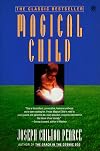
I wasn't that impressed with this book. While the author does have some very interesting ideas on child development, this book in an exercise in intellectual theory, not concrete action plans on how to raise children. There is no citation provided, but there is an extensive Notes section where Pierce elaborates on some points. While I agree with a lot of the author's particular views on the stages of child development, I ultimately found it just another take on Piaget's classic study of show more child development I read in college. This book is just a little hopelessly dated for my tastes. Pierce's writing style is phrased in an idealistic (kind of an ambiguous, hippie-dipppie) framework I just couldn't relate to.
The author's more recent publications dealing mostly with spirituality are much more interesting, relevant and pragmatic for me than this book. show less
The author's more recent publications dealing mostly with spirituality are much more interesting, relevant and pragmatic for me than this book. show less
"Magical Child, a classic work, profoundly questioned the current thinking on childbirth practices, parenting, and educating our chilrdren. Now its daring ideas about how Western society is damaging our children, and how we can better nurture them and ourselves, ring truer than ever. From the very instant of birth, says Joseph Chilton Pearce, the human child has only one concern: to learn all that there is to learn about the world. This planet is the child's playground, and nothing should show more interfere with a child's play. Raised this way, the Magical Child is a happy genius, capable of anything, equipped to fulfill his amazing potential.
Expanding on the ideas of internationally acclaimed child psychologist Jean Piaget, Pearce traces the growth of the mind-brain from birth to adulthood. He connects the alarming rise in autism, hyperkinetic behaviour, childhood schizophrenia, and adolescent suicide to the all too common errors we make in raising and educating our children. Then he shows how we can restore the astonishing wealth of creative intelligence that is the birthright of every human being. Pearce challenges all our notions about child rearing, and in the process challenges us to re-examine ourselves. Pearce's message is simple: it is never too late to play, for we are all Magical Children." show less
Expanding on the ideas of internationally acclaimed child psychologist Jean Piaget, Pearce traces the growth of the mind-brain from birth to adulthood. He connects the alarming rise in autism, hyperkinetic behaviour, childhood schizophrenia, and adolescent suicide to the all too common errors we make in raising and educating our children. Then he shows how we can restore the astonishing wealth of creative intelligence that is the birthright of every human being. Pearce challenges all our notions about child rearing, and in the process challenges us to re-examine ourselves. Pearce's message is simple: it is never too late to play, for we are all Magical Children." show less
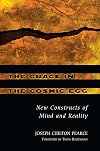
His psychological perspective may seem 'old hat' now, but Pearce posits that unless we have learned how to create our own reality as children (utilizing creative play), we tend to suffer from morose feelings of anxiety and isolation. See, also, _The Continuum Concept_ - a book that makes an even stronger case.
Lists
You May Also Like


Associated Authors
Statistics
- Works
- 21
- Also by
- 2
- Members
- 1,296
- Popularity
- #19,806
- Rating
- 4.0
- Reviews
- 11
- ISBNs
- 60
- Languages
- 6
- Favorited
- 1