
Pliny the Younger (0061–0113)
Author of The Letters
About the Author
Raised by his uncle Pliny the Elder, who was a scholar and industrious compiler of Natural History, Pliny the Younger intended his Letters for posterity and polished them with extreme care. He was an orator, statesman, and well-educated man of the world. He wrote with discretion on a variety of show more subjects, and without the bitterness of his friends Tacitus and Suetonius or the disgust for the social conditions of those troubled times found in the writings of his contemporaries Juvenal and Martial. In the introduction to the Loeb edition, Hutchinson wrote: "Melmoth's translation of Pliny's letters, published in 1746, not only delighted contemporary critics . . . but deservedly ranks as a minor English classic. Apart from its literary excellence, it has the supreme merit of reflecting the spirit of the original. . . . No modern rendering can capture the ease and felicity of Melmoth's; for they came of his living in a world like "Pliny's own."' (Bowker Author Biography) show less
Image credit: Cathedral of Santa Maria Assunta, Como. Wikipedia
Works by Pliny the Younger
Letters of Marcus Tullius Cicero with His Treatises on Friendship and Old Age and Letters of Gaius Plinius Caecilius Secundus (1981) — Contributor — 304 copies, 1 review
Martial and Pliny : Selections from Martial and Pliny the Younger : Edited with introduction, notes and vocabulary (1998) — Writer — 30 copies
Letters (Latin) 16 copies
Letters / Panegyricus 12 copies
The Letters of Pliny the Younger 6 copies
Letters, vols. 1 & 2 6 copies
Pliny: Correspondence with Trajan from Bithynia: Epistles X, 15-121 (Aris and Phillips Classical Texts) (1990) 5 copies
A sixth-century fragment of the letters of Pliny the Younger; a study of six leaves of an uncial manuscript preserved in (2012) — Contributor — 5 copies, 1 review
The letters of Pliny the consul: with occasional remarks. By William Melmoth, Esq; ... Vol. I 4 copies
Pliny : selections from the letters 4 copies
Lettere ai familiari 3 copies
Correspondance: Tome I: Livres I-III. (Collection Des Universites de France Serie Latine) (French and Latin Edition) (2002) 2 copies
The Letters, books 1-5 2 copies
Pliny's Letters: Books VI - X 2 copies
LibriVox Ghost Story Collection 004 2 copies
Письма 2 copies
Selections from Pliny's letters 2 copies
C. Plini Caecili Secundi: Epistularum Libri Novem. Epistularum Ad Traianum Liber. Panegyricus. (1903) 2 copies
The Letters of Pliny the Consul: With Occasional Remarks. by William Melmoth, Esq. the Third Edition, Corrected. of 2; Volume 1 (2018) 2 copies
Epistularum libri novem 2 copies
Lletres 1 copy
Voor altijd (Dutch Edition) 1 copy
Plinius Mladší : dopisy 1 copy
L'Art d'écrire 1 copy
The Letters, books 5-9 1 copy
Penegíric 1 copy
Lletres II 1 copy
Lletres, vol. 2 1 copy
Lletres, vol. 1 1 copy
Corresnpència amb Trajà 1 copy
Lletres Volum II 1 copy
Gaio Plinio Cecilio Secondo detto il giovane: comme s’arricettaie zizío: ovvero le lettere a Tacito sulla morte di Plinio il Vecchio tradotte in napoletano con testo latino a… (2018) 1 copy, 1 review
The Eruption of Vesuvius. Adapted from The Letters of Pliny with Notes, Test Papers, a Short Syntax, and a Vocabulary. (1937) 1 copy
C. Plini Carcili Secvndi 1 copy
Nowele Rzymskie — Contributor — 1 copy
Letters. With an English translation by William Melmoth, rev. by W.M.L. Hutchinson, Vol 2 (2012) 1 copy
Letters and Panegyrics I 1 copy
Epistolae et Panegyricus 1 copy
Panegirico di Traiano 1 copy
Lettres panégyrique de trajan. texte établi et traduit par anne-marie guillemin et marcel durry. 1 copy
Pliny Letters and Panegyricus I, II — Author — 1 copy
El Panegirico 1 copy
Selected Letters 1 copy
Pline le Jeune : Tome 4. Lettres. Livre 10. Panégyrique de Trajan [Panegyricus Traiani]. (1947) 1 copy
Pliny a Self Portrait 1 copy
Pliny's letters 1 copy
XII Panegyrici Latini 1 copy
Lettere scelte 1 copy
Letters, book III 1 copy
C. Plini Caecili Secundi : epistularum libri novem, epistularum ad traianum liber, panegyricus 1 copy
Lettere 1 copy
Lettres Tome I, II 1 copy
Les Lettres - Tome I 1 copy
Les Lettres - Tome II 1 copy
Letters and Panegyricus 1 copy
Associated Works
Readings and Exercises in Latin Prose Composition: From Antiquity to the Renaissance (2005) — Contributor — 48 copies
Masters of Roman prose from Cato to Apuleius : interpretative studies (1983) — Contributor — 26 copies
Grolier Classics: Les Miserables, Autobiography of Benjamin Franklin, French Revolution, Divine Comedy (1956) 19 copies
Library of the World's Best Mystery and Detective Stories: French, Italian, Spanish and Latin (2009) — Contributor — 18 copies
Erzählungen der Antike 1 copy
Tagged
Common Knowledge
- Canonical name
- Pliny the Younger
- Legal name
- Gaius Plinius Luci filius Caecilius Secundus
- Other names
- Cilo, Gaius Caecilius
Plinius Caecilius Secundus, Gaius - Birthdate
- 0061
- Date of death
- 0113
- Gender
- male
- Occupations
- lawyer
orator
writer
politician
military tribune
propraetor of the province of Pontus - Relationships
- Pliny the Elder (uncle, adoptive father)
- Nationality
- Roman Empire
- Birthplace
- Como, Italy
- Place of death
- Bithynia, Turkey
- Map Location
- Italy
Members
Discussions
A Pliny in Challenge: Loeb Classical Library (July 2021)
Reviews

Pliny had the great fortune to live during the time of Emperor Trajan, when the Roman Empire was at its very peak and only near the start of its Five Good Emperors period. Like Pepys' diary, Pliny's letters have added value for their describing important events and people of his time, such as the eruption of Mount Vesuvius (which killed his uncle, the elder Pliny) and persecution of the Christianity cult. We also get to know the author himself. Pliny's letters are a pleasure to read, show more expressing his creativity and wisdom, and they vary in tone according to whom he writes. He takes great pride in his writing skill, proved not only in what he says about his poetry, his speeches and other prose but also in the careful text of the letters themselves. He puts the greatest care into his letters for Trajan and for Tacitus with his desire to impress.
Pliny's times are orderly under Trajan's rule, but he has not forgotten the difficulties and chaos under the former reigns of Nero and Domitian. Pliny played his cards right and was always able to duck sanction in those darker periods, but many of his more outspoken friends could not. In the letters we see his generous feelings and financial support, including for families he knows were hard done by as he makes a kind of restitution for his survivor's guilt. Besides the evidence of these acts and observations on others' writings and his own, he often brings up unexpected topics which include a description of ghosts, and a story he's heard about an especially friendly dolphin. As the Penguin edition's introduction states, the personae of ancient Greeks are a mystery to us but many Romans have left us letters, and Pliny's are the best of all. show less
Pliny's times are orderly under Trajan's rule, but he has not forgotten the difficulties and chaos under the former reigns of Nero and Domitian. Pliny played his cards right and was always able to duck sanction in those darker periods, but many of his more outspoken friends could not. In the letters we see his generous feelings and financial support, including for families he knows were hard done by as he makes a kind of restitution for his survivor's guilt. Besides the evidence of these acts and observations on others' writings and his own, he often brings up unexpected topics which include a description of ghosts, and a story he's heard about an especially friendly dolphin. As the Penguin edition's introduction states, the personae of ancient Greeks are a mystery to us but many Romans have left us letters, and Pliny's are the best of all. show less
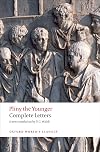
"I'm really enjoying reading Pliny. It's strange, but I really identify with him. He's just this guy, he's got his job to do, but what he really cares about is literature, reading it, writing a bit of it, talking about it with his friends."
"Okay."
"I've been imagining myself as Pliny when I write emails. Will this go down in posterity? How can I be a little wittier? Should I redraft this?"
"You know he owned half of Italy, right? And you have a part time job at a liberal arts college?"
That show more really happened. Trust my wife to bring me down a peg. Anyway, I stand by what I said, even though Pliny was massively rich and hob-nobbed with emperors. These letters are really interesting, provided you can get into at least two of the categories:
i) Literary criticism
ii) Legal affairs
iii) Bureaucratic wheedling
iv) Personal lives of Roman aristocrats
v) Gossip with famous historians
vi) Minutiae of governing a province
I enjoyed them all to begin with. The legal affairs got pretty dull pretty quickly, though they're great history, I'm sure; long discussions of cases Pliny presented or witnessed. The wheedling was pleasant, since it's nice to see office politics on a truly grand scale, but palls soon enough. The minutiae is, again, good for historians, but fairly dull reading (dear emperor, should I let these people build a swimming pool? Yours, Pliny). The literary criticism was, of course, my favorite for some time; it's thrilling to read someone's letters about Martial. They're also interesting because of the weight put on style. We could learn something there; Pliny even makes the argument that writing works with vapid content is more challenging, because the style has to be so much more rigorous (rather than, e.g., not writing things with vapid content). The personal lives stuff was okay for a while, but there are only so many grand performance eulogies you can read before they blend into one another. Gossip between Pliny, Tacitus, and Suetonius, however, was always fascinating, just because of who they are.
The point of all this is: the book offers diminishing returns. Books VIII and IX in particular, are deadly boring. But well worth flicking through the rest. show less
"Okay."
"I've been imagining myself as Pliny when I write emails. Will this go down in posterity? How can I be a little wittier? Should I redraft this?"
"You know he owned half of Italy, right? And you have a part time job at a liberal arts college?"
That show more really happened. Trust my wife to bring me down a peg. Anyway, I stand by what I said, even though Pliny was massively rich and hob-nobbed with emperors. These letters are really interesting, provided you can get into at least two of the categories:
i) Literary criticism
ii) Legal affairs
iii) Bureaucratic wheedling
iv) Personal lives of Roman aristocrats
v) Gossip with famous historians
vi) Minutiae of governing a province
I enjoyed them all to begin with. The legal affairs got pretty dull pretty quickly, though they're great history, I'm sure; long discussions of cases Pliny presented or witnessed. The wheedling was pleasant, since it's nice to see office politics on a truly grand scale, but palls soon enough. The minutiae is, again, good for historians, but fairly dull reading (dear emperor, should I let these people build a swimming pool? Yours, Pliny). The literary criticism was, of course, my favorite for some time; it's thrilling to read someone's letters about Martial. They're also interesting because of the weight put on style. We could learn something there; Pliny even makes the argument that writing works with vapid content is more challenging, because the style has to be so much more rigorous (rather than, e.g., not writing things with vapid content). The personal lives stuff was okay for a while, but there are only so many grand performance eulogies you can read before they blend into one another. Gossip between Pliny, Tacitus, and Suetonius, however, was always fascinating, just because of who they are.
The point of all this is: the book offers diminishing returns. Books VIII and IX in particular, are deadly boring. But well worth flicking through the rest. show less
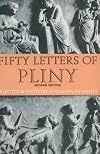
I have had this little book since I was a student and have read it several times. I have other editions of Pliny, Westcott's selection of 100 letters, Sir Roger Mynor's Oxford Classical Text, etc. This may be my favorite. It is portable and largely self-contained (although the glossary has more holes than a sieve). Sherwin White's selection is excellent: the letters on Vesuvius and on the Christians of Bithynia, the daily rounds in town and at the villa, accounts of several notable Romans show more (Pliny's uncle, Verginius Rufus, Martial, etc.), recitations. In short a fine depiction of upper crust life in the high empire, in pleasant and readable Latin. show less
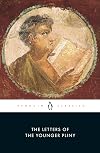
[From “Books of the Year”, Sunday Times, 25 December 1955; reprinted in A Traveller in Romance, ed. John Whitehead, Clarkson N. Potter, 1984, p. 123:]
The third book I wish to speak about I came upon entirely by accident. I have some three thousand books in my house and now and then, looking at the serried shelves, I realise that I haven’t one I want to read. On one such occasion I caught sight of The Letters of Pliny the Younger (Loeb Library. 2 vols. Heinemann). I had bought my show more edition sixty years ago, when I was trying to make acquaintance with Latin literature, but had never read it. For want of anything more tempting, I took it from its shelf and began to read. I found it entrancing. I hasten to add that I read it in the admirable translation which accompanied the Latin text.
Pliny was a Roman gentleman of wealth who flourished during the reign of the Emperor Trajan. He had been governor of a province, but had retired to live on his estates and went to Rome only when duty called. He was house-proud, and his description of a house he had built, with its swimming pool and central heating, is very engaging. He was addicted to writing indifferent verse, which he was overproud to read to his friends. He was very generous, but well aware that his generosity was praiseworthy, and always ready to oblige a friend. He was vain in a childish and rather charming way. The more you read his letters the more you feel at home with him.
He was in fact very like one of those cultured English noblemen of the nineteenth century who, after years in the public service, spent their declining years on their ancestral estates and went up to London only when they felt it incumbent on them to oppose some amendment in the House of Lords. Some of them, too, published now and again a slim volume of light verse.
The Letters of Pliny the Younger can be read with pleasure without any classical learning and with only the most elementary knowledge of Roman history. They make a most enjoyable bedside book. show less
The third book I wish to speak about I came upon entirely by accident. I have some three thousand books in my house and now and then, looking at the serried shelves, I realise that I haven’t one I want to read. On one such occasion I caught sight of The Letters of Pliny the Younger (Loeb Library. 2 vols. Heinemann). I had bought my show more edition sixty years ago, when I was trying to make acquaintance with Latin literature, but had never read it. For want of anything more tempting, I took it from its shelf and began to read. I found it entrancing. I hasten to add that I read it in the admirable translation which accompanied the Latin text.
Pliny was a Roman gentleman of wealth who flourished during the reign of the Emperor Trajan. He had been governor of a province, but had retired to live on his estates and went to Rome only when duty called. He was house-proud, and his description of a house he had built, with its swimming pool and central heating, is very engaging. He was addicted to writing indifferent verse, which he was overproud to read to his friends. He was very generous, but well aware that his generosity was praiseworthy, and always ready to oblige a friend. He was vain in a childish and rather charming way. The more you read his letters the more you feel at home with him.
He was in fact very like one of those cultured English noblemen of the nineteenth century who, after years in the public service, spent their declining years on their ancestral estates and went up to London only when they felt it incumbent on them to oppose some amendment in the House of Lords. Some of them, too, published now and again a slim volume of light verse.
The Letters of Pliny the Younger can be read with pleasure without any classical learning and with only the most elementary knowledge of Roman history. They make a most enjoyable bedside book. show less
Lists
Awards


You May Also Like


Associated Authors
Statistics
- Works
- 220
- Also by
- 18
- Members
- 2,993
- Popularity
- #8,524
- Rating
- 3.8
- Reviews
- 44
- ISBNs
- 147
- Languages
- 12
- Favorited
- 5
