
Nicola Upson
Author of An Expert in Murder
About the Author
Image credit: http://www.nicolaupson.com/nicola_upson/index.html
Series
Works by Nicola Upson
Associated Works
Helaine Blumenfeld OBE: Tree of Life at Ely Cathedral — Contributor — 2 copies
Helaine Blumenfeld: Hard Beauty — Introduction — 1 copy
Helaine Blumenfeld: Het Depot — Contributor — 1 copy
Helaine Blumenfeld: The Space Within — Contributor — 1 copy
Tagged
Common Knowledge
- Birthdate
- 1970
- Gender
- female
- Education
- University of Cambridge (Downing College)
- Occupations
- journalist
- Awards and honors
- Escalator Award (Arts Council England)
- Agent
- Karolina Sutton (Curtis Brown | UK)
Jennifer Joel (ICM | US)
Daisy Meyrick (Curtis Brown | translations) - Nationality
- UK
- Places of residence
- Cambridge, Cambridgeshire, England, UK
Cornwall, England, UK
Bury St. Edmunds, Suffolk, England (birth) - Associated Place (for map)
- England, UK
Members
Reviews
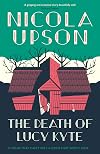
My first Upson and her fifth in the series. I thought I wasn't going to be able to get through the book when I realised that a fictionalised Josephine Tey was the protagonist. However, the writing and the characterisation made me stay, as well as Upson's own reasonings that I read online.
The plot itself was fascinating and I thought very well-researched in establishing its time period and location. It wasn't till I finished the book and was looking it up online that I found out that the show more crime was based on a true story! If I had known beforehand, I probably would've been put off reading it. The Red House was so effectively evoked that its fictional renovation was a relief to me. At what point does a true crime story turn into historical fiction?
As I had read this after a Winspear's Maisie Dobbs, it was very interesting to compare the two: the art style of the covers, the hidden emotional centre of the female detective protagonist, the darkness of human nature that they explore. But all the characters in Lucy Kyte were beautifully realised, messy, irrational, trying and not quite achieving their best - whereas Dobbs' are glossed up and pure of heart. Lucy's arc and Hester's decline haunt me. The pessimism towards family and relationships in Kyte was also a strange breath of fresh air.
I know it's fictional, but now I'm invested in Marta, and I want to know what sounds like an incredible (but not in a good way) backstory and I want to be privy to more of the fictional Tey's antisocial inner thoughts. More Upsons! show less
The plot itself was fascinating and I thought very well-researched in establishing its time period and location. It wasn't till I finished the book and was looking it up online that I found out that the show more crime was based on a true story! If I had known beforehand, I probably would've been put off reading it. The Red House was so effectively evoked that its fictional renovation was a relief to me. At what point does a true crime story turn into historical fiction?
As I had read this after a Winspear's Maisie Dobbs, it was very interesting to compare the two: the art style of the covers, the hidden emotional centre of the female detective protagonist, the darkness of human nature that they explore. But all the characters in Lucy Kyte were beautifully realised, messy, irrational, trying and not quite achieving their best - whereas Dobbs' are glossed up and pure of heart. Lucy's arc and Hester's decline haunt me. The pessimism towards family and relationships in Kyte was also a strange breath of fresh air.
I know it's fictional, but now I'm invested in Marta, and I want to know what sounds like an incredible (but not in a good way) backstory and I want to be privy to more of the fictional Tey's antisocial inner thoughts. More Upsons! show less
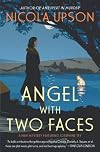
So. Many. Secrets. Yes, almost every cozy set in a British village reveals a collection of secrets; however, author Nicola Upson’s second novel in a series featuring Scottish novelist and playwright Josephine Tey has more — and worse — secrets than most.
Handsome, charming, reckless Harry Pinching has finally met his end at the age of 26, leaving behind his devastated sisters, his twin Morwenna and 14-year-old Loveday. The presumption is that it was an accident. However, Tey’s friend show more Detective Inspector Archie Penrose, down in his native Loe, Cornwall, for a holiday with Tey, begins to wonder if Pinching’s death wasn’t murder.
Upson packs Angel with Two Faces with so many twists, and the ending will come as quite a shock. In this novel, unlike the first, the relationship between Tey and Penrose doesn’t ring false. There’s no sophomore slump for Upson! No. 2 improves on the debut novel, An Expert in Murder, in every way. show less
Handsome, charming, reckless Harry Pinching has finally met his end at the age of 26, leaving behind his devastated sisters, his twin Morwenna and 14-year-old Loveday. The presumption is that it was an accident. However, Tey’s friend show more Detective Inspector Archie Penrose, down in his native Loe, Cornwall, for a holiday with Tey, begins to wonder if Pinching’s death wasn’t murder.
Upson packs Angel with Two Faces with so many twists, and the ending will come as quite a shock. In this novel, unlike the first, the relationship between Tey and Penrose doesn’t ring false. There’s no sophomore slump for Upson! No. 2 improves on the debut novel, An Expert in Murder, in every way. show less
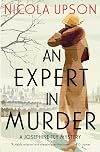
First Line: Had she been superstitious, Josephine Tey might have realised the odds were against her when she found that her train, the early-morning express from the Highlands, was running an hour and a half late.
No one could be more surprised than Josephine Tey that her play, Richard of Bordeaux, is the hit of the 1934 theatre season in London. She boards the train from Inverness to London to attend the play's final week and strikes up a conversation with a very personable young girl in the show more same compartment. To Josephine's shock, the young girl is murdered shortly after the train reaches London.
A friend of Josephine's, Detective Inspector Archie Penrose, is convinced that the murder is connected to the play, and that Josephine herself is in danger. When a second murder occurs, the policeman and the playwright find themselves working together to catch a killer.
Author Nicola Upson has done a marvelous job of blending fact and fiction in the character of Josephine Tey. (I don't read many "classic" or "golden age" mysteries, but even I know about Josephine Tey and her wonderful books. She is a very under-appreciated writer.) Upson's historical detail isn't at all overwhelming, and sets just the right tone in transporting a reader into the 1930s.
I had managed to identify the killer and a cohort, but I did not deduce the Why of it all because I was enjoying the characters, the setting, and the twists and turns of the plot so much. I look forward to reading the other books in the series, and would recommend them to anyone who has enjoyed reading Jacqueline Winspear's Maisie Dobbs series, the Bess Crawford series written by Charles Todd, or the books of Suzanne Arruda. show less
No one could be more surprised than Josephine Tey that her play, Richard of Bordeaux, is the hit of the 1934 theatre season in London. She boards the train from Inverness to London to attend the play's final week and strikes up a conversation with a very personable young girl in the show more same compartment. To Josephine's shock, the young girl is murdered shortly after the train reaches London.
A friend of Josephine's, Detective Inspector Archie Penrose, is convinced that the murder is connected to the play, and that Josephine herself is in danger. When a second murder occurs, the policeman and the playwright find themselves working together to catch a killer.
Author Nicola Upson has done a marvelous job of blending fact and fiction in the character of Josephine Tey. (I don't read many "classic" or "golden age" mysteries, but even I know about Josephine Tey and her wonderful books. She is a very under-appreciated writer.) Upson's historical detail isn't at all overwhelming, and sets just the right tone in transporting a reader into the 1930s.
I had managed to identify the killer and a cohort, but I did not deduce the Why of it all because I was enjoying the characters, the setting, and the twists and turns of the plot so much. I look forward to reading the other books in the series, and would recommend them to anyone who has enjoyed reading Jacqueline Winspear's Maisie Dobbs series, the Bess Crawford series written by Charles Todd, or the books of Suzanne Arruda. show less

"An Expert In Murder" is a well-written, rigorously-plotted, character-driven novel with a perfect period feel that I loved most for its empathy and compassion.
I'm a fan of Josephine Tay. I think "Brat Farrar" is exceptional. So, when I saw that someone had written a series of mysteries with Josephine Tay as the central character, I was intrigued and had to try one.
I think combining fictional characters and real characters in an historical setting is very challenging. It's in danger of show more becoming either a dumping ground for research or an appropriation of the real people involved or the interpolation of inappropriately modern perspectives. When one is writing about a writer, there's also the challenge of getting the tone of the writing right.
Nicola Upson meets all of these challenges with great skill and manages to produce a compelling novel with strong characters.
"An Expert In Murder" is set in London in the 1930s and revolves around deaths associated with a production of Josephine Tays most successful play.
The first thing that struck me about the book was that that tone of the writing was a good fit for the period, without becoming a pastiche. The period was presented in a way that felt authentic and unromanticised. I was given an insight into the emotional state of a generation haunted by The Great War and already standing in the shadow of the next one. It spoke to the unbridgeable divide between those who'd experienced the trenches and the tunnels those who hadn't. It conveyed the sense of loss on such a scale that no-one was left untouched.
Theatrical life was drawn with energy and realism and what seems to be a deep knowledge of what the London stage was like in the thirties when John Guilgood was the lead in Tey's play (he doesn't appear by name in the book).
The plot is complicated and surprising and has evil at its heart. There is a suspect-rich environment with many people keeping secrets. The characters are strong and their relationships and moods shift in realistic ways.
By the end of the novel, the strongest impression I was left with was not a clever mystery puzzle but of a deeply compassionate story about the damage done to men by the war, the vulnerability of women and how the theatre could help them achieve independence and the small ways in which we all fail ourselves and each other.
I enjoyed this novel and I'll definitely be reading more in the series.
If you think you'd enjoy it too, I strongly recommend that audiobook version. Sandra Duncan's narration is outstanding. show less
I'm a fan of Josephine Tay. I think "Brat Farrar" is exceptional. So, when I saw that someone had written a series of mysteries with Josephine Tay as the central character, I was intrigued and had to try one.
I think combining fictional characters and real characters in an historical setting is very challenging. It's in danger of show more becoming either a dumping ground for research or an appropriation of the real people involved or the interpolation of inappropriately modern perspectives. When one is writing about a writer, there's also the challenge of getting the tone of the writing right.
Nicola Upson meets all of these challenges with great skill and manages to produce a compelling novel with strong characters.
"An Expert In Murder" is set in London in the 1930s and revolves around deaths associated with a production of Josephine Tays most successful play.
The first thing that struck me about the book was that that tone of the writing was a good fit for the period, without becoming a pastiche. The period was presented in a way that felt authentic and unromanticised. I was given an insight into the emotional state of a generation haunted by The Great War and already standing in the shadow of the next one. It spoke to the unbridgeable divide between those who'd experienced the trenches and the tunnels those who hadn't. It conveyed the sense of loss on such a scale that no-one was left untouched.
Theatrical life was drawn with energy and realism and what seems to be a deep knowledge of what the London stage was like in the thirties when John Guilgood was the lead in Tey's play (he doesn't appear by name in the book).
The plot is complicated and surprising and has evil at its heart. There is a suspect-rich environment with many people keeping secrets. The characters are strong and their relationships and moods shift in realistic ways.
By the end of the novel, the strongest impression I was left with was not a clever mystery puzzle but of a deeply compassionate story about the damage done to men by the war, the vulnerability of women and how the theatre could help them achieve independence and the small ways in which we all fail ourselves and each other.
I enjoyed this novel and I'll definitely be reading more in the series.
If you think you'd enjoy it too, I strongly recommend that audiobook version. Sandra Duncan's narration is outstanding. show less
Lists
British Mystery (1)
Awards


You May Also Like


Associated Authors
Statistics
- Works
- 17
- Also by
- 4
- Members
- 3,025
- Popularity
- #8,443
- Rating
- 3.6
- Reviews
- 161
- ISBNs
- 205
- Languages
- 3
- Favorited
- 1
