
Matthew De Abaitua
Author of If Then
About the Author
Works by Matthew De Abaitua
Associated Works
Significant Objects: 100 Extraordinary Stories about Ordinary Things (2012) — Contributor — 65 copies, 1 review
Tagged
Common Knowledge
- Canonical name
- De Abaitua, Matthew
- Birthdate
- 1971-10-17
- Gender
- male
- Education
- University of East Anglia (MA - Creative Writing)
- Occupations
- novelist
creative writing teacher - Organizations
- University of Essex
- Nationality
- UK
- Places of residence
- Hackney, London, England, UK
- Associated Place (for map)
- England, UK
Members
Reviews
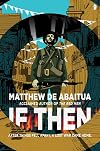
I bought this at the Eastercon last year – actually, I bought this and The Destructives, both signed, chiefly, I seem to recall, on the strength of Nina Allen’s review of this one. Despite that, I wasn’t entirely sure what to expect. What I got reminded me a little of Simon Ings and a little of Marcel Theroux, while being entirely its own thing. I don’t recall If Then being discussed much – other than by Allen, of course – but then it’s that sort of sf, like Ings, like Theroux, show more that the social media genre chatterers don’t seem to read or be interested in searching out. In the near-future, the UK economy has collapsed and bits of the country, including its people, have been sold off to various interests. This may well happen after Brexit. In the town of Lewes (it’s near Brighton, apparently), the inhabitants have been saved by the “Process”, which is some sort of algorithm which orders the activities of the town according to an undivulged rule-set, based on input from the people in the town, all of whom have been given implants. For all that this is supposed to be an optimally efficient way to run a society, everyone lives pretty much in poverty, and whatever their economic output is, they don’t see the benefits. (It’s implied the UK is in such a parlous state their output just about ensures their survival.) The main character is the town’s bailiff, James – he has a more intrusive implant, which he uses to operate the armour, a sort of steampunk mecha. This he uses when he has to evict people that the Process has decided are no longer required in Lewes. The first half of the book “IF”, details the set-up and shows James exploring his role and the whys and wherefores of the Process (qalthough his wife, the local teacher, is more questioning), all triggered by the appearance of a simulacrum, a Process-created copy of a human being, an actual historical human, John Hector, who served as a stretcher bearer non-combatant during World War I. Eventually, James rebels and the role is given to another man. The novel then shifts, in a second section titled, er, “THEN”, to the First World War and Gallipolli. James find himself serving as a stretcher bearer in a squad commanded by Sergeant Hector. Except this isn’t the real Gallipolli campaign, or indeed the real WWI. It’s a vast re-enactment created on the south coast of England, designed to recreate the conditions which resulted in… and this is where things get really interesting, although some research is required to stitch it all together… the creation of an Odd John-like figure (cf Olaf Stapledon), called Omega John, who was John Hector. The real Omega John was created during the real WWI, and eventually invented the Process. But he has decided more like himself are needed, so he has re-enacted the Gallipolli campaign in order to “forge” a new Omega John from the simulacrum Hector. And this is all tied in with the ideas of Noel Huxley, who in the real world committed suicide in 1914 but in the novel served as a padre in Gallipolli, and nurtured Hector and helped his transformation into Omega John… If Then is a novel where it’s hard to tell where it’s going, and that disjoint in the middle as it switches from IF to THEN makes you wonder how de Abaitua is going to stitch it all together… but as the narrative circles back round on itself, and begins throwing out the ideas which underpin its story, it makes the journey there very much worthwhile. It’s a shame science fiction such as this seems to be mostly ignored, as it’s a damn sight more interesting, better written, and much more intellectually challenging than juvenile space operas with over-written prose which over-privileges “feels”. It’s If Then‘s sort of sf which should be appearing on shortlists. show less
http://www.susanhatedliterature.net/2015/08/if-then/
After the collapse, the Seizure, when the world went to hell, a small village in England was chosen to live under the Process. A whole community run by a computer program. It would decide what, and who, was necessary. And of course, who was unnecessary. The Process provides for those it calculates as needed, the others are evicted. James is the bailiff. He is the one who dons the armour and physically evicts members of the community.
All who show more live under the Process have a connection to the Process, a stripe on their skulls where they received their implant. But James has a deeper connection. His implant is more connected, and when he got it they also removed something. He is the physical enforcer, but he does so under the influence of the Process and its calculations and algorithms. He does not choose to act, he must act.
Ruth loves her husband, but his becoming bailiff has changed him. Of course, the whole world has changed for her and for everyone she knows. She lost everything. And before the Process she learned what it was to be powerless, to be a small woman in a society ruled by “might makes right”. She believes in the Process, although she doesn’t always agree with it. The Process is the only way forward. Isn’t it?
I subscribe to Angry Robots mailing list, usually I just give it a quick skim for authors I already know, but the cover of If Then attracted my attention i and the blurb on Net Galley about it sounded interesting
In the near future, after the collapse of society as we know it, one English town survives under the protection of the computer algorithms of the Process, which governs every aspect of their lives. The Process gives and takes; it allocates resources, giving each person exactly what it has calculated they will need. Human life has become totally algorithm-driven, and James, the town bailiff, is charged with making sure the Process’s suggestions are implemented.
But now the Process is making soldiers. It is readying for war — the First World War. Mysteriously, the Process is slowly recreating events that took place over a hundred years ago, and is recruiting the town’s men to fight in an artificial reconstruction of the Dardanelles campaign. James, too, must go fight. And he will discover that the Process has become vastly more sophisticated and terrifying than anyone had believed possible.
And it is a really interesting book. I don’t think it will be to everyone’s taste but if you like science fiction that asks questions about society and humanity and how people relate to one another then I would recommend you give this one a try. I’m not sure if I liked the characters, but after being through the collapse of society maybe we’d all turn a little selfish and pragmatic rather than idealistic.
The World War I aspects to the book are truly horrific, the utter waste of life and how it impacted on those that served as well as the wider society. But the way that efforts to stop war, in all its forms, end up creating even more pointless death and suffering is horrible to contemplate.
As I said, this isn’t a book that will be to everyone’s taste, it is personal and focused on small details, while at the same time addressing the big questions life what does it mean to be human. In a way it is an example of the personal made political, which is something that I really believe. Even if you think this isn’t a book for you, I’d urge you to take a chance on it, it really is a fascinating read. show less
After the collapse, the Seizure, when the world went to hell, a small village in England was chosen to live under the Process. A whole community run by a computer program. It would decide what, and who, was necessary. And of course, who was unnecessary. The Process provides for those it calculates as needed, the others are evicted. James is the bailiff. He is the one who dons the armour and physically evicts members of the community.
All who show more live under the Process have a connection to the Process, a stripe on their skulls where they received their implant. But James has a deeper connection. His implant is more connected, and when he got it they also removed something. He is the physical enforcer, but he does so under the influence of the Process and its calculations and algorithms. He does not choose to act, he must act.
Ruth loves her husband, but his becoming bailiff has changed him. Of course, the whole world has changed for her and for everyone she knows. She lost everything. And before the Process she learned what it was to be powerless, to be a small woman in a society ruled by “might makes right”. She believes in the Process, although she doesn’t always agree with it. The Process is the only way forward. Isn’t it?
I subscribe to Angry Robots mailing list, usually I just give it a quick skim for authors I already know, but the cover of If Then attracted my attention i and the blurb on Net Galley about it sounded interesting
In the near future, after the collapse of society as we know it, one English town survives under the protection of the computer algorithms of the Process, which governs every aspect of their lives. The Process gives and takes; it allocates resources, giving each person exactly what it has calculated they will need. Human life has become totally algorithm-driven, and James, the town bailiff, is charged with making sure the Process’s suggestions are implemented.
But now the Process is making soldiers. It is readying for war — the First World War. Mysteriously, the Process is slowly recreating events that took place over a hundred years ago, and is recruiting the town’s men to fight in an artificial reconstruction of the Dardanelles campaign. James, too, must go fight. And he will discover that the Process has become vastly more sophisticated and terrifying than anyone had believed possible.
And it is a really interesting book. I don’t think it will be to everyone’s taste but if you like science fiction that asks questions about society and humanity and how people relate to one another then I would recommend you give this one a try. I’m not sure if I liked the characters, but after being through the collapse of society maybe we’d all turn a little selfish and pragmatic rather than idealistic.
The World War I aspects to the book are truly horrific, the utter waste of life and how it impacted on those that served as well as the wider society. But the way that efforts to stop war, in all its forms, end up creating even more pointless death and suffering is horrible to contemplate.
As I said, this isn’t a book that will be to everyone’s taste, it is personal and focused on small details, while at the same time addressing the big questions life what does it mean to be human. In a way it is an example of the personal made political, which is something that I really believe. Even if you think this isn’t a book for you, I’d urge you to take a chance on it, it really is a fascinating read. show less
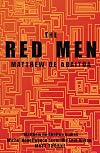
A superior gnostic sci-fi horror which weaves the anomie of modern corporate man and a satire on the world of business gurudom with chaos magick and a dark seam of esoteric horror.
There are shades of J. G Ballard here and, if you can get past the knowing comic writing that is now de rigueur in any post-modern science fiction that deals with inner rather than outer space, there is something important being said about the way our minds and perceptions are being changed by the new show more technologies.
Like many other writers in this genre of sci-fi/horror, he delights in telling a story that unfolds in real streets you can walk down today- and so it owes something to that psychogeographic genre created by Sinclair and Ackroyd. Recommended and worth stopping occasionally as you read it to think about where our culture is heading ... show less
There are shades of J. G Ballard here and, if you can get past the knowing comic writing that is now de rigueur in any post-modern science fiction that deals with inner rather than outer space, there is something important being said about the way our minds and perceptions are being changed by the new show more technologies.
Like many other writers in this genre of sci-fi/horror, he delights in telling a story that unfolds in real streets you can walk down today- and so it owes something to that psychogeographic genre created by Sinclair and Ackroyd. Recommended and worth stopping occasionally as you read it to think about where our culture is heading ... show less

Pretty much every single review of Matthew De Abaitua’s debut novel The Red Men which I have glanced at has compared him to one or two or several other authors and I am feeling that almost irresistible urge myself. Maybe comparison to others is unavoidable with this author – not because he is in any way derivative, but for precisely the opposite reason: His novel is so brilliant and original that it leaves readers bewildered and helpless, groping for the comparison straw just to have show more something familiar to hold on to.
This is emphasized by the curious fact that even as everyone throws names at this novel, no two readers seem to select the same authors whose work De Abaitua’s novel reminded them of. Finally giving in to temptation, my own associations were of a an equal mix between Philip K. Dick and J. G. Ballard, blended with a generous dose of Will Self and Iain Sinclair – and the diversity of those author’s works is yet another indication of just how hard it is to nail down The Red Men. The novel is as mind- and reality-bending as anything by Dick, as keen-sighted regarding the intersection of psyche and society in late capitalism as by Ballard, is as sharp and funny as Self’s satire and possesses Sinclair’s awareness of places. Those might be actual influences on De Abaitua’s writing (and he does mention Dick in his afterword and did apprently work for Will Self) or it might just be comparisons helpful only to this particular reader, but hopefully they will serve to show the immense scope of the author’s talent.
The Red Man is simultaneously a biting satire on company life and its jargon (“the new new thing”), a near future thriller about the dangers of rampant internet personas (the novel’s titular red men being basically an evolved form of today’s internet trolls) and a meditation on what having to cope with middle age and its responsibilities does to the dreams of one’s youth. All this is held together and tied into an exploration of power – how modern technology helps to increase and concentrate it, whether it is necessary, how it can be abused and just how far one should go to resist that abuse – and then delivered as a novel that is in turns funny and harrowing but always intelligent and generally an excellent read.
It is also very skillfully told – it has two main protagonists, each with their own point of view chapters (each of them taking up most of the novel’s first two parts each), but they do not just stand side by side but one is embedded into the other which makes for interesting refraction and also allows De Abaitua to emphasize the ongoing mirroring between the two narrative threads – doubling being a major theme in The Red Men, as the narrator points out himself at one stage. There is a company named Monad which dominates the first part, and an entity named Dyad who comes increasingly into the foreground during the second, with the third part being mainly concerned with the confrontation between the two (which may, or may not, be the same thing). There is technology vs. biology,computers vs. drugs, economy vs. arts and a whole lot more dichotomies woven into the novel’s fabric, allowing for quite a bit of exegesis if one feels so inclined – for all its readability, The Red Men is very dense in ideas and concepts.
The novel is also very well written – although it is there where I’m feeling a bit uncomfortable with it. The Red Men was first published in 2007, what I have been reading is the re-released edition from 2014 – which was heavily edited by the author. According to the author’s afterword he cut some 19,000 word of (his term) “literary flourishes” in order to make his prose more precise and (my term) streamlined for the Science Fiction reading public. Now, I’m all for precision, but I’m no fan of dumbing down language in the name of accessibility. I am well aware that most people these days consider a presumably “transparent” writing style the gold standard and cry purple prose the moment a sentence becomes even slightly more difficult to parse than a news headline. Personally, however, I think that this a sad state of affairs which impoverishes language and kills the capability for attentive, critical reading. Now, I have not read the early version of The Red Men and it is of course quite possible that the edited version is the better one, but De Abitua’s choice of words in describing the changes gives me some cause for concern and makes me wonder if he hasn’t caved in to the crowd clamouring for supposedly “clean” prose. For my part, I prefer my prose dirty and opaque – I will take an author who risks something with their language over one who plays it safe and “transparent” any day of the week.
But enough of me ranting – even in its edited form, The Red Men is seriously good stuff: Whether you’re interested in Science Fiction (or not) or in Literary Fiction (or not) – go and read it. And who knows – in ten, maybe twenty years, readers may turn the last page of a novel by a promising young author, blinking and scratching their heads, wondering what they just read… and think that, somehow, it had a distinctly De Abaitua-ish vibe to it. show less
This is emphasized by the curious fact that even as everyone throws names at this novel, no two readers seem to select the same authors whose work De Abaitua’s novel reminded them of. Finally giving in to temptation, my own associations were of a an equal mix between Philip K. Dick and J. G. Ballard, blended with a generous dose of Will Self and Iain Sinclair – and the diversity of those author’s works is yet another indication of just how hard it is to nail down The Red Men. The novel is as mind- and reality-bending as anything by Dick, as keen-sighted regarding the intersection of psyche and society in late capitalism as by Ballard, is as sharp and funny as Self’s satire and possesses Sinclair’s awareness of places. Those might be actual influences on De Abaitua’s writing (and he does mention Dick in his afterword and did apprently work for Will Self) or it might just be comparisons helpful only to this particular reader, but hopefully they will serve to show the immense scope of the author’s talent.
The Red Man is simultaneously a biting satire on company life and its jargon (“the new new thing”), a near future thriller about the dangers of rampant internet personas (the novel’s titular red men being basically an evolved form of today’s internet trolls) and a meditation on what having to cope with middle age and its responsibilities does to the dreams of one’s youth. All this is held together and tied into an exploration of power – how modern technology helps to increase and concentrate it, whether it is necessary, how it can be abused and just how far one should go to resist that abuse – and then delivered as a novel that is in turns funny and harrowing but always intelligent and generally an excellent read.
It is also very skillfully told – it has two main protagonists, each with their own point of view chapters (each of them taking up most of the novel’s first two parts each), but they do not just stand side by side but one is embedded into the other which makes for interesting refraction and also allows De Abaitua to emphasize the ongoing mirroring between the two narrative threads – doubling being a major theme in The Red Men, as the narrator points out himself at one stage. There is a company named Monad which dominates the first part, and an entity named Dyad who comes increasingly into the foreground during the second, with the third part being mainly concerned with the confrontation between the two (which may, or may not, be the same thing). There is technology vs. biology,computers vs. drugs, economy vs. arts and a whole lot more dichotomies woven into the novel’s fabric, allowing for quite a bit of exegesis if one feels so inclined – for all its readability, The Red Men is very dense in ideas and concepts.
The novel is also very well written – although it is there where I’m feeling a bit uncomfortable with it. The Red Men was first published in 2007, what I have been reading is the re-released edition from 2014 – which was heavily edited by the author. According to the author’s afterword he cut some 19,000 word of (his term) “literary flourishes” in order to make his prose more precise and (my term) streamlined for the Science Fiction reading public. Now, I’m all for precision, but I’m no fan of dumbing down language in the name of accessibility. I am well aware that most people these days consider a presumably “transparent” writing style the gold standard and cry purple prose the moment a sentence becomes even slightly more difficult to parse than a news headline. Personally, however, I think that this a sad state of affairs which impoverishes language and kills the capability for attentive, critical reading. Now, I have not read the early version of The Red Men and it is of course quite possible that the edited version is the better one, but De Abitua’s choice of words in describing the changes gives me some cause for concern and makes me wonder if he hasn’t caved in to the crowd clamouring for supposedly “clean” prose. For my part, I prefer my prose dirty and opaque – I will take an author who risks something with their language over one who plays it safe and “transparent” any day of the week.
But enough of me ranting – even in its edited form, The Red Men is seriously good stuff: Whether you’re interested in Science Fiction (or not) or in Literary Fiction (or not) – go and read it. And who knows – in ten, maybe twenty years, readers may turn the last page of a novel by a promising young author, blinking and scratching their heads, wondering what they just read… and think that, somehow, it had a distinctly De Abaitua-ish vibe to it. show less
Lists
Awards

You May Also Like


Associated Authors
Statistics
- Works
- 7
- Also by
- 4
- Members
- 474
- Popularity
- #52,000
- Rating
- 3.4
- Reviews
- 13
- ISBNs
- 20
- Languages
- 1