
Walter Macken (1915–1967)
Author of Seek the Fair Land
About the Author
Series
Works by Walter Macken
Wiekslag boven Connemara 1 copy
Det skønne frie land 1 copy
Associated Works
Vader is de beste — Author — 3 copies
Tagged
Common Knowledge
- Canonical name
- Macken, Walter
- Birthdate
- 1915-05-03
- Date of death
- 1967-04-22
- Gender
- male
- Occupations
- actor
novelist
dramatist - Nationality
- Ireland
- Birthplace
- Galway, Ireland
- Places of residence
- Galway, Ireland (birth | death)
- Place of death
- Galway, Ireland
- Associated Place (for map)
- Galway, Ireland
Members
Reviews
I've always had a hard time engaging with Ireland as a subject for fiction. It's like a teenager being embarrassed by their Dad, even though they love their Dad they can't stand to see him up in front of everyone carrying on and expecting people to take him seriously. So maybe I'm finally out of that difficult teenage phase once and for all.
This is pure brilliant.
Dominick MacMahon and his two children and a priest flee the Cromwellian massacre of Drogheda. There is as much horror and show more brutality ahead of them as their is behind - can they find a place to live without fear? The soldier Murdoc who Dominick saves twice might be able to provide it for them, but he may have to sell his very soul to the devil to do it - the repulsive Coote, ruler of Connaught.
The oddest thing about this wonderful book is the presence of Sebastian, the priest. Such a saintly figure should rankle a bit, yet it's possible to detect ambiguity under the surface of his depiction. It's hard for many modern Irish readers not to view Catholicism as a malignant force in Irish history, yet so welded to the Irish identity and clung to so strongly by the oppressed masses (while all the time the Spanish Inquisition is merrily doing its thing.) So when Sebastian starts to preach - particularly his denouncing Murdoc and Columba - it's natural to despise him from our point of view. And yet Sebastian is a saintly man, full of love and kindness, and he himself is not giving the people anything they do not desperately crave. He embodies the courage of the type as well as the subtle, corrupting, oppressive misogyny and conservatism. Isn't that just like us, as more than one character notes of the Irish temperament through the book.
Anyway, this is written at a level close to perfection, whether it is describing people or places or psychological states or brutal horrors. it is a big tale of small people surviving wretched misery and nightmare, but its achievement as a novel and its humanity transcends the degradations of its subject. A classic for a reason. show less
This is pure brilliant.
Dominick MacMahon and his two children and a priest flee the Cromwellian massacre of Drogheda. There is as much horror and show more brutality ahead of them as their is behind - can they find a place to live without fear? The soldier Murdoc who Dominick saves twice might be able to provide it for them, but he may have to sell his very soul to the devil to do it - the repulsive Coote, ruler of Connaught.
The oddest thing about this wonderful book is the presence of Sebastian, the priest. Such a saintly figure should rankle a bit, yet it's possible to detect ambiguity under the surface of his depiction. It's hard for many modern Irish readers not to view Catholicism as a malignant force in Irish history, yet so welded to the Irish identity and clung to so strongly by the oppressed masses (while all the time the Spanish Inquisition is merrily doing its thing.) So when Sebastian starts to preach - particularly his denouncing Murdoc and Columba - it's natural to despise him from our point of view. And yet Sebastian is a saintly man, full of love and kindness, and he himself is not giving the people anything they do not desperately crave. He embodies the courage of the type as well as the subtle, corrupting, oppressive misogyny and conservatism. Isn't that just like us, as more than one character notes of the Irish temperament through the book.
Anyway, this is written at a level close to perfection, whether it is describing people or places or psychological states or brutal horrors. it is a big tale of small people surviving wretched misery and nightmare, but its achievement as a novel and its humanity transcends the degradations of its subject. A classic for a reason. show less

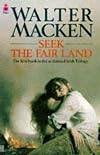
God that cover.
Irony of being a middle-aged middle-class Irishman living in the 21st century and trying to lose a bit of weight while reading about people starving in the 19th century. It's not even the Great Hunger, it's one of the earlier famines of 1826. Oh good lord. This is my history, our legacy. We cry into our whiskey and curse the sassenach and the treachery of our fellow Irishmen and lament the great suffering and the appalling injustice, which were a byword for backward and show more repressive agrarian policies.
Before we get to the famine, though, there's the life of Dualta Duane, who flees Galway after knocking a landlord's son off his horse. Fired by anger at the general awfulness of landlordism, he dabbles in rural agitation, but finds at the end he has no stomach for wanton destruction and murder even in a good cause. He settles in a Clare valley, but tithes and rents and gale days and cronyism and corruption squeezing the poor unmercifully, trouble is never very far away, despite the best efforts of the great Liberator, Daniel O'Connell, who strides the land like a behemoth, driving the country towards Emancipation and Repeal.
Dualta is an engaging and likable hero, his decency and good nature sorely tested by his times. will he survive? Will his family? Will anyone? The last few chapters are a guided tour of hell, but Macken is sure-footed and clear-eyed and guides us through the grief and horror to the point where there can be a future again, however frail. show less
Irony of being a middle-aged middle-class Irishman living in the 21st century and trying to lose a bit of weight while reading about people starving in the 19th century. It's not even the Great Hunger, it's one of the earlier famines of 1826. Oh good lord. This is my history, our legacy. We cry into our whiskey and curse the sassenach and the treachery of our fellow Irishmen and lament the great suffering and the appalling injustice, which were a byword for backward and show more repressive agrarian policies.
Before we get to the famine, though, there's the life of Dualta Duane, who flees Galway after knocking a landlord's son off his horse. Fired by anger at the general awfulness of landlordism, he dabbles in rural agitation, but finds at the end he has no stomach for wanton destruction and murder even in a good cause. He settles in a Clare valley, but tithes and rents and gale days and cronyism and corruption squeezing the poor unmercifully, trouble is never very far away, despite the best efforts of the great Liberator, Daniel O'Connell, who strides the land like a behemoth, driving the country towards Emancipation and Repeal.
Dualta is an engaging and likable hero, his decency and good nature sorely tested by his times. will he survive? Will his family? Will anyone? The last few chapters are a guided tour of hell, but Macken is sure-footed and clear-eyed and guides us through the grief and horror to the point where there can be a future again, however frail. show less

Stephen Riordan loves his home, remote Connemara in rural Ireland. He works his father’s land, fishes, hunts, and sometimes poaches with his friend Michilin. With his mother dead from cancer and his unkind father often drunk, Stephen realizes he may have to leave to make his mark on the world as a writer.
He falls in love with Kathleen Finnerty, whose brother Malachai is the odious bailiff that has been trying to catch Stephen and Michilin poaching for years.
After a fight with his father, show more Stephen makes his way to Galway, where he intends to earn enough money to move to Dublin with Kathleen. Tragedy interferes with his plans, and Stephen’s life takes an unintended turn.
Walter Macken lovingly describes life in Connemara in glowing terms; life in the city less so, but always with warmth and life. Quench The Moon is a wonderful and tragic story of Ireland in the 1940s. show less
He falls in love with Kathleen Finnerty, whose brother Malachai is the odious bailiff that has been trying to catch Stephen and Michilin poaching for years.
After a fight with his father, show more Stephen makes his way to Galway, where he intends to earn enough money to move to Dublin with Kathleen. Tragedy interferes with his plans, and Stephen’s life takes an unintended turn.
Walter Macken lovingly describes life in Connemara in glowing terms; life in the city less so, but always with warmth and life. Quench The Moon is a wonderful and tragic story of Ireland in the 1940s. show less

Published in 1950, Rain on the Wind is set in a fishing village on Galway Bay in the west of Ireland. The fishermen set to sea for days in sturdy hand-built boats powered by the wind in their sails. They are becoming an anachronism, as is their way of life.
The story follows Mico, born to be a fisherman, from childhood to manhood. Mico is a gentle giant, slow of mind, strong, principled. He has a red birthmark on his face that he’s self-conscious about. Mico’s father and grandfather are show more fishermen and he’s followed in their footsteps. Mico’s mother favors his brother, Tommy, but she’s the only person that does.
The story follows the rhythms of coastal Ireland and the ocean that dominates existence there. The characters, humanity and drama make for a satisfying and timeless novel. show less
The story follows Mico, born to be a fisherman, from childhood to manhood. Mico is a gentle giant, slow of mind, strong, principled. He has a red birthmark on his face that he’s self-conscious about. Mico’s father and grandfather are show more fishermen and he’s followed in their footsteps. Mico’s mother favors his brother, Tommy, but she’s the only person that does.
The story follows the rhythms of coastal Ireland and the ocean that dominates existence there. The characters, humanity and drama make for a satisfying and timeless novel. show less
Lists
Awards


You May Also Like


Associated Authors
Statistics
- Works
- 31
- Also by
- 2
- Members
- 1,187
- Popularity
- #21,659
- Rating
- 3.9
- Reviews
- 12
- ISBNs
- 90
- Languages
- 4
- Favorited
- 3