

Uwe Lehmann
Author of Antigone
Works by Uwe Lehmann
Hamburger Lesehefte : Johann Wolfgang von Goethe : Faust zweiter Teil (1987) — Editor — 52 copies, 2 reviews
Hamburger Lesehefte : Johann Wolfgang von Goethe : Wilhelm Meisters Lehrjahre (2011) — Editor — 18 copies
Hamburger Lesehefte : Rainer Maria Rilke : Aufzeichnungen des Malte Laurids Brigge (1910) — Editor — 8 copies
Hamburger Lesehefte plus Königs Materialien : Johann Wolfgang von Goethe : Die Leiden des jungen Werthe (2019) 3 copies
Hamburger Lesehefte plus Königs Materialien : Gottfried Keller : Romeo und Julia auf dem Dorfe (2022) — Mitwirkender — 1 copy
Tagged
Common Knowledge
- Gender
- male
Members
Discussions
Sophocles's Antigone in Ancient History (April 2009)
Reviews
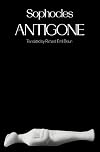
I re-read Antigone (translated by Richard Emil Braun) today June 17, 2020, before giving my copy to my 16 year old granddaughter to read. Must be the third or fourth time I've read it. It'll be her first.
How remarkable that a 2,500 year old play should still speak to us. Words from Ancient Greece, from a time when that funny old god Zeus was supreme and war was waged as an unthinkable face-to-face brutality of swords, down to our time, our high-tech-global-speed-of-light world with things show more like DNA and drones. Will there be meaning for my granddaughter's first reading? I think so.
When I first read it at age 14, in another long ago time of the 1970s, I related to it from a budding feminist perspective. Today I see its parallel lessons in the massive Black Lives Matter protests. Protesters of thousands and thousands of Antigones (and Antigonuses) buck against a stubborn power that has lost its moral code, refuses to budge, and fights against the divinely inherent rights of humanity. Makes me wonder what parallels my granddaughter might find with the world when she's my age. I can't imagine. But, they will be there.
What I didn't understand in my youth but see clearly now, is that this is a cycle that will -- and must be -- played out by all the generations, all over the world.
At the end, Kreon is personally demolished. Of the pain of his folly and result of his stubbornness, he cries out, "It leaps on me, it crushes." In all these intervening years since the play was written, there have been thousands of Kreons, some also crushed. But even more Antigones, locked in the clash with the powerful by the empowered still willing to fight face-to-face brutality.
The play ends with advice for leaders, "To be sensible and to be pious are the first and last of happiness." The message is from the chorus, the story is of Kreon, but the title is Antigone. show less
How remarkable that a 2,500 year old play should still speak to us. Words from Ancient Greece, from a time when that funny old god Zeus was supreme and war was waged as an unthinkable face-to-face brutality of swords, down to our time, our high-tech-global-speed-of-light world with things show more like DNA and drones. Will there be meaning for my granddaughter's first reading? I think so.
When I first read it at age 14, in another long ago time of the 1970s, I related to it from a budding feminist perspective. Today I see its parallel lessons in the massive Black Lives Matter protests. Protesters of thousands and thousands of Antigones (and Antigonuses) buck against a stubborn power that has lost its moral code, refuses to budge, and fights against the divinely inherent rights of humanity. Makes me wonder what parallels my granddaughter might find with the world when she's my age. I can't imagine. But, they will be there.
What I didn't understand in my youth but see clearly now, is that this is a cycle that will -- and must be -- played out by all the generations, all over the world.
At the end, Kreon is personally demolished. Of the pain of his folly and result of his stubbornness, he cries out, "It leaps on me, it crushes." In all these intervening years since the play was written, there have been thousands of Kreons, some also crushed. But even more Antigones, locked in the clash with the powerful by the empowered still willing to fight face-to-face brutality.
The play ends with advice for leaders, "To be sensible and to be pious are the first and last of happiness." The message is from the chorus, the story is of Kreon, but the title is Antigone. show less
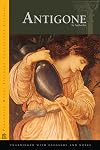
There are so many things to say about this most famous play by the ancient Greek writer Sophocles, I actually do not know where to begin. Let me start by addressing the most significant point: every single character is characterized in a remarkably ambiguous way.
Naturally, the focus lies on Antigone herself (but do not be misled, it was not Sophocles who gave the title). She is often portrayed as the heroine of resistance against blind state power, the defender of a more respectful, humane show more approach, and she is that of course, but she is not only that. The way Sophocles depicts her can lead you, with just as many arguments, to see in her a case of extreme stubbornness—in the negative sense, that is—someone who is unable or simply unwilling to see the other point of view, and who even wallows in her role as a martyr (when her sister Ismene suddenly joins her, she becomes angry that she is taking over her role). Incidentally, she is the only one in the entire play who does not doubt, who never changes her point of view; even the fate of her fiancé Haemon leaves her cold.
Then there is Creon, in whom we like to see the hard-hearted tyrant, and naturally there are arguments for that too. Many of his pronouncements are also downright condescending and misogynistic. But Sophocles succeeds just as well in portraying him as the responsible leader who keeps the collective interest in mind and realizes that to cook, one simply has to break eggs. Even he eventually changes his mind, albeit too late and somewhat out of self-interest.
Then Ismene, Antigone's sister, embodies the viewpoint of the woman who wavers, who wants to be pragmatic, bows to power, and is ultimately persuaded by her sister. She perhaps comes across slightly less convincingly.
And then there is Haemon, the son of Creon and thus also Antigone's fiancé. Sophocles first presents him as the voice of reason. Haemon even uses cunning and rhetoric to convince his father to be accommodating, but resolutely chooses the path of radicalism when pointing out his opposition, and in this he is no less adept than Antigone.
Antigone and Creon naturally stand out, but Sophocles makes it quite difficult to determine exactly which side he is on, and that is cleverly done. Or rather: I get the impression that Sophocles takes neither side, for he makes it clear that he condemns both of them for their obtuse radicalism. Both Antigone and Creon go astray in their stubbornness; in that sense, the moralizing lesson in the final lines of this play is clear: “Wisdom is by far the greatest Condition for happiness. One must never be impious towards gods. Great arrogance Pays for its boastfulness With great misfortunes. Wisdom is acquired with age.” Amen.
And with all that, Sophocles also skillfully demonstrates that there are multiple sides to a situation, that there are, as it were, multiple truths that might be equally legitimate from a certain standpoint. This will be music to the ears of postmodernists. And that is without even mentioning the tight composition, the sharp dialogues, and the choral reflections. This is rightly still *the* classic of Antiquity.
You can find a few reflections on historical aspects of this piece in my History account on Goodreads: https://www.goodreads.com/review/show/8550160708.
As an exception, I give this play a rating, because of its qualities and ever-relevant message. show less
Naturally, the focus lies on Antigone herself (but do not be misled, it was not Sophocles who gave the title). She is often portrayed as the heroine of resistance against blind state power, the defender of a more respectful, humane show more approach, and she is that of course, but she is not only that. The way Sophocles depicts her can lead you, with just as many arguments, to see in her a case of extreme stubbornness—in the negative sense, that is—someone who is unable or simply unwilling to see the other point of view, and who even wallows in her role as a martyr (when her sister Ismene suddenly joins her, she becomes angry that she is taking over her role). Incidentally, she is the only one in the entire play who does not doubt, who never changes her point of view; even the fate of her fiancé Haemon leaves her cold.
Then there is Creon, in whom we like to see the hard-hearted tyrant, and naturally there are arguments for that too. Many of his pronouncements are also downright condescending and misogynistic. But Sophocles succeeds just as well in portraying him as the responsible leader who keeps the collective interest in mind and realizes that to cook, one simply has to break eggs. Even he eventually changes his mind, albeit too late and somewhat out of self-interest.
Then Ismene, Antigone's sister, embodies the viewpoint of the woman who wavers, who wants to be pragmatic, bows to power, and is ultimately persuaded by her sister. She perhaps comes across slightly less convincingly.
And then there is Haemon, the son of Creon and thus also Antigone's fiancé. Sophocles first presents him as the voice of reason. Haemon even uses cunning and rhetoric to convince his father to be accommodating, but resolutely chooses the path of radicalism when pointing out his opposition, and in this he is no less adept than Antigone.
Antigone and Creon naturally stand out, but Sophocles makes it quite difficult to determine exactly which side he is on, and that is cleverly done. Or rather: I get the impression that Sophocles takes neither side, for he makes it clear that he condemns both of them for their obtuse radicalism. Both Antigone and Creon go astray in their stubbornness; in that sense, the moralizing lesson in the final lines of this play is clear: “Wisdom is by far the greatest Condition for happiness. One must never be impious towards gods. Great arrogance Pays for its boastfulness With great misfortunes. Wisdom is acquired with age.” Amen.
And with all that, Sophocles also skillfully demonstrates that there are multiple sides to a situation, that there are, as it were, multiple truths that might be equally legitimate from a certain standpoint. This will be music to the ears of postmodernists. And that is without even mentioning the tight composition, the sharp dialogues, and the choral reflections. This is rightly still *the* classic of Antiquity.
You can find a few reflections on historical aspects of this piece in my History account on Goodreads: https://www.goodreads.com/review/show/8550160708.
As an exception, I give this play a rating, because of its qualities and ever-relevant message. show less

Antigone is a play that has plenty of resonances for modern audiences. It's often been used in situations where there's a conflict between political authority and private conscience - Athol Fugard's theatre company during the Apartheid years famously created a play in which two prisoners on Robben Island are staging Antigone, for instance.
The plot is surprisingly simple - two of Antigone’s brothers, fighting on opposite sides, have been killed during a failed attack on Thebes. Their uncle show more Kreon, the ruler of Thebes, has decreed that the rebel’s body may not be buried. Antigone defies the order, going out to perform a symbolic burial rite for her brother. Bad things ensue, for Kreon and everyone else.
For the Greek viewer, this is presumably meant to be primarily about the after-effects of the Oedipus story rumbling on, and about Kreon acting ultra vires by trying to assert authority over the dead, but Sophokles doesn't allow you to see it simply as the tragedy of Kreon. Antigone’s clarity of conscience is at the heart of the play, and is what has made it such a beacon for people confronted by oppressive government.
Anne Carson's translation is obviously meant in the first place to make this play performable by modern actors in front of a general audience. She avoids archaism and "high language" and keeps the text simple and punchy. Since the actors are going to find the right cadences when they speak the lines anyway, she doesn't bother with punctuation, which initially makes it rather odd to read, but isn't really a problem - it forces you to imagine the sound of the lines. show less
The plot is surprisingly simple - two of Antigone’s brothers, fighting on opposite sides, have been killed during a failed attack on Thebes. Their uncle show more Kreon, the ruler of Thebes, has decreed that the rebel’s body may not be buried. Antigone defies the order, going out to perform a symbolic burial rite for her brother. Bad things ensue, for Kreon and everyone else.
For the Greek viewer, this is presumably meant to be primarily about the after-effects of the Oedipus story rumbling on, and about Kreon acting ultra vires by trying to assert authority over the dead, but Sophokles doesn't allow you to see it simply as the tragedy of Kreon. Antigone’s clarity of conscience is at the heart of the play, and is what has made it such a beacon for people confronted by oppressive government.
Anne Carson's translation is obviously meant in the first place to make this play performable by modern actors in front of a general audience. She avoids archaism and "high language" and keeps the text simple and punchy. Since the actors are going to find the right cadences when they speak the lines anyway, she doesn't bother with punctuation, which initially makes it rather odd to read, but isn't really a problem - it forces you to imagine the sound of the lines. show less

My version was translated by Elizabeth Wyckoff in 1954. I would recommend a better translation as this one softens the drama in the language. Maybe try the one by Seamus Heaney titled [Burial at Thebes], as it's highly regarded and I like the quotes other readers shared.
This was my second time reading this, and it was much better this time. Actually, it was quite magnificent. I first read it, in 2016, as one of several classical Greek plays, and it didn't stand out for me. Instead of the show more direct drama of some Sophocles plays, which is there, the power of this play lies in its implied questions and its sense of rebellion, and the convoluted sense of logic behind that.
This time I read in isolation and the dramatic elements leapt out. How Antigone is more powerful by not making any practical sense but yet remaining true to her form. How king Creon is undermined by making complete sense, because he wraps himself in pride that gets tighter and more fragile, setting up a kind of self-destruct button. The key elements here include logic, family, pride, honor, and reputation. How do we manage complexities that require us to step outside the cold logic and into a larger world of human sensibility?
2025
https://www.librarything.com/topic/375106#9035756 show less
This was my second time reading this, and it was much better this time. Actually, it was quite magnificent. I first read it, in 2016, as one of several classical Greek plays, and it didn't stand out for me. Instead of the show more direct drama of some Sophocles plays, which is there, the power of this play lies in its implied questions and its sense of rebellion, and the convoluted sense of logic behind that.
This time I read in isolation and the dramatic elements leapt out. How Antigone is more powerful by not making any practical sense but yet remaining true to her form. How king Creon is undermined by making complete sense, because he wraps himself in pride that gets tighter and more fragile, setting up a kind of self-destruct button. The key elements here include logic, family, pride, honor, and reputation. How do we manage complexities that require us to step outside the cold logic and into a larger world of human sensibility?
2025
https://www.librarything.com/topic/375106#9035756 show less
Lists
Five star books (1)
. (1)
Favourite Books (1)
Plays I Like (1)
Awards


You May Also Like


Associated Authors
Statistics
- Works
- 22
- Members
- 6,846
- Popularity
- #3,569
- Rating
- 3.7
- Reviews
- 86
- ISBNs
- 342
- Languages
- 22