
Miles J. Unger
Author of Magnifico: The Brilliant Life and Violent Times of Lorenzo de' Medici
About the Author
Miles J. Unger is the author of four books: Michelangelo: A Life in Six Masterpieces, Machiavelli: A Biography, Magnifico: The Brilliant Life and Violent Times of Lorenzo de' Medici, and The Watercolors of Winslow Homer. He has written for numerous national and regional newspapers and magazines, show more including The New York limes, The Boston Globe, Boston Magazine, and ARTnews. show less
Image credit: Miles J. Unger
Works by Miles J. Unger
Tagged
Common Knowledge
- Canonical name
- Unger, Miles J.
- Gender
- male
- Occupations
- art historian
journalist - Nationality
- USA
- Places of residence
- Florence, Italy
Boston, Massachusetts, USA - Associated Place (for map)
- USA
Members
Reviews
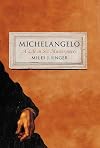
Caution: Genius at Work
I can honestly say I’ve never read a biography as gripping as Michelangelo. His life was a constant controversy. He made enemies, he dodged (metaphorical) bullets, and he made art. He was an unpleasant misogynist who ironically adored nothing more than portraying the human body. He was universally recognized as the greatest, within his own lifetime. He lied and embellished, but his art speaks for itself. It all makes for a great read.
He was doubly cursed; he lived in show more interesting times, and was an interesting character. Michelangelo’s greatest achievement was to fuse the artist and his work. That is a huge transition point, centered on Michelangelo in this warts and all biography. Because in addition to taking art in a whole new direction, complementing rather than being subservient to religion, Michelangelo turns out to be arrogant, obnoxious, self-centered, narcissistic, antisocial, overbearing and uncaring about any of it. Despite it all, he was the first superstar of art.
He never married, and there were of course questions about his sexual preferences, what with all those nude males he clearly preferred. He deflected them all by saying his art was all the wife he could handle. Later in life, he risked having close relationships with younger men. He was a drama queen; his favorite tactic was to threaten to quit unless he got everything he wanted. And he quit often anyway. He was a notorious abandoner, starting projects and never completing them. There are far more of them than completed works.
Despite abusing his body with little food, minimal rest, and zero care, he lived into his eighties. He outlived nine popes, and worked with five of them. They were often personal friends of his from childhood, which allowed him to be even more arrogant and petulant than he would otherwise. He seemed to have written it all down in letters and poems, and it is juicily reproduced here. This biography is as flesh and blood as Michelangelo’s sculptures and paintings, a fitting framework if ever there was one. show less
I can honestly say I’ve never read a biography as gripping as Michelangelo. His life was a constant controversy. He made enemies, he dodged (metaphorical) bullets, and he made art. He was an unpleasant misogynist who ironically adored nothing more than portraying the human body. He was universally recognized as the greatest, within his own lifetime. He lied and embellished, but his art speaks for itself. It all makes for a great read.
He was doubly cursed; he lived in show more interesting times, and was an interesting character. Michelangelo’s greatest achievement was to fuse the artist and his work. That is a huge transition point, centered on Michelangelo in this warts and all biography. Because in addition to taking art in a whole new direction, complementing rather than being subservient to religion, Michelangelo turns out to be arrogant, obnoxious, self-centered, narcissistic, antisocial, overbearing and uncaring about any of it. Despite it all, he was the first superstar of art.
He never married, and there were of course questions about his sexual preferences, what with all those nude males he clearly preferred. He deflected them all by saying his art was all the wife he could handle. Later in life, he risked having close relationships with younger men. He was a drama queen; his favorite tactic was to threaten to quit unless he got everything he wanted. And he quit often anyway. He was a notorious abandoner, starting projects and never completing them. There are far more of them than completed works.
Despite abusing his body with little food, minimal rest, and zero care, he lived into his eighties. He outlived nine popes, and worked with five of them. They were often personal friends of his from childhood, which allowed him to be even more arrogant and petulant than he would otherwise. He seemed to have written it all down in letters and poems, and it is juicily reproduced here. This biography is as flesh and blood as Michelangelo’s sculptures and paintings, a fitting framework if ever there was one. show less
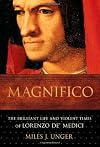
A detailed, well researched look at the life of Lorenzo the Magnificent, Lorenzi di Piero di Cosimo de'Medici. A surprisingly engaging and engrossing read for a story rooted in Renaissance Italy, this book makes clear Lorenzo's impact on Florence at the height of its powers. Ultimately a sad tale, because this true Renaissance man died too young and his works were undone too quickly, this book makes one want to read more about the Medici family. I would have preferred more information about show more Lorenzo's personal life - his wife and children are only briefly alluded to in the book - but one is limited to the sources available, I expect. A fascinating look at a fascinating man in a fascinating period of time. show less
This is probably as good a biography of Michelangelo as any I have read. I liked the way Unger used his "six masterpieces" to structure the narrative. M comes across as a grumpy genius. He accepted more commissions than he could complete. Once hired, he imposed his own vision on his art regardless of the desires of his patrons, including numerous popes. He had somewhat of an inferiority complex, coming from a less than wealthy family, and lacking a formal education. He insisted on artists show more such as himself as being coequal with the highest classes of society. Although famously known for some of his paintings, e.g., the Sistine Chapel, M regarded it as a lesser art form than sculpture. Never married, there is speculation he was gay, which in that time and place, while not unusual, was also sanctioned as criminal behavior. This book successfully intertwines history and art . show less
Unger weaves the life story of Michelangelo Buonarroti through the perspective of 6 of his greatest works: the Pieta, David, the Sistine Chapel ceiling, the Medici tombs, The Final Judgment, and the dome of St. Peter’s basilica in Rome. It was interesting to note that he had as many unfinished works as he had completed ones. The major explanation for this was the time needed to complete each piece and the changing circumstances of his patrons and commissions. He would have multiple show more contracts at one time; money would dry up, people went out of favor or died, political factions would change and Michelangelo would need to flee, or he would feel slighted or insulted and would stop work. The Pieta was completed when he was 21 and his last work, the Rondaninni Pieta, when he was 89. He was the beginning of the current view of the artist who creates for art's sake rather than strictly as the commissioner decides. He demanded autonomy over his work even if the work was paid for and a specific concept was contracted by a patron. Very interesting with lots of specifics on the descriptions and meanings for the works. show less
Lists
Awards


You May Also Like


Associated Authors
Statistics
- Works
- 6
- Members
- 778
- Popularity
- #32,713
- Rating
- 3.8
- Reviews
- 9
- ISBNs
- 30
- Languages
- 4
