
Scott D. Anthony
Author of Seeing What's Next: Using Theories of Innovation to Predict Industry Change
About the Author
Scott D. Anthony is Managing Partner of Innosight. Based in Innosight's Singapore office since 2010, he also leads the firm's Asian consulting operations and its venture-capital investment activities. The author or coauthor of seven books, Scott is a prolific contributor to Harvard Business Review. show more You can follow him on Twitter @ScottDAnthony. show less
Works by Scott D. Anthony
Seeing What's Next: Using Theories of Innovation to Predict Industry Change (2004) 416 copies, 1 review
Innovator's Guide to Growth: Putting Disruptive Innovation to Work (Harvard Business School Press) (2008) 51 copies
Tagged
Common Knowledge
- Gender
- male
- Education
- Dartmouth College
Harvard Business School (MBA) - Organizations
- Innosight Ventures
Members
Reviews
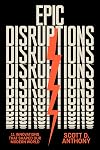
Anthony has an engaging, accessible writing style, and his ideas and insights about disruption and innovation are insightful. Any list of 11 "epic disruptions" is bound to be debatable, but I liked the variety of finding Julia Child, disposable diapers, and the iPhone in the same room as the printing press and the scientific method. Although the content is supplemented with ample references, Anthony tends to use footnotes for interesting asides, pop-culture references, and jokes, in a way show more that is fun without being excessive. (And I don't think I've ever read an author who so repeatedly encouraged his readers to contact him to ask for more anecdotes or alternate endings to his book!)
I was left with a lot of food for thought (and not just about Big Macs). Particularly helpful for pondering is the final chapter, in which Anthony frames technologies and businesses of the present in light of the historic disruptions the rest of the book discusses, and asks pointed questions designed to get the reader thinking about how to apply those historical lessons to the present moment.
I found myself really enjoying this book, more than I expected to, and so I gave it an unusual (for me) five-star rating. show less
I was left with a lot of food for thought (and not just about Big Macs). Particularly helpful for pondering is the final chapter, in which Anthony frames technologies and businesses of the present in light of the historic disruptions the rest of the book discusses, and asks pointed questions designed to get the reader thinking about how to apply those historical lessons to the present moment.
I found myself really enjoying this book, more than I expected to, and so I gave it an unusual (for me) five-star rating. show less
 This review was written for LibraryThing Early Reviewers.
This is an excellent book.
There, we got that out of the way so, if you are perusing and just reading first lines, then you’ll get the gist of what follows.
Through “Epic Disruptions” Scott Anthony tells the stories of 11 of the most influential innovations that helped shape our world. But this is not a history lesson. His stories of major disruption do much more. They show the patterns that exist in how innovation and disruption happen. (Well, as much as we can understand something show more that, no matter the explanation, still seems to be magic – my conclusion, not his.)
From gunpowder through the printing press to iPhones, Anthony tells stories and provides details that show the time innovation takes, the people it takes, and the processes (usually a complicated dance between knowledge and timing.)
At first glance, there are some choices here that don’t initially make sense. Why would he include things like Julia Child and Pampers. (If you are a parent, you know the answer to that second one.) But no matter what subject is chosen, it fits the model and the story Anthony is putting together. And, based on footnotes and asides, choosing what to include and what not to include seems to have been an arduous battle. I’d love to see the book that is twice as large which contains all those others
Two quibbles, very minor quibbles. There is a casualness to Anthony’s writing that I like. It feels written by a real human, not a word processor wearing skin. However, particularly in the footnotes, some of this becomes a bit much. You don’t like it? Don’t read the footnotes (which were all asides; the actually supporting information was all in the “Notes” section.) But I couldn’t help myself. And while, as I say, sometimes it got a bit much, sometimes they were as entertaining as the main text.
And the second minor quibble is there seems to be too much about Clayton Christenson. It seems much of the direction Anthony has taken comes from his working with Christensen. So, reference to that work is fine. But Christensen seems to do a bit too much hovering over this work. (Note 1: Anthony mentions that he almost did a full chapter on Christensen. Removing this was a good decision. Note 2: I thought I had some of Christensen’s books. I don’t. Anthony has made me go out, get some, and start reading.)
Let me repeat. Very, very, very minor quibbles. Because this is book worth reading by anyone out there, whether you’re in business or not. When we talk about innovation and disruption it is very easy to believe that it is the purview of business and corporations. But it is not. It is a set of skills all of us, whether in our work life or personal life, need to embrace. Innovative change, even at a personal level, is necessary.
It can apply anywhere. For example, I work in the field of internal audit, a field not known for its ability to change. As I read the book, I kept track of the many things that internal auditors need to embrace to make the profession better.
A good book. A fun read. And, potentially, a life=changer. show less
There, we got that out of the way so, if you are perusing and just reading first lines, then you’ll get the gist of what follows.
Through “Epic Disruptions” Scott Anthony tells the stories of 11 of the most influential innovations that helped shape our world. But this is not a history lesson. His stories of major disruption do much more. They show the patterns that exist in how innovation and disruption happen. (Well, as much as we can understand something show more that, no matter the explanation, still seems to be magic – my conclusion, not his.)
From gunpowder through the printing press to iPhones, Anthony tells stories and provides details that show the time innovation takes, the people it takes, and the processes (usually a complicated dance between knowledge and timing.)
At first glance, there are some choices here that don’t initially make sense. Why would he include things like Julia Child and Pampers. (If you are a parent, you know the answer to that second one.) But no matter what subject is chosen, it fits the model and the story Anthony is putting together. And, based on footnotes and asides, choosing what to include and what not to include seems to have been an arduous battle. I’d love to see the book that is twice as large which contains all those others
Two quibbles, very minor quibbles. There is a casualness to Anthony’s writing that I like. It feels written by a real human, not a word processor wearing skin. However, particularly in the footnotes, some of this becomes a bit much. You don’t like it? Don’t read the footnotes (which were all asides; the actually supporting information was all in the “Notes” section.) But I couldn’t help myself. And while, as I say, sometimes it got a bit much, sometimes they were as entertaining as the main text.
And the second minor quibble is there seems to be too much about Clayton Christenson. It seems much of the direction Anthony has taken comes from his working with Christensen. So, reference to that work is fine. But Christensen seems to do a bit too much hovering over this work. (Note 1: Anthony mentions that he almost did a full chapter on Christensen. Removing this was a good decision. Note 2: I thought I had some of Christensen’s books. I don’t. Anthony has made me go out, get some, and start reading.)
Let me repeat. Very, very, very minor quibbles. Because this is book worth reading by anyone out there, whether you’re in business or not. When we talk about innovation and disruption it is very easy to believe that it is the purview of business and corporations. But it is not. It is a set of skills all of us, whether in our work life or personal life, need to embrace. Innovative change, even at a personal level, is necessary.
It can apply anywhere. For example, I work in the field of internal audit, a field not known for its ability to change. As I read the book, I kept track of the many things that internal auditors need to embrace to make the profession better.
A good book. A fun read. And, potentially, a life=changer. show less
This review was written for LibraryThing Early Reviewers.I quite enjoyed this book. Think Friedman's Guns...etc. meets Burke's Connections but more fun. I don't agree with Mr. Anthony on all of his eleven choices, but lists are lists and the top 100 guitarists (to pick a list) from whatever sources rarely include one who I think should be in the top ten. Anyway, we've got a really good survey of the histories of the disruptions (the author says, “I define a disruptive innovation as one that transforms an existing market or creates a new one by show more making the complicated simple and the expensive affordable.”) with an excellent Notes section of [properly annotated in text] citations you can drill down on AND footnotes!
I like his sense of humor, too. Right in the flow of the first innovation, gunpowder, when relating early Chinese writings on the subject, he drops “Something is happening here, but what it is isn't exactly clear.” And a bit further, after observing that at some point in history someone was trying something to see what worked and what didn't, “I often wonder about the person first thought that a hard-shelled insect wandering in the water would make a delicious meal. Or came up with the idea of intentionally growing mold on cheese and eating it. Daredevils, visionaries, mad-men, indeed.” I wonder that, too.
There's something here for everyone and I appreciate the publisher sending me a review copy through the LibraryThing Early Reviewers Program. Some good jumping off points for me (books to find) and some things to think about.
Curated notes:
“Why do companies overshoot their customers? In business, gravity pulls you up, not down. Companies generally seek to solve the hard problems, to serve the most demanding customers, because that's the path to profits. People will always take improvements but will grow increasingly unwilling to pay for them, creating opportunities for people to change the game.
[...]
So even if a company spots an opportunity to disrupt, its customers don't want it to do so.
This is the innovator's dilemma.”
{A couple of decades ago in grad school, I was doing Industrial Assessments (energy, waste stream, etc) and we would ask what the ROI peroid was. More than not, I was stunned at the short-sightedness of boards of directors (one required a payback period of less than 18 months if an implementation was to be considered, let alone approved.)}
[on organizational focus on optimization]
“That means prioritizing investments to make today better, not those that promise to make tomorrow different.”
[seeds for disruption]
“Anytime there is a barrier to consumption, where consumption requires wealth, specialized skills, a centralized location, or significant amounts of time, there are opportunities for simple, convenient, disruptive solutions.”
[on adoption of new ideas (innovators, early majority, late majority, laggards)]
“Do you remember when you first saw Uber, or first considered using Airbnb for accommodations {Me: early majority}, or tried out ChatGPT {Me:laggard}? Maybe you are an innovator or early adopter who jumped in.”
{Still wary of AI.}
“[…]when an innovation modularly layers into an existing infrastructure-think Instagram or ChatGPT -adoption can be very fast. If an innovation requires a completely new infrastructure-think electric vehicles or the metaverse- it still takes decades.”
“That's the power of disruption. When you make it easy for people to do things themselves, you create the possibility for explosive growth.
That's good for those who enable the growth. It can be bad for people who prospered in an era of constraints.”
{This.}
“I always disliked the title [The Innovator’s DNA], as DNA implies something that is deterministic, while the research clearly shows that most of what makes innovators successful is specific behaviors that can be learned.”
{And this}
[on five behaviors that drive innovation success]
“ 1. Curiosity. Great innovators question the status quo, looking for different and better ways to do things. They ask questions like "Why do we do things this way?" and "How might we do it differently?"”
2. Customer obsession. You can't do something different that creates value unless you solve a problem that matters to a customer.
3. Collaboration
4. show less
I like his sense of humor, too. Right in the flow of the first innovation, gunpowder, when relating early Chinese writings on the subject, he drops “Something is happening here, but what it is isn't exactly clear.” And a bit further, after observing that at some point in history someone was trying something to see what worked and what didn't, “I often wonder about the person first thought that a hard-shelled insect wandering in the water would make a delicious meal. Or came up with the idea of intentionally growing mold on cheese and eating it. Daredevils, visionaries, mad-men, indeed.” I wonder that, too.
There's something here for everyone and I appreciate the publisher sending me a review copy through the LibraryThing Early Reviewers Program. Some good jumping off points for me (books to find) and some things to think about.
Curated notes:
“Why do companies overshoot their customers? In business, gravity pulls you up, not down. Companies generally seek to solve the hard problems, to serve the most demanding customers, because that's the path to profits. People will always take improvements but will grow increasingly unwilling to pay for them, creating opportunities for people to change the game.
[...]
So even if a company spots an opportunity to disrupt, its customers don't want it to do so.
This is the innovator's dilemma.”
{A couple of decades ago in grad school, I was doing Industrial Assessments (energy, waste stream, etc) and we would ask what the ROI peroid was. More than not, I was stunned at the short-sightedness of boards of directors (one required a payback period of less than 18 months if an implementation was to be considered, let alone approved.)}
[on organizational focus on optimization]
“That means prioritizing investments to make today better, not those that promise to make tomorrow different.”
[seeds for disruption]
“Anytime there is a barrier to consumption, where consumption requires wealth, specialized skills, a centralized location, or significant amounts of time, there are opportunities for simple, convenient, disruptive solutions.”
[on adoption of new ideas (innovators, early majority, late majority, laggards)]
“Do you remember when you first saw Uber, or first considered using Airbnb for accommodations {Me: early majority}, or tried out ChatGPT {Me:laggard}? Maybe you are an innovator or early adopter who jumped in.”
{Still wary of AI.}
“[…]when an innovation modularly layers into an existing infrastructure-think Instagram or ChatGPT -adoption can be very fast. If an innovation requires a completely new infrastructure-think electric vehicles or the metaverse- it still takes decades.”
“That's the power of disruption. When you make it easy for people to do things themselves, you create the possibility for explosive growth.
That's good for those who enable the growth. It can be bad for people who prospered in an era of constraints.”
{This.}
“I always disliked the title [The Innovator’s DNA], as DNA implies something that is deterministic, while the research clearly shows that most of what makes innovators successful is specific behaviors that can be learned.”
{And this}
[on five behaviors that drive innovation success]
“ 1. Curiosity. Great innovators question the status quo, looking for different and better ways to do things. They ask questions like "Why do we do things this way?" and "How might we do it differently?"”
2. Customer obsession. You can't do something different that creates value unless you solve a problem that matters to a customer.
3. Collaboration
4. show less
This review was written for LibraryThing Early Reviewers.This is an interesting book that traces the "disruption" caused by--as the subtitle announces--11 innovations. Some of these are fairly obvious, such as Gutenberg and the printing press and Henry Ford and the assembly line; others are not so obvious, such as Julia Childs and the modern cookbook or Proctor and Gamble's disposable diaper. Anthony is also quite good at tracing the shadow of each innovation and its disruption to the present. This is not, however, a deep history and, as the show more author discloses at the beginning, this is not a scholarly book. Much of Anthony's details and anecdotes are secondhand, often from a couple of sources. Still, the author is adapt at making connections and showing patterns in a relatively light and conversational style. His sense of humor, which is evident throughout the book, may not be for everyone. Nevertheless, for a "light" read on the nature of disruption and the lessons that can be gleaned from them, this is a good start. show less
This review was written for LibraryThing Early Reviewers.Lists
read in 2026 (1)
Awards

You May Also Like


Associated Authors
Statistics
- Works
- 12
- Members
- 710
- Popularity
- #35,708
- Rating
- 3.8
- Reviews
- 19
- ISBNs
- 34
- Languages
- 3
