

Robin Brande
Author of Evolution, Me & Other Freaks of Nature
About the Author
Series
Works by Robin Brande
Associated Works
A New Dawn: Your Favorite Authors on Stephenie Meyer's Twilight Series (2008) — Contributor — 122 copies, 8 reviews
Tagged
Common Knowledge
- Birthdate
- 20th Century
- Gender
- female
- Occupations
- lawyer
yoga instructor
insurance agent
Members
Reviews
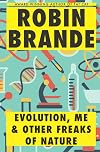
10ish years later, I read it again. It held up.
I agree with the novel's basic premise that rational humans can believe in God's existence/supremacy & simultaneously believe at least some elements of the theory of evolution. That resonates with me. I wish more people understood that the debate is nuanced; there's this helpful gray area that allows for both. You don't have to be on one "side" or the other.
The depiction of the Christians from her church relied heavily on stereotypes & flat show more characters. This is annoying, but understandable...sadly, it probably resonates with some people's experiences with Pharisaic individuals who claim to be followers of Jesus. (Although, I acknowledge that those of us who sincerely strive to live like Jesus still mess up a lot, too—myself definitely included.) The fact that the dynamic, brilliant Ms. Shepherd was a believer? That balanced it out & then some for me.
While I don't agree with the interpretation of the Parable of the Talents—Mena's epiphany that the novel seems to lead up to—I see how she (or the author) got there. Whether or not she's right or I am (or neither of us is), it doesn't matter as much as what we DO agree on: that we were created to follow Him & use our brains at the same time. show less
I agree with the novel's basic premise that rational humans can believe in God's existence/supremacy & simultaneously believe at least some elements of the theory of evolution. That resonates with me. I wish more people understood that the debate is nuanced; there's this helpful gray area that allows for both. You don't have to be on one "side" or the other.
The depiction of the Christians from her church relied heavily on stereotypes & flat show more characters. This is annoying, but understandable...sadly, it probably resonates with some people's experiences with Pharisaic individuals who claim to be followers of Jesus. (Although, I acknowledge that those of us who sincerely strive to live like Jesus still mess up a lot, too—myself definitely included.) The fact that the dynamic, brilliant Ms. Shepherd was a believer? That balanced it out & then some for me.
While I don't agree with the interpretation of the Parable of the Talents—Mena's epiphany that the novel seems to lead up to—I see how she (or the author) got there. Whether or not she's right or I am (or neither of us is), it doesn't matter as much as what we DO agree on: that we were created to follow Him & use our brains at the same time. show less
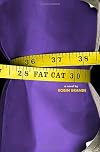
Cat has the best plan for her science class research and experimentation project. It’s practically guaranteed that she’ll beat Matt McKinney, her intellectual rival and ex-best friend who betrayed her in middle school on account of her weight. Using herself as a test subject, Cat plans to return to the days of the early Homo erectus and live a similar lifestyle: no processed foods, no modern utilities, no transportation except on foot.
Her plan needs a bit of tweaking, but the thing that show more really needs to change is Cat’s attitude towards herself. She’s doing this for the grade and to beat Matt…or does she also want to not be fat anymore? And as more and more mediocre guys begin to pay attention to her, will Cat realize that the lack of spark may not be because she’s not interested in love…but rather that her heart was stolen already years before?
Brilliance like this unfortunately still rarely exists in YA lit, and it’s a real shame, because YA lit needs more authors like Robin Brande. FAT CAT is funny, wise, super-intelligent, and heart-stoppingly romantic. It’s the kind of book that makes you smile weeks after reading it as you remember why you still enjoy and read YA contemporary realistic fiction.
Readers of all shapes and sizes (body and brain) will be able to connect with Cat. Hers is the voice of a levelheaded, smart, yet insecure teenager. Brande does not dumb down her fictional teenagers, with the surprising yet joyful result that they will end up appealing to everyone. How often do we get to read about smart girls who are good at and into math and science? Not often enough; my inner physicist is jumping with happiness even as I write this and reflect on FAT CAT.
Cat—and thus, us readers—learns an important lesson without sounding aggressively moralistic. The theme of FAT CAT is a powerful one, hinting at the harmful effects of our modern-day materialistic, processed consumerist culture. Cat’s development from bitter girl with a low body image to a happier, healthier, more energetic, and more creative young woman may just about turn smart readers off of junk food. I honestly laid off the Oreos for several weeks after reading this book, so unappealing the thought of sweets were to me. Rarely does a book have so strong a hold on me in the rest of my life!
The first half of the story focuses on Cat’s science project, while the second half discusses more her relationships with other people. The change of scope is a little bizarre and disconcerting, most likely because the science part is so wonderful to read, but I appreciated the character development of this book. The main “cast” of characters is great, particularly Cat’s best friend, as well as Cat’s romance.
FAT CAT is a story you catch yourself thinking about randomly even weeks after reading it. It’s also the book you’ll want to talk about to your friends, your mother, your teacher, that random middle-aged lady sitting next to you at the bus stop….It’s the book that you’ll hold up and say, “See? This is what quality YA literature is like. Now excuse me while I reread it; you may get your own copy elsewhere, if you’d like.” show less
Her plan needs a bit of tweaking, but the thing that show more really needs to change is Cat’s attitude towards herself. She’s doing this for the grade and to beat Matt…or does she also want to not be fat anymore? And as more and more mediocre guys begin to pay attention to her, will Cat realize that the lack of spark may not be because she’s not interested in love…but rather that her heart was stolen already years before?
Brilliance like this unfortunately still rarely exists in YA lit, and it’s a real shame, because YA lit needs more authors like Robin Brande. FAT CAT is funny, wise, super-intelligent, and heart-stoppingly romantic. It’s the kind of book that makes you smile weeks after reading it as you remember why you still enjoy and read YA contemporary realistic fiction.
Readers of all shapes and sizes (body and brain) will be able to connect with Cat. Hers is the voice of a levelheaded, smart, yet insecure teenager. Brande does not dumb down her fictional teenagers, with the surprising yet joyful result that they will end up appealing to everyone. How often do we get to read about smart girls who are good at and into math and science? Not often enough; my inner physicist is jumping with happiness even as I write this and reflect on FAT CAT.
Cat—and thus, us readers—learns an important lesson without sounding aggressively moralistic. The theme of FAT CAT is a powerful one, hinting at the harmful effects of our modern-day materialistic, processed consumerist culture. Cat’s development from bitter girl with a low body image to a happier, healthier, more energetic, and more creative young woman may just about turn smart readers off of junk food. I honestly laid off the Oreos for several weeks after reading this book, so unappealing the thought of sweets were to me. Rarely does a book have so strong a hold on me in the rest of my life!
The first half of the story focuses on Cat’s science project, while the second half discusses more her relationships with other people. The change of scope is a little bizarre and disconcerting, most likely because the science part is so wonderful to read, but I appreciated the character development of this book. The main “cast” of characters is great, particularly Cat’s best friend, as well as Cat’s romance.
FAT CAT is a story you catch yourself thinking about randomly even weeks after reading it. It’s also the book you’ll want to talk about to your friends, your mother, your teacher, that random middle-aged lady sitting next to you at the bus stop….It’s the book that you’ll hold up and say, “See? This is what quality YA literature is like. Now excuse me while I reread it; you may get your own copy elsewhere, if you’d like.” show less

I would have given this 2 stars only I can't stop reading this series so I guess it warrants another star for being compelling.
Otherwise, it's the kind of book that makes me crazy with not being able to suspend my disbelief. You'll notice I tagged it fantasy even though it definitely wants to be sci-fi. Also it's a young adult novel, which isn't its fault, I just tend to be irritated by young adult protagonists.
So first, the main character is a girl (Audie) who is terrible at math but great show more at physics. So already, I don't believe her. I'm sure you can understand physics to a point without math, learn the theories and whatnot in plain language (that's what I do), but I seriously can't imagine being able to actually BE GOOD at physics, especially in a university setting (which is where Audie wants to go), without understanding the math behind it. Someone, please, prove me wrong, it just doesn't seem possible to me given that physics IS MATH.
The next thing is that Audie somehow figures out (using her unparalleled physics skills, I assume) that "changing your vibrations" can catapult you into an alternate universe. The way she changes her vibrations is by meditating. And she has to be meditating at the same time as her counterpart in an alternate universe is meditating. Which doesn't seem all that hard, so my question is, how come this hasn't been documented before in all of human history? Audie literally disappears when she goes to the other universe, in a human history full of spirituality, I can't imagine that there weren't a lot of people disappearing and coming back with stories of alternate universes. And you don't even have to be good at meditating, Audie had only been doing it for 6 months before it worked for her!
She finds this professor that all the other physics professors laugh at because he does fringe research on vibrations and shit, and in his lab is a grad student who hooks polygraph machines up to plants to measure their stress levels (as if plants show stress in the same way that people do). So really, I'm thinking, yeah, this guy should probably be laughed out of the physics conferences, except that his research turns out to be right, and they explain the fact that he's not respected by claiming that cognitive dissonance and fear is causing the other physicists to not believe the proof that he's showing to them.
Audie meets her alternate self, Halli, who is exactly like her genetically only she was raised to be an adventurer and is therefore buffer and better at problem-solving. I'm assuming this means that their universes split at least just after they were both born, but that's wrong, because their parents are totally different too. So their parents, despite their crazy-different personalities, still managed to get together and have kids at exactly the same time with the exact same gene configuration. I know, I know, infinite universes contain infinite possibilities, it just seems KIND OF CONVENIENT.
And then Audie is also mooning over this love of her life, her best friend's brother, who is dating a caricature of an annoying person. He's the best most selfless and wonderful guy in the entire world and Audie has never told him that she into him, she just licks spoons that he's used when he's not looking. This is where I start to zone out because I hate reading about mooney love-struck teens.
Audie has adventures with Hallie in the alternate world and then shit goes down, right into a serious cliffhanger. At which point I need to decide: do I walk away from this series, or double-down and read three more books? Despite all of the above, the cliffhanger was really serious and amazon's one-click purchase thing with the kindle app is really dangerous so now I'm reading the omnibus. show less
Otherwise, it's the kind of book that makes me crazy with not being able to suspend my disbelief. You'll notice I tagged it fantasy even though it definitely wants to be sci-fi. Also it's a young adult novel, which isn't its fault, I just tend to be irritated by young adult protagonists.
So first, the main character is a girl (Audie) who is terrible at math but great show more at physics. So already, I don't believe her. I'm sure you can understand physics to a point without math, learn the theories and whatnot in plain language (that's what I do), but I seriously can't imagine being able to actually BE GOOD at physics, especially in a university setting (which is where Audie wants to go), without understanding the math behind it. Someone, please, prove me wrong, it just doesn't seem possible to me given that physics IS MATH.
The next thing is that Audie somehow figures out (using her unparalleled physics skills, I assume) that "changing your vibrations" can catapult you into an alternate universe. The way she changes her vibrations is by meditating. And she has to be meditating at the same time as her counterpart in an alternate universe is meditating. Which doesn't seem all that hard, so my question is, how come this hasn't been documented before in all of human history? Audie literally disappears when she goes to the other universe, in a human history full of spirituality, I can't imagine that there weren't a lot of people disappearing and coming back with stories of alternate universes. And you don't even have to be good at meditating, Audie had only been doing it for 6 months before it worked for her!
She finds this professor that all the other physics professors laugh at because he does fringe research on vibrations and shit, and in his lab is a grad student who hooks polygraph machines up to plants to measure their stress levels (as if plants show stress in the same way that people do). So really, I'm thinking, yeah, this guy should probably be laughed out of the physics conferences, except that his research turns out to be right, and they explain the fact that he's not respected by claiming that cognitive dissonance and fear is causing the other physicists to not believe the proof that he's showing to them.
Audie meets her alternate self, Halli, who is exactly like her genetically only she was raised to be an adventurer and is therefore buffer and better at problem-solving. I'm assuming this means that their universes split at least just after they were both born, but that's wrong, because their parents are totally different too. So their parents, despite their crazy-different personalities, still managed to get together and have kids at exactly the same time with the exact same gene configuration. I know, I know, infinite universes contain infinite possibilities, it just seems KIND OF CONVENIENT.
And then Audie is also mooning over this love of her life, her best friend's brother, who is dating a caricature of an annoying person. He's the best most selfless and wonderful guy in the entire world and Audie has never told him that she into him, she just licks spoons that he's used when he's not looking. This is where I start to zone out because I hate reading about mooney love-struck teens.
Audie has adventures with Hallie in the alternate world and then shit goes down, right into a serious cliffhanger. At which point I need to decide: do I walk away from this series, or double-down and read three more books? Despite all of the above, the cliffhanger was really serious and amazon's one-click purchase thing with the kindle app is really dangerous so now I'm reading the omnibus. show less

It's rare, in a sense. After finishing the book I know exactly what I want to say. Here goes.
This book has potential to change somebody's life, probably? But it's not without flaws. And it does absolutely nothing for me personally. I wouldn't call it a waste of time, but I didn't like it much.
The healthy living message wasn't too forceful, but maybe it's because I mostly ignored it. I can do that, unless it gets too forceful - then I quit altogether. I'm just not invested in listening to show more preachers.
I liked Cat's transformation and her emotional growth, but gods did I want to shake her more than once. And she should have made Matt work more. You don't just kiss a guy after not speaking to him for 4 years. It's a long time, a lot of changes. You may not even like who he's become. What the hell?
And Matt himself? I don't see him. At all. He is this very vague idea incapable of relating emotionally to other people. I thought him very presumptuous expecting Cat just to come back to him. And as far as I could tell he didn't even make an effort to find out why Cat ditched him. If he was her friend why didn't he just ask her what was wrong? It's like he doesn't even care. Ugh. Four years! FOUR YEARS, PEOPLE!
Actually, the longer I spend writing this review the less I like the book. It's entirely unrealistic. If only because dieting has a lot more of a psychological impact. Not to mention nursing a kiddy crush, and getting The Guy, and everything being Just Fabulous in the end.
FINAL VERDICT: I would not recommend this show less
This book has potential to change somebody's life, probably? But it's not without flaws. And it does absolutely nothing for me personally. I wouldn't call it a waste of time, but I didn't like it much.
The healthy living message wasn't too forceful, but maybe it's because I mostly ignored it. I can do that, unless it gets too forceful - then I quit altogether. I'm just not invested in listening to show more preachers.
I liked Cat's transformation and her emotional growth, but gods did I want to shake her more than once. And she should have made Matt work more. You don't just kiss a guy after not speaking to him for 4 years. It's a long time, a lot of changes. You may not even like who he's become. What the hell?
And Matt himself? I don't see him. At all. He is this very vague idea incapable of relating emotionally to other people. I thought him very presumptuous expecting Cat just to come back to him. And as far as I could tell he didn't even make an effort to find out why Cat ditched him. If he was her friend why didn't he just ask her what was wrong? It's like he doesn't even care. Ugh. Four years! FOUR YEARS, PEOPLE!
Actually, the longer I spend writing this review the less I like the book. It's entirely unrealistic. If only because dieting has a lot more of a psychological impact. Not to mention nursing a kiddy crush, and getting The Guy, and everything being Just Fabulous in the end.
FINAL VERDICT: I would not recommend this show less
Lists
Awards


You May Also Like


Associated Authors
Statistics
- Works
- 25
- Also by
- 1
- Members
- 1,112
- Popularity
- #23,103
- Rating
- 3.8
- Reviews
- 87
- ISBNs
- 70
- Languages
- 2
- Favorited
- 2
