
Thi Bui
Author of The Best We Could Do: An Illustrated Memoir
About the Author
Works by Thi Bui
Labor (The Best We Could Do, #1) 5 copies
In/vulnerable 1 copy
Associated Works
Tagged
Common Knowledge
- Birthdate
- 1975
- Gender
- female
- Nationality
- USA
- Birthplace
- Saigon, Vietnam
- Places of residence
- Berkeley, California, USA
- Associated Place (for map)
- USA
Members
Reviews
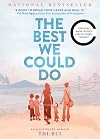
...being a child, even a grown-up one, seems to me to be a lifetime pass for selfishness.
The Best We Could Do is a graphic family memoir, two genres that I don't count among my favorites, but this one works for me.
Thi Bui was born in Vietnam, but her family immigrated to the US as refugees when she was very young. Both of her parents were traumatized by their wartime experiences (and her father by his difficult childhood). As an adult and a new parent, Ms. Bui was able to piece together more show more of her parents' stories. What she created is both a family biography and an examination of her relationships with her parents, her perception of them as a child vs. how she sees them as an adult.
It's beautiful and heartbreaking and enlightening. show less
The Best We Could Do is a graphic family memoir, two genres that I don't count among my favorites, but this one works for me.
Thi Bui was born in Vietnam, but her family immigrated to the US as refugees when she was very young. Both of her parents were traumatized by their wartime experiences (and her father by his difficult childhood). As an adult and a new parent, Ms. Bui was able to piece together more show more of her parents' stories. What she created is both a family biography and an examination of her relationships with her parents, her perception of them as a child vs. how she sees them as an adult.
It's beautiful and heartbreaking and enlightening. show less
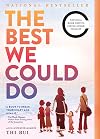
How do you understand your place in the world? Thi Bui's memoir traces her story and those of her family, their lives in Vietnam, as refugees, and in the US. Illustrated with expressive lines and tones of orange, Bui's story sometimes crackles with tension and aches with pain and loss, but looks at all of it with the understanding and tenderness borne out of her unflinching willingness to look deeply and find her truth.
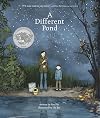
:Afishing trip is not just a fishing trip in this poignant, semiautobiographical tale.
As a young boy growing up in a Vietnamese refugee family in Minneapolis, Phi would wake up “hours before the sun comes up” to go fishing with his dad. Right from the start, he hints at his family’s dire straits: “In the kitchen the bare bulb is burning.” Readers learn they are up so early because his dad got a second job. And Phi asks innocently, “If you got another job, why do we still have to show more fish for food?” At the pond, father and son share moments of tenderness. A nod here—when Phi lights a fire with one strike of a match; a warning there—to avoid “the spicy stuff” in his bologna sandwich. Father and son also bond through stories. “I used to fish by a pond like this one when I was a boy in Vietnam,” says Dad. “With your brother?” Phi asks. Dad nods and looks away, a clue to the unspeakable devastation of the war. When they catch enough fish for dinner they head home, Phi dreaming about the landscape of Dad’s home country. Together, Phi’s gentle, melodic prose and Bui’s evocative art, presented in brushy and vividly colored panels and double-page spreads, rise above the melancholy to tell a powerful, multilayered story about family, memory, and the costs of becoming a refugee.
Spare and simple, a must-read for our times. (Picture book. 5-9): www.kirkusreviews.com, A Kirkus Starred Review show less
As a young boy growing up in a Vietnamese refugee family in Minneapolis, Phi would wake up “hours before the sun comes up” to go fishing with his dad. Right from the start, he hints at his family’s dire straits: “In the kitchen the bare bulb is burning.” Readers learn they are up so early because his dad got a second job. And Phi asks innocently, “If you got another job, why do we still have to show more fish for food?” At the pond, father and son share moments of tenderness. A nod here—when Phi lights a fire with one strike of a match; a warning there—to avoid “the spicy stuff” in his bologna sandwich. Father and son also bond through stories. “I used to fish by a pond like this one when I was a boy in Vietnam,” says Dad. “With your brother?” Phi asks. Dad nods and looks away, a clue to the unspeakable devastation of the war. When they catch enough fish for dinner they head home, Phi dreaming about the landscape of Dad’s home country. Together, Phi’s gentle, melodic prose and Bui’s evocative art, presented in brushy and vividly colored panels and double-page spreads, rise above the melancholy to tell a powerful, multilayered story about family, memory, and the costs of becoming a refugee.
Spare and simple, a must-read for our times. (Picture book. 5-9): www.kirkusreviews.com, A Kirkus Starred Review show less

In 1978 three-year-old Thi Bui and her family fled Vietnam and became one of the hundreds of thousands of ″boat people″ seeking asylum in other countries. Her memoir, in graphic novel form, is both a family history and a glimpse of how becoming a mother influenced her understanding of that history. Her illustrations are stark and entirely in orange and black, well-suited to a war setting.
The book begins factually, with the birth of her son, and ends philosophically with a reflection on show more what she has learned as both a daughter and a mother. In between are the stories she learned from each of her parents about their childhoods, as well as their life together as they try to build a family amongst the war and its aftermath. The things they lived through are horrible, as are the life-long effects of the trauma. That trauma is shared by the children of the survivors both directly and indirectly.
The first graphic novel in which I encountered the multi-generational effects of wartime trauma is [Maus] by Art Spiegelman. In it he recounts not only the experiences of his parents at Auschwitz, but also the effect that weighty history had on how he was raised and his uneasy relationship with that history. Similarly Bui wrestles with the stories she has heard from her parents and siblings, and how those stories have influenced her identity.
The structure of the book is confusing in places, as the author moves recursively through time from various perspectives and her extended family moved repeatedly as their political alliances changed and the war surged. But I think it adds to the feeling that this is almost an oral history that Bui has attempted to capture and recount. The book was widely acclaimed when it was published in 2017, and she has since gone on to collaborate with Viet Thanh Nguyen, author of [The Sympathizer], on a children′s book. show less
The book begins factually, with the birth of her son, and ends philosophically with a reflection on show more what she has learned as both a daughter and a mother. In between are the stories she learned from each of her parents about their childhoods, as well as their life together as they try to build a family amongst the war and its aftermath. The things they lived through are horrible, as are the life-long effects of the trauma. That trauma is shared by the children of the survivors both directly and indirectly.
The first graphic novel in which I encountered the multi-generational effects of wartime trauma is [Maus] by Art Spiegelman. In it he recounts not only the experiences of his parents at Auschwitz, but also the effect that weighty history had on how he was raised and his uneasy relationship with that history. Similarly Bui wrestles with the stories she has heard from her parents and siblings, and how those stories have influenced her identity.
The structure of the book is confusing in places, as the author moves recursively through time from various perspectives and her extended family moved repeatedly as their political alliances changed and the war surged. But I think it adds to the feeling that this is almost an oral history that Bui has attempted to capture and recount. The book was widely acclaimed when it was published in 2017, and she has since gone on to collaborate with Viet Thanh Nguyen, author of [The Sympathizer], on a children′s book. show less
Lists
Awards


You May Also Like


Associated Authors
Statistics
- Works
- 4
- Also by
- 3
- Members
- 2,247
- Popularity
- #11,409
- Rating
- 4.2
- Reviews
- 161
- ISBNs
- 27
- Languages
- 4